Pink quill

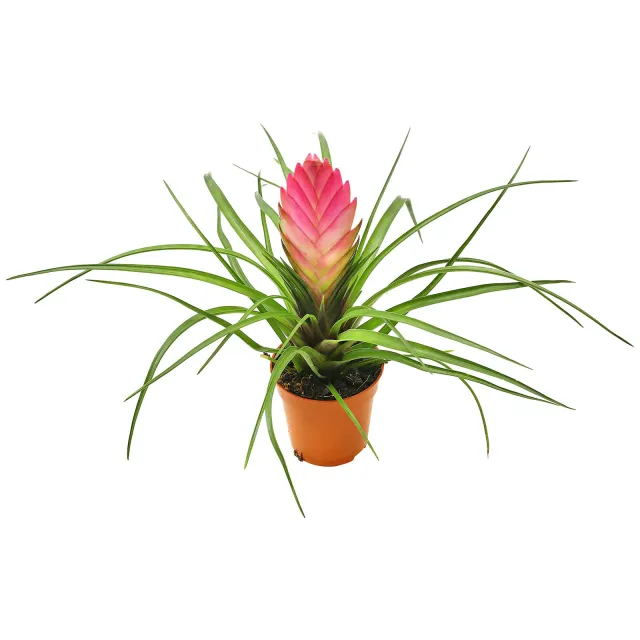
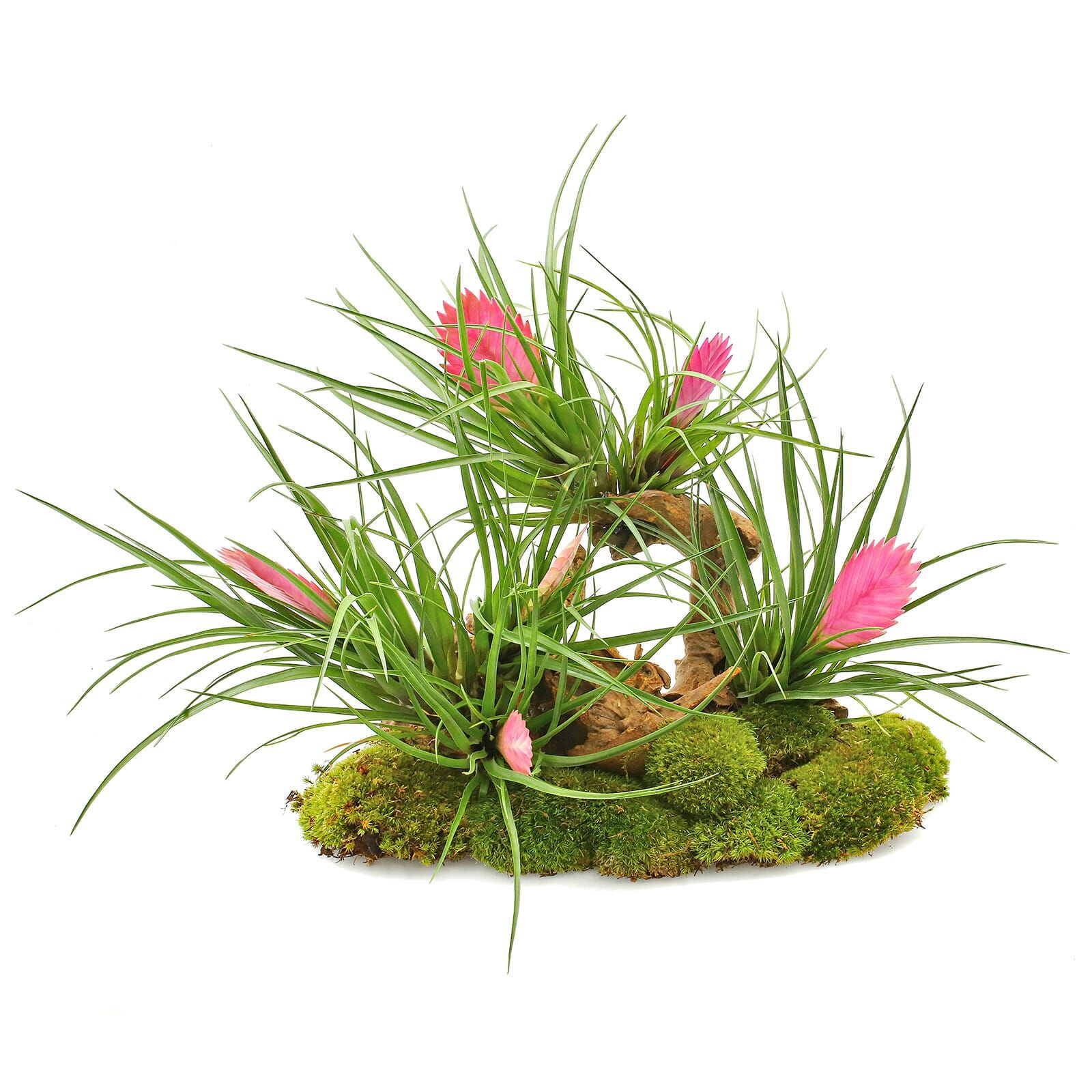
Wallisia cyanea (Tillandsia cyanea)
Pink quill
- Elegant leaf rosettes
- Magnificent inflorescence
- Suitable for rainforest terrariums
Curbside delivery: This item ships by freight carrier and is delivered to the curb only, not to your door or into your home. The carrier will call you in advance to schedule a delivery date. Learn more about freight delivery
Customers also bought


Item question
We’re here for you!
Please enter your question and e-mail and we’ll contact you as soon as possible. It usually takes us up to 24 hours during business days to respond.
Thank you for your question!
Thank you, we’ll get in touch!
Close window
You already sent us a question.
Please wait a few minutes
Description
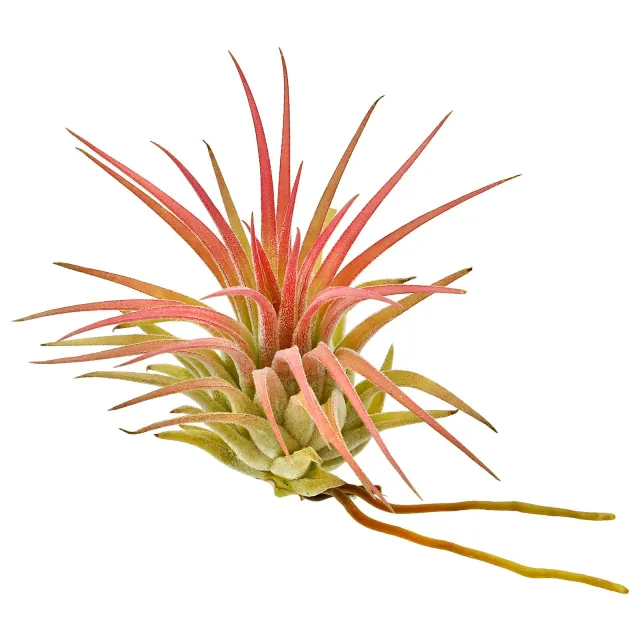
Although this particularly pretty bromeliad with its striking flowers is now classified in the genus Wallisia, it is still widely known as Tillandsia cyanea. In Ecuador and Peru, it inhabits tropical montane forests at about 600 to 1,000 meters above sea level. This epiphyte roots in accumulations of humus on tree trunks and branches. The plant forms a stemless rosette about 40 - 50 cm wide of narrow, dark gray-green leaves. After its unmistakable inflorescences, the plant is called "Pink quill" in English.
Wallisia cyanea is counted among the "green tillandsias", which like a more humid environment and are suitable for rainforest terrariums. It absorbs water and nutrients both through its roots and through the few absorbent scales (trichomes) on its leaves. When tied onto objects, Wallisia cyanea needs a layer of epiphyte substrate for its roots, which should not dry out completely. Cultivation in a pot is also possible. The location should be rather bright, but semi-shaded and protected from midday sun when grown in daylight. Misting with soft water about two to three times a week is recommended; an orchid and tillandsia fertilizer can be added with every second watering.
In rainforest terrariums, the "Pink quill" is attractive for its elegant arching foliage alone, and becomes a special highlight when its characteristic pink flower spikes with blue flowers along the edges appear. It needs a fair amount of space and looks good as a solitary plant or small group, not only on epiphyte branches and trunks, but also on background walls or rock structures.
Profile
| Wallisia cyanea | |
| Cultivation options | Terrestrial, epiphytic (tied on) |
| Growth height | approx. 30 - 50 cm |
| Temperature | approx. 7 - 28 °C |
| Humidity | At least 60% with sufficient air circulation |
| Light requirement | Bright to sunny |
| Watering | Soft, low-lime water. Moderately, several times a week by misting or dipping |
| Fertilization | Occasionally add small amounts of low-nitrogen liquid fertilizer during the growing season |
| Propagation | Formation of offsets (pups) after flowering |
| Suitable for | Rainforest terrariums, temperate terrariums with short dry phases |
| Cultivation options |
| Terrestrial, epiphytic (tied on) |
| Growth height |
| approx. 30 - 50 cm |
| Temperature |
| approx. 7 - 28 °C |
| Humidity |
| At least 60% with sufficient air circulation |
| Light requirement |
| Sunny to semi-shade |
| Watering |
| Soft, low-lime water. Moderately, several times a week by misting or dipping |
| Fertilization |
| Occasionally add small amounts of low-nitrogen liquid fertilizer during the growing season |
| Propagation |
| Formation of offsets (pups) after flowering |
| Suitable for |
| Rainforest terrariums, temperate terrariums with short dry phases |
Terrarienpflanzen
Our terrarium plants give every terrarium an individual, natural atmosphere and at the same time provide a healthy environment for all terrarium inhabitants. Our wide range of tropical, subtropical and even arid plants are easy to combine and enhance any terrascape. Whether it's strong succulents, subtle tillandsias, eye-catching neoregelias or wonderful orchids - we offer terrarium plants for different terrascapes from rainforest to desert.
General information
Please choose a variant to see more information.
| Item no. |
|
| EAN | |
| Weight | |
| Shipping weight |
Questions and answers about Wallisia cyanea (Tillandsia cyanea)
You have questions about this product? Ask other customer or our support team about this product!