Recycling
Our hobby revolves around the beauty of nature - and we want to do our part to preserve it, too. Please take a moment and read the information below carefully.
Feel free to get in touch with us if you're not sure how to dispose of something properly.
Thank you very much!
Aquatic plants
We would like to point out that aquatic plants should not be disposed of in local wastewater systems. Nobody knows how much potential the various species have to keep growing under such conditions. In the Netherlands, for example, a certain Hydrocotyle species became "native" after being disposed of in wastewater and may no longer be sold in the Netherlands, because it throws the local flora out of balance.
If you no longer want to use plant trimmings or aquatic plants you've sorted out, please don't dispose of them in your toilet or any other wastewater system. Aquatic plant remains are great for composting in your own garden or on your balcony. Alternatively, you can also use your organic waste bin.
Have you heard of our plant swap on Flowgrow yet? There you can pass on aquatic plants you've sorted out and maybe even make other aquascapers or aquarists happy.
Batteries
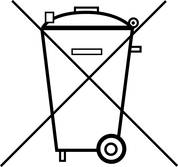
Since our shipments may contain batteries and rechargeable batteries, we are required by the German Battery Act (BattG) to inform you of the following:
Batteries and rechargeable batteries must not be disposed of with household waste.
You are legally obligated to return used batteries and rechargeable batteries. Used batteries may contain harmful substances that can damage the environment and your health if they are not stored or disposed of properly. However, batteries also contain important raw materials such as iron, zinc, manganese or nickel and can be recycled. After use, you can either send the batteries back to us or return them free of charge close by (e.g. in stores, at municipal collection points or at our shipping warehouse). Returns at points of sale are limited to quantities customary for end users and to used batteries of the kind the distributor carries or has carried as new batteries in its product range.
The crossed-out trash can symbol means that you must not dispose of batteries and rechargeable batteries with household waste. Below this symbol, you will also find the following symbols with these meanings:
Chemicals
Whether calibration fluids or water test solutions - many things don't belong in the wastewater. Many towns and municipalities offer disposal options specifically for hazardous substances. We encourage you to dispose of hazardous substances you no longer need properly - for the sake of our environment.
A good way to dispose of hazardous substances is the so-called mobile hazardous waste collection (Schadstoffmobil). There are also citizen hotlines where you can get information. If in doubt, simply ask your local waste management company for an appropriate disposal method.
Lamps and bulbs
Did you know that old aquarium lights don't belong in the household trash? There are specially set up collection points or local disposal systems for them. Depending on the type of lighting, many manufacturers or importers are even obligated to take back old devices for disposal free of charge.
If you're not sure how to dispose of your lamps and bulbs, simply ask your local waste management company or the manufacturer.
Electronic items
Your external filter has given up the ghost or your inline heater no longer works? Even though there are many electrical devices in the aquarium hobby that would fit into the household trash size-wise - that's not where they belong. Similar to the disposal of lamps and bulbs, many electrical devices can be recycled and are accepted by local recycling centers. In some cases, the so-called mobile hazardous waste collection also accepts small electrical devices such as toasters or pocket calculators on certain collection dates. Disposal obligations are regulated by the German Electrical and Electronic Equipment Act (ElektroG), which also obligates many manufacturers and importers to take back old devices for disposal free of charge.