




What do you need to consider with a CO2 system for your aquarium?
At a low point early in his career, Takashi Amano, the founder of nature aquariums and the father of aquascaping, poured some mineral water into his aquarium out of sheer curiosity. Despite many attempts, the aquatic plants in it were still growing poorly and looked unhealthy. Shortly afterwards, small oxygen bubbles formed on the plants and visibly rose to the water surface. Adding the mineral water had increased the plants' photosynthetic activity. Mineral water or sparkling water contains a lot of carbon dioxide. For Amano, this discovery was a real eye-opener, and he realized how important the supply of carbon is for aquatic plants in an aquarium. Today, injecting CO2 and the carbon fertilization of aquarium plants that comes with it are an integral part of the aquarium hobby.
Studies also prove the positive effect of CO2 fertilization in a planted aquarium or aquascape. You can read all about it in the article "Sukei Research: CO2 Supply".
In addition, injecting carbon dioxide also affects the pH in the aquarium: since a small percentage of it forms carbonic acid, the CO2 supply makes the water more acidic. A low pH has many advantages: it improves the nutrient uptake of aquarium plants, and many tropical fish, invertebrates and plants prefer soft, acidic water similar to what they are used to in their natural habitats.
In any case, you should monitor the CO2 injection and the level of dissolved carbon dioxide in the aquarium water, as too much CO2 can cause problems for the animals in the tank. To monitor the CO2 level in the water, aquarists use CO2 drop checkers. They let you keep the gas injection under control. To dose specific amounts, aquarists use bubble counters. And this brings us to the components of a CO2 system used for carbon fertilization in planted aquariums. Several types of CO2 systems are used in the hobby, from bio CO2 and disposable systems to refillable CO2 systems with a pressurized gas cylinder.
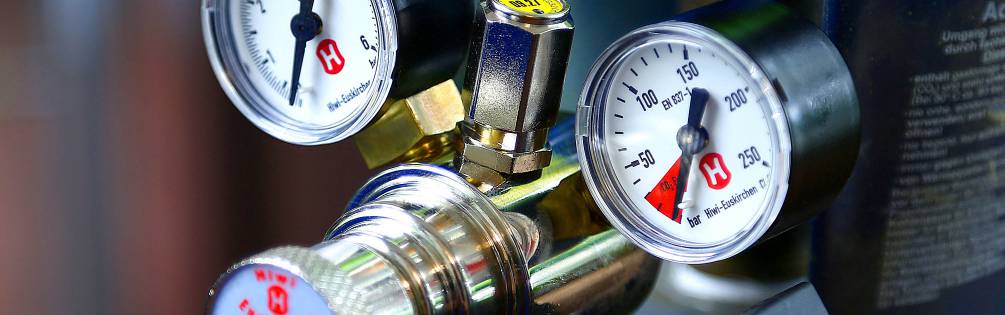
In this section of our Aquascaping Wiki, we explain how such CO2 systems are set up and how the individual components work, such as pressure regulators, bubble counters, night shut-off valves, check valves and diffusers. The articles in this category also describe how to care for and handle CO2 accessories such as drop checkers and other CO2 glassware.
In aquascaping in particular, so-called diffusers are very popular CO2 injection devices. The gas is pushed through a fine-pored ceramic membrane, creating lots of tiny CO2 bubbles that can spread throughout the aquarium. Diffusers also come in different designs and materials, such as glass, plastic or stainless steel. In the articles in this section, we take a closer look at the differences between diffusers, so with the help of these articles you will surely find not only the ideal CO2 system, but also the right injection device for your aquarium.