
Determining the CO2 level correctly

By Aram Schneider Published Updated
Translated from German with AI assistance and reviewed by our editors.
Carbon is one of the most important nutrients for aquatic plants in an aquarium and is usually supplied in gaseous form as carbon dioxide via a CO2 system. The CO2 level in a planted aquarium can be determined using several components. Quite a few factors also influence the carbon dioxide concentration in the aquarium. We explain what you should pay particular attention to here.
CO2 deficiency in aquatic plants

Your aquarium plants aren't growing properly even though all the other micro- and macronutrient parameters look good? Then there may be a CO2 deficiency. In line with Liebig's law of the minimum, aquatic plants don't grow well even if all other nutrients are sufficiently available but one particular nutrient element is lacking. Many deficiency symptoms, such as pale colors or yellow leaves, can be interpreted as an iron or nitrogen deficiency, but a lack of carbon is also possible. The deficiency symptoms look quite identical here. That is why, with growth problems in aquatic plants or the appearance of algae in the aquarium, it is particularly important to first check the input of CO2.
The KH-pH-CO2 table
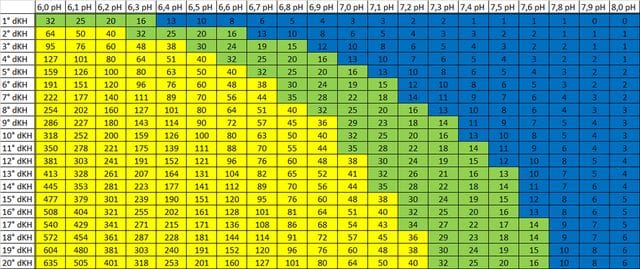
A theoretical basis for many aquarists is the so-called KH-pH-CO2 table (see above). Because of the lime-carbonic acid equilibrium, there are certain relationships between carbonate hardness, pH and the concentration of CO2. In theory this is correct as far as it goes, but as a real-world reference for determining the CO2 level, the table is only of limited use. Aquarium water contains other substances such as humic substances or phosphates that act as buffers for the pH and can therefore distort the relationships. A CO2 drop checker, which works with a test reagent independent of the aquarium water, is therefore more reliable. In practice, glaring differences often show up here.
Color of the drop checker
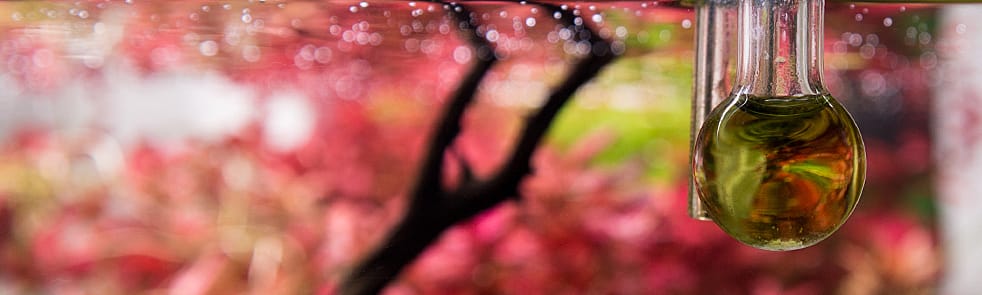
Using a drop checker is especially important for determining the CO2 concentration in the aquarium water. It is filled with a color reagent whose color change can then indicate whether the CO2 level is okay. Blue stands for too little carbon dioxide, yellow for too much. A green shade indicates a good value for a planted aquarium. Depending on the test reagent, this is usually a concentration of 20 or 30 mg/l. It is important to use a test reagent that works independently of the aquarium water. The test liquid has its own defined carbonate hardness, so factors such as other acids or buffers in the aquarium water cannot influence the result.
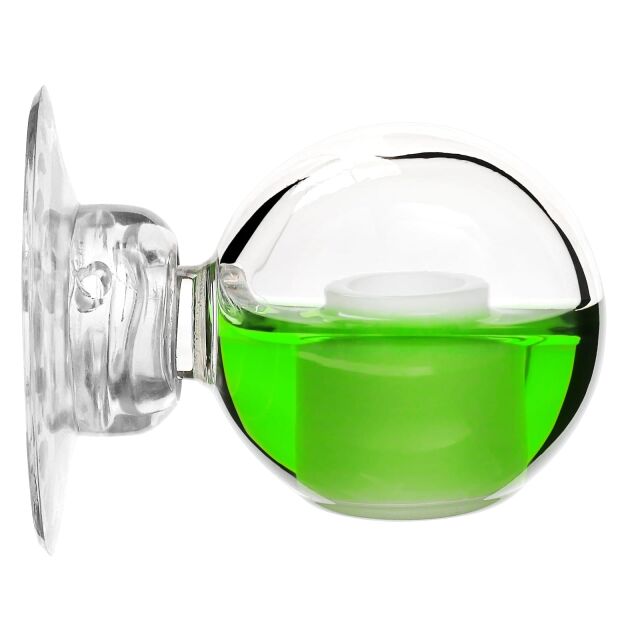
The right shade of green is also crucial. In general, the drop checker is much easier to read against a white background. Some drop checkers have extra white components for this purpose to make them easier to read (see photo above). Especially with the Aqua Rebell test liquids, a light green shade should be reached to achieve the desired CO2 concentrations. A dark green or even turquoise shade is not sufficient for this. This shade should be reached over the course of the day. Especially in connection with night shut-off, the CO2 level fluctuates in a day-night rhythm. Since no carbon dioxide is introduced at night, the drop checker turns bluish or dark green during this period. It is therefore normal for the test to have such a color in the morning. CO2 is then introduced over the course of the day. After a few hours, the light green shade should therefore be reached. This state is the decisive one.
The test reagent should also be renewed regularly after a few weeks of use to ensure that the drop checker works reliably. You will often notice that the color intensity of the liquid decreases. Then you should replace the reagent. This also matters if it has come into contact with the aquarium water, for example because the drop checker fell off the glass.
By the way, it is quite normal for the drop checker to turn bluish during or after a water change, because the fresh water or the outside air contains significantly less CO2 than the old water in the aquarium. If carbon fertilization is set well, the light green shade should be reached after a few hours or by the next day at the latest.
Surface agitation and CO2 level
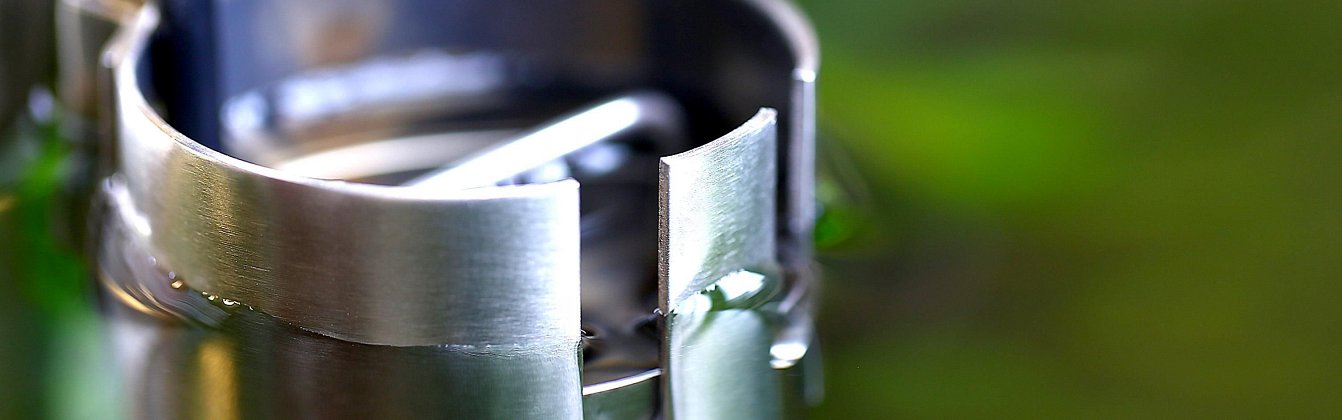
Surface agitation of the water and the gas exchange associated with it sometimes have a massive effect on the carbon dioxide level in the aquarium. Strong flow in the upper area, air stones, but also surface skimmers can have a big influence here. Accordingly, you should take these circumstances into account in the CO2 supply (and introduce correspondingly more to reach a green shade on the drop checker), or change the water movement. For example, you can point the filter outflow more clearly downward so that the surface is no longer hit directly. A skimmer can sometimes be run for only a few hours a day, provided the technical conditions allow it. In any case, the aquarist should be aware of these relationships and act accordingly. This also works the other way around, because a clogged filter or a surface skimmer that no longer works can, conversely, suddenly increase the CO2 input. This should also be kept in mind.
The right bubble rate
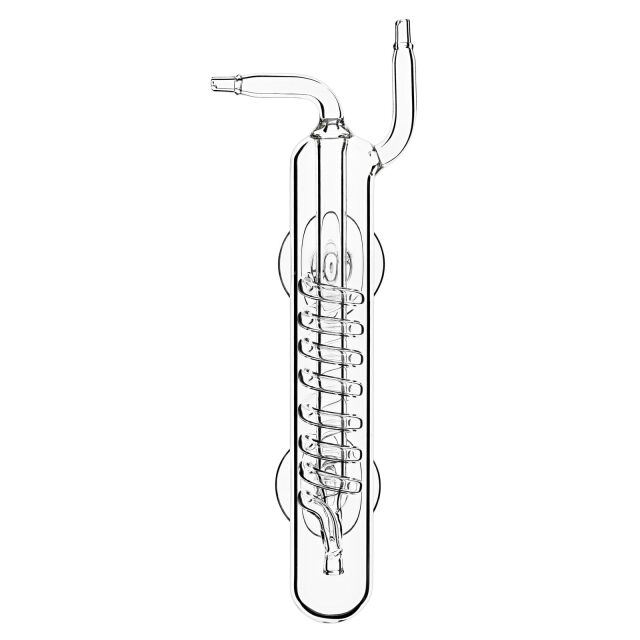
Besides determining the CO2 level with the drop checker, you can also compare it with the amount being introduced. A bubble counter is required for this. With it, the number of bubbles can be determined, expressed as bubbles per minute or bubbles per second. You can orient yourself with the following rule of thumb: 10 bubbles per minute for every 10 l of aquarium water. This formula usually produces the required light green shade. A typical 60 liter aquarium therefore needs around 60 bubbles per minute. This rule of thumb applies to a standard planted aquarium with moderate lighting and a plant mass corresponding to about 3/4 of the base area. In this article, we explained the procedure in more detail once again.
Conclusion
To assess the concentration of CO2 in the aquarium correctly, the color of the drop checker (under the influence of all environmental factors) is decisive. If you are unsure, comparing it with the bubble rate rule of thumb helps. If there are deviations, you need to adjust the CO2 supply and check everything on the technical side so that the CO2 drop checker can work correctly.