


Let There Be Light - Lighting for Your Aquarium
Powerful lighting that makes the ground cover plants in your aquascape pearl. Tanganyika cichlids stalking their prey under cool white beams of light. Tetras swimming their laps in the warm white daylight of an Amazonian clearwater biotope. The day awakens with a sunrise. A pair of cichlids watching over their brood in faint moonlight.
These are just a few examples of how you can create different moods in an aquarium with light. That's why practically every aquarist is always looking for the optimal lighting for their aquarium. And every aquarium owner has different needs when it comes to the design or mounting method of an aquarium light. Aquascapers love the transparency and elegant design of top-mounted lights with discreet acrylic brackets. Classic aquarists prefer a light bar integrated into the cover of their aquarium. Nano aquarists and shrimp keepers appreciate practical clip-on lights for their small cubes.
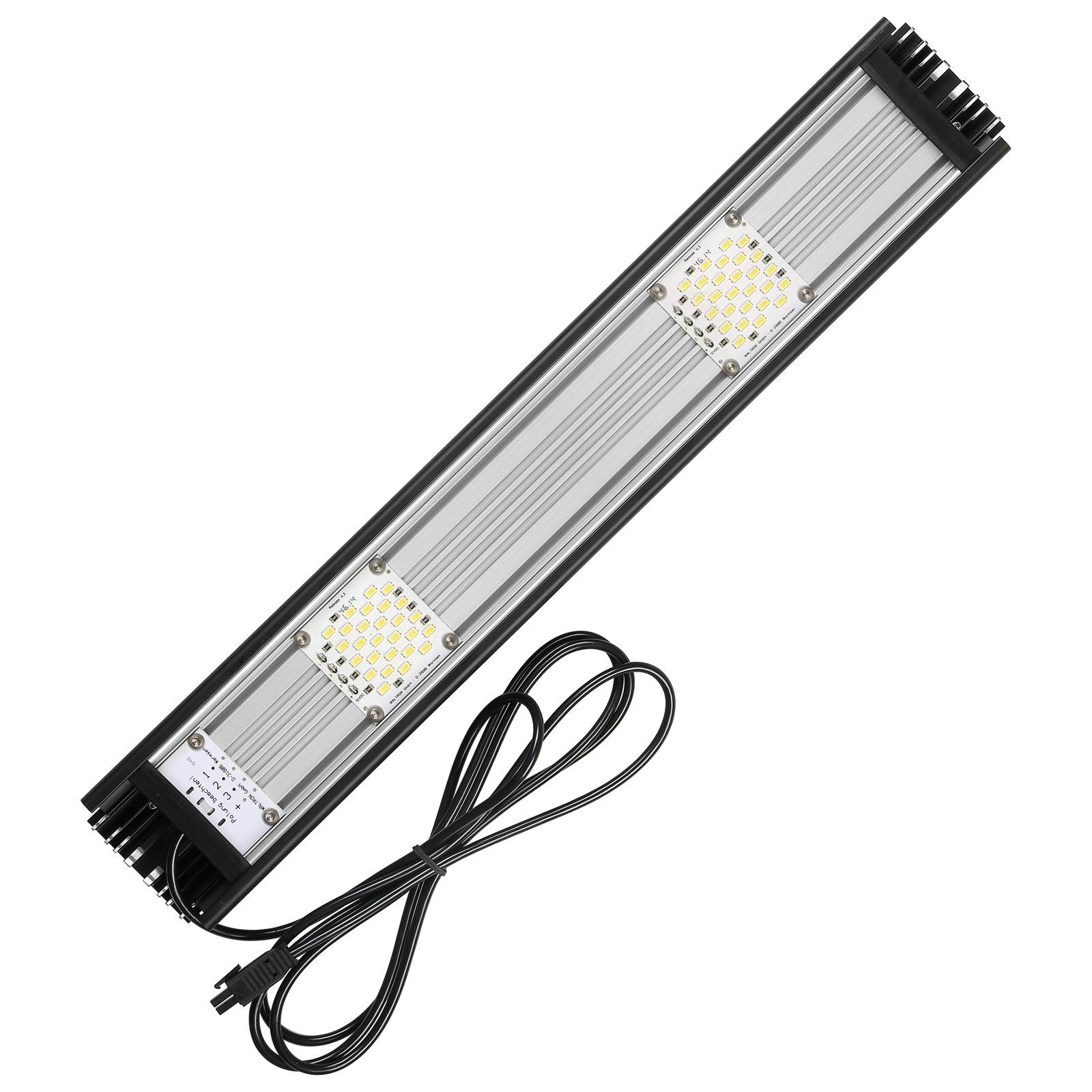
Aquarium lighting based on LEDs is a very modern, advanced approach that is increasingly becoming the standard not only in the home but also in the aquarium hobby. No wonder, since LED lights consume much less energy and last longer – a big advantage at a time of ever-rising electricity prices. In the past, aging light sources such as fluorescent tubes or bulbs had to be replaced regularly. That's no longer necessary either if you run your aquarium with LED lights. Even if the purchase price seems a bit off-putting at first glance: anyone who calculates and compares the costs will find that retrofitting or buying a new LED-based aquarium light clearly pays off after a while. LED lights also offer many advantages in terms of light control, since several color tones can be produced on a very small area using LEDs of different colors: the light-emitting diodes need far less space on a light housing than conventional lighting with fluorescent tubes.
In this section of our Aquascaping Wiki, we therefore mainly present LED lighting systems for aquariums. With our focus on aquascaping and planted aquariums, we naturally recommend above all aquarium lights that are optimally designed for the growth of aquatic plants. In this category, you'll also find tips on retrofitting, on mounting options for aquarium lights and on control options using LED controllers and daylight simulators. We also answer typical questions about light and lighting in the aquarium here.
Beginners to the aquarium hobby in particular are often at a loss when it comes to color temperature (which is given in Kelvin). This value indicates the shade of white in which various light sources are available. Which color temperature is ideal for the growth of aquatic plants in the aquarium? Unfortunately, there's no blanket answer to that, since in principle every plant species has its own preferences. In addition, certain aquarium plants are able to adapt to the spectrum of the light – this is called chromatic adaptation.
In general, however, we can say that an even daylight spectrum is good for the growth of all plants. By now, this can be achieved with almost any aquarium light offered by renowned manufacturers. The choice of white tone no longer plays such a big role for aquatic plants, so aquarium owners can let their personal taste decide.
Besides the color spectrum, however, it is above all the light intensity of an aquarium light that determines plant growth. Many aquarists make a crucial mistake here. True to the motto "more is better", they drastically increase their lighting. This change often ends in an algae disaster. Two things matter here: the light intensity should match the requirements of the aquatic plants kept in the aquarium. An Anubia, a Cryptocoryne and a few mosses in the tank don't justify high-intensity lighting. These shade plants do much better with less light. More demanding plants such as stem plants do benefit from more light and grow faster as a result. But they then also need larger amounts of other nutrients. Any increase in lighting should therefore always go hand in hand with an adjustment of the rest of the nutrient supply in the micro and macro range, as well as the CO2 supply. In addition, there should be sufficient plant mass in the aquarium as a foundation.
We cover these and many other topics in our Aquarium Lighting category. Here we want to give you the most complete overview possible of the optimal aquarium lighting for your needs.