 The right lighting for your aquarium
Are you looking for the right lamp for your aquarium? Then you've come to exactly the right place. In this guide, we want to explain to you step by step how to arrive at the right LED lighting for your new aquaristic project. The selection among the many different models and manufacturers is very large. In this article, we show you the perfect approach.
How should the lamp be mounted?
First of all, it should be clear what space is available for the lamp at all and how the lighting is to be installed on the aquarium. There are many possibilities here, such as top-mounted lamps, hanging lamps or operation inside the aquarium lid.
In the cover
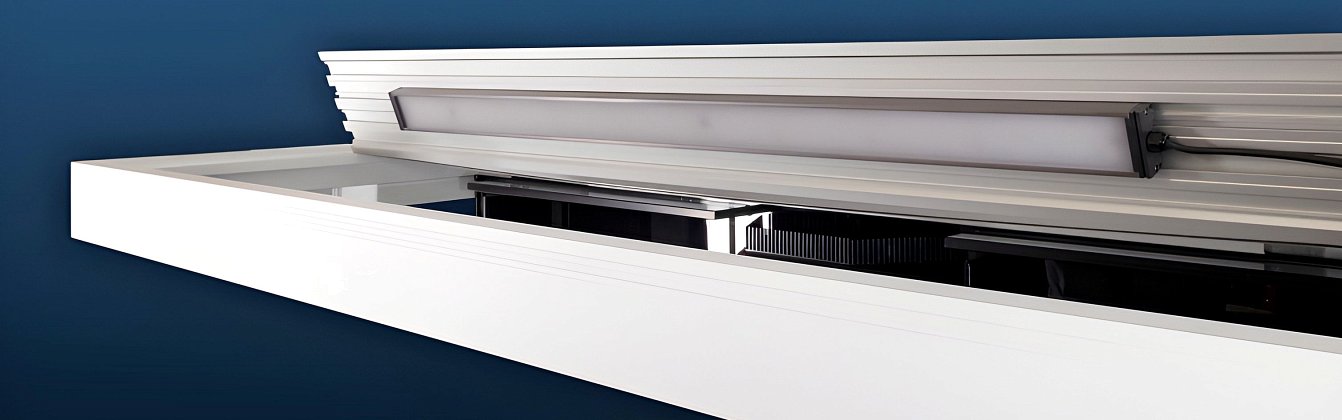
Is the aquarium run with a fixed cover? Then it makes sense to choose a lamp designed for that. Above all, the lighting should be protected well enough to withstand the humidity inside the aquarium lid. Not all aquarium lamps are suitable for this. Here you should look for a suitable IP rating (such as IP68), so that the lamp can even be submerged in an emergency. Next, you should measure under what conditions a lamp body fits under the cover. Often, guide rails are already recessed along the edges of a hood for this purpose. Here you need to determine the exact length from left to right. How much room does the lamp then have up to the lid? The height you determine then dictates how tall a suitable lamp may be. Also keep in mind that the lamp body should not lie flat against the lid. There should be a little space between the lamp housing and the lid so that the waste heat can be carried away by the air.
Lamp systems that can be integrated into existing covers and their conditions are particularly smart. The daytime matrix system may be mentioned here as an example. With a suitable adapter rail, you can simply replace the center brace in Juwel and Eheim aquariums and place the new lamp in it. The lids of the cover can continue to be attached to it and used.
Top-mounted lamp
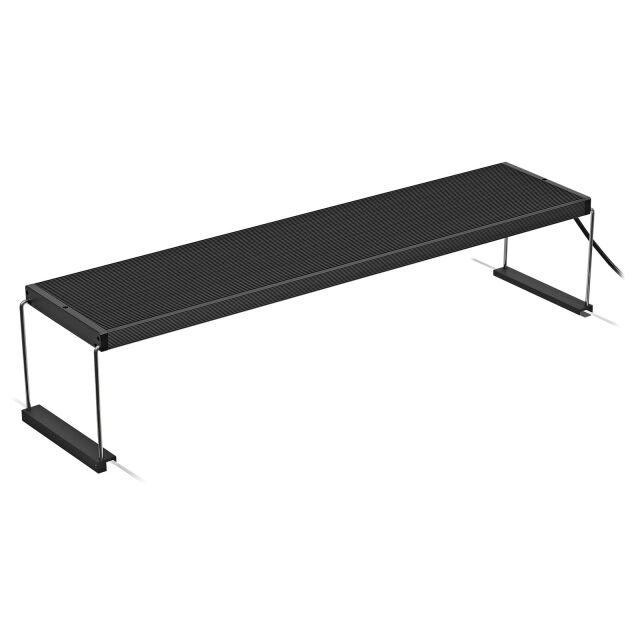
So-called top-mounted lamps are particularly suitable for open aquariums in pool-style construction. They are very popular above all in aquascaping. Special brackets on the sides allow them to be set on the glass edges of the aquarium on the left and right. Here you need to pay attention to the exact length and the glass thickness of the aquarium in order to find a suitable model. Many top-mounted lamps, however, are also adjustable in length and can thus adapt to special sizes and individual circumstances. If there are no obstacles in the way, the lamps can also be slid along the depth of the aquarium on the side panes. This makes maintenance easier, for example during water changes or plant trimming. Top-mounted lamps with transparent brackets look especially elegant. They look less bulky and let the lamp body float above the aquarium, so to speak.
Hanging lamp
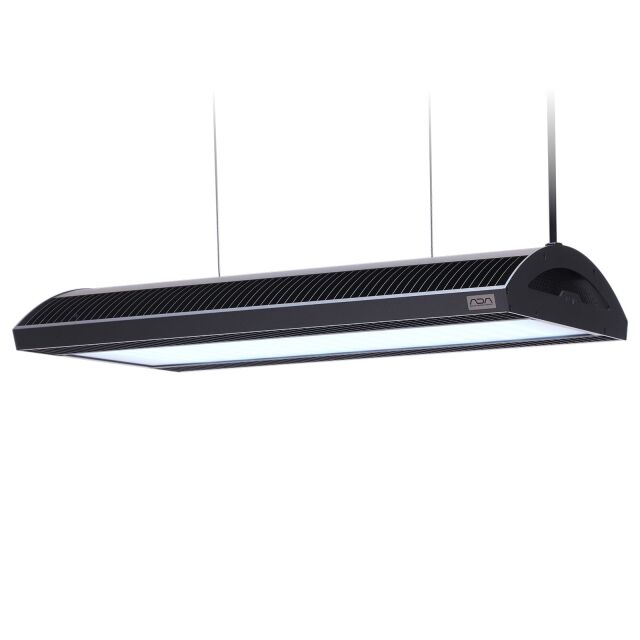
Aquarium lamps are mounted hanging by means of a cable suspension. In the living space, this creates a very special ambience and looks very stylish. A hanging lamp is a good choice especially for open aquariums with driftwood or aquatic plants reaching out of the water. With wire cables, the aquarium lighting can be attached to the ceiling of the room, for example. But there are also special brackets and tube systems that allow installation on the base cabinet or on the glass edges of the tank. The advantage of a hanging lamp is the ability to adjust its height. If stray light dazzles the viewer too much, so-called "shades" can be installed, depending on the manufacturer, which reduce the glaring stray light.
Clip-on lamp
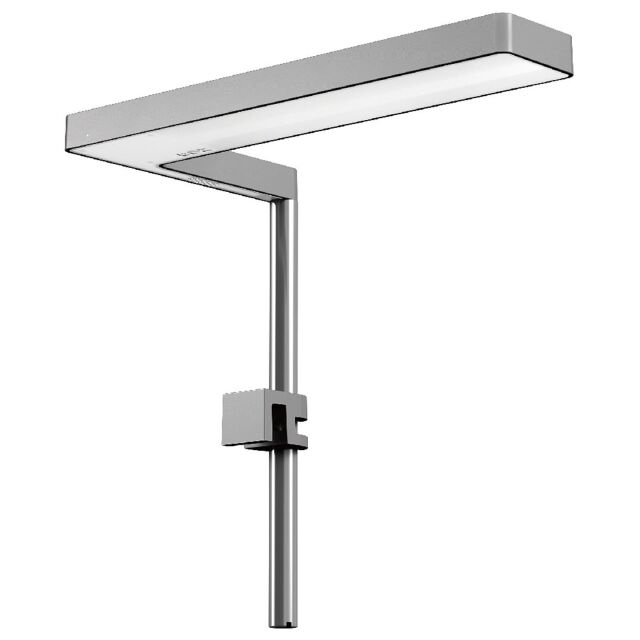
Clip-on lamps are generally smaller lights for nano aquariums that are simply clamped to a pane of the aquarium by a bracket. This is possible because of their low weight. Clip-on lamps are suitable for small open aquariums. Operation under a cover is not possible. They are often swiveling, which makes cleaning work much easier.
Determining the light requirement
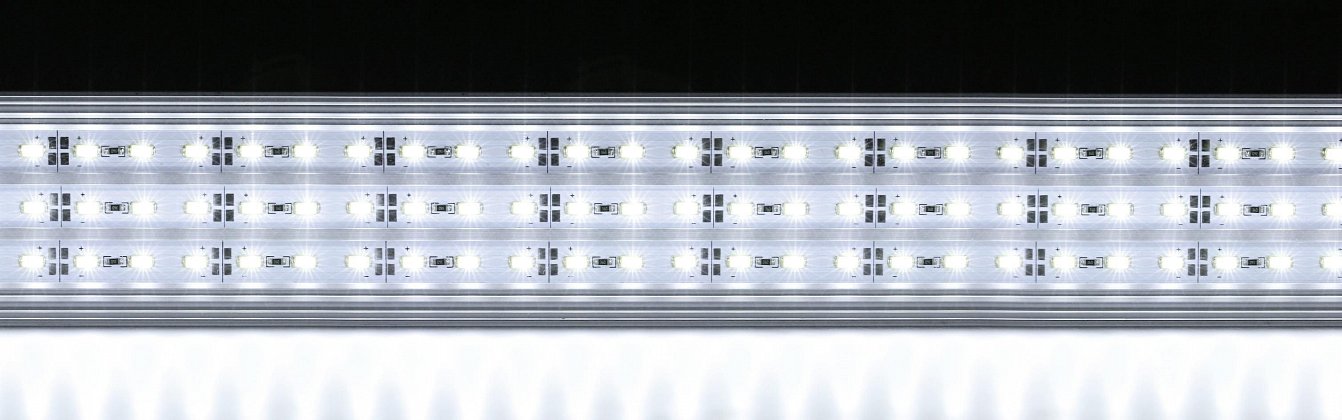
How much light, or brightness, does my aquarium need at all? Here the lumen rating from the lamp's manufacturer is very important. You then put the luminous flux in lumens in relation to the tank size, which gives a certain lumen-per-liter ratio. In principle, for an aquascape or planted aquarium the light requirement of aquatic plants can be divided into the following categories:
- low light requirement: approx. 0.2 to 0.3 W/l with old light sources corresponds to approx. 15 to 20 lm/l with LEDs.
- medium light requirement: approx. 0.5 W/l with old light sources corresponds to approx. 30 lm/l with LEDs.
- high light requirement: approx. 1 W/l with old light sources corresponds to approx. 60 lm/l with LEDs.
For aquariums with a depth of more than 45 - 50 cm, it is worth investing in a second light bar. With a double light, the overall illumination of the aquarium also increases with that much area toward the back.
For pure fish aquariums, strong lighting is generally not necessary at all. Here, experience shows you can happily aim for the range of low to medium light requirement. Stronger lighting could otherwise lead to increased algae growth, especially if aquatic plants as competition are missing or too few.
Determining the light color
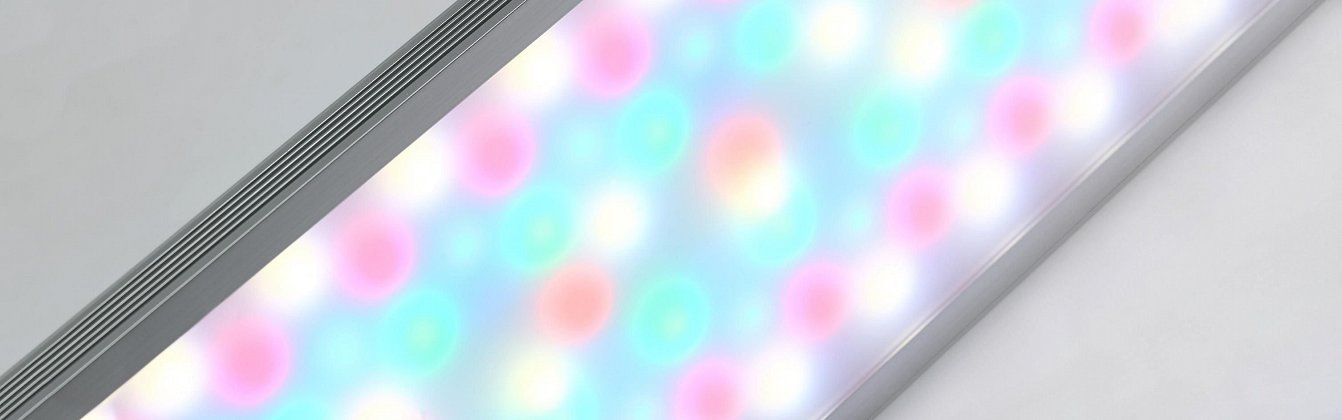
The light color of a lamp, in terms of the white tone of the lamp, is given in Kelvin. Depending on the color temperature, the aquarium lighting can create different lighting moods. A low Kelvin number gives a warmer white with more yellow. It is well suited, for example, for a South American aquarium. The Kelvin value of 6,500 K is often called daylight white and represents something like the golden mean between warm and cool color temperature. The white tone here is relatively neutral. Cooler light with more blue can be produced with color temperatures above 8,000 K. This lighting mood is needed in the marine sector, but is also often used in Malawi or Tanganyika aquariums.
In addition, certain lighting moods or color emphasis are possible with suitable RGB LEDs. For this, the LED lamps are supplemented with colored (red, blue, green) LEDs. These provide great color support, especially to emphasize the radiance of reddish or blue animals and aquatic plants even more. You can find more info on the topic "RGB LEDs" here.
Length
Once you have settled on a type of aquarium lighting based on the factors above (lumens, light color, mounting option), you can then choose a suitable manufacturer and a specific model. What is decisive above all is whether the length of the lamp matches the size of the aquarium. To make this easier, in our online shop we have stored the corresponding dimensions for many lamp models. With these, you can then choose an aquarium lamp that is well matched in length to your own aquarium. For good illumination, especially at the edges, a length that corresponds exactly to the edge length of the glass tank is required. This way no shadow zones arise, and the aquatic plants can benefit from the light almost everywhere in the aquarium.
LED controller
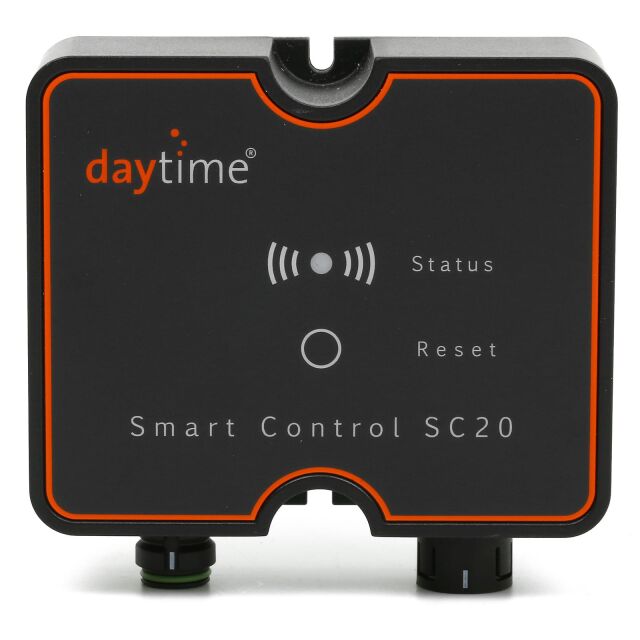
So-called LED controllers offer a great upgrade. These must of course be compatible with the respective model. If the lamps support it, the controllers can dim the lighting, or specific lighting scenarios and daylight curves can be set. In some cases the individual light colors can even be controlled separately, which enables countless lighting scenarios and color effects. This includes, for example, sunrises and sunsets or moonlight phases. Gentle starts and stops are also much less stressful for the fish in the aquarium, because the light does not come on abruptly. This is a big advantage especially for skittish animals and those that like to jump. Dimming phases also allow flexible transitions and an adjustment of the light output, for example during the cycling phase or when there are algae problems. This way you can react well to different scenarios in terms of lighting, and there are plenty of design possibilities.