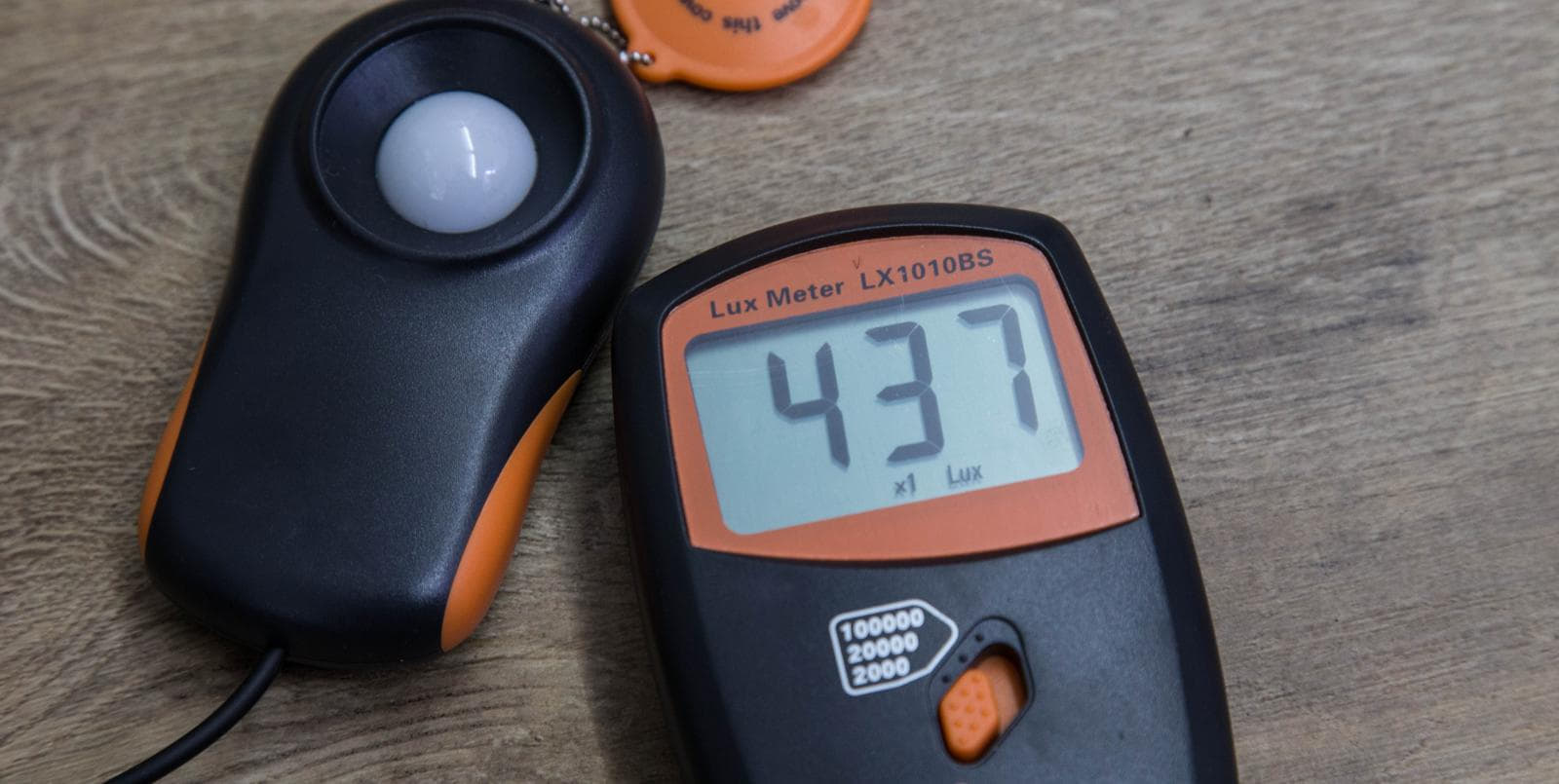
 Aquarium lighting: What is lux?
In aquaristics there are several terms that can roughly describe the brightness of an aquarium lamp. These include above all the unit lumen (luminous flux) and PAR (photosynthetically active radiation). There is also the unit lux, which we would like to introduce in more detail in this article.
Definition of lux
Lux is the unit of measurement for illuminance, given as a so-called SI unit. SI stands for the International System of Units, which also includes base quantities such as the meter. Lux (abbreviated lx) describes the luminous flux measured in lumens (abbreviated lm) in relation to a certain area (in m2) on which the light falls.
The correct formula defining lux is therefore: 1 lx = 1 lm / m2
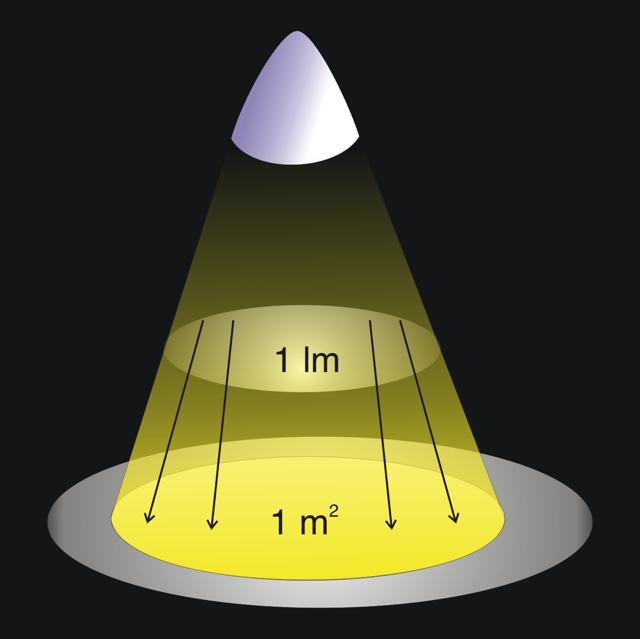
Image credit: Sigried - Own work, license: CC BY-SA 3.0, source.
So besides the emitted luminous flux of a light source, lux also takes into account the beam angle and the distance to the illuminated surface. In contrast to lumen (a transmitted quantity), lux is thus a unit that represents what is received (a received quantity). To explain: if a light source shines on a surface from a large distance, we get a low lux value. The same applies to a lamp with a wide beam angle. In both cases the source illuminates a rather large area, so the concentration of the luminous flux at a single spot in relation to the total area is very low. It is different with a smaller distance between light and surface or with a smaller beam angle. Here the light falls more concentrated on a smaller area, and the lux value is consequently higher in these cases. Theoretically, a conversion from lux to lumens (and vice versa) is therefore even possible if distance and beam angle are included in the calculations. You can find various websites on the internet for converting the two quantities.
Significance for aquarium practice
Some lamp manufacturers actually also state lux values for their aquarium lamps. Often this is also in combination with the beam angle and the distance between the light source and the illuminated surface. Like the quantity of photosynthetically active radiation (PAR), lux is therefore more precise because it includes the factors of distance and angle. But: this also complicates matters considerably and makes comparisons between different lighting systems difficult. Besides, there are not many empirical values on which plant species grow best at exactly which distance from the light source, or which lux values they need at which height in the aquarium. On top of that, environmental factors such as reflection from the water surface, the cleanliness and coloring of the water and the limited transparency of a cover glass now play a large role and can therefore lead to quite different results.
In aquarium practice, the unit lux (lx) has therefore not really caught on compared with lumens (lm). Although assessing brightness with lux is more precise in principle, precisely because it also includes the factors distance to the light source and beam angle, it also complicates the procedure. It is therefore recommended to prefer the unit lumen for aquaristic purposes.