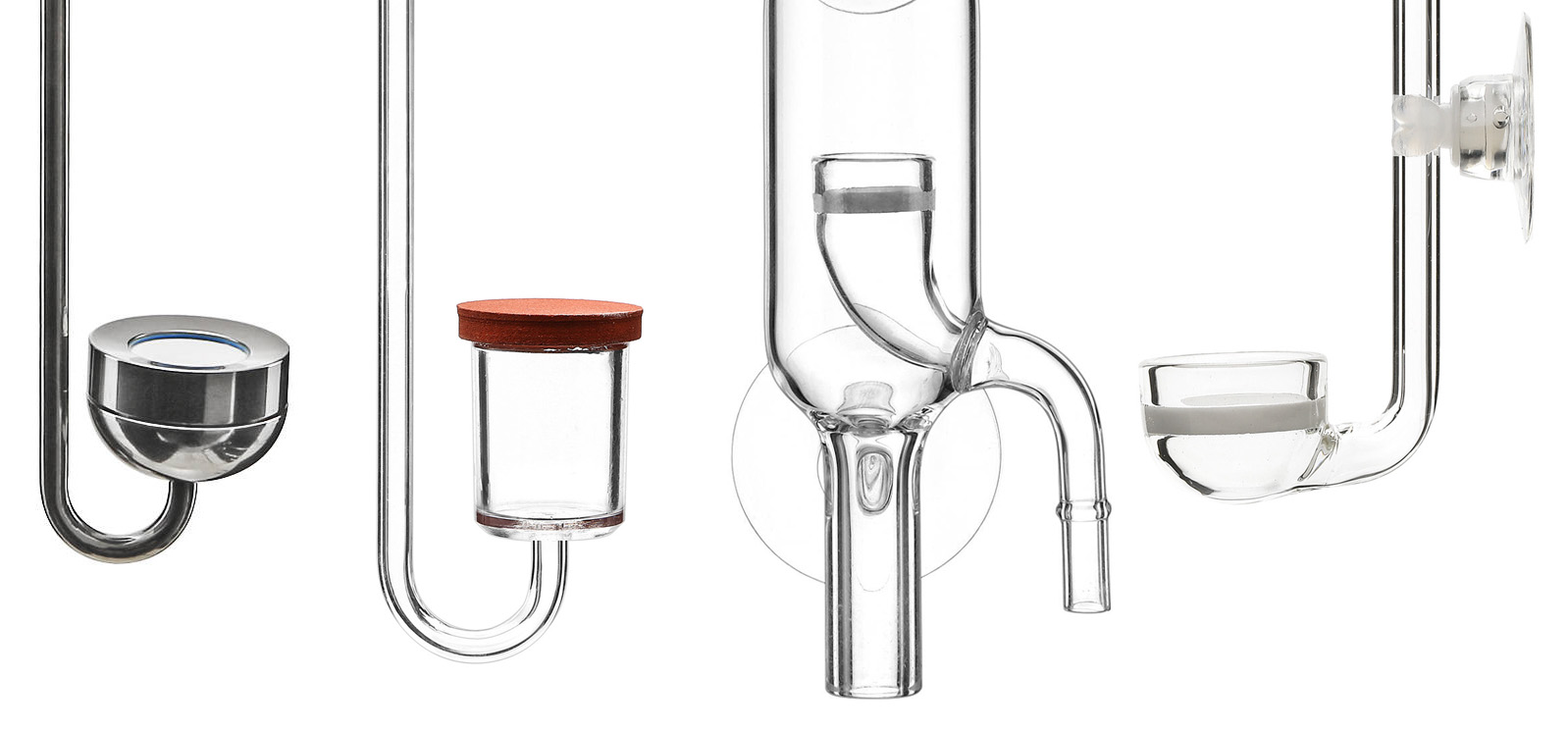
 Different CO₂ delivery devices
There is a lot of choice among the delivery devices for a CO₂ system in a planted aquarium. There are flippers, Paffrath bowls, diffusers and reactors. Some of these are used inside the aquarium, others externally. There are also plenty of differences in terms of price, efficiency and model variety. In this article, we show you the differences.
Flipper
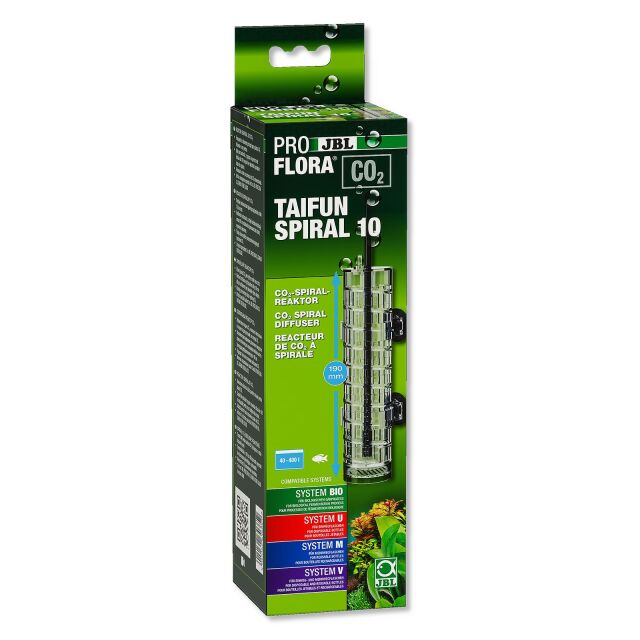
A CO₂ flipper is a special CO₂ delivery device that ensures the supplied carbon dioxide is dissolved evenly in the aquarium water. It works on a physical principle in which the CO₂ bubbles travel upward through a kind of spiral staircase or cascade, continuously releasing gas into the water along the way. The name "Flipper" comes from the flowing movement of the CO₂ through the device – similar to a pinball machine, in which the balls move in a spiral. The goal is to minimize CO₂ loss and maximize gas utilization. The way it works can be summarized in the following steps: The CO₂ is fed into the device through a small opening at the bottom of the flipper. The CO₂ bubbles travel upward and pass through a helical structure that often consists of several chambers or stages. During the ascent, the gas continuously releases CO₂ into the water. The contact time between the bubbles and the water is maximized by the flipper's design with its longer path, which achieves efficient CO₂ diffusion.
If any CO₂ that is not yet fully dissolved is left at the top end of the flipper, it can be stored in a collection area or escape. The advantages of the CO₂ flipper are its high efficiency, easy installation, often a low price, low CO₂ loss thanks to the extended contact time between the CO₂ and the water, and visible control: aquarium owners can easily watch the rising bubbles and thereby monitor and adjust the amount of CO₂ supplied.
Paffrath bowl
The Paffrath bowl is a simple but effective method of supplying aquarium plants with carbon dioxide (CO₂). Unlike technical CO₂ diffusers or flipper systems, the Paffrath bowl works without additional energy use and complex equipment, which makes it particularly interesting for beginners or aquarium owners who rely on a low-cost solution.
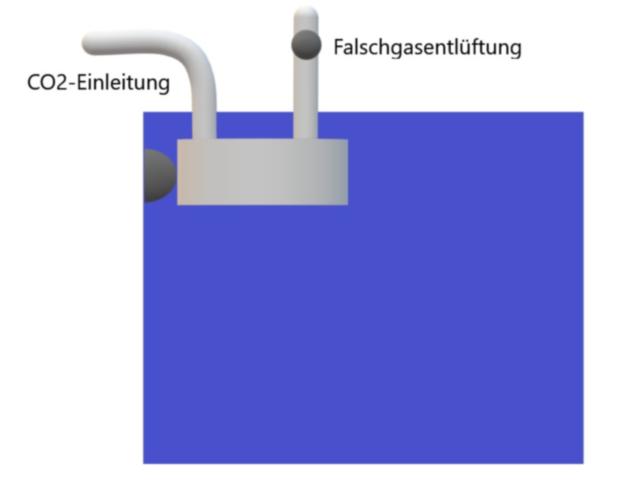
The Paffrath bowl is a bowl open at the bottom that is mounted just below the water surface in the aquarium. It is filled with CO₂ gas, which is gradually absorbed by the water. The method was named after its inventor and is often described as a low-tech alternative to conventional CO₂ fertilization. The principle is simple: the CO₂ collects in the bowl and slowly dissolves in the water, so the plants receive enough carbon dioxide for photosynthesis.
The CO₂ comes either from a CO₂ system with a pressurized gas cylinder or from a bio CO₂ system. It is led into the bowl through a tube. The bowl collects the CO₂ that is fed in and holds it under the water surface like a "bell". The CO₂ gradually diffuses into the water. The larger the contact area between water and gas, the more effectively the carbon dioxide dissolves.
The advantages of the Paffrath bowl are easy installation, very low purchase costs, low maintenance effort and technical simplicity.
Disadvantages and limitations include limited efficiency, because in large or heavily planted aquariums the Paffrath bowl may not be able to deliver enough CO₂ to meet the plants' demand. Depending on the size of the bowl, it can look visually disruptive in the aquarium. In addition, the amount of CO₂ that gets into the water cannot be regulated as precisely as with other methods.
CO₂ diffuser
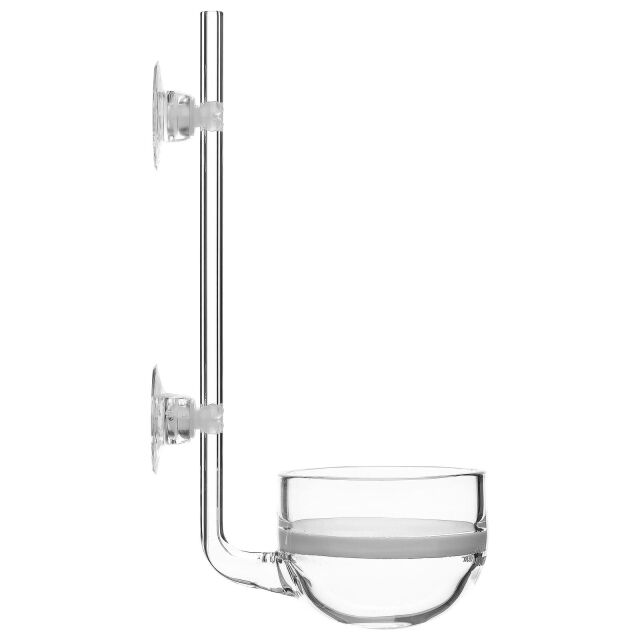
A CO₂ diffuser is a delivery device that is connected to a CO₂ system and releases small bubbles of the gas into the aquarium water. The job of the diffuser is to atomize the CO₂ into tiny bubbles in order to maximize the contact area between water and gas and thus ensure fast and effective dissolving of the CO₂. CO₂ diffusers come in various designs, from simple glass diffusers to more advanced models with integrated membranes.
A CO₂ diffuser works as follows: the gas is led from a CO₂ system (either with a pressurized gas cylinder or, to a limited extent, a bio CO₂ system) through a tube into the diffuser. The diffuser is fitted with a fine ceramic membrane that splits the CO₂ into tiny bubbles. The small CO₂ bubbles rise slowly through the water while the gas is continuously absorbed by the water. The smaller the bubbles, the more effectively the CO₂ dissolves in the water. The CO₂ molecules dissolved in the water are distributed evenly by the current in the aquarium and thus reach all the plants.
The advantages of a CO₂ diffuser are efficient CO₂ uptake through atomizing the CO₂ into tiny bubbles, even distribution, easy monitoring and the variety of models. Diffusers come in various designs and sizes, so they are equally suitable for small and large aquariums. Disadvantages are sometimes higher purchase costs, more cleaning effort and a higher working pressure that the CO₂ system has to provide.
Types of CO₂ diffusers
- Ceramic diffusers: These models consist of a fine ceramic disc through which the CO₂ diffuses in small bubbles. They are widely used and available in various designs.
- Inline diffusers: These diffusers are connected directly to the aquarium's external filter and mix the CO₂ with the water outside the tank before it is returned. They are particularly effective and ideal for larger aquariums.
CO₂ reactor
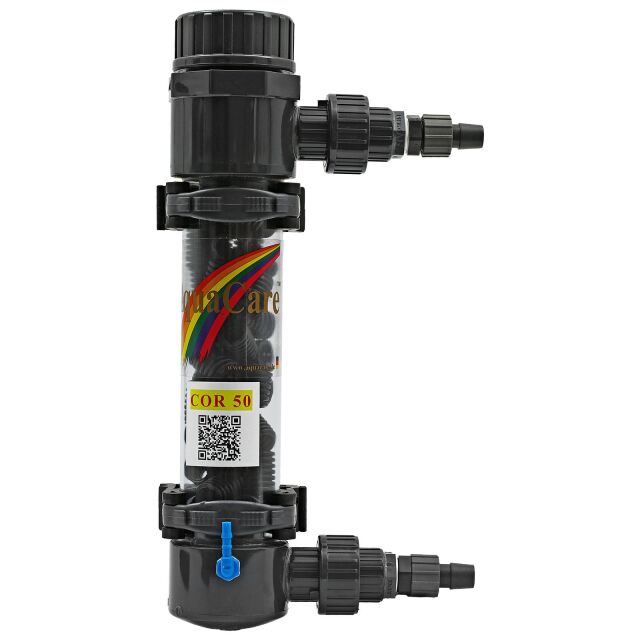
A CO₂ reactor is one of the most effective methods of dissolving carbon dioxide (CO₂) in an aquarium and distributing it evenly in the water. Unlike diffusers, which split the CO₂ into fine bubbles, the reactor works with a mechanical system that dissolves almost 100% of the supplied CO₂ in the water. This makes it especially ideal for large or heavily planted aquariums. The gas is held in the reactor chamber by flow and swirling motion until it is fully absorbed. The devices are often cylindrical or tube-shaped and mounted either inside or outside the aquarium.
CO₂ reactors come in two main variants:
- Internal CO₂ reactors: They are located directly in the aquarium and are especially popular in smaller tanks.
- External CO₂ reactors: These are installed outside the aquarium, usually connected to an external filter, which makes them particularly suitable for larger tanks.
A CO₂ reactor works as follows: the CO₂ is led from a CO₂ system through a tube into the reactor. Water flows through it, either via a pump or through the connection to the external filter. Inside the reactor, special components such as swirl chambers, turbines or diffuser elements ensure that the CO₂ is mixed intensively with the water. Thanks to the extended contact time and the permanent mixing, almost all of the CO₂ is dissolved in the water before it is returned to the aquarium.
The advantages of a CO₂ reactor are its high efficiency, low CO₂ loss and the option of external installation. Such reactors are particularly well suited for very large aquariums.