Carbon fertilization in the aquarium

By Aram Schneider Published Updated
Translated from German with AI assistance and reviewed by our editors.
Anyone who wants to devote themselves wholeheartedly to the health of their aquatic plants cannot avoid the topic of CO2 in the aquarium. Why a carbon supply is important and how best to provide it is what we explain in this article.
Carbon as a nutrient for aquatic plants
Besides oxygen and hydrogen, carbon (C) is one of the core nutrients for all living things. Practically every living tissue contains organic carbon compounds. Furthermore, plants need this element as an essential starting material for photosynthesis. Plants - and of course our aquarium plants too - mainly obtain this nutrient in the form of carbon dioxide (CO2) from the air or from the water. Some species of aquatic plants such as waterweed or vallisneria can also use bicarbonate as a carbon source with the help of "biogenic decalcification". This happens especially when hardly any free CO2 is present in the water column. When carbon is taken from bicarbonate, a shift in the carbonate-carbonic acid equilibrium leads to the precipitation of calcium carbonate. This becomes noticeable as white, hard deposits on the plant leaves. The phenomenon of biogenic decalcification certainly occurs in the aquarium as well. Suitable carbon fertilization with a CO2 system avoids this problem.
CO2 levels in the planted aquarium
In a more heavily planted aquarium, certain target values for dissolved carbon dioxide have proven themselves in practice. The optimal range is generally between 20 and 30 mg/l CO2. Of course, the carbon addition should match the rest of the nutrient situation (light, micro- and macronutrients) as well as the growth rate and mass of the aquatic plants.
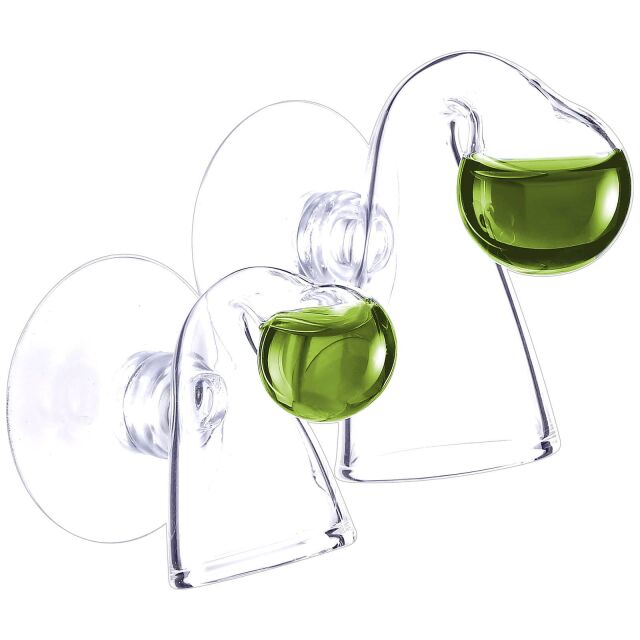
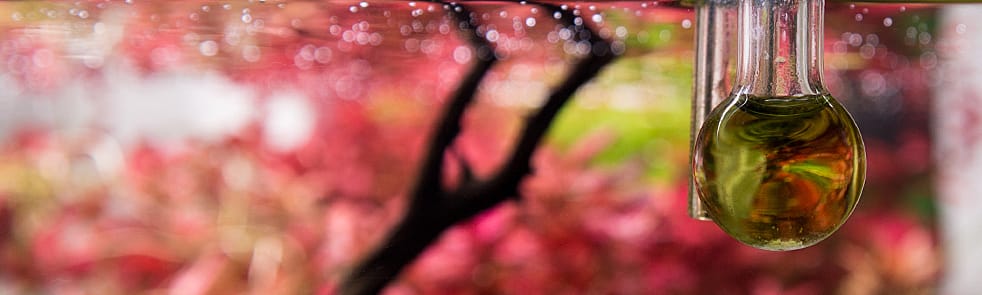
The content of dissolved carbon dioxide in the aquarium is best monitored permanently with a so-called CO2 drop checker. Glass containers (drop checkers) are often used for this, which use a reagent liquid to show through different shades of color whether the gas concentration is right. If it is, the drop checker indicates this with a green color. A blue tone is an indication of too little, and a yellow color a sign of too much CO2. Too high a CO2 value should be avoided so as not to endanger the health of the aquarium inhabitants.
How does carbon fertilization work in a planted aquarium?
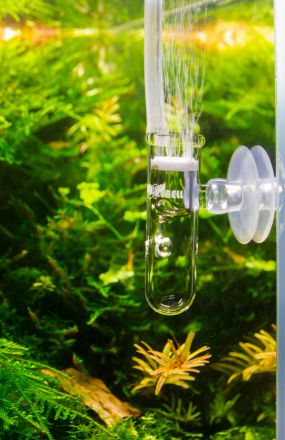
Carbon is added in an aquarium with aquatic plants generally via a CO2 system, which introduces gaseous carbon dioxide into the water, where it dissolves. Various systems such as bio CO2 or disposable and refillable CO2 systems are available for this. The aquarist also has a choice of various injection devices for feeding it in, which differ mainly in their design and efficiency. Diffusers are quite popular in planted aquariums. These usually contain a ceramic membrane through which the gas is forced and atomized at a correspondingly high pressure. This creates many tiny micro-bubbles from which, thanks to the greatly enlarged interface between gas and water, the CO2 dissolves much more effectively than from larger bubbles.
Of course, to a certain extent some carbon dioxide always gets into the water even without additional fertilization, since the animals living in it, such as ornamental fish and invertebrates, exhale CO2. Even the plants exhale CO2. During the day, this is more than offset by the carbon dioxide consumed by photosynthesis, but at night, or whenever no photosynthesis is taking place, the carbon dioxide release of the plants is quite measurable. Some CO2 from the air also always gets into the water through the gas exchange at the water surface.
In an aquarium with many and especially fast-growing aquarium plants, the CO2 supply by this natural route is usually not enough to ensure vital growth. In this case, additional carbon fertilization in the aquarium is advisable.
Liquid CO2?
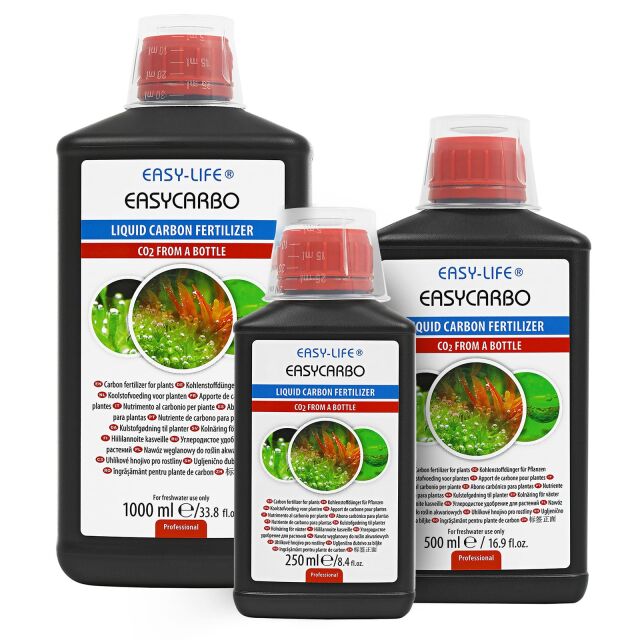
Some care product manufacturers offer so-called "liquid carbon". These are often products based on glutaraldehyde or similar base substances, which offer aquarium plants longer carbon chains. These can, for example, be used as alternative carbon sources for the citric acid cycle. In addition, the bacterial breakdown of glutaraldehyde also produces the gas CO2, albeit to a very small extent. These care products cannot be regarded as a replacement for a complete CO2 system, however, but rather as a supplement to support plant growth. Products such as Seachem Flourish Excel or Easy Life Easy Carbo can also be used excellently for red algae control.
Bio CO2

Using so-called bio CO2 systems is a good way of carbon fertilization above all for beginners, penny-pinchers and owners of small aquariums. The principle is based on the fermentation of a sugary solution by yeast bacteria. The fermentation process takes place outside the aquarium in a separate container. This produces the gas carbon dioxide. The fermentation container is connected to the aquarium via a hose and an injection device, and the CO2 is introduced into the water this way. Compared with disposable and refillable CO2 systems, the pressure in a bio CO2 system is rather low, and it even drops further after a certain time. If this is the case, or if you notice that there is no longer any visible bubble production, the nutrient solution together with the yeast must be renewed. Practical refill packs are available for this. Even a DIY bio CO2 variant is possible, in which the aquarist mixes the solution themselves. The pressure that fluctuates over time makes an injection device necessary that still delivers enough CO2 to the water even at low pressure. Diffusers with a ceramic membrane are not suitable for this; flippers, Paffrath bowls or the AQUARIO Neo Air Diffuser Curved Special are better suited.
Disadvantages of bio CO2 systems: the carbon dioxide addition cannot really be regulated, and a night shut-off is not possible without great effort either. This is exactly why it is all the more important to monitor the CO2 concentration in the aquarium water well with a drop checker. If it is generally too high (for example in the initial period of the bio CO2 system with a fresh nutrient solution), you can reduce the efficiency of the feed somewhat by raising the injection device (diffuser) or shortening the flipper. If the CO2 content of the water is too high especially in the morning, you have to disconnect the bio CO2 system from the injection device manually overnight and reconnect it in the morning. The carbon dioxide is then released into the room air overnight. If you were to clamp off the gas supply or interrupt it with a valve, the fermentation container could explode in extreme cases, since the yeasts keep producing carbon dioxide undiminished at night.
To prevent some of the nutrient solution from getting into the aquarium in case of strong overpressure or if the fermentation bottle tips over, some aquarists use a wash bottle through which they first pass the gas coming from the bio CO2 system. For this you either use a ready-made wash bottle or build one yourself. An empty bottle is filled about halfway with water. Two holes are made in the lid. The hose coming from the bio CO2 system is siliconed in gas-tight into the first one, in such a way that it ends just above the bottom of the bottle. In the second hole you insert the hose only about 2-3 cm (here, too, it is siliconed in) - this length of hose then leads to the injection device in the aquarium. The wash bottle is now filled about halfway with water, and the CO2 is passed through the water. This way you can avoid any impurities ending up in the aquarium.
With some effort, even a night shut-off is possible when operating a bio CO2 system. Since plants do not photosynthesize during the dark phase, additionally introducing carbon dioxide during the night is not strictly necessary and can even be counterproductive. To interrupt the CO2 supply automatically, a solenoid valve controlled by a timer can be used. Its way of working is exactly the other way around compared with disposable or refillable systems. For this, a further hose outlet is installed on the wash or fermentation bottle. This length of hose is only meant to carry gas and therefore does not extend into the liquid inside the bottle. Outside the bottle, an inline solenoid valve is attached to the hose. During the day it is closed, at night it is opened. The CO2 always takes the path of least resistance. With the solenoid valve open, it escapes through the shorter hose into the room air and thus does not reach the aquarium.
Disposable CO2 systems
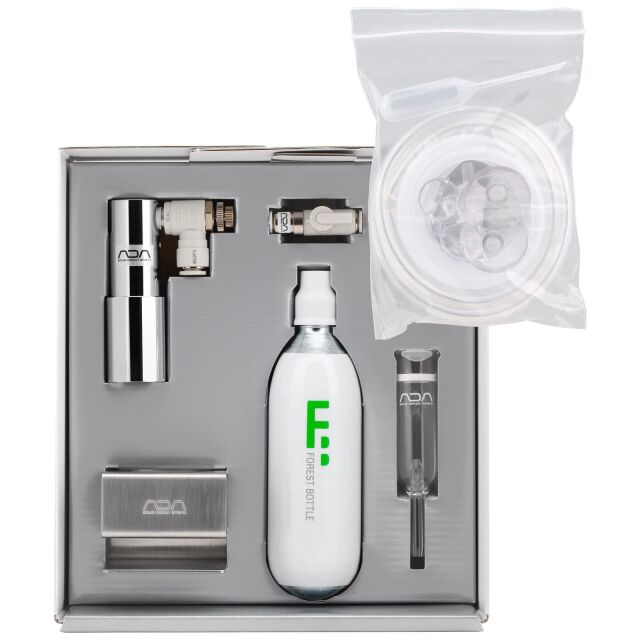
The disposable CO2 system works with compressed gas. The advantage is that this makes it possible to operate injection devices such as diffusers with a ceramic membrane, which require a higher working pressure (usually 1.5 bar and up). They make feeding in the carbon dioxide considerably more efficient, since the diffusers atomize the gas into many tiny bubbles. Together with a disposable CO2 system, further CO2 accessories such as a check valve can be used, which can provide more safety when handling CO2 in and at the aquarium. If suitable connection options are available on the pressure reducer or in the hose run, a solenoid valve controlled by a timer can also be used for the night shut-off. This way CO2 is only added during the photosynthetic activity of the plants, and the aquarium owner saves resources in this way. Alternatively, a night shut-off is also possible manually with these systems: this means the aquarium owner closes the valve in the evening and opens it again in the morning. You should remember or mark the open valve setting in order to get the same amount of gas introduced again the next day.
Depending on the size of the aquarium and the amount added, the contents of a cartridge last for several weeks. When it is empty, it is disposed of and replaced with a refill bottle.
Refillable CO2 systems
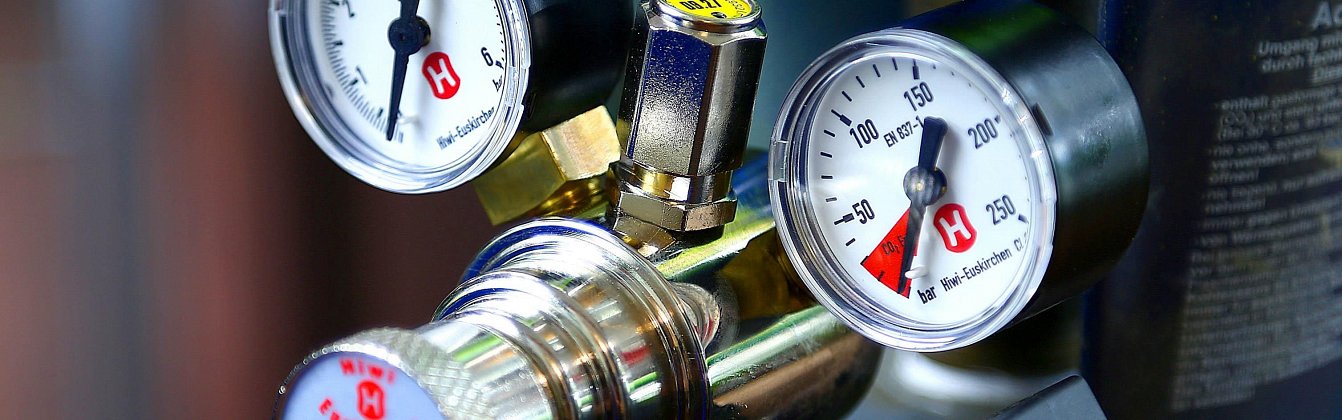
Refillable CO2 systems are somewhat more expensive to buy, but very efficient, economical to run, and they offer a variety of options for the carbon fertilization of an aquarium. We have explained the exact setup of such a refillable system for CO2 fertilization in more detail in this article. In principle, such a system consists of a refillable bottle and a pressure reducer. Since the systems are based on compressed gas, the aquarist has a free hand in choosing the CO2 injection device and can select products that require a high working pressure but can achieve a particularly fine atomization of the gas bubbles. In addition to various diffusers, these include above all so-called atomizers and inline diffusers, which stand out for their particular efficiency. The latter are integrated into the hose run of the external filter and can thus be stowed invisibly in the aquarium cabinet. With the pressure reducer you have various options for regulating the working pressure and for setting the bubble count during CO2 feeding. It is also equipped with one or more pressure gauges, which among other things allow permanent monitoring of the bottle pressure. When the contents of a refillable CO2 bottle are running low, the aquarist can read this early on. Empty carbon dioxide bottles can, for example, be refilled at the local pet store.
With refillable systems, too, you of course have the option of a night shut-off. Here, a solenoid valve integrated into the system can be used to switch off CO2 fertilization overnight with the help of a timer. This effectively saves carbon dioxide, since aquatic plants do not photosynthesize in the dark and therefore need no carbon fertilization during this period.
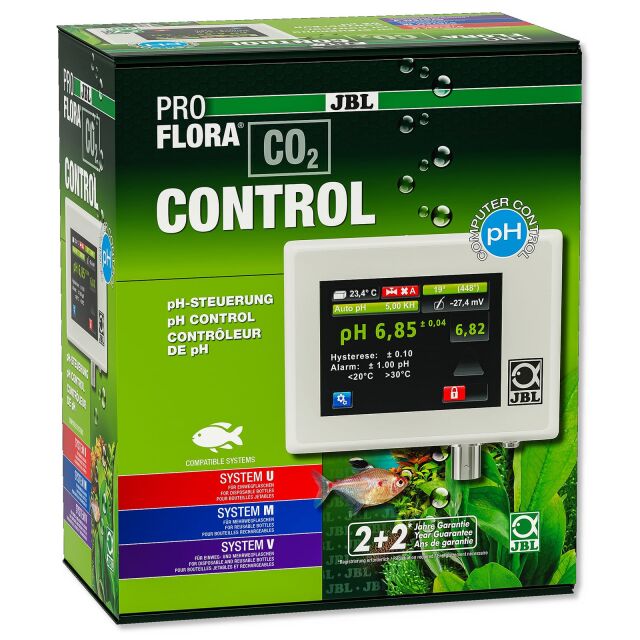
Further control options arise when using a refillable CO2 system with pH control. A pH controller regulates the carbon dioxide addition so that a certain target pH value can be maintained at all times. This way the process of CO2 fertilization of an aquarium can be automated even further.