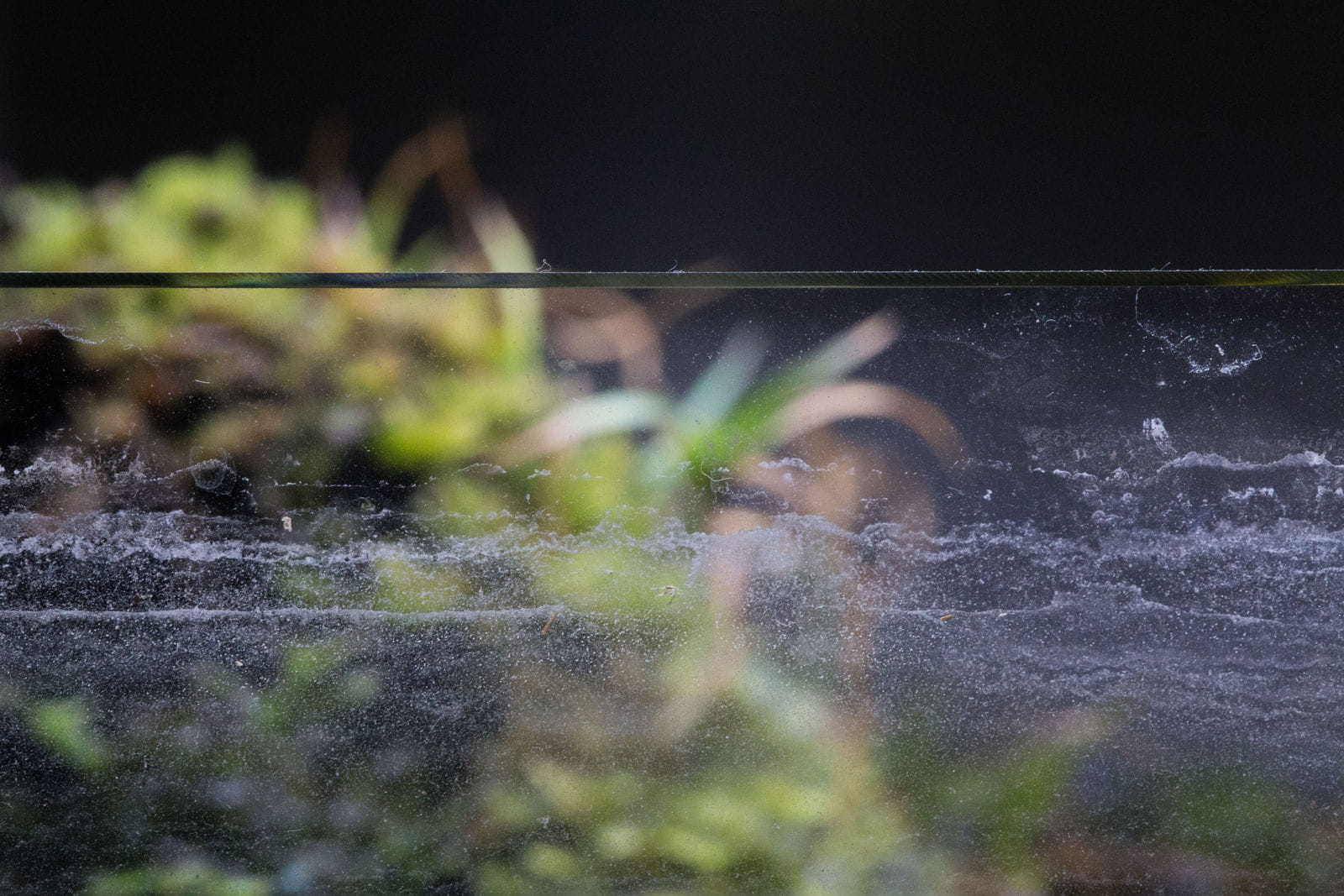
 Limescale rim on the aquarium
Over time, white crusty deposits can form in the aquarium, especially at the top near the water level, the so-called limescale rim. We report here what it is all about and how best to get rid of this layer again.
What is the limescale rim?
Limescale rims are whitish and quite hard coatings that often form roughly where the water level in the aquarium is. If they are not removed regularly, the layers get thicker and thicker and then take on an encrusted appearance. Especially in open-top aquariums, such limescale rims do not look very nice and should therefore be removed regularly.
Limescale rims really do consist of lime, that is, calcium carbonate. This is present in the water in its dissolved components (ions). These would be calcium on one side and hydrogen carbonate on the other. Both substances are natural components of the general hardness (GH) and carbonate hardness (KH). The harder the source water, the higher the likelihood of limescale rims forming. In very soft water, for example, this is hardly the case. Water-hardening decorative items such as calcareous stones can also introduce even more calcium carbonate into the water. Because of the relationships of the lime-carbonic acid equilibrium, this is further promoted if a CO2 system is also used on the aquarium.
Chemogenic decalcification
Although the components of lime are dissolved in the water, certain conditions can cause calcium carbonate to precipitate as a solid and then form such crusts or coatings. These are often physical and chemical relationships that are summarized under the term chemogenic decalcification. The process of lime formation, for example, depends on temperature. The warmer the water, the better lime can form as a solid. This can also be seen in the example of various kitchen appliances such as kettles or coffee machines. Here water is often heated, which therefore promotes the formation of limescale. But pressure can also play a role, as can the solubility limit. In this respect, the evaporation of water in particular can cause limescale rims to form. They also often form at the spots where the water level recedes.
Biogenic decalcification
In rare cases, biogenic decalcification can also underlie the formation of lime through precipitation in the aquarium. These are often not necessarily limescale rims, though, but white coatings of calcium carbonate on all decorative items and even on plant leaves. This process is also caused by aquatic plants. If no free CO2 is present, the plants draw the carbon they need from the hydrogen carbonate. These processes raise the pH value in the water. Based on the existing lime-carbonic acid equilibrium, considerably more carbonates are now formed. If the maximum solubility in the water is now exceeded together with calcium, lime precipitates as a solid and forms these whitish coatings.
Removing the limescale rim
To remove the lime deposits, the aquarist can use various aids. Here we present various products and solutions for making limescale rims disappear.
Blade cleaner

Limescale rims that have been there for a long time in particular are extremely stubborn. Soft items such as sponges unfortunately don't get you far here; blade cleaners are far more helpful. To make it work even better, you can moisten the limescale rims a little beforehand. It is important here to work at the right angle of the glass cleaner so that no scratches are made on the glass. Especially in the area of the silicone seams you should also be careful not to damage them. For safety reasons it is therefore better to skip the corners of the aquarium when working with the blade cleaner and to use other tools for them.
Stainless steel sponge
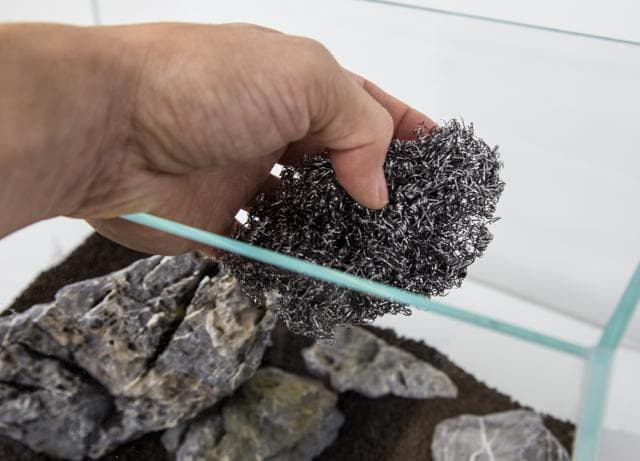
Another good way to remove it is to use a (still unused) stainless steel sponge. You can repurpose one from drugstore supplies, for example. It should in any case be a model that leaves behind as little abrasion as possible in the form of steel residue or even dust, so that this waste does not pollute the water. A fairly coarse sponge made up of several spiral-shaped elements is very well suited for this. Very thick coatings cannot be removed as well with it, but thinner coatings can. For this, the sponge and the spot to be cleaned should be well moistened with water. With gentle pressure, limescale rims can then be scrubbed away very well. With proper handling, no scratches should occur on the glass. However, the aquarist should make sure that no foreign objects get between the sponge and the glass and should therefore rinse the sponge out regularly. All surfaces should also always stay well moistened.
Such a stainless steel sponge is quite flexible in shape and can therefore also be used well for the corners of the glass tank. However, you should take care not to damage the silicone seams, for example by applying too much pressure.
Magnetic cleaner
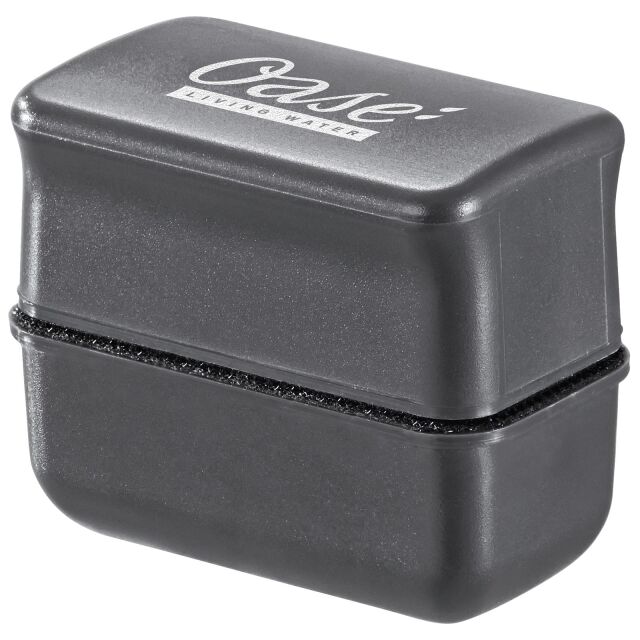
So-called magnetic cleaners can sometimes also be used to remove limescale rims. However, this is only promising with very thin coatings. With thicker layers, the force of the magnetic cleaner is often not sufficient. In addition, the position of the limescale rim, which is often at the upper end of the glass tank, makes working with the magnetic glass cleaner quite difficult. For correct operation, the glass pane must always be fully between the two magnets. When working at the edge of the pane, it can easily happen that the magnets touch each other directly and thus limit the glass cleaner in its work. A magnetic cleaner is therefore only conditionally suitable for removing limescale rims.
Removing limescale rims with acid
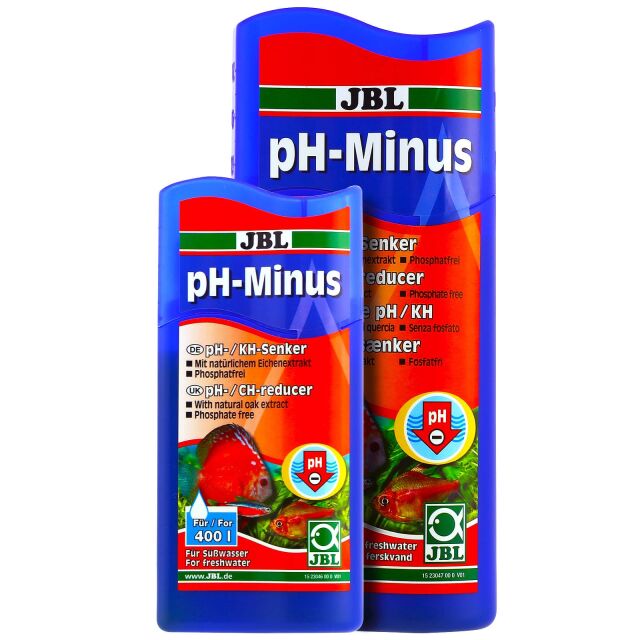
In principle, acid or acidic agents such as pH-minus products are also very well suited for removing lime. However, when handling acid, the precautions recommended by the manufacturer of the respective product must be observed. Acid is corrosive, so contact with skin, eyes and clothing should definitely be avoided. For this reason, a corresponding notice follows:
Safety instructions and disclaimer
This treatment method is only suitable for completely empty aquariums. Please read and follow the safety instructions of the product before use. Avoid direct contact with the skin, the eyes and clothing, as well as direct contact with animals or aquatic plants. The use of appropriate protective clothing (goggles, gloves) is recommended. Pure acid should preferably be diluted. Use at your own risk! We accept no liability for any damage that may occur.
To take no risk of acid dripping into the aquarium water, we strongly recommend this procedure only for completely emptied aquariums without stock. The best way to apply a small amount of the acidic liquid to the spots affected by lime is with a small toothbrush, a sponge or a cloth. Thin limescale deposits usually already come off at this point and can be removed with light wiping movements. With thicker layers, it is worth letting the acid act for a short moment and then removing it after waiting a few seconds. In this way, all spots of the tank affected by lime can be freed of calcium carbonate. Finally, the aquarium should be rinsed out thoroughly and several times with lukewarm water to remove the remaining traces of acid as well.
Removing limescale rims with JBL Proclean Aqua
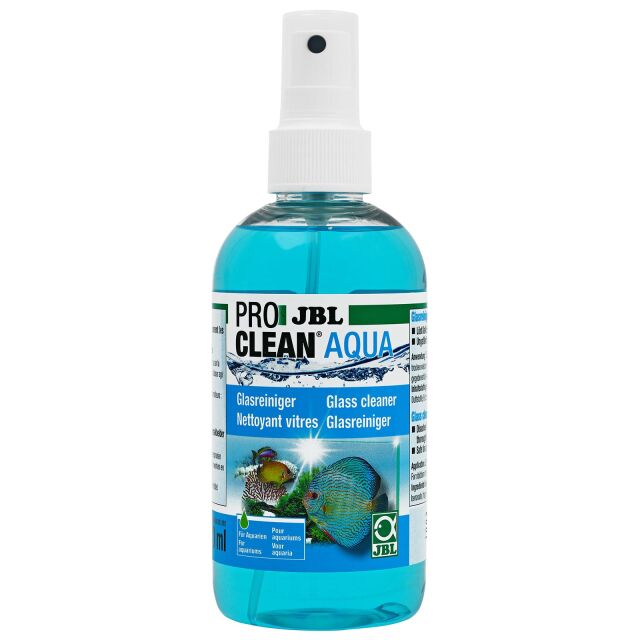
With the Proclean Aqua, the manufacturer offers a cleaner that is harmless to the inhabitants and aquatic plants in the aquarium. Surfaces affected by lime can be sprayed with it and then wiped off with a cloth. For limescale rims above the water level, you should apply the product directly to a cloth and then treat the limescale deposits that way. Here too, a longer contact time is needed for very stubborn crusts. In itself, the product is characterized by easy handling.