 Natural products in the aquarium
Especially in shrimp keeping, natural products play an important role, but in principle they can enrich just about any type of aquarium. For other invertebrates such as snails and crayfish, and of course for aquarium fish too, natural products offer many benefits. Leaves from a wide variety of trees serve as food and retreats, while alder cones and Indian almond products are often used to naturally enrich the water with humic substances and tannins. In this article of our Aquascaping Wiki, we give you an overview.
Leaves in the aquarium
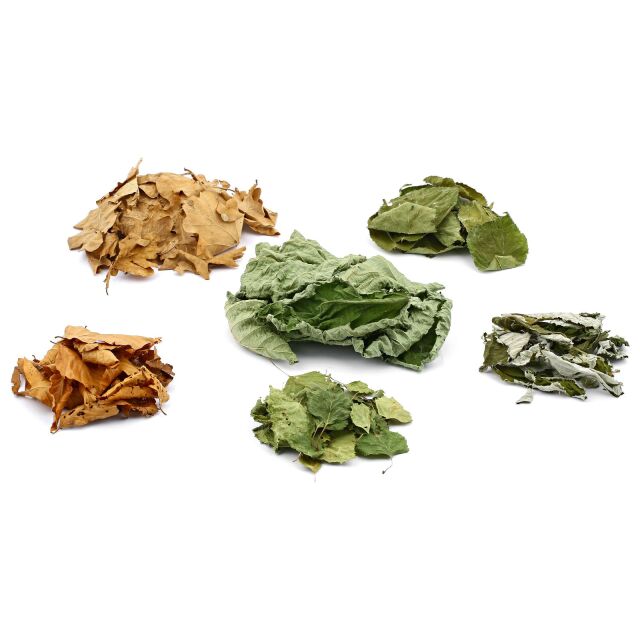
Especially in their natural habitats, the falling leaves of the surrounding trees play an essential role for invertebrates such as dwarf shrimp, but also for freshwater snails and other crustaceans. Over time, the leaves decompose in the water. The little crawlers use them as places to graze on biofilms and, over time, also consume them as food. The leaves are also great hiding places, especially for juveniles and berried females. Some types of leaves have an effect on water quality: for example, the leaves of the Indian almond tree act to lower and stabilize pH thanks to their humic substance content, and are antibacterial and fungicidal.
Native plants are also often used in the aquarium hobby, such as oak, beech, birch, raspberry, walnut, blackberry, hazelnut and many more. The various native types of leaves that we offer in our online shop generally come from forests in the northern Black Forest and are either harvested directly from the tree or collected straight from the ground in autumn. This ensures a high quality standard and the greatest possible freedom from contaminants.
Our range is rounded off by a few more exotic tree species such as mulberry and guava from Asia.
For the different types of leaves for the aquarium, a basic distinction is made between the different colors the leaves have. Here the looks play less of a role than the chemical composition. Brown autumn leaves can be used without hesitation, since in these cases the tree has removed sugar-containing compounds from the leaves. Brown leaves can therefore also stay in the aquarium for longer. Leaves of other colors (such as green, yellow or red) still contain a somewhat higher nutrient content and can therefore sometimes pollute the water. Leaves of this coloring should therefore be treated like normal fish or shrimp food. In other words: after feeding, leftovers must be removed from the aquarium.
Below, we have put together a small overview of the common types of leaves and their characteristics:
Brown leaves:
Green types of leaves:
Colorful leaves (red, yellow):
Indian almond tree
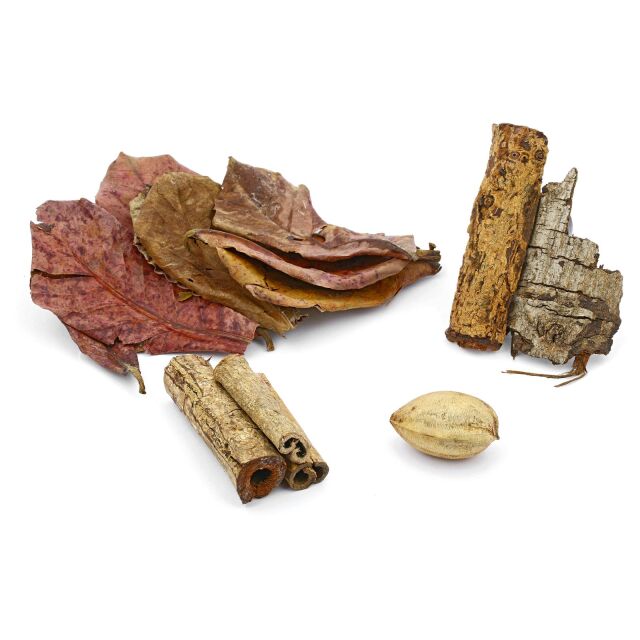
The products of the Indian almond tree are known to have an antiseptic and fungicidal effect because of the humic substances they contain. This applies to the leaves and in particular to the bark of this tree. The latter is often offered in tube form to provide great hiding places for the inhabitants of the aquarium. Smaller aquatic animals in particular, such as dwarf crayfish and shrimp, benefit from this great retreat. The humic substances released reduce germs in the aquarium water. In some cases, as in our Indian almond set, seeds of the catappa tree (Terminalia catappa) are also offered, with which you can grow your own Indian almond tree. The Indian almond seeds come with detailed planting instructions. If you want to use the leaves of your own little tree in the aquarium, make sure that the tree has shed them and that they are completely brown before you put them into your tank.
Alder cones
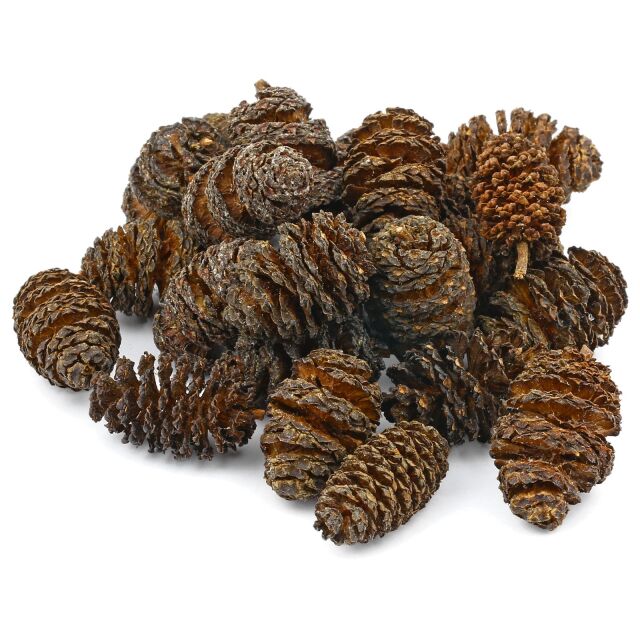
Alder cones are a true classic in the aquarium hobby when it comes to natural products. Like Indian almond products, alder cones also have an antibacterial effect and thereby improve water quality in the aquarium. This is because they release humic substances, which can tint the water slightly brown (depending on the dose). Alder cones are also often used preventively in breeding aquarium fish against egg fungus. In addition, they lower the pH slightly and thus naturally create a suitable environment for soft-water fish and invertebrates.
The alder cones you can buy at Aquasabi come exclusively from black alders (Alnus glutinosa) from the northern Black Forest. There the cones are picked directly from the trees in autumn, so that high quality is ensured and contamination is virtually ruled out.
Caves and hiding places
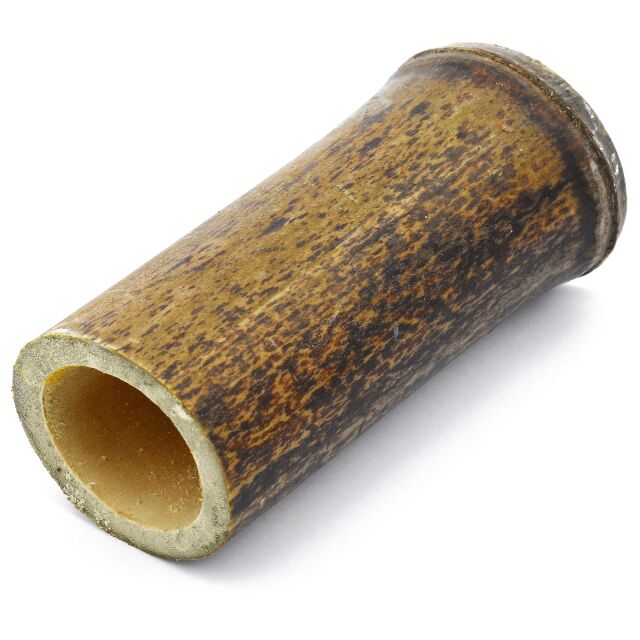
Aquarium fish such as catfish and some cichlids in particular, but also invertebrates such as shrimp and crayfish, prefer caves and tubes as hiding and retreat places. Caves made of natural products, such as bamboo or willow, offer a good way to design the aquarium naturally. Willow tubes also have the advantage that they act like a natural algae control agent, since they contain small amounts of salicylic acid.
Among all the tubes and caves, versions closed at one end, completely open ones and half tubes are available. Small tubes made from rolled-up bark create very nice little hiding places that are very suitable for juveniles, for example.
Bark
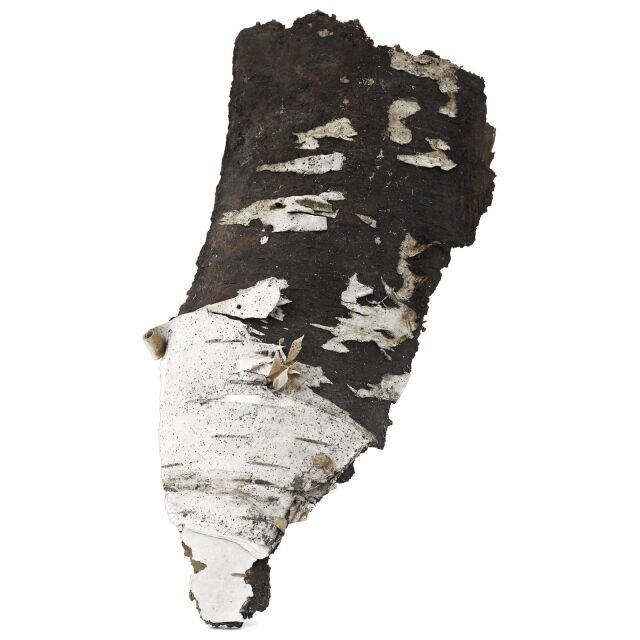
Bark from various tree species is also often used as natural decoration in the aquarium. Larger pieces, such as from the Indian almond tree or birch, serve as grazing places, and the animals can hide underneath. With the tree species mentioned above in particular, positive properties come into play that also affect the water favorably. Birch, for example, has an anti-inflammatory and antibiotic effect, while Indian almond bark is antibacterial and fungicidal.
Smaller and thinner pieces of bark usually curl up, creating great tube-shaped hiding places for the inhabitants of the aquarium. Willow bark, for example, inhibits the growth of algae, above all green algae (willow bark). The antiseptic Indian almond bark is also available in the form of smaller tubes.
Cinnamon sticks, which are obtained from the bark of the Ceylon cinnamon tree, play a special role in the aquarium hobby. They contain important tannins, but also essential oils that can increase the well-being of the aquarium inhabitants.
Wild plants and vegetables as food in the aquarium
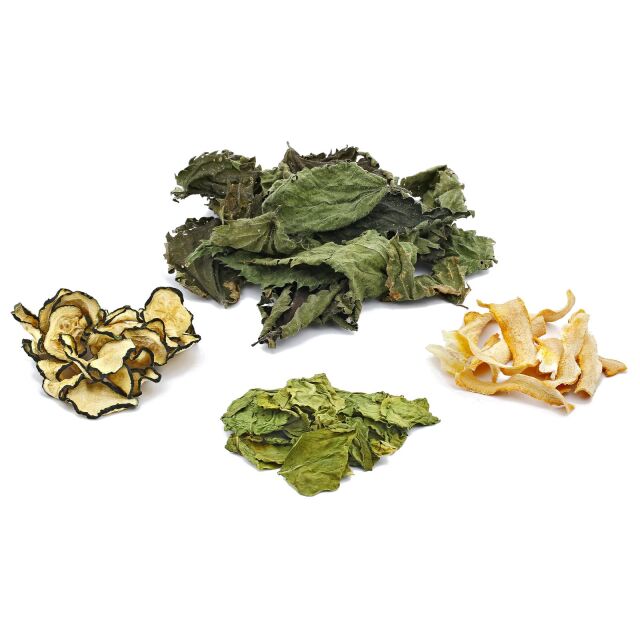
Dried vegetables or wild plants such as zucchini, Hokkaido (pumpkin), stinging nettle or fennel herb are excellent supplementary natural foods. These foods are gently air-dried and are readily accepted by invertebrates in the aquarium and by plant-eating fish such as L-catfish or livebearers. Stinging nettle, for example, stands out because it is nutritious, rich in vitamins and minerals, and very high in protein, while pumpkin chips contain a lot of carotene and are particularly well suited for getting wild-caught animals such as nerite snails and other Neritina to start feeding. Like colorful leaves, vegetables or wild plants as food should not stay in the aquarium overnight; leftovers should be removed a few hours after feeding. This avoids unnecessary water pollution.
- Oak: Brown leaves in a typical rounded, lobed shape that decompose slowly and can therefore stay in the aquarium longer.
- Walnut: Rather elongated, brown leaves that, like Indian almond, have slight antibacterial properties (in a weaker form).
- Red oak: Brown leaves that are quite durable in the aquarium. They decompose slowly. The leaf shape is decoratively serrated.
-
Beech: Compact, brown leaves that last a long time in aquarium water. Can be used as a permanent food.
- Guava: Green foliage, originating from Asia. Slight antibiotic effect.
- Black alder: Green, rather small leaves, the matching foliage to the popular alder cones. The humic substance content in the leaves is, however, much lower.
- Blackberry: Green leaves that have been dried. Rich in tannins.
- Raspberry: Small, green leaves, harvested directly from the shrub. Also contain many tannins.
- Mulberry: From Asia, rich in vitamins, fiber and minerals.
- Walnut, green: Green, elongated leaves that, like Indian almond, have antibacterial properties.
- Wild cherry, green: Wonderfully fragrant, green leaves.
- Willow leaves: Narrow, elongated leaves that, like willow bark, have an effect against algae in the aquarium (although in a weaker form).
- Hazelnut, green: Compact, green leaves available in different sizes.
- Quince: Green, roundish leaves, wonderfully fragrant and very popular.
- Birch: Very small, green to yellowish leaves. Also often used for preventing or treating diseases in the aquarium hobby.
- Miracle tree: Originating from Cambodia, long-stalked, very nutrient-rich leaves of the moringa tree.
- Apple: Another fruit tree variety with rather small, greenish leaves that are eaten with relish.
- Chestnut (marone): Elongated leaves of the sweet chestnut with a long decomposition time.
- Horse chestnut: Leaves of the horse chestnut picked green, rather slow decomposition.
- Red hazelnut: Colorful leaves in shades of red and green.
- Plum: The leaves are harvested green but look rather yellowish after drying. From plum and damson trees in the northern Black Forest.
- Pear: The leaves are picked green but look rather yellow-brown after drying. Oval shape.