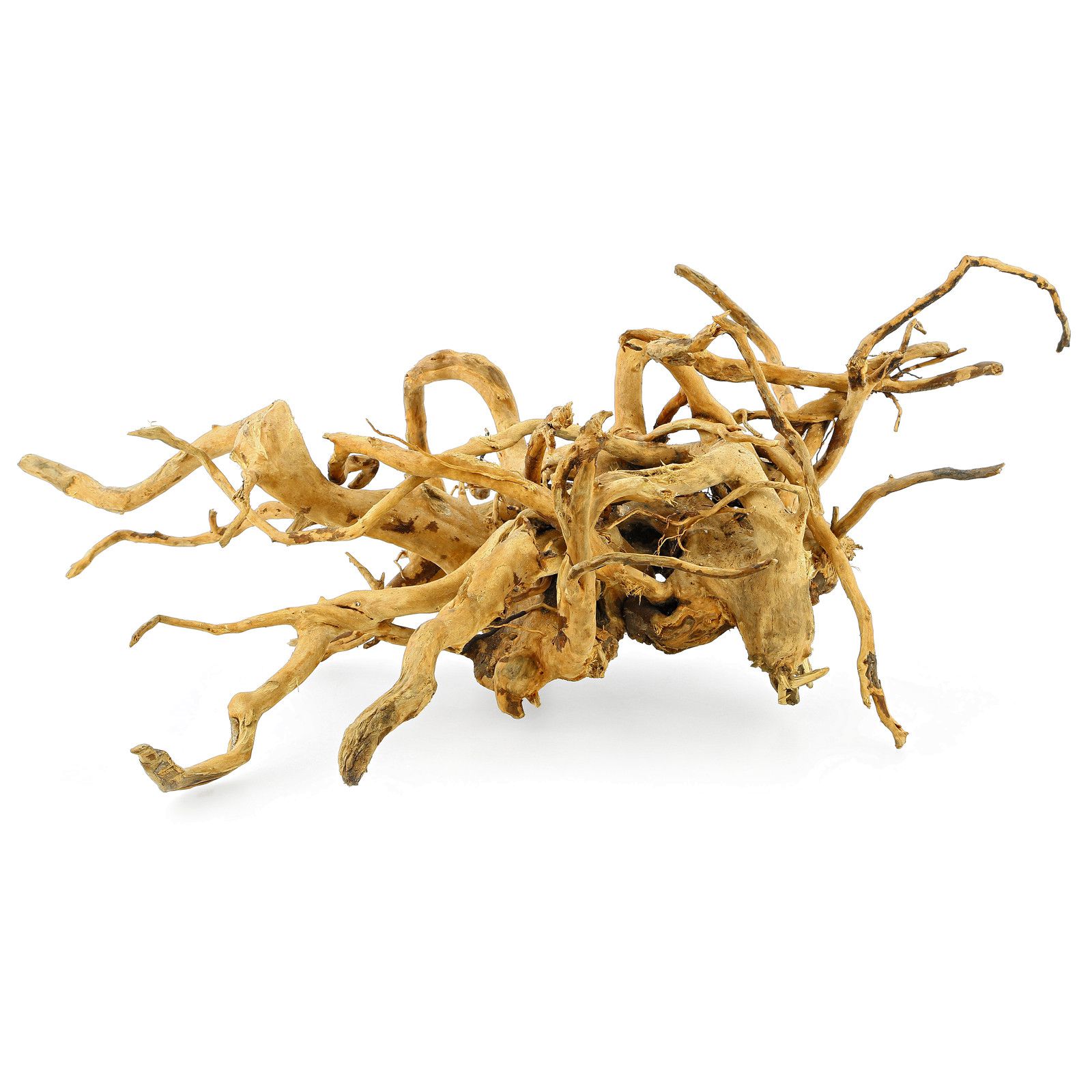
 Oliver Knott: Preparing Driftwood for the Aquarium
Driftwood made of real wood is a beautiful, natural element for designing an aquascape or aquarium. It offers the inhabitants hiding places or shelters, structures the space and can be greened very well with mosses and epiphytes. Oliver Knott gives some tips on how to handle wood in the aquarium.
Types of driftwood
Many different types of driftwood for the aquarium are now available in stores. Mangrove or red bogwood are popular classics. In terms of density, you should basically distinguish between two classifications: there are wood types with high density, which usually sink right away. Often these also turn the water very brown in the initial phase. Lighter wood has a low density and therefore tends to float up, especially while it is still dry. In the video, Oliver gives some tips on weighing these woods down. By the way: you can find a good overview of all possible wood types in our online shop in our hardscape article. There, the types are also sorted into heavy and light driftwood.
Pre-soaking driftwood
Pre-soaking means that the aquarium designer stores the wood submerged in a separate water-filled container for several weeks before placing it in the aquarium. During this time, the driftwood soaks up water and loses its buoyancy. Pieces that color the water strongly can "bleed out" in peace over this period and release their dyes into the water. It helps to change the water now and then.
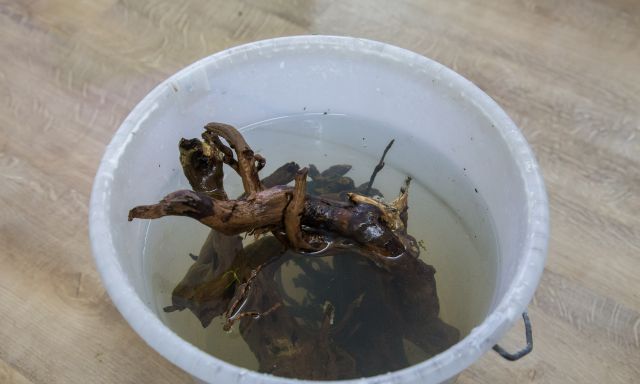
This method offers many advantages in itself, but unfortunately also costs a lot of time and space.
Weighing down driftwood
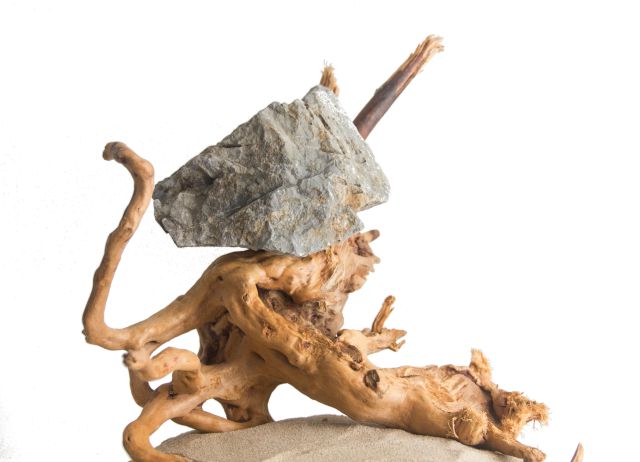
A good measure for working with wood directly in the aquarium is fixing it in place. A cleverly placed stone on the driftwood keeps it from floating up. Once the wood has absorbed enough water after some time, it stays underwater and you can remove the stone again.
It is visually more appealing to arrange stones and driftwood as part of the design so that the rock holds the wood down directly. All elements then remain permanently as fixed components of the hardscape in the aquarium layout.
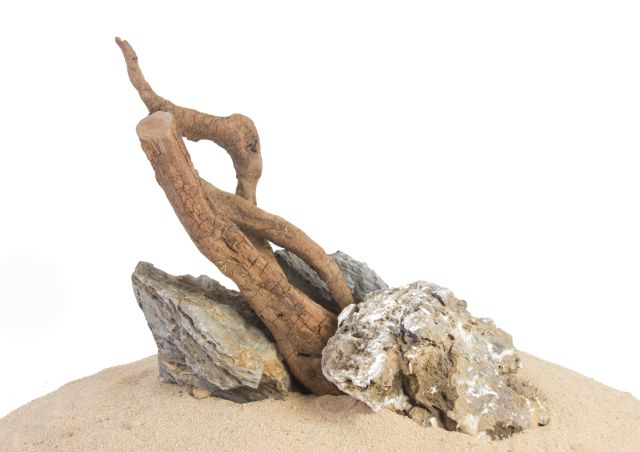
Of course, you can also connect driftwood and stones more firmly to each other. This can be done, for example, by gluing, screwing (use stainless steel screws) or, as Oliver demonstrates in the video, simply by fixing them with one or more cable ties.
Moldy driftwood?
Some special types of wood, such as red bogwood, tend in the beginning to form white, slimy patches that look like mold. These are bacterial coatings, however, which are completely harmless - they metabolize the residual sugar in the wood. As a rule, they disappear on their own after some time when the nutrients are used up, but you can also help things along by siphoning off or scrubbing off the coatings repeatedly. At the latest when you add snails, shrimp or fish with sucker mouths, the bacteria will be history, since the animals simply eat them.
By the way: you can find more tips on the topic in our article "Preparing aquarium driftwood".