 Preserving details in aquascaping
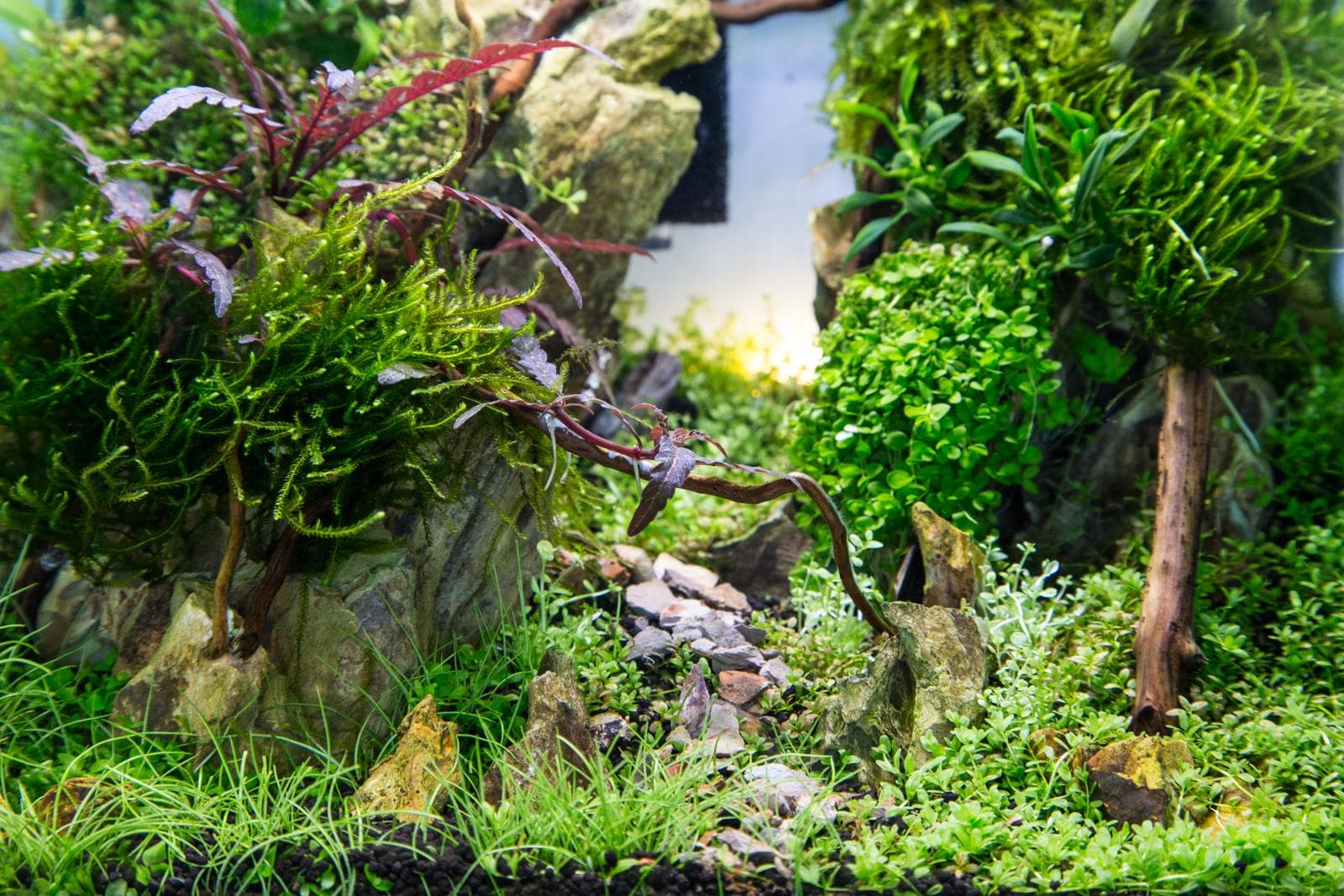
What actually separates a good aquascape from a very good one? When does the so-called wow effect occur that simply leaves you in awe? There are many things in aquarium design that play a role here. A very important part of it is attention to detail. Tiny pebbles at the edge of the sand path, ground cover plants skillfully growing out of the moss, or delicate driftwood in the background: it is above all the little things that, taken together, raise the degree of realism of a diorama scape, improve the sense of depth or make the planting in the aquarium much more varied. Here we show you how important details are in aquascaping and how best to preserve them over a longer period.
The difficulty of preserving details
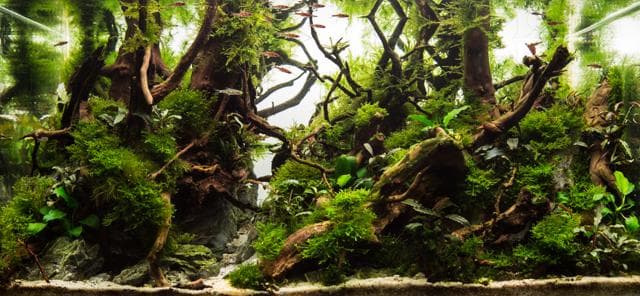
Even if the final shot of an aquascape looks like a perfect painting, an aquarium is and remains a dynamic element that constantly changes and develops. Plants grow (or don't), and natural erosion and the actions of digging animals level out the substrate. Decorative elements such as wood and stones shift. All of this has to be accepted when you do aquascaping, even if your ideal may be an underwater landscape that stays fairly static. Change is simply the natural course in the life of an aquarium. All the harder, then, is the time very small things have over the lifespan of such an aquarium design. Smaller hardscape elements in particular, such as stones and driftwood, get overgrown by plants over time, and tiny pebbles on the sand path gradually sink into the substrate. To keep such details visible permanently, the enthusiastic aquascaper has to give it some thought.
Timing when placing details
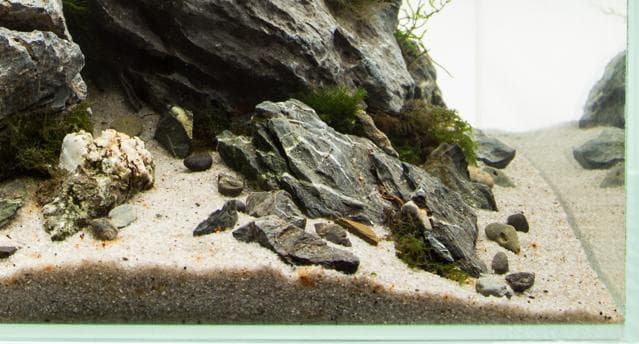
Some details are so small and delicate that they cannot really be maintained in the long run, or doing so would take enormous effort. Especially with aquascapes that are designed and maintained toward a specific point in time (such as a contest aquarium heading toward a final shot), there is no expectation of keeping all details visible permanently. Rather, this is factored into the schedule, and important details are added only shortly before the final shot. For example, smaller stones and fragments on a sand zone can be placed just a few days before the "perfect moment". Somewhat larger stones, however, should be added to the aquarium with a longer lead time so that they later show the same patina and algae coating as the other stones. Otherwise, it is easy to see that some stones were added later.
Tiny hardscape elements in the form of small pieces of wood sometimes need a little more lead time in addition; here you have to allow for a possible bacterial film as well as the buoyancy of the wood. Soaking the small branches beforehand can avoid this process. The same applies here: somewhat larger hardscape that takes up more visual area should be added earlier than just a few days before the final photo. With a little more time, the corresponding algae film and the discoloration that goes with it can form. That way, all the pieces of wood look evenly aged.
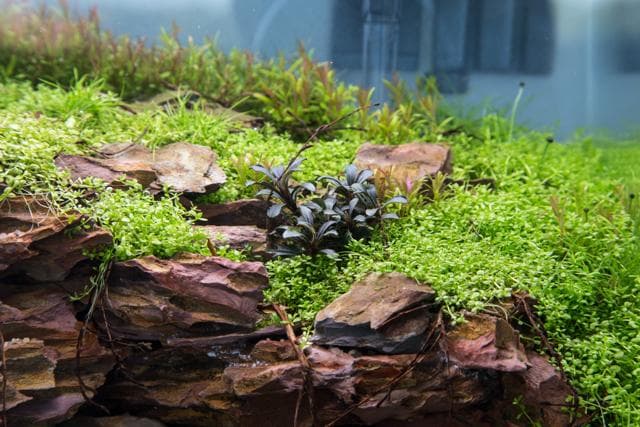
When placing certain details with aquatic plants, you need to know the growth rate of the respective species well in terms of timing. If you use in-vitro plants or potted plants, an appropriate period should be allowed for, since the plants also have to switch from emersed to submersed growth.
You can find more detailed information on timing when planting and trimming aquatic plants here.
Preserving details over a longer period
The great art, and also the effort in the sense of diligent work, is certainly to preserve details in an aquascape over a longer period. Above all, the growth of the aquatic plants often causes details to get buried after a while, so that you have to bring them back out. Here we show you how best to do that.
Trim aquatic plants regularly
Under good conditions, fast-growing stem plants in particular, but also ground cover plants, can grow so quickly that they become quite invasive. There is a risk that slow-growing species get "crowded out" or that the layout no longer looks structured. Regular trimming of aquarium plants is therefore very important for preserving the entire composition. Details that have already been placed and may have been overgrown also become visible again when the overgrown aquatic plants are trimmed back.
Trimming aquarium plants has further advantages as well: stem plants in the background become much bushier and more compact. With ground cover plants, regular trimming prevents the lower layers from dying off due to lack of light, which could later cause entire plant carpets to float up.
Secure the hardscape well
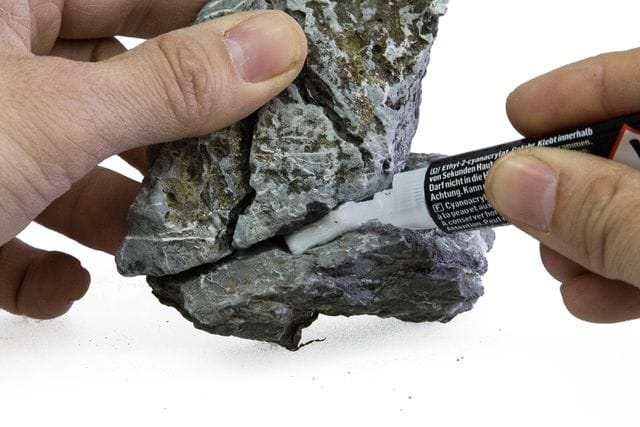
Over time, certain movements also take place in the hardscape. Especially with fairly steep structures with strongly rising substrate, the substrate gets leveled out somewhat over time, partly through natural erosion but above all through animals that dig in the substrate, such as shrimp. This affects the hardscape structure. Stones, for example, can shift or change their angle. Smaller stones in particular can sometimes "sink" into the substrate or the plants. It is therefore important from the very beginning, when planning such a layout, to make sure the hardscape elements are secured well. For example, you can stabilize stone structures well with lava rock fragments or smaller stones as support in the substrate build-up. Especially with driftwood (but also with stones), gluing the design elements is worthwhile. Indonesian aquascapers in particular practice this type of fixing in a very impressive way (see also "The Indonesian Style"). The extra effort during the initial design is very much worth it in terms of longevity and preserving details in the hardscape.
Safety notes and disclaimer
Please observe the safety instructions of the respective product before use. The glue used bonds skin and eyelids together within seconds. Keep out of the reach of children. Avoid direct contact with skin, eyes and clothing. Wearing suitable protective clothing (gloves) is recommended.
Although experience shows that using cigarette filters in an aquarium, which is not their intended purpose, is harmless, it cannot be ruled out that the ingredients may cause damage to plants and animals. Use at your own risk! We accept no liability for any damage that may occur.
Maintaining a sand path
Sand zones in particular, such as the very popular sand paths that wind in serpentines toward the back, are extremely popular in aquascaping and can be equipped very well with numerous details. These include finely placed pebbles or even other types of substrate, smaller hardscape fragments or solitary aquatic plants. Such paths often also have a fairly steep angle. Here the slope threatens to flatten out over time, and details in the foreground in particular then sink into the sand. Maintaining such sand paths is therefore essential, and the slope should be restored regularly as well. Sunken objects should be dug out or brought back up and placed more prominently. You can find more tips on the topic "Maintaining a sand path" here.
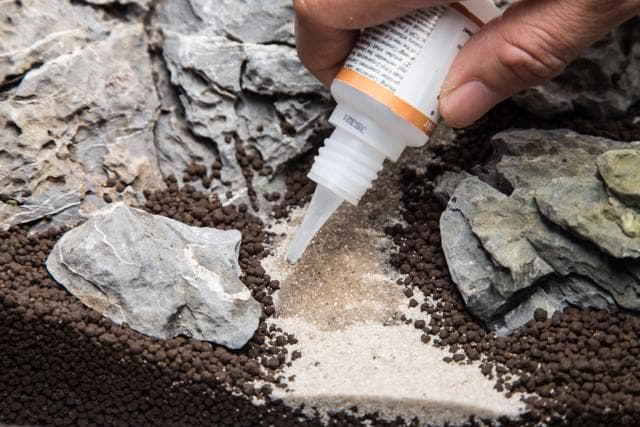
By the way, fixing entire sand paths or zones with super glue can definitely be worthwhile here too, to make sure these complete areas sit firmly and stably. In principle, this borrows the approach of Indonesian aquascapers, who glue hardscape to a large extent. Only here it is transferred to the substrate. You can learn more about this approach here.
Disclaimer & safety notes
Please observe the safety instructions of the respective product before use. The glue used bonds skin and eyelids together within seconds. Keep out of the reach of children. Avoid direct contact with skin, eyes and clothing. Wearing suitable protective clothing (gloves) is recommended.
Since quite a lot of glue is used this way, we recommend working with the material only in well-ventilated rooms. You should also take regular breaks. If you notice signs of headache or nausea, stop working.
Although experience shows that using super glue in an aquarium, which is not its intended purpose, is harmless, it cannot be ruled out that the ingredients may cause damage to glass, equipment, substrate, plants and animals. Use at your own risk! We accept no liability for any damage that may occur.