We use cookies to offer you an optimal shopping experience. These cookies can be grouped into categories. The necessary ones are essential for your purchase. Functional services enable additional content such as videos and maps. With further cookies we produce anonymized statistics. Others serve primarily marketing purposes and are used for the personalization of advertising. These cookies are used by 11 Services used in the shop. You can decide for yourself which cookies you want to allow.
We store your choice on your device (“local storage”) and ask you again after 12 months at the latest. You can change it at any time under “Cookie Preferences” in the footer. You can find details on cookie lifetimes and necessary cookies in our privacy policy.
These services are required to run the shop and for your purchase and cannot be switched off.
Strictly necessary cookies enable basic functions and are required for the website to work properly.
Description:
Shop functions: Essential Shop functions This includes: JTLSHOP (cookie, until you close the browser; keeps your session, the cart and your login), consent (browser storage; remembers your cookie choice, 12 months at most, during the session also in session storage), has_starting_point, cur_product_id and product_page_visits (session storage; navigation between products) as well as aquasabi-search-index-last-url, aquasabi-search-index-results and aquasabi-search-index-data (session storage; search results and lists when paging).
easyVision: easyVision lets website visitors customize the display – e.g. by adjusting contrast, font size, line and letter spacing, color rendering, a blue light filter or by disabling animations. Developed and hosted in Germany, the service is GDPR-compliant and supports statutory accessibility requirements (BFSG) from 2025. The service loads its scripts from cdn.sitecockpit.com and stores your settings (easy-vision-*) in your browser storage (no cookies).
Reviews: aquasabi_guid (cookie, 12 months) is only set when you click “Helpful” under a review. It stores a random ID so that the same person cannot count a review as helpful more than once.
Sorting and view: aquaSort and aquaDisplayType (cookies, 90 days) store the sorting or view (gallery or list) that you choose in a product list. They are only set when you choose a sorting or view.
Amazon Pay: Payment processing with Amazon Pay.
The service provider is Amazon Payments Europe S.C.A. Where Amazon Pay is offered (e.g. in the cart and at the checkout), the shop loads scripts and images from static-eu.payments-amazon.com, payments-eu.amazon.com and m.media-amazon.com and sets cookies (language, ledgerCurrency, apay-session-set). You can find out more in the privacy policy at https://www.amazon.de/gp/help/customer/display.html?nodeId=GRFTMVHP4HXMESSP
PayPal: Payment processing with PayPal.
The service provider is PayPal (Europe) S.à r.l. et Cie, S.C.A. Where PayPal is offered (e.g. in the cart and at the checkout), the shop loads scripts from www.paypal.com; for invoice payment via PayPal, c.paypal.com is added for fraud prevention. PayPal stores an entry in your browser storage (__paypal_storage__), and the shop remembers the chosen PayPal payment method in session storage (chosenPPCPaymentOption). You can find out more in the privacy policy at https://www.paypal.com/en/legalhub/paypal/privacy-full
Sofortüberweisung: On the confirmation page after an order with this payment method the shop loads a Klarna logo from x.klarnacdn.net.
Additional functions such as embedded videos and maps, spam protection in forms or the rating badge. Data is transferred to the respective provider when they load.
Show Youtube Videos
Description:
Displaying videos
Processing company:
Google Ireland Limited, Google Building Gordon House, 4 Barrow St, Dublin, D04 E5W5, Ireland
Helps us understand how the shop is used so that we can improve it.
We measure which pages and products are viewed and how visitors move through the shop. Google Analytics sets cookies (_ga, _ga_*) and sends usage data to Google.
Description:
Audience measurement and analysis of how the shop is used
Measures our advertising and enables personalised advertising on other sites.
We measure whether an ad on Facebook or Instagram led to a purchase and show visitors relevant ads again. Cookies are set for this: _fbp and _fbc (Meta) and as_fbclid (ours, 30 days; remembers the ID of the ad click). Meta receives data about your actions in the shop (e.g. product views, cart, purchase), your IP address and browser information; for a purchase our server may also send them directly to Meta (Conversions API). More in our privacy policy (retargeting/remarketing and conversion tracking).
Description:
Measure advertising success and show relevant ads again (Facebook, Instagram)
We measure whether an ad on TikTok led to a purchase. Cookies are set for this: _ttp, ttclid and _tt_* (TikTok) and as_ttclid (ours, 30 days; remembers the ID of the ad click). TikTok receives data about your actions in the shop (e.g. product views, cart, purchase), your IP address and browser information; for a purchase our server may also send them directly to TikTok (Events API). More in our privacy policy (retargeting/remarketing and conversion tracking).
We measure whether an ad in ChatGPT led to a purchase. Cookies are set for this: __oppref and __obref (OpenAI) and as_oppref (ours, 30 days; remembers the ID of the ad click). OpenAI receives data about your actions in the shop (e.g. product views, cart, purchase), your IP address and browser information; for a purchase our server may also send them directly to OpenAI (Conversions API). Data may be transmitted to OpenAI OpCo, LLC (USA). More in our privacy policy (retargeting/remarketing and conversion tracking).
Description:
Measure the success of ads in ChatGPT
Processing company:
OpenAI Ireland Limited, 1st Floor, The Liffey Trust Centre, 117-126 Sheriff Street Upper, Dublin 1, D01 YC43, Irland
We measure whether an ad led to a purchase and show visitors relevant ads again. Google Ads sets cookies (e.g. _gcl_*) and receives purchase data, where applicable in hashed form (SHA-256).
Description:
Measure advertising success and show relevant ads again (remarketing)
We use cookies that are essential for payment processing through our partners. Please select which payment providers you would like to use.
In order to unlock offers for extended payment options, in particular express checkout and payment in instalments, we require your consent to the data transfer and storage of third-party cookies of the payment provider PayPal. This allows us to also offer you express checkout and payment by instalments. Without your consent, only the technically necessary data transfer to PayPal will take place, but you will then not be able to use the express checkout or extended offers for payment by instalments on this site.
Description:
Using express checkout and Displaying offers for payment in instalments for individual items or your entire purchase.
Your consent ID:With this randomly generated number we can show on request what you selected. It contains no information about you.
Data privacy settings
Would you like to see these contents? Activate the desired contents for one session only or allow the website to remember these settings. Once you have given your consent, the third-party data can be loaded. For this, third-party cookies might be stored on your device. You can change these settings at any time (footer: “Cookie Preferences”). For further details, please see the Privacy notice.
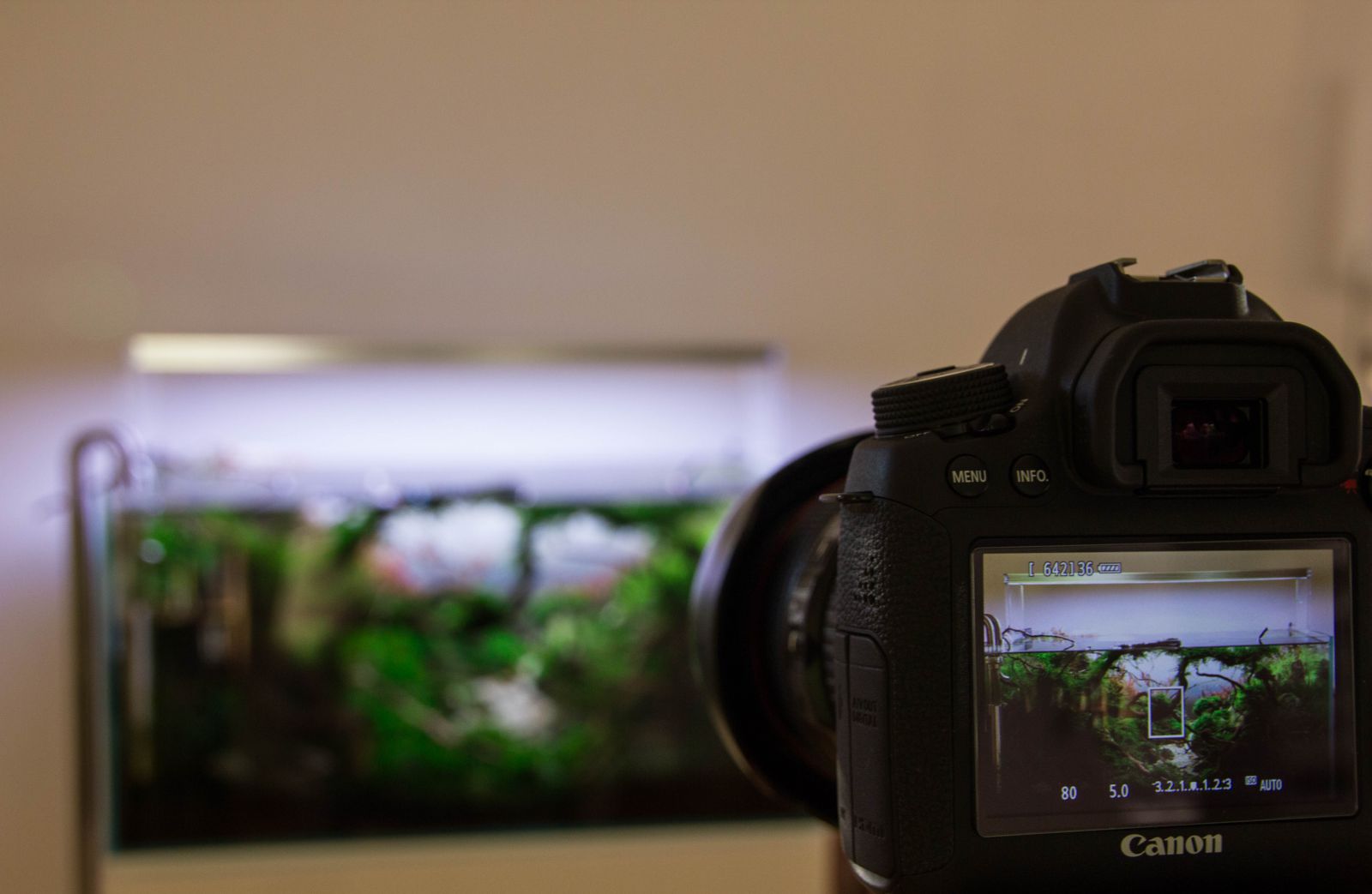
Since many aquascaping competitions require the submission of images via the internet, photography and aquascaping are closely linked. Takashi Amano, the originator of nature aquaristics, was also a landscape and nature photographer, uniting the two topics. But not only for the so-called "Final Shot" of an aquascaping layout, it is important to be able to shoot attractive photos. In order to depict plants or inhabitants of the aquarium in general, some basics are required. We show you here what to look out for.
Position
The glass panes of an aquarium can cause unusual distortions of the images depending on the angle of incidence of the camera. It is therefore important that the lens of the camera is aligned as parallel as possible to the front of the aquarium. For good pictures it is also very rewarding to at least clean the fron pane of the tank from the inside and outside. For cleaning the inside you can use the usual glass cleaners and sponges.
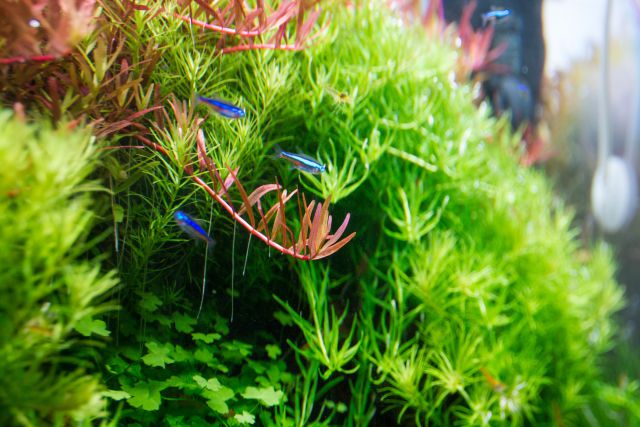
Oblique angles of incidence often cause distortions of the images. This sample photo looks very compressed on the side.
Surroundings
Since an aquarium happens to be made of glass, reflections on the panes can occur. This looks distracting in the pictures. In a photo shoot you should therefore avoid external light from other sources such as windows, as well as light reflections from other bright surfaces in the room. This can be, for example, bright furniture, but in extreme cases also simply the bright hands or clothing of the photographer. To avoid this, the room should be darkened as much as possible; bright areas are covered with dark cloths (for example black molleton). The photographer should wear dark clothes, if necessary even dark gloves.
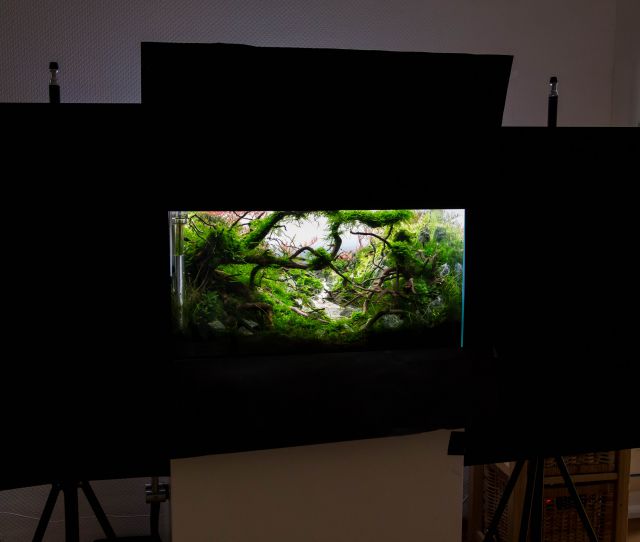
Photo frame made of black cardboard.
To further avoid reflections, it is advisable to fashion a black frame (for example made of craft cardboard) around the front pane of the aquarium. This reduces reflections that are caused by the stray light of the aquarium lighting caught by the lens of the camera or the white lettering on the camera.
Flash
Many smartphones, but also digital cameras automatically trigger a flash in the pre-set automatic mode, especially in poor lighting conditions. Unfortunately, this leads to unusable images, because the internal flashes of the devices cause unsightly white reflections on the aquarium panes. In this case you should disable the flash manually.
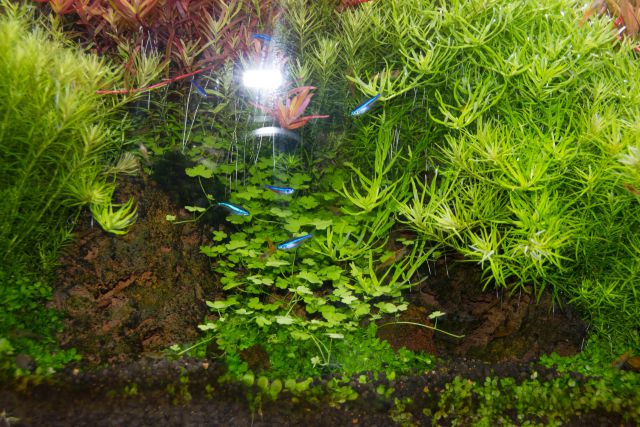
Although the internal flash provides a lot of brightness, it also causes unpleasant light reflections.
Of course, flashes can also be useful in aquarium photography, but in a detached way. This means that you use an external flash, which is positioned somewhere else, detached from the camera, for example, above the aquarium. The flash is controlled by cable or infrared signal from the device itself.
Sharpness
Of course you want to depict the objects to be photographed as clearly and sharply as possible. A good tip is to fix the camera with a tripod or other aids. Free-hand photos often result in blurred images, especially when slower shutter speeds have been selected (around 1/60 of a second or longer). In extreme cases, the pressure on the trigger button alone can cause blurring. In almost all digital cameras, however, you are able activate a timer, which ensures that the device triggers only a few seconds after pressing the shutter button.
Light
In aquarium photography, light is a very vital factor. It is not just needed inexpendably in order to shoot a properly bright picture, but also for other reasons. It’s got effects on the depth and motion sharpness as well as the noise of an image. We'll talk about that in the next chapter.
The correlation between sharpness, light and ISO value
Depth of focus: This indicates the spatial sharpness in a picture, from the foreground to the middle- to the background. If all layers of a photo are to be equally sharp, a corresponding depth of focus is necessary. An einer Kamera kann diese über den Blendenwert eingestellt werden. This is usually indicated by the letter F in the display. The imaging power is, as mentioned above, dependent on the light. A low F-value corresponds to a small depth of focus, but through the open aperture a lot of light is applied to the sensor of the camera. This ensures brighter pictures. In return, a higher F-values has a greater depth of focus, the pictures are a bit darker, though.
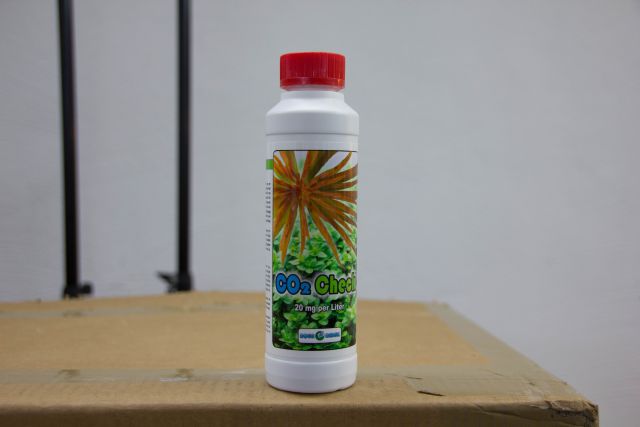
Here, an object (Aqua Rebel bottle) was photographed with an open aperture of F/4 photographed. The object itself is sharp, but the background is blurry.
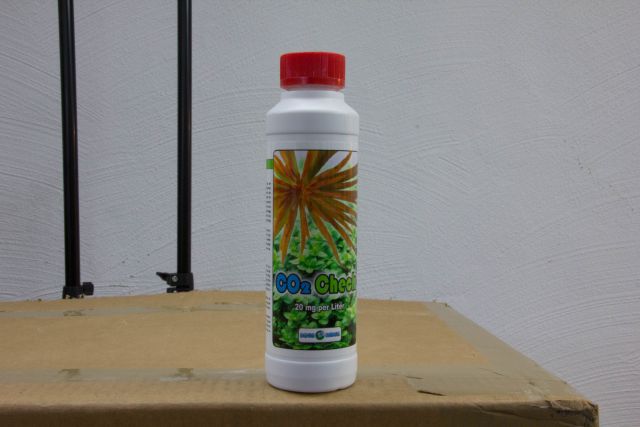
The f-number is now at F/25. Here the background is clearly visible, including the furrows of the rough plaster on the white wall.
Motion Sharpness: This describes how sharply moving objects are imaged. The fastest objects in an aquarium are certainly the fish living in them. In order to image their fast movements as sharply as possible, a very short exposure time is required during photography. This is referred to as the so-called shutter speed, which is given in fractions of a second. Very fast shutter speeds ensure sharp photos, but unfortunately at the expense of the brightness of an image. On the other hand, very long shutter speeds produce much brighter photos.
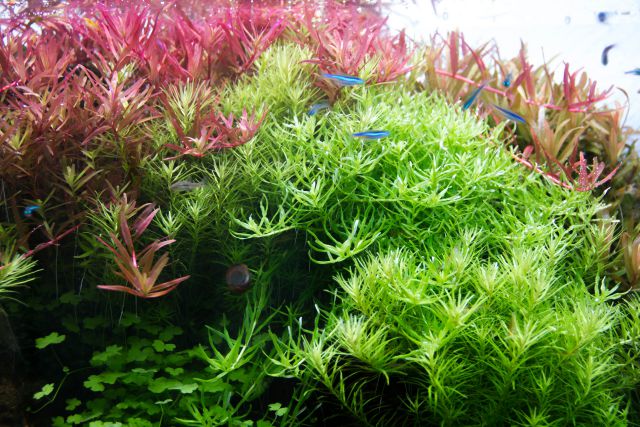
With a slow shutter speed of 1/30 second, fish movements are blurred.
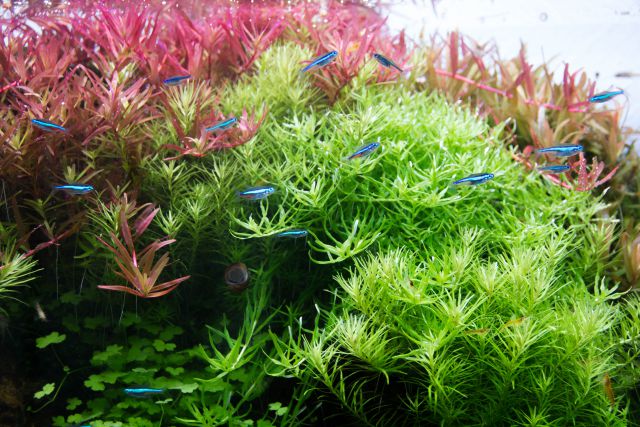
A fast shutter speed of 1/125 seconds sharpens the quick-moving fish.
ISO value: The ISO value describes the photosensitivity of the image sensor. With higher ISO numbers, photos can be brightened accordingly. If, for example, short shutter speeds and / or higher F-values are required for more depth of field, the light reduction of the photo can be compensated by higher ISO numbers. Unfortunately, this also has disadvantages, because the so-called noise component of the image is increasing. Contrast and sharpness decrease significantly at higher ISO values, in addition, the amount of off-color pixels increases.
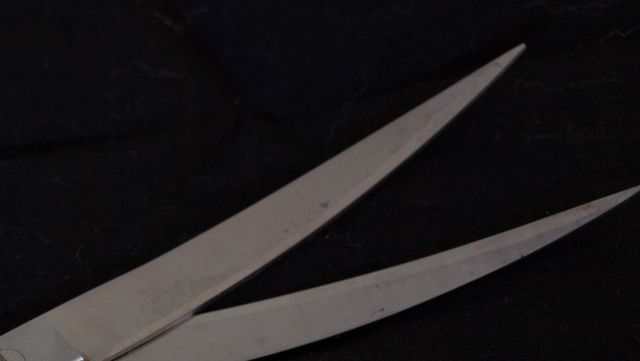
A detail of scissors shot with ISO 100.
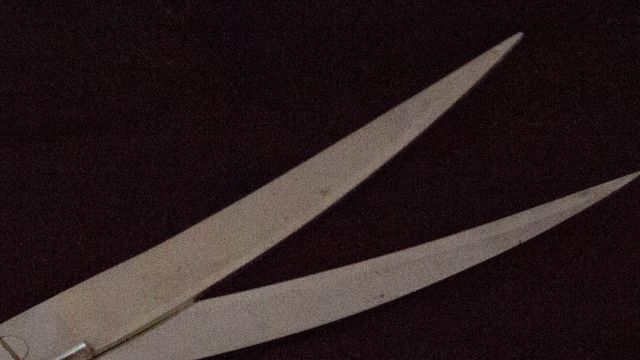
The same section shot with an ISO of 6400. Pixelations clearly visible.
Conclusion
Related to aquarium photography, this means:
We want an aquarium that is as sharp as possible in all planes (depth of field). This is achieved by a higher aperture value, but it costs us brightness.
We want to portray our moving animals as sharply as possible. This requires a fast shutter speed - also at the expense of brightness.
A higher ISO value compensates for the light reduction that comes with the previous two points, but it may result in very pixelated, “noisy” photos.
In the next article, we will discuss this topic in more detail and explain how you can increase the light factor in a photo production for a final shot in order to achieve the best possible aquarium pictures.
