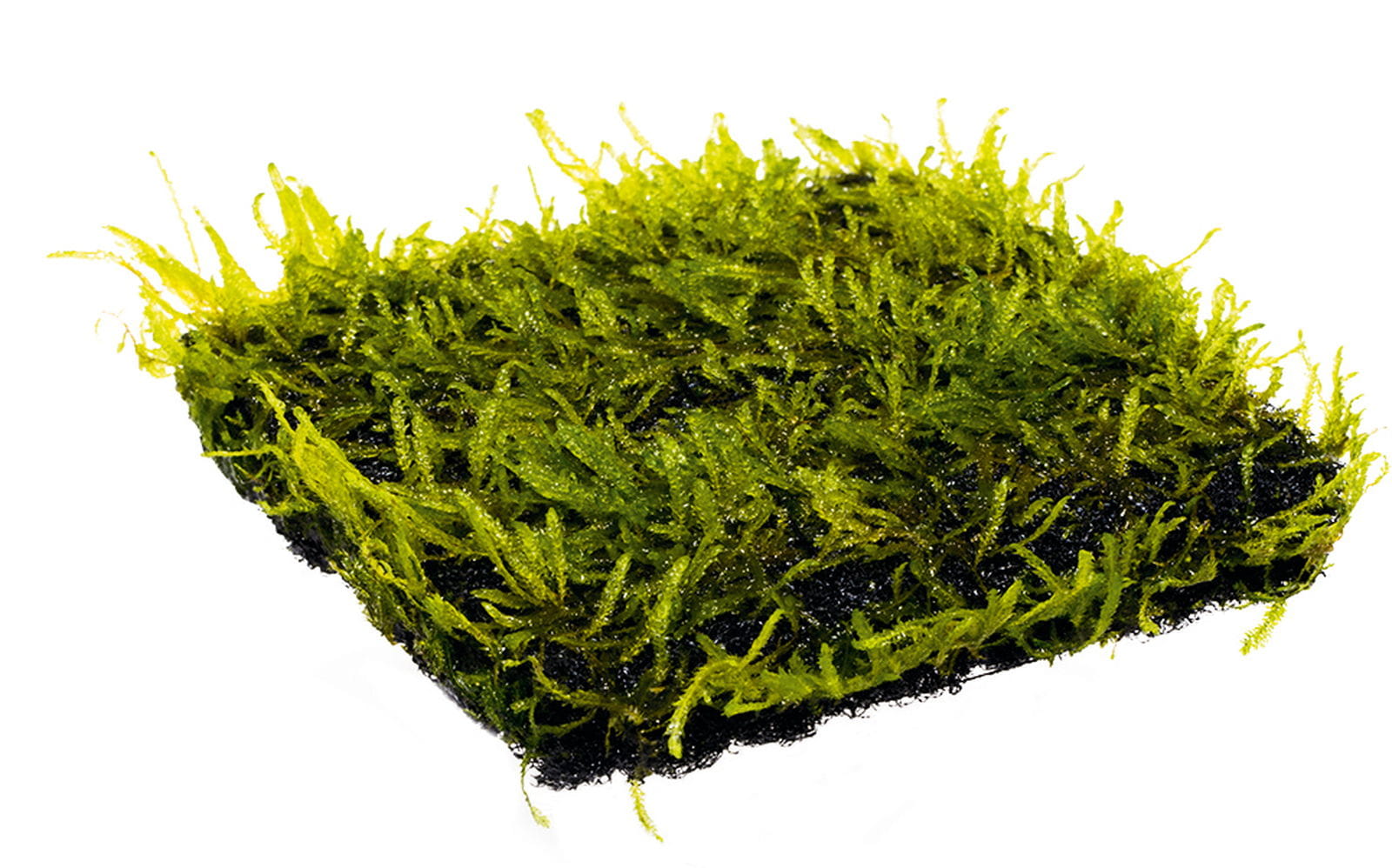
 Variations in moss
In this part we would like to look at aquatic plants from different angles and share information about them. To begin with, we would like to introduce the Wabi-Kusa mat (Wabi-Kusa Mat).
The Wabi-Kusa Mat series came to the shops a few months ago. The fiber thickness and weave density of the mat were chosen by ADA so that mosses and other epiphytes find good hold on it. This way the mats can also be used vertically, and enough water is still retained in the mat structure. Four different moss species are currently available in the series. At first glance they look quite similar, but if you look more closely, you can see the differences in color and texture very well. If you look at the moss very closely, you can recognize the uniqueness of each variety. Plants growing on uneven surfaces such as a Wabi-Kusa Wall or stones tend toward horizontal growth to capture as much light as possible — or so we thought, at least. In reality, the growth form varies from species to species. It is easy to say "mosses all look the same", yet the different species adapt to their surroundings in their very own way to secure their survival. Some change their form, others their growth. In many of them the changes are so tiny that you only really discover them when you look at them more closely. That is exactly where the fascination lies!
Base mat
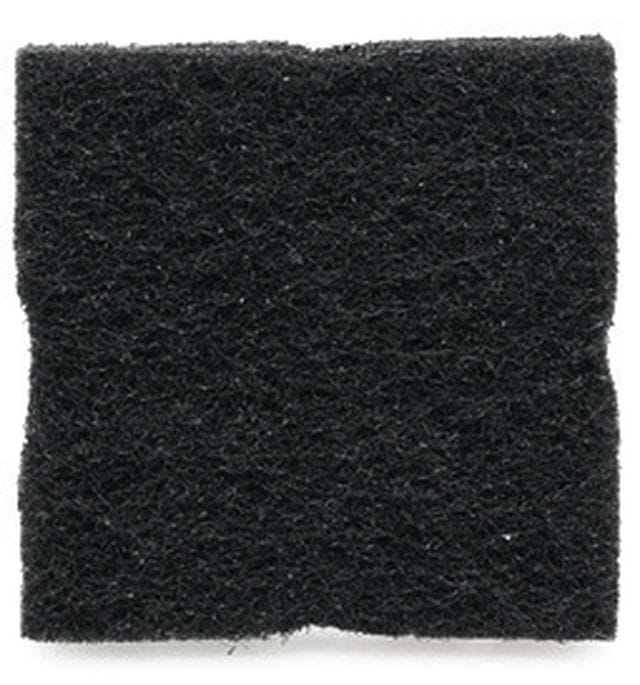
The base mat developed by ADA allows plants to grow optimally and retains water very well.
The name of the product is on the front of the packaging. The container comes with a lid that keeps in the moisture.
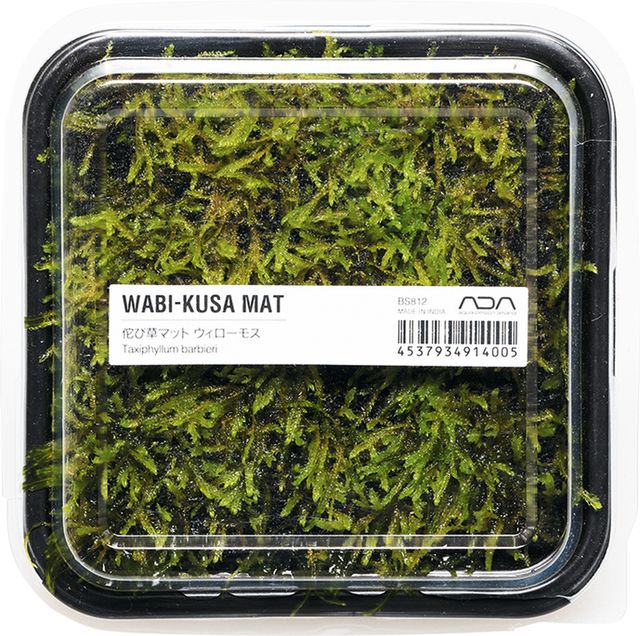
Wabi-Kusa Mat / Taxiphyllum barbieri
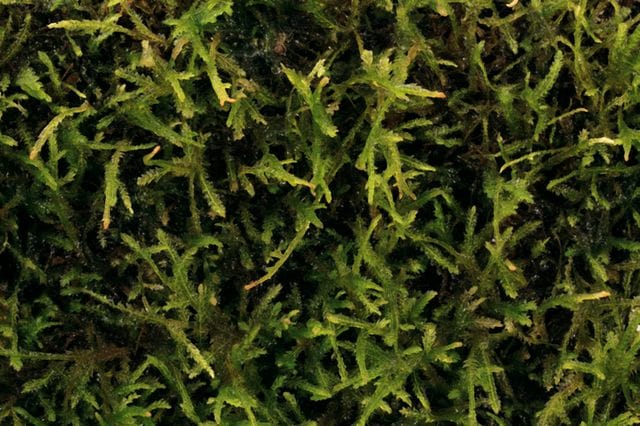
It is usually called Java moss (Taxiphyllum barbieri). There are several variants of this moss. Above water it does not branch particularly well; the shoots are long and thin. Attached vertically to a Wabi-Kusa Wall, the moss gets light from above and sends its shoots horizontally to overhanging into the space.
Wabi-Kusa Mat / Vesicularia ferriei ‘Weeping Moss’
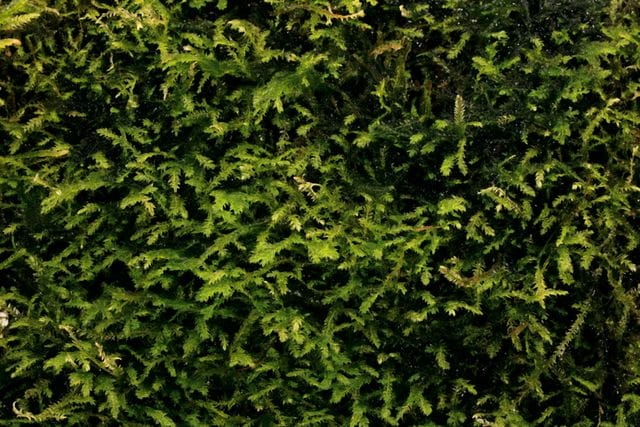
As the name suggests, Vesicularia ferriei, the 'weeping moss', grows underwater with overhanging shoots. Above water it also tends to droop downward. The plant cushions do not get particularly thick, and the shoots develop fine little leaves. This moss grows more slowly than other varieties.
Wabi-Kusa Mat / Vesicularia montagnei
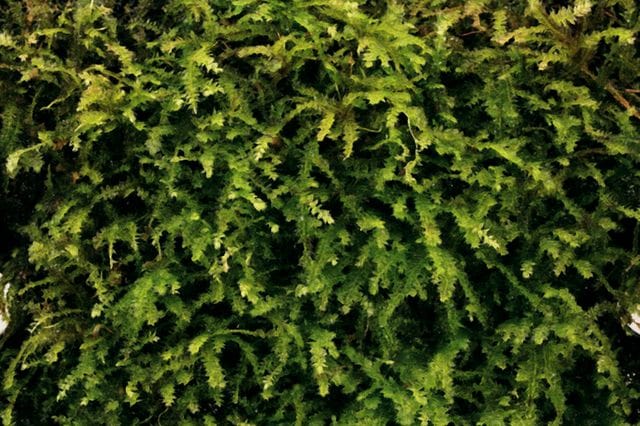
Vesicularia montagnei first grows downward when cultivated on a Wabi-Kusa Wall. Over time the growth speed increases and the growth direction becomes more horizontal. The moss develops into thick cushions. The green looks very vivid when you look at the plant from the front.
Wabi-Kusa Mat / Taxiphyllum sp. ‘Peacock Moss’
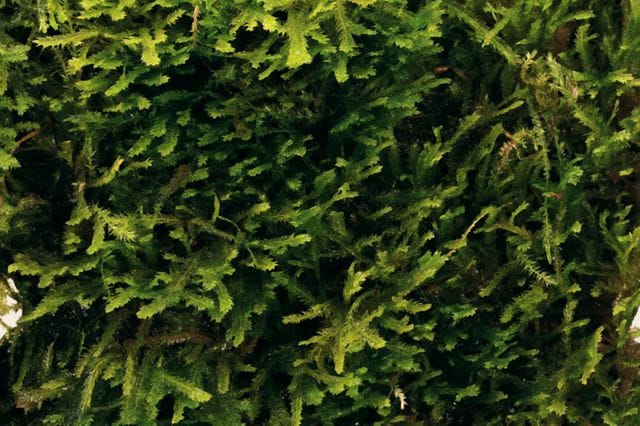
The little leaves sit densely on the finely branched short shoots. This light green moss grows rather upright and thus creates a three-dimensional, dense light green wall. The short, dense little leaves protect the shoot tips from drying out.
Source and copyright of the article/photos - Aqua Design Amano - ADA. From Aqua Journal 266, author / Shunsuke Sugimoto