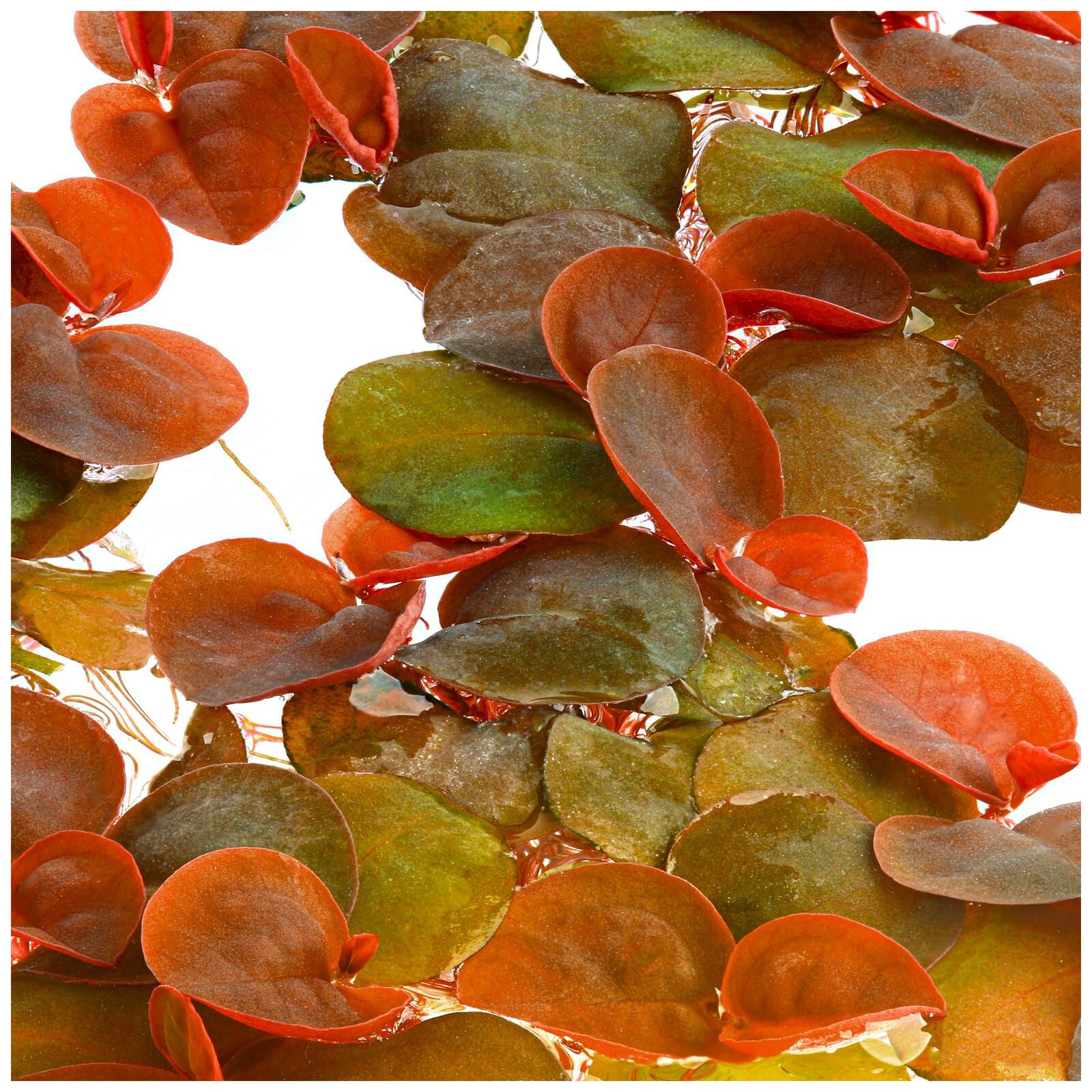
 Fixing Floating Plants in the Aquarium
Floating plants are aquatic plants in an aquarium that float on the water surface and green the upper zone of the tank there. These aquarium plants are popular hiding places for surface-oriented ornamental fish and especially for juveniles, which can hide in the thicket there. In addition, they help calm the water at the surface, consume excess nutrients and create a certain amount of shade. In contrast to plants rooted in the substrate, however, floating plants are free to move on the water surface and are exposed to the current. There are some tricks, though, for keeping them at least somewhat in place.
Using other aquatic plants as a barrier
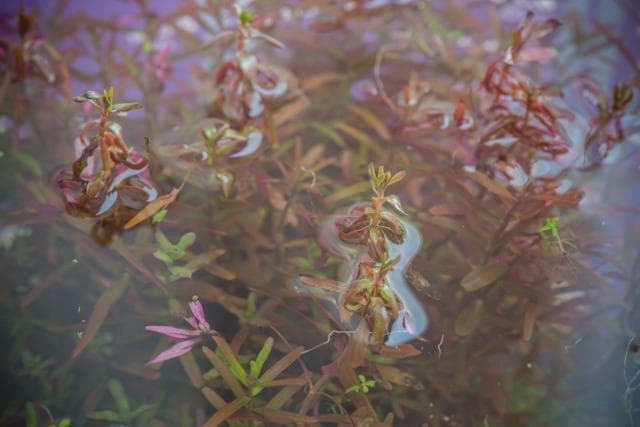
If some submersed aquarium plants already grow strongly near the water surface or even beyond it, they can possibly be used as natural barriers. But decoration that sticks out of the water, such as driftwood, can sometimes be used for this too. Floating plants with long roots in particular (such as South American frogbit) then "get tangled" with the aquatic plants nearby and stay reasonably in place. If you also adjust the current in the aquarium so that these areas are washed over as little as possible, you can set up reasonably stable areas for the floating plants in these spots under good conditions without much effort. Of course, it should be mentioned that floating plants also take light from the plants directly below them and can therefore somewhat impair their growth. Regularly thinning out the floating plant cover is therefore highly recommended.
Using a floating ring
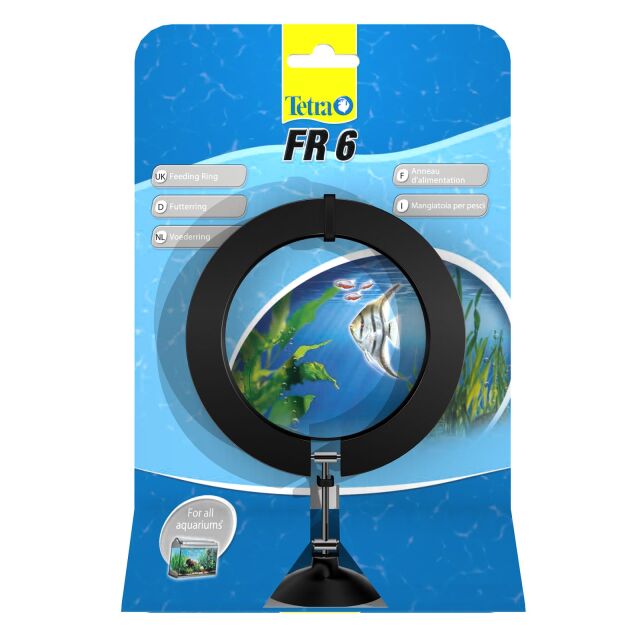
Another option would be to use so-called feeding rings to fix floating plants. These are available partly free-floating, but also with a suction cup attachment (see photo). In such a ring, you can keep at least a small amount of floating plants in place. For larger amounts of plants, you can of course use several feeding rings. This type of fixing offers a very secure boundary, but unfortunately leaves not much room for the floating aquarium plants.
Making a floating ring from airline tubing
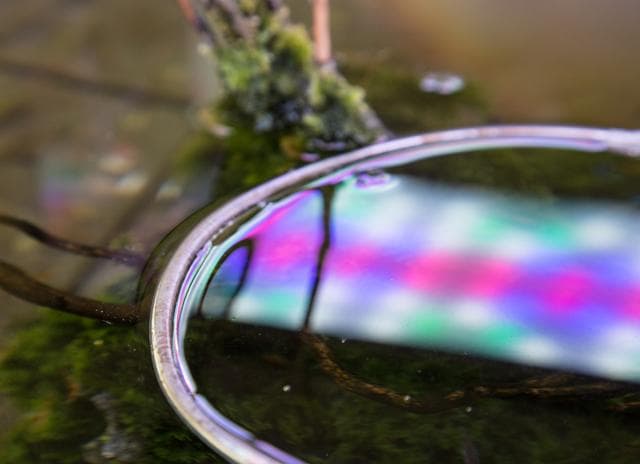
A solution that floats quite well is simply to use 4/6 mm airline tubing to set up a floating plant zone. The tubing should preferably not be silicone, since it is otherwise sometimes permeable to water. Plastic tubing is better suited. As a rule, the tubing is light enough to float; the air cushion inside provides the necessary buoyancy. You can fix the tubing ends at the edges of the aquarium or glue them to each other to create a proper floating ring. Of course, no water should get into the tubing, since it would otherwise threaten to sink. This way, though, you can create a floating zone of any size with quite simple means.
Setting up a floating zone with nylon thread
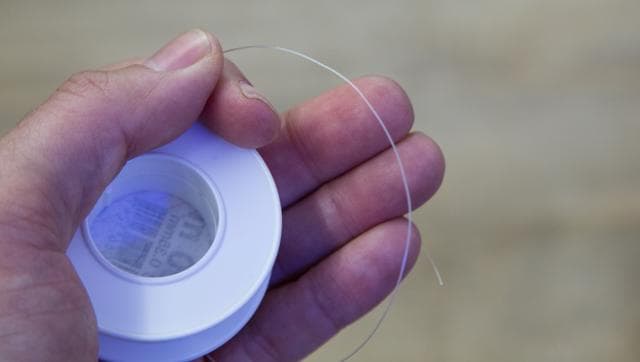
An option that is visually even a bit more discreet would be creating a floating zone using a thin nylon line. These are often so light that they are carried by the surface tension of the water. Similar to the solution with the 4/6 mm airline tubing, you can attach the two ends of the line to the edge of the aquarium here. Alternatively, it would likewise be possible to create a ring-shaped structure by connecting the two ends. One slightly annoying circumstance is that freshly unrolled nylon line still looks quite curvy. To get straighter shapes, the line should be stretched, for example by using weights or heat. The latter in particular is quite easy to implement by ironing the line straight with an iron, with the help of a piece of cloth.