Hormonal Regulation During the Switch Between Submersed and Emersed Growth
Published
Translated from German with AI assistance and reviewed by our editors.
This article was published by Heiko Muth on September 5, 2011 in the Flowgrow Aquascaping Network.
Many aquatic plant species can live both above water (emersed) and submerged (submersed). The plant physiologist Dr. Dierk Wanke (University of Tübingen) has summarized in a review new findings on what role plant hormones play in the "switch" between the emersed and submersed form.
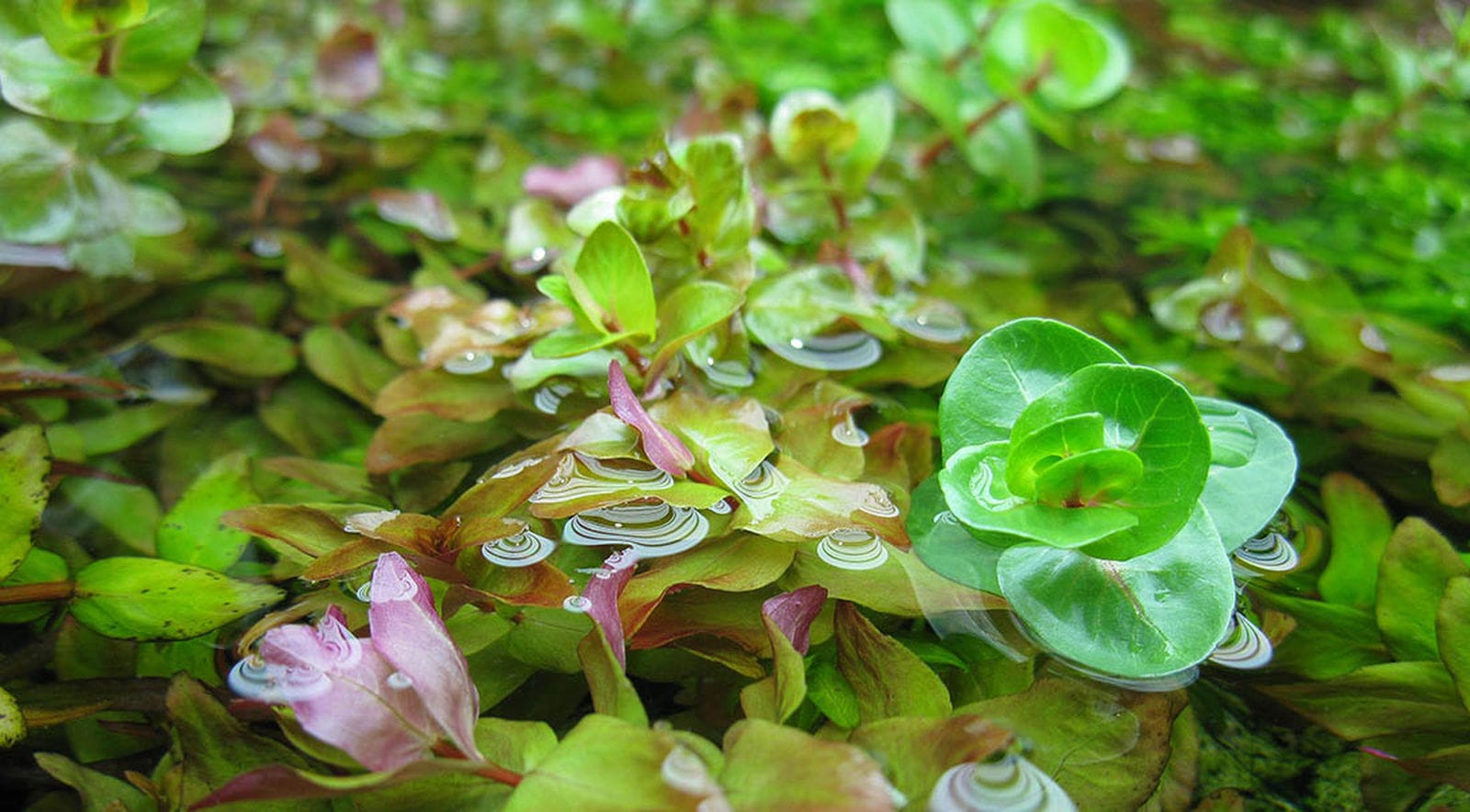
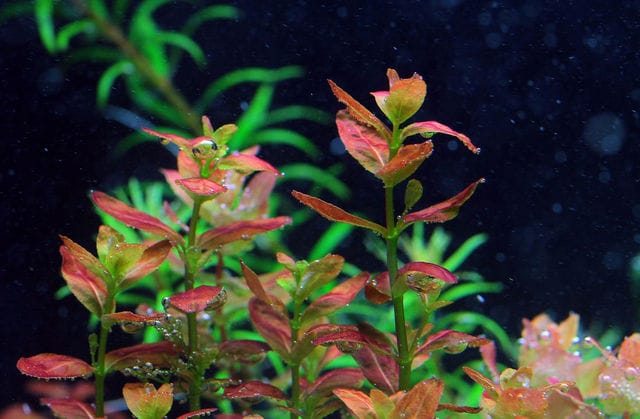
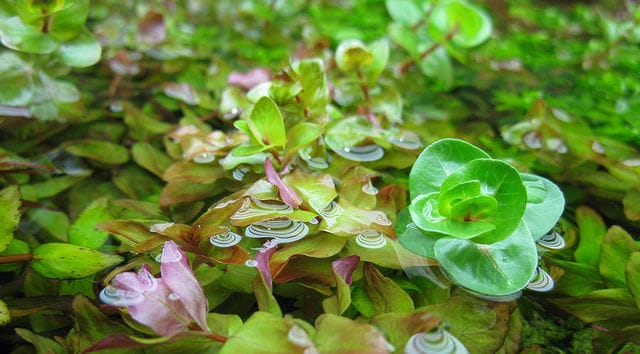
Anyone who has ever planted emersed-grown aquarium plants such as Echinodorus or Rotala rotundifolia in an aquarium and then noticed that the new leaves and shoots developed underwater look completely different from the older aerial leaves, or has experienced plants growing out over the water surface, changing their leaf shape in the process and possibly also developing flowers, knows the "switch" from the emersed growth form (land form) to the submersed form (underwater form) and vice versa.
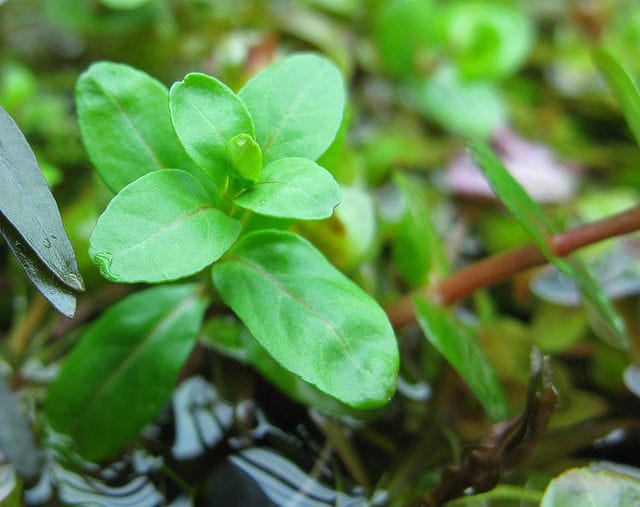
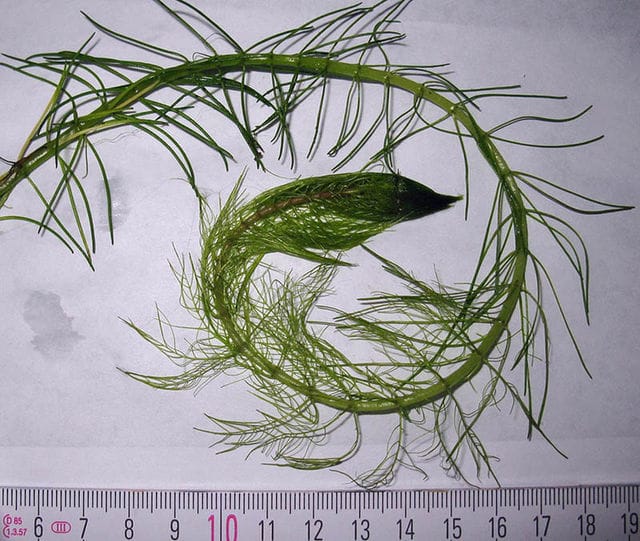
Such plant species come from the land-water transition zones in nature; they grow in floodplains, on river and lake banks, in swamps and in waters that periodically dry out, where the water level can fluctuate strongly with the seasons and also in the short term. These amphibious plants mediate between land plants, which cannot tolerate permanent flooding, and extreme underwater plants, which cannot form a land form and die when they dry out. By changing their leaf set, the amphibious plants are equipped for the very different living conditions below and above the water level. The great majority of aquarium plant species belong to this plant type. You can cultivate them indefinitely either only submersed or only emersed without them losing their ability to switch their way of life. Relatively few aquatic plant species are pure underwater plants. Comparable to the amphibious plants, floating-leaved plants such as water lilies (Nymphaea) or water crowfoots (Ranunculus) form, depending on water level, season and stage of development, both soft underwater leaves and tougher floating leaves that repel water on top. The Cabomba species also belong here; besides the well-known finely feathered underwater leaves, they form flowering shoots with shield-shaped floating leaves. But many true underwater plants are also "still" dependent on the air space for their complete life cycle, because they push their flowers or inflorescences up above the water surface.
When a plant forms differently shaped foliage leaves, this is called heterophylly ("different leaves"). Heterophylly occurs not only, but especially often, in marsh and aquatic plants.
Dr. Dierk Wanke (ZMBP plant physiology, University of Tübingen) presents in a paper (Wanke 2011) the role of plant hormones in the "switch" of plants between an emersed and a submersed way of life, and uses a model to illustrate the interplay and mutual influence of the hormones in triggering heterophylly. For this work, the author evaluated many plant-physiological research results, including his own. Dierk Wanke also presented this paper at the Göttingen Aquatic Plant Symposium in early July 2011, among other places.
In plants, growth and development, as well as responses to environmental stressors that lead to increased stress resistance, are regulated by plant hormones (phytohormones). Environmental stimuli set signal chains in motion in which hormones are produced, which influence gene expression via the further links of the signal chains. The stressors can be, e.g., cold, heat, radiation, drought and salt stress, nutrient deficiencies or oxygen deficiency due to flooding.
Five groups of plant hormones are distinguished, roughly divided into rather growth-promoting (auxins, cytokinins, gibberellins) and growth-inhibiting substances (abscisic acid, ethylene). It has become increasingly clear that the hormones are integrated into regulatory networks and influence each other's effects in many ways.
Adaptations of the land and water forms
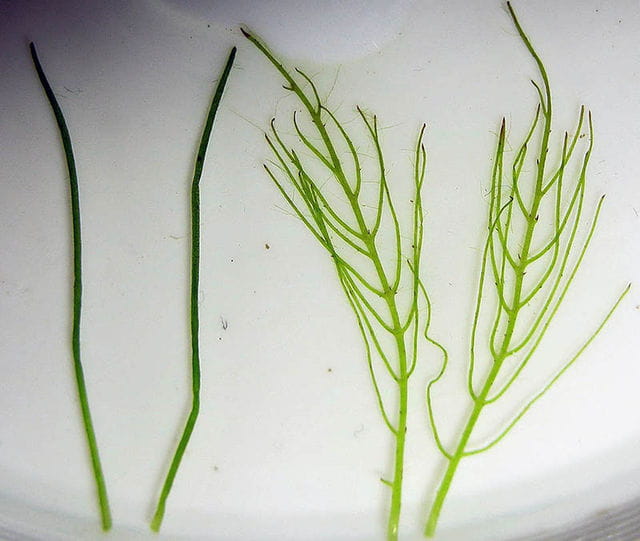
First, the paper describes adaptations of plants to the aquatic environment. Compared with aerial leaves, underwater leaves are mostly softer and dry out faster in air. They are often shaped and colored differently, are narrower or dissected to feathered. A cuticle that limits evaporation (a waxy layer on the outer cell walls of the epidermis) is not or hardly developed, the leaf thickness is lower, the inner cell layers are less differentiated than in aerial leaves, the outer cells (epidermal cells) can contain chloroplasts, and stomata are often absent. These properties make photosynthesis and CO2 and nutrient uptake easier underwater. Narrower leaf shapes have lower flow resistance in flowing water. The rest of the plant body also shows adaptations to life in water, e.g. air channels (aerenchyma), which ensure the oxygen supply of the roots and rhizomes in the substrate and provide buoyancy for the stems.
Emersed leaves of aquatic plants, by contrast, do not differ from the leaves of "normal" land plants and are protected from excessive water loss by wax deposits on the cuticle.
When amphibious plants have grown up to the surface, or the water level falls, the formation of emersed leaves, shoots and/or flowers often already begins while the plant is still underwater or just touching the surface. Drought-resistant organs can therefore also be formed by a formative tissue (meristem) that is located underwater. This raises the question of how the plant is signaled when it is time to switch to emersed growth.
Environmental factors that trigger the "switch" between emersed and submersed
The mechanisms that trigger heterophylly have been studied in many studies on a number of plants: Marsilea quadrifolia, Ludwigia arcuata, Callitriche heterophylla, Hippuris vulgaris, Ranunculus flabellaris, Nymphaea odorata, Proserpinaca sp. and Potamogeton species. Many abiotic (not caused by living organisms) environmental factors have been identified as triggers for the change of leaf type, e.g. changes in water level, temperature, day length, light intensity and color, as well as salt stress. Among other things, it was observed that aquatic plants can "estimate" the distance to the water surface from the increase of light-red or dark-red light toward the surface, probably via phytochrome photoreceptors.
The abiotic factors are not to be seen in isolation from each other, but form a complex network in triggering heterophylly. The role of plant hormones in this is described further below.
Evolution of aquatic plants: out of the water onto land and back again
Dierk Wanke also discusses the evolution of land plants from water-dwelling, green-algae-like ancestors, which probably began in the Silurian about 430 million years ago. The general trend was the colonization of increasingly drier habitats, differentiation of tissues and organs, increasingly larger plant bodies, development of strengthening tissue (e.g. wood), improvement of water uptake, transport and storage, protection against evaporation and increasing independence from liquid water in sexual reproduction.
The most primitive land plants still living today, the liverworts, hornworts and mosses, cannot protect themselves against water loss, but can survive temporary desiccation for a shorter or longer time. Vascular plants (cormophytes) are much further developed in this respect. With roots and true conducting tissue, they can effectively absorb and transport water and nutrients from deeper soil layers, and with waxy deposits on the outer cell walls they protect themselves against excessive water loss. Thanks to strengthening tissue, they can grow much larger than mosses - up to trees over 100 meters tall. More primitive vascular plants are the clubmosses and ferns, which still depend on liquid water in their surroundings for sexual reproduction (keyword "alternation of generations in ferns"). The highest evolutionary stage has been reached by the seed plants (spermatophytes) and, within them, the flowering plants (= angiosperms). Flowering plants have been the dominant plant group since the late Mesozoic; they include, among others, most drought-resistant plant species.
A decisive step in land plant evolution was that abscisic acid (ABA), which occurs in a great many living things - not only plants - acquired a function early on as a signal molecule under drought stress. Its interaction with other developmental and metabolic processes has also been demonstrated in all of today's major groups of land plants - from mosses to flowering plants. A multitude of environmental stimuli trigger an increase of the ABA level in the plant, including those already mentioned for triggering heterophylly. The changes triggered by ABA can lead, e.g., to improved drought stress resistance, for instance through increased wax deposits on the cuticle.
The article also describes that in all major groups of land plants except the gymnosperms (more primitive seed plants, e.g. conifers and ginkgo), there was also, many times and at different times, the step "back" into the water. Apart from the "algae", the primary aquatic plants, all plants living in water ("aquatic macrophytes") descend from land plant ancestors and are therefore secondary aquatic plants. Their evolution probably always began with the colonization of temporarily wet or flooded sites and led through semi-aquatic stages to true underwater plants. In today's plant world, too, we find all degrees of adaptation to the wet element. Flowering plants (angiosperms) have, in turn, gone the furthest here; most and also the most extreme aquatic plants belong to them. Hornwort (Ceratophyllum) and water nymph (Najas), for example, have flowers pollinated underwater, the rootless watermeal (Wolffia) can hardly be recognized externally as higher plants anymore, and the seagrasses, which most likely descend from freshwater ancestors, colonize the oceans. Aquatic plants have evolved in many different flowering plant families and have repeatedly produced very similar forms independently of each other (convergently). Compared with terrestrial plants, a simplification of structures and reduction to loss of organs is typical for aquatic plants.
Terrestrial plants, and thus also the aquatic plants descended from land plants, once went through evolutionary processes that were connected with adaptation to dryness. It can be assumed that for the adaptation to an underwater way of life, only a few changes to programs that run during individual development are needed.
Interplay of the hormones
In experiments with the test plants mentioned above, conversions between the submersed and emersed form were triggered not only by changing the external conditions (submerging or exposing to air), but also, under constant growth conditions, by hormone treatment alone. Conversely, a change in hormone levels in the plants was found on submerging or air contact. This involves the three phytohormones abscisic acid (ABA), gibberellic acid (GA) and the gaseous ethylene.
In various plants in the submersed form, e.g. Marsilea quadrifolia (water clover), treatment with ABA alone caused the formation of the emersed leaf type.
When emersed shoots of Ludwigia arcuata were exposed to ethylene gas, the ABA concentration in them decreased, and in the air they developed a leaf type corresponding to the submersed leaves.
In Callitriche heterophylla (a water starwort species), gibberellic acid (GA) caused elongation of the leaf cells and thereby the formation of leaves similar to the submersed type.
In submersed shoots of Hippuris vulgaris (mare's tail), an increase in ABA was found when they came into contact with air. They then formed the emersed shoot type.
When emersed Ludwigia arcuata shoots were put underwater, the ethylene concentration in them rose and the ABA level fell, and the submersed leaf type developed.
ABA counteracts the effects of GA and ethylene, while ethylene promotes the GA effects. Ethylene either suppresses ABA synthesis or initiates the breakdown of ABA.
The regulatory network of the three hormones is summarized as follows:
When the plant ends up underwater, it produces more ethylene. This promotes the effect of gibberellic acid (GA). Together, both hormones cause the formation of the submersed form (submersed leaf type, formation of aerenchyma, etc.). The abscisic acid (ABA) level decreases.
The gaseous ethylene is rather hydrophobic (water-repellent) and can hardly escape underwater. It accumulates in the plant. This stabilizes the development of the submersed type of leaves or shoots underwater.
As soon as the plant reaches the surface and has contact with air, ethylene can escape. The ABA concentration then rises, which triggers the development of the emersed leaf or shoot type.
As mentioned above, in land plants ABA plays a decisive role in building resistance under drought stress. During the evolution of aquatic plants from land plant ancestors, the same hormone apparently acquired, many times and independently, a "switch function" in triggering heterophylly and thus became important for the ability to live both under and above water.
Conclusion
What has been found out about the hormonal control of the emersed-submersed switch can also be relevant for the aquarium plant hobby. Hans-Georg Kramer mentioned in the discussion after Dierk Wanke's talk at the Göttingen Aquatic Plant Symposium that he had often had bad experiences with longer transport and replanting of certain submersed-grown aquarium plant species, and that, despite good conditions in the aquarium, they often continued to grow poorly or even died. Emersed shoots of the same species, on the other hand, acclimated without problems after transport, sprouted quickly in the aquarium and formed the submersed form in the process. Many aquarists have surely already had corresponding experiences. Hans-Georg Kramer suspected that the hormonal switch could be one of several factors in this: as described above, submersed plants can quickly release ethylene as soon as they have contact with air; as a result, the concentration of abscisic acid rises and that of gibberellic acid falls, and the development of the emersed leaf or shoot type is initiated, with the plant mobilizing energy and nutrient reserves. This could weaken the plant when it is then put back underwater. Shoots developed in the land form, on the other hand, only go through the switch from emersed to submersed in the aquarium.
Possible problems with transporting submersed plants certainly also depend very much on the plant species and other factors. Many submersed-grown aquatic plants that can form a land form can nevertheless be transported for days without problems merely moist in plastic bags or other sealed containers and then continue to grow well in the aquarium, and it is by no means necessary to transport aquatic plants in water. But what has been found out about the plants' adaptation mechanisms also suggests that planting an aquarium with plants already converted to submersed offers no advantage over planting emersed-grown plants - apart from exhibition purposes.
Literature:
Wanke, Dierk (2011): The ABA-mediated switch between submersed and emersed life-styles in aquatic macrophytes. Journal of Plant Research (J Plant Res.) 124(4): 467-75. (http://www.springerlink.com/content/w111016701540866/fulltext.pdf)