 Lily pipes: glass or stainless steel?
Lily pipes are popular filter inlets and outlets in aquascaping, made primarily of glass. Compared to plastic filter tubes, this is a visual upgrade for any aquarium. However, there are also inflows and outflows made of stainless steel. Which lily pipes suit your aquascape better, we explain here in this article.
Lily pipes
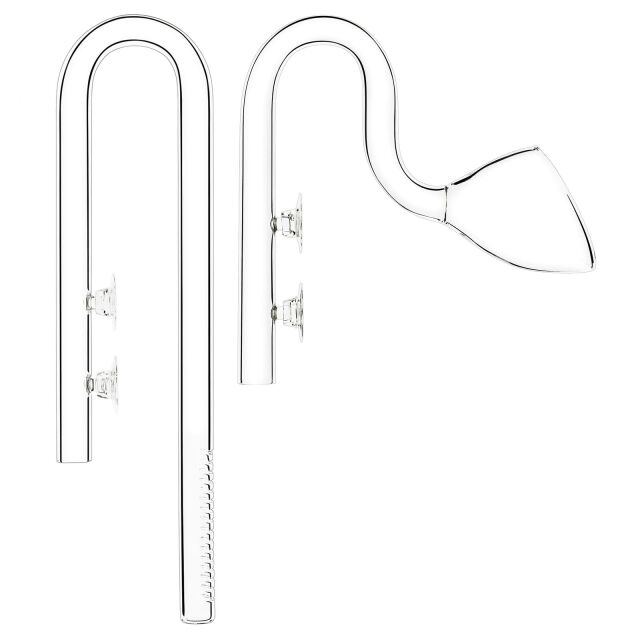
The term "lily pipe" originally comes from the glassware designed by Takashi Amano. The filter outflow was modeled on the blossom of a lily, which explains the name. In aquascaping, however, lily pipes are also used as a general term for all filter inlets and outlets made of aesthetically high-quality material such as glass. Especially in the area of filter outlets, there are many different shapes, all of which create different types of flow. You can learn more on this topic in our article on lily pipes.
Glass lily pipes
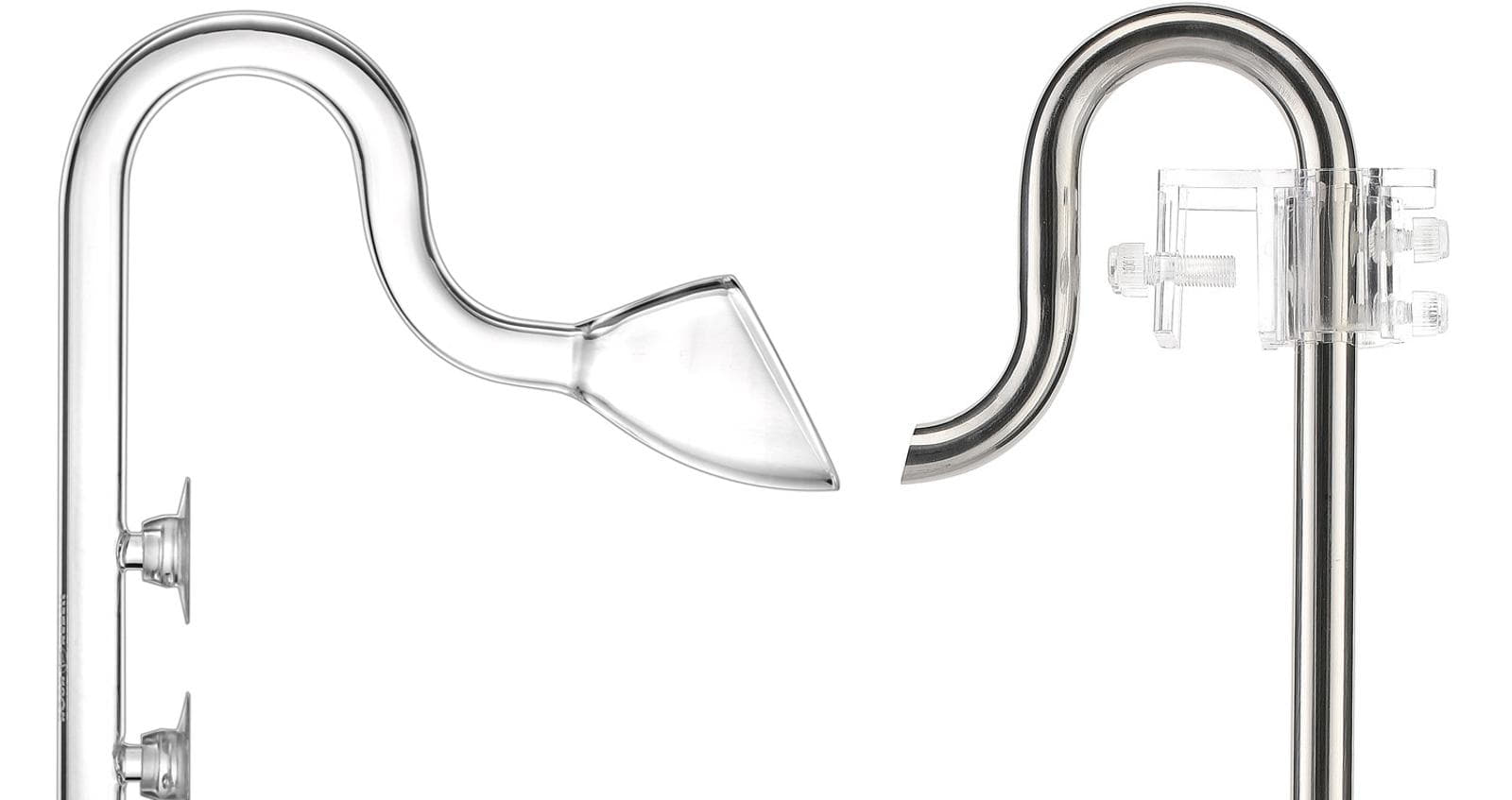
Glass lily pipes have an enormous visual advantage. Thanks to their transparency, they are almost invisible and therefore do not disturb the viewer's eye. Especially in a stylish aquascape, the entire filter technology is thus transformed into a very subtle and inconspicuous object, particularly compared to ugly plastic filter tubes. However, glass pipes also have to be cleaned regularly to keep this look. For this, the aquarist can use special cleaning brushes. With them you can also clean the matching transparent filter hoses from the inside.
Stubborn dirt can be removed in a bath of bleach and water. For this, the pipes are removed and treated outside the aquarium. You can find out exactly how to proceed here. It should not go unmentioned that glass is of course less sturdy than, for example, plastic or stainless steel, and that glass can break under appropriate force. The aquarist should therefore be careful, especially when pushing on and detaching the filter hoses. In these cases it is worth warming the hose briefly to make installation or removal easier. You can find more tips on this at this link.
For a consistently transparent look, the aquascaper can also use other glassware. Especially in the area of CO2 equipment, check valves, bubble counters, drop checkers and diffusers made of glass are also available. This visually upgrades an aquarium all around and offers as little visually disruptive aquarium equipment as possible.
Stainless steel pipes
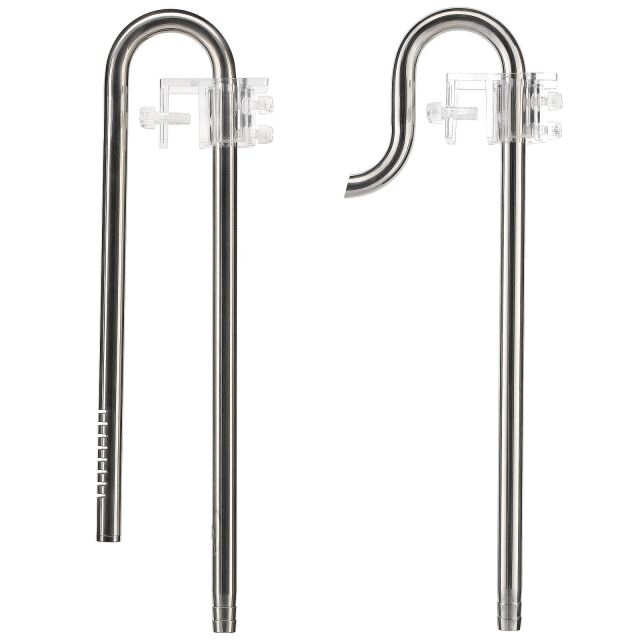
Lily pipes made of stainless steel offer a sturdier, easier-care, yet still visually appealing solution for filter inlets and outlets. They are made of stainless steel and are therefore usually rust-free. The filter tubes are of course more visible than the transparent look of glass pipes, but they look significantly higher-quality than plastic. Due to their design and material, stainless steel filter outlets are not shaped like a lily blossom but are often a straight tube end. As a result, a stronger flow is rather achieved in the aquarium.
To match the look, there are also matching delivery devices made of stainless steel, especially among CO2 diffusers. This gives the aquarist a consistent look across all the important equipment components in the aquarium.
Caution is advised with strongly oxidizing equipment such as oxydators or electrolysis-based sterilizers. Their outlets should preferably not be near stainless steel items, since these can otherwise start to rust at times.
The comparison
The advantages and disadvantages of glass and stainless steel lily pipes are actually quite clear. Glassware looks particularly unobtrusive and subtle. Disruptive equipment is then hardly noticeable in the aquarium. This does require, however, that it is cleaned regularly. Compared to stainless steel, glass is somewhat more prone to breaking. Glass lily pipes are a must for the stylish aquascaper.
Stainless steel still offers a stylish look, but compared to glass it looks considerably bulkier. This can be even more pronounced, especially in smaller aquariums. Nevertheless, stainless steel is higher-quality in appearance and material than plastic inlets and outlets. Compared to glass, stainless steel is much sturdier and also significantly less maintenance-intensive, since the pipes do not get visibly dirty as quickly. Stainless steel pipes are therefore a good compromise between looks and care and are aimed at somewhat "more easygoing" aquarium owners who cannot or do not want to put in that much maintenance effort.