 Interview with Jonas Loose
Jonas Loose is a paludarium scaper and has accordingly specialized in designing paludariums. These are aqua-terrariums that have both an underwater part and an above-water part. True to the motto of aquascaping and Nature Aquarium keeping, plants and furnishings such as stones and driftwood take center stage in the setup.
Jonas Loose impresses with his great work, above all on social media platforms such as Instagram and YouTube. There he is known under the profile name "The world of green". He has also already achieved very good placements in the paludarium and Wabi-Kusa categories in international contests. Absolutely deserved, in our opinion!
Aram Schneider (AS) was able to ask Jonas Loose (JL) a few questions on the subject of paludariums. Read more in the following interview.

The interview
AS: "What are your influences, where do you get your inspiration and ideas? Which artists have influenced you?"
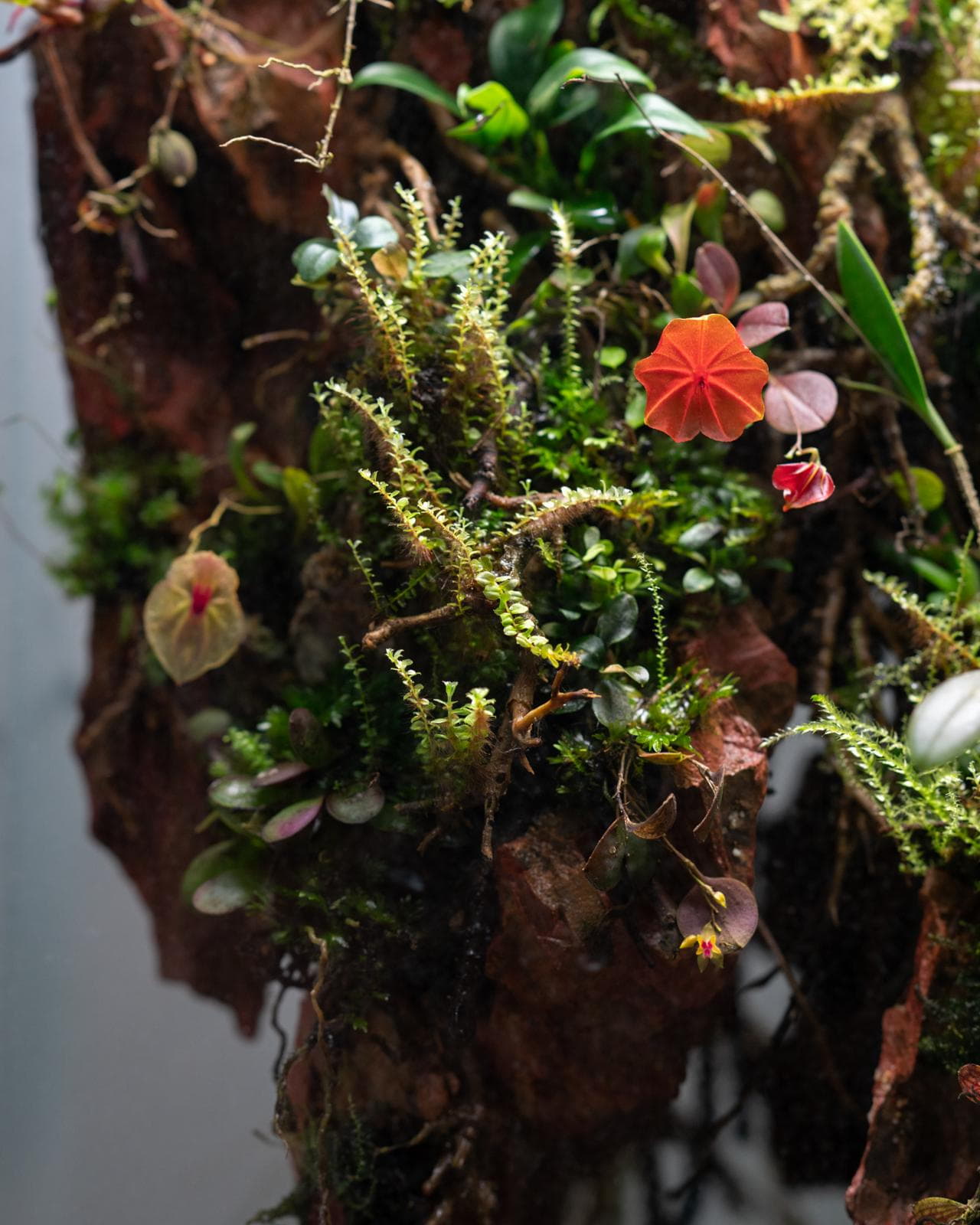
(JL): "My workflow for designing a new scape always begins with a search for inspiration on Instagram and Pinterest. I don't research other aquascapes, though, but rather nature photography. For my rainforest paludarium, I first looked at photographs from various rainforests and, based on those, thought up a layout for my paludarium.
I don't have a particular artist I could name here, except perhaps Takashi Amano, who, as the founder of the hobby, of course has a big influence on me as an aquascaper. For instance, his biography and other picture books are lying around in my apartment."
AS: "You came to designing paludariums via aquascaping. How did this change come about? In what way does paludarium scaping have its very own appeal?"
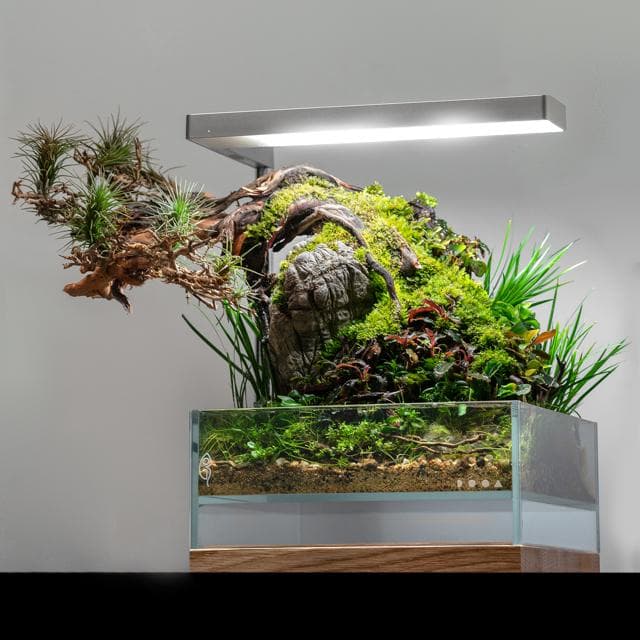
(JL): "Designing freshwater underwater landscapes had lost its appeal for me for a certain time, which is why I then switched to saltwater aquariums with a stony coral reef tank. Since the maintenance effort is considerably higher there, though, I looked for an alternative that is easier to care for and that lets me go on vacation without a bad conscience. Paludariums with a larger land section are ideal for this, since the plants grow more slowly than underwater and are often also easier to care for.
Paludarium scaping is particularly fun for me because it unites two worlds. I find designing a harmonious transition from the water to the land section especially challenging."
AS: "How do you maintain your paludariums? What is your fertilization concept, and how do you humidify your paludariums, which in some cases have very lavish hardscape structures?"
(JL): "For all paludariums I do a water change of 50% of the water once a week. In addition, I trim back all the plants once a month.
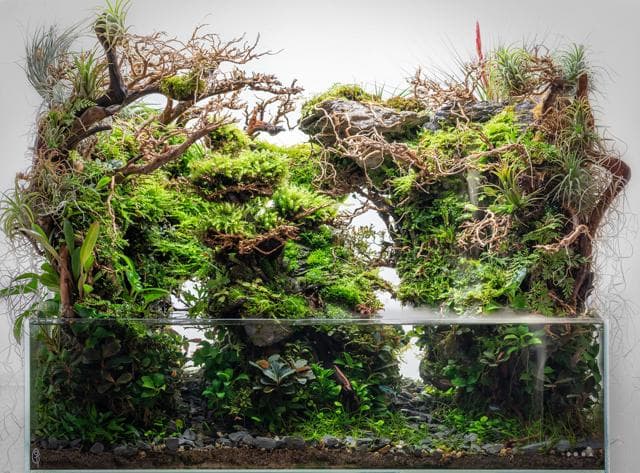
As far as fertilizing is concerned, I would like to distinguish between the sizes of my paludariums. I actually only fertilize my large (60 cm) paludarium, with Tropica Specialized fertilizer once a week. The small jars, on the other hand, I don't fertilize separately; there the plants are only trimmed back and the water changed every now and then. These small paludariums are sufficiently supplied with nutrients by the soil used.
The large (60 cm) paludarium is humidified with RO water by an automatic irrigation system. This system runs for 20 seconds every 2 hours. I humidify the small jars at least once a day with a spray bottle of RO water. In some of the smaller setups I have also installed Hygrolon to keep the moisture under the mosses and plants, since the dry indoor climate is rather counterproductive for the plants. "
AS: "The tip with Hygrolon is a good one. What is your favorite material, e.g. which types of stone and aquatic plants? Which plants can you recommend especially for the emersed parts?"
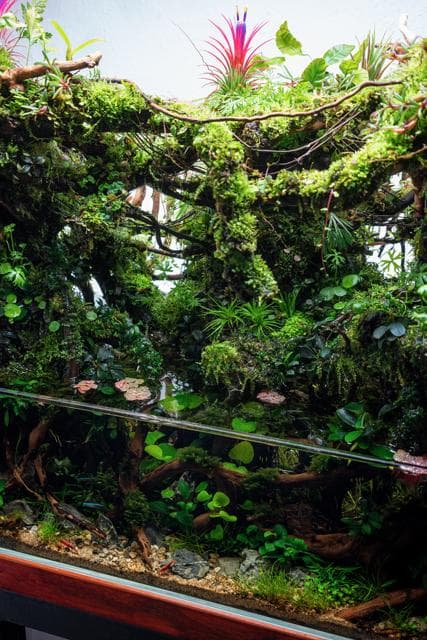
(JL): "My favorite material is definitely wood, for example driftwood or Red Moorwood. I like to combine different types of wood with each other because that gives me more freedom in the design.
I also use stones in all scapes - preferably in contrast to the dark wood. I therefore mainly use gray stones there, for example Seiryu Stone.
If I had to name a favorite plant, it would certainly be Bucephalandra, which comes in diverse colors and shapes.
The selection of plants for the emersed parts of the paludarium is almost endless. The key to success here is definitely high humidity. For water storage I therefore always use mosses, and Plagiomnium cf. affine is especially suitable for this, as it also survives short dry spells well."
AS: "How long have you been doing the "scaping" hobby (perhaps split into aquascaping and paludarium scaping)?"
(JL): "I got my first aquarium at 12 and have always put the focus on the design of the aquarium. The term "aquascaping" wasn't known to me at all back then, though. I designed my first paludarium at about 16, back then for keeping red vampire crabs."
AS: "What are your greatest successes in competitions?"
(JL): "AGA 2020: 2nd place in the paludarium category and AGA 2020: 1st place in the Wabi-Kusa category."
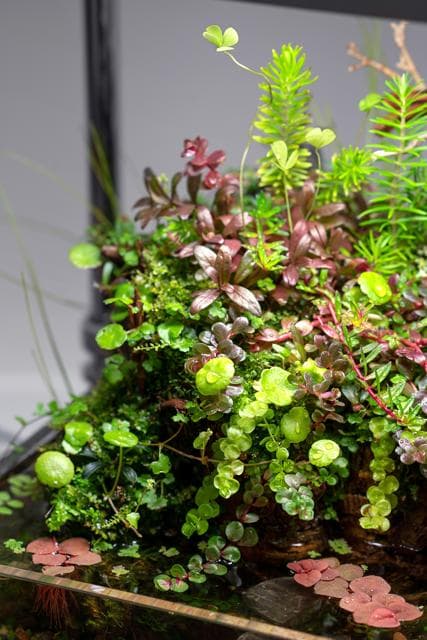
AS: "Your paludariums have, in my opinion, a very nice unique selling point, since they also use lavish hardscape, which until now was mainly known from modern aquascapes. In addition, the planting looks considerably more harmonious and natural and is strongly oriented toward the principle of Wabi Sabi. How do you conceive a layout design for a paludarium? Do you plan the hardscape first?"
(JL): "I already described how I come up with ideas in my first answer. Actually, I always design the hardscape first. I don't make drawings for it, though, but design "by gut feeling". Most ideas for the layout come during the design process, when I see the matching wood or stone elements in front of me. In doing so, I already take the planting into account mentally - not in detail, but rather the growth characteristics. For example, when planning the hardscape I already work out where I want to use hanging plants."
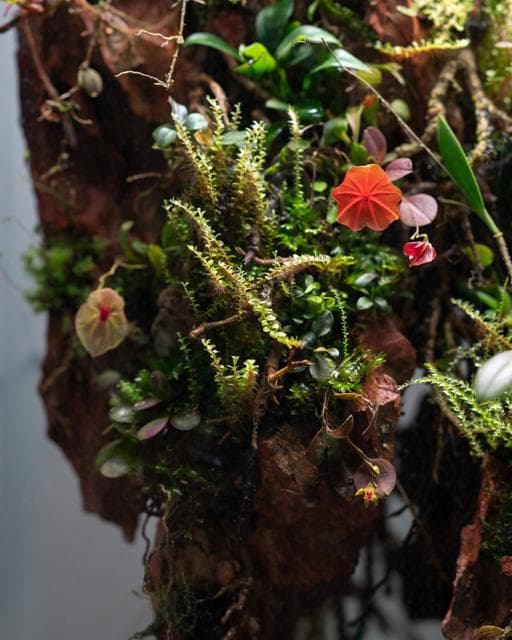
AS: "If you had to choose between a beautiful stone and a beautiful aquatic plant, which would you take?"
(JL): "If I had to choose a type of stone, it would probably be Seiryu Stone, because its extraordinary structure lets you create a good sense of depth even in a small space."
AS: "Thanks for the interview!"
Copyright for all photos in the article: Jonas Loose