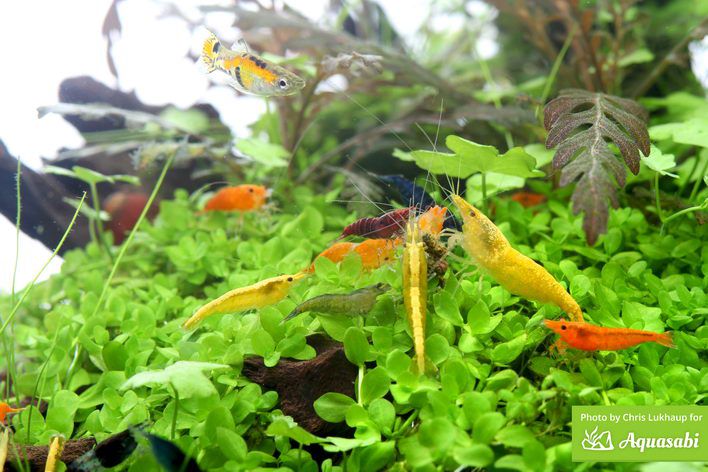
Preparing plants for your shrimp tank
Published
Translated from German with AI assistance and reviewed by our editors.
Shrimp in a planted aquarium are the proverbial icing on the cake - sometimes their colors are really beautiful and bright, they look great and they appear like small, shrimpy spots of color in predominantly green planted aquariums. However, shrimp take care of algae films, young algae growth and all kinds of biofilms besides looking nice. A cleaning crew like that is more than welcome, especially in an aquascape.
Those who want to keep shrimp in a planted tank should keep a couple of basics in mind. We have covered those in detail in our article on "Shrimp in a planted tank". This article is about how to best prepare plants so that they can be used easily and without unwanted consequences for the inhabitants in a shrimp aquarium or in a community tank where shrimp are kept.
At first we’ll have to look at where our plants come from. Conventionally, aquarium plants are produced in aquatic plants nurseries. This is often done abroad in non-European countries. In northern Europe, the climate is not very suitable for tropical aquarium plants, and the greenhouses need to be massively heated and lit during the dark and cold winter months. Energy - as we all know - is expensive, and thus many nurseries have outsourced their production to countries where light and heat are provided by the sun. In their greenhouses located in northern latitudes, the plants are merely quarantined, and after that, packed and shipped. Almost all conventionally produced aquarium plants are nowadays mostly raised and cultivated outside of Europe, though.
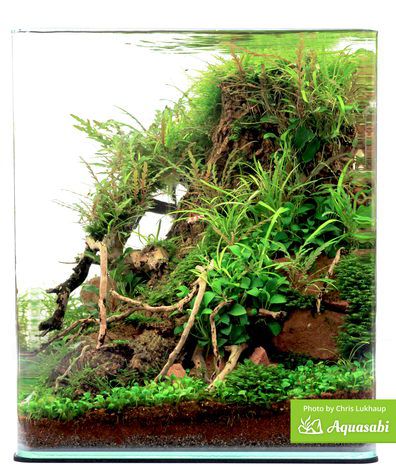
Shrimp can also be kept in a nicely planted cube aquarium.
So far - so good, nothing to complain about that method, really. However, you should know that the European Union insists on aquatic plants not bringing any foreign organisms along. This directive is quite reasonable - just think of the havoc some foreign plants and pests have been known to cause when introduced into local natural biotopes. For this reason, the plants freed from pests of any kind in their countries of origin. Unfortunately, in many cases this is done by using pesticides. These special pesticides for aquatic plants are designed in such a way that they don’t harm fish - after all, the plant producers don’t want to anger their customers. BUT, even more unfortunately, shrimp and other decapod crayfish belong to the same taxon - the arthropods - as many of the pests the poison was intended to kill. Shrimp and other decapod crayfish react exceptionally strong to these substances, and if you put a conventionally produced imported plant into your shrimp tank just like that, there might be massive losses due to poisoning.
This problem is especially frequent with low-priced bunch plants. They are most likely imported and had to be chemically treated according to import regulations as mentioned above. But proper quarantine is expensive, and most likely low-priced plants are just being handed over due to cost-cutting issues. Plants that have undergone insufficient quarantine are highly likely to kill off all crabs and shrimp in your tank.
We at Aquasabi’s don’t offer imported bunch plants like that at all. The bunch plants available in our shop are cultivated in Germany, in our own submerse installation, where we have shrimp living in each and every one of our tanks.
Many reputable nurseries such as Tropica or Dennerle import young plants or use cuttings or plants from tissue culture as a basis. These plants are then cultivated in Northern Europe until they reach their selling size. Plants from these manufacturers carry a very low risk of poisoning.
You can tell if your shrimp have been poisoned if they either become very calm or lethargic, or if they go for the higher regions of the aquarium or try to escape from the tank altogether. When severely poisoned, shrimp have been observed to jump upwards and sink back down again. Often they remain lying as if stunned and then die after a short time.
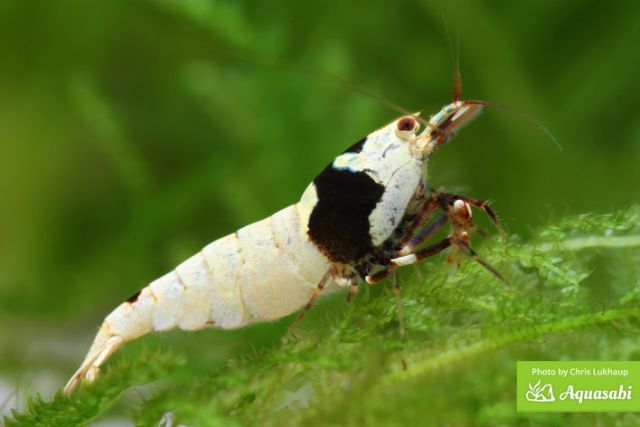
The Bee Shrimp Caridina logemanni reacts very sensitively to pesticides.
If you notice such symptoms after putting a new plant into your shrimp tank, you need to act quickly. Of course the plant must be removed immediately. If the shrimp are only sitting at the top or if they are very calm, a very generous or even complete water change of 80-100% is sufficient. The addition of a pollutant-binding water conditioner has also proven useful. Zeolite-based products such as the Easy Filter Powder by Salty Shrimp have proven to be especially suitable. If the symptoms are more severe, you should move your shrimp to fresh water immediately. They will often recover, but unfortunately there may be long-term damage and the shrimp might still die after a few days or even weeks.
As we all know, prevention is better than cure, so what can you do to keep the risk of poisoning as low as possible? From Aquasabi’s you can not only purchase submerged plants from our own cultivation tanks but also high-quality plants that have been cultivated above the waterline, which have been quarantined aptly. For plants from other sources, we generally recommend a quarantine of at least two weeks. During this time, of course, the plants need light and nutrients - optimally you'll set up a small extra aquarium for this purpose. If this is not an option, take a bucket, a large vase or a bowl - there are no limits to your imagination.
Light is important for quarantined plants, too. For aquarium plants with high light requirements, the light that comes through the window is not sufficient - quarantine on the windowsill is only suitable for the most robust plants such as Cryptocoryne or Bucephalandra, many mosses or water ferns. For stem plants, especially for the red varieties, we have to make more of an effort. An affordable LED clip-on lamp will serve you well in these cases.
Before you put the plants in their quarantine quarters, you should remove the rock wool, which often protects the roots of potted aquarium plants. In this substrate, especially many unwanted substances may accumulate. Removing rock wool from plant roots is not the most pleasant of jobs, but vital! The best thing to do is to proceed as we have described in our article on "How to prepare your aquatic plants". The rock wool often cannot be completely removed from the very fine and delicate root system of ground covers - if this is the case, make sure you cut off as much as possible.
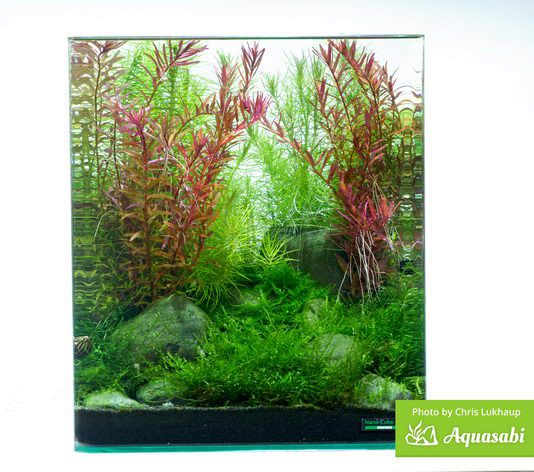
A correct quarantine has no negative effects on the plants in the aquarium afterwards.
Unwanted aquarium fauna is often introduced with new plants. An overview of those "pests" can also be found in our Aquascaping Wiki. If you want to make sure that you do not bring any of these pesky stowaways into your tank, you should dunk conventionally cultivated plants in highly carbonated mineral water before quarantining them. Submersion of 30 seconds to about 1 minute is vastly sufficient, a longer time can damage the plants. Due to the high CO 2 content, the pests are killed or at least stunned so they let go of the plants.
After that, put your new aquarium plants into their quarantine tank. Leave them there for two weeks and change 50% of the water every other day to dilute adherent pesticides. UV light helps break down pesticides and makes them decompose much faster. After this quarantine period, the plants are again subjected to a short dip in bubbling mineral water, so that pests that possibly hatched from eggs during the quarantine period are also eliminated. After that, the conventional plant can be planted in the shrimp tank. Please keep an eye on your shrimp after planting and have a pollutant-binding water conditioner ready - just to be on the absolutely safe side.
If these proceedings take too much time and effort, there are alternatives: you can either rely on plants from trustworthy sources or on InVitro plants from tissue cultivation. In recent years, plants cultivated in laboratories have become more and more prevalent in the hobby. Here you can be sure that the plants are neither infested with pests nor have been treated with pesticides. Also, InVitro plants are much easier to plant, especially in a shrimp tank. Remove the nutrient medium (depending on the company it consists either of a nutritious gel or a nutrient fluid), rinse the plants briefly, divide them and they are ready for planting. InVitro cultivation is taking more and more of a foothold in the aquarium hobby, and you already have a very nice selection of laboratory-cultivated plants available, which keeps getting growing.