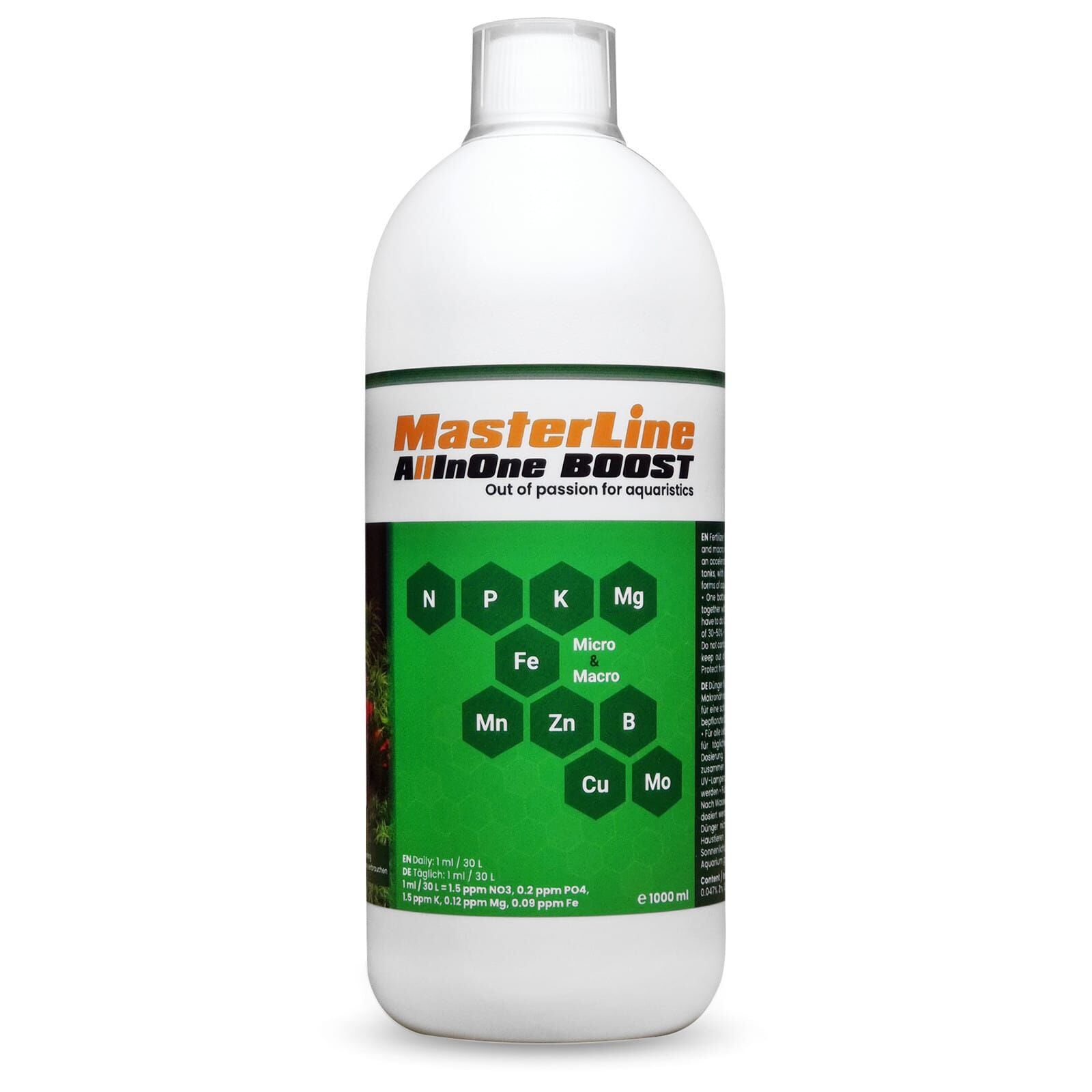
 All-in-One Fertilizer
Some manufacturers of aquatic plant fertilizers offer so-called all-in-one fertilizers. In this article, we explain what they are all about.
What is an all-in-one fertilizer?
All-in-one fertilizers are generally liquid fertilizers that can supply both micronutrients and macronutrients in a fixed ratio to each other. Micronutrients generally include trace elements such as the important iron, but also manganese, copper, molybdenum and other metals. They are called micronutrients because aquatic plants only need them in small amounts. Normally, in a planted aquarium the need for trace elements is covered by a so-called complete iron fertilizer.
Macronutrients, on the other hand, are nutrient elements that are consumed more heavily. These include above all nitrogen (N), phosphorus (P) and potassium (K). As a rule, these are combined in an NPK macronutrient fertilizer or fertilized using individual components.
In an all-in-one fertilizer, the micro- and macronutrients needed by the plants are now carried together in one bottle. So that the substances do not react with each other (above all iron and phosphate, which could otherwise precipitate as solids), the nutrient elements are sufficiently protected by chelators or complexing agents. These surround the nutrients with a kind of protective shell.
Advantages of an all-in-one fertilizer
The advantage of such a liquid fertilizer is obvious: it is very easy to handle. Instead of several bottles, you only deal with one bottle that contains all the important nutrients. If the requirements of the aquatic plants allow it, this circumstance, combined with fertilizing only weekly, can make for very convenient care with little effort. In terms of cost, too, buying just one bottle of fertilizer is considerably cheaper than with several fertilizers.
Disadvantages of an all-in-one fertilizer
The disadvantages of an all-in-one fertilizer can lie above all in being tied to a fixed nutrient composition. The ratio of the individual nutrient elements to each other is fixed, so you are not flexible. If the nutrient composition of the fertilizer exactly matches the consumption and requirements of the particular planted aquarium, this is a wonderful thing. If the nutrient ratio does not suit the aquatic plants, however, growth problems and/or algae growth are bound to follow in the long run. The aquarist also does not notice this at first glance, since deficiencies or surpluses of certain nutrients probably only reveal themselves over time. Here it helps to monitor the most important parameters such as Fe, NO3, PO4 and K now and then with a water test. This measure of course comes at the expense of convenience again.
Conclusion
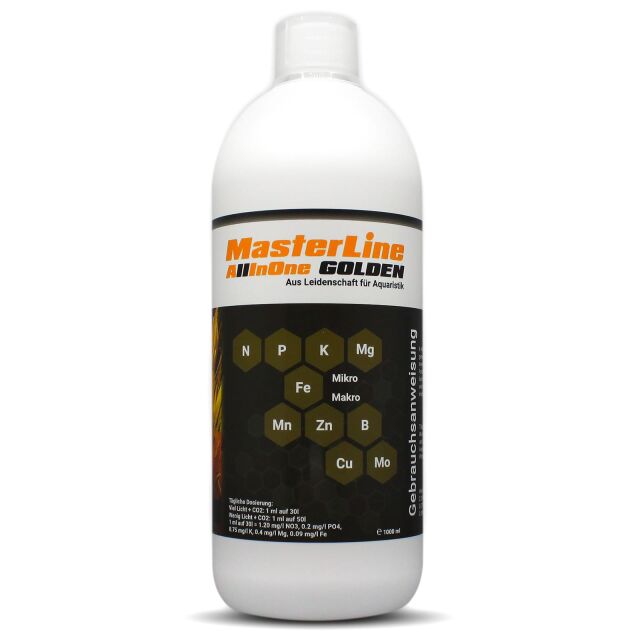
All-in-one fertilizers can be a good and above all convenient solution for supplying your aquatic plants with all the necessary nutrients. Handling is particularly easy and requires little effort. The fixed nutrient composition, however, sometimes makes plant nutrition inflexible, and not every aquarium copes with this fixed nutrient element composition. The manufacturer MasterLine therefore offers various all-in-one fertilizers with different nutrient compositions, which take into account, for example, the type of substrate.