 How to dose aquarium fertilizer?
There are various ways to add liquid fertilizer or water conditioner to an aquarium, be it dosing pumps, drip dosing caps, syringes and measuring cups, or even automated dosing. Here we show you the different options, taking different aquarium sizes into account.
Dosing with a pump head
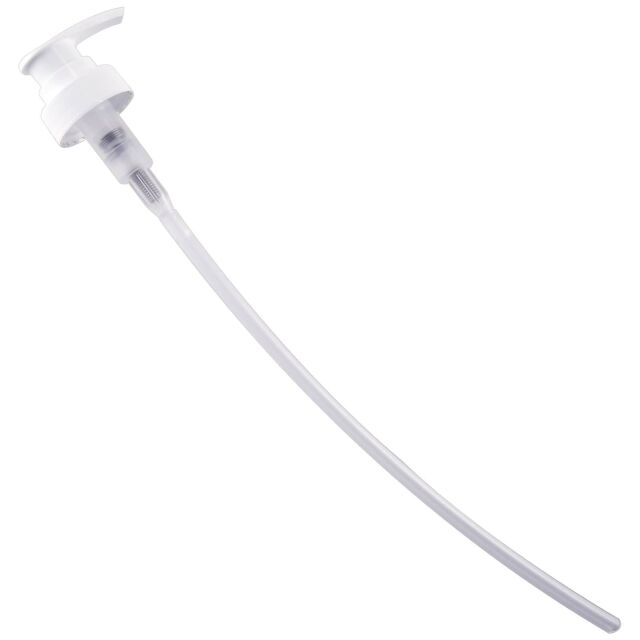
Adding aquarium fertilizer or water conditioner with a pump head is certainly the most widespread option, and it can be used flexibly for many types of aquariums. For this, a fertilizer bottle is fitted with the pump head, and a tube connected to it leads into the inside of the bottle. The length of the tube should be adapted to the bottle size, and the tube should end as exactly as possible at the bottom of the bottle - you may have to shorten it accordingly. One stroke of the pump head adds a certain amount of fertilizer. This is often 1 ml (though it can vary depending on the manufacturer). If necessary, you can measure out the amount with a measuring container or a syringe with a milliliter scale. Dosing with the pump is quick and easy.
Recommended dosing amounts and aquarium size
Dosing pumps (which dose 1 ml per pump stroke) are best used for dosing amounts of 1 to 10 ml of liquid fertilizer or water conditioner. Unfortunately, an amount below 1 ml is not technically possible with them. With aquarium sizes from nano aquariums up to mid-sized aquariums of about 80 liters, however, the required amount of complete iron fertilizer for daily fertilization can be below 1 ml. In these cases, the Aqua Rebell drip dosing cap would be the much better choice for exact dosing.
Multiple pump strokes (here we took the number 10 as the limit) can be quite annoying, especially if you have to do the dosing daily for several fertilizer bottles. Larger amounts of fertilizer are needed especially for larger aquariums and in the case of macronutrient fertilizer. Here, dosing with a measuring cup is probably somewhat more convenient.
Dosing with the drip dosing cap
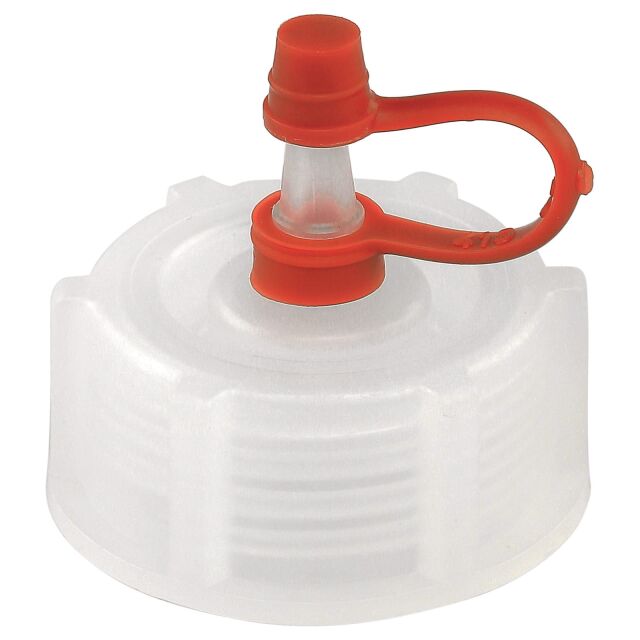
If the dosing amount of a liquid fertilizer is below 1 ml, our drip dosing cap as an attachment for the fertilizer bottle is the best choice. This can be the case, for example, if you have to dose complete iron fertilizer for a nano aquarium. The drip dosing cap fits all Aqua Rebell bottles and can thus turn any type of fertilizer into a fertilizer suited to a nano aquarium.
To convert milliliters into drops, the following rule of thumb helps: 1 milliliter = approx. 20 drops. To add 0.5 ml of aquarium fertilizer, for example, you dose 10 drops. You can find more detailed information on adding fertilizer with the drip cap in this separate article.
Recommended dosing amounts and aquarium size
The drip cap is suitable for all dosing amounts below 1 ml. This can be the case, for example, with a complete iron fertilizer in an aquarium under 80 l as a daily dose. The drip dosing cap is definitely also a good choice for "real" nano aquariums with only about 10-30 liters of volume. In such small aquariums, however, macronutrient fertilizers may still be needed in a higher dosing amount. A pump head is then the better option. This always depends very much on the individual case.
Dosing with a measuring cup
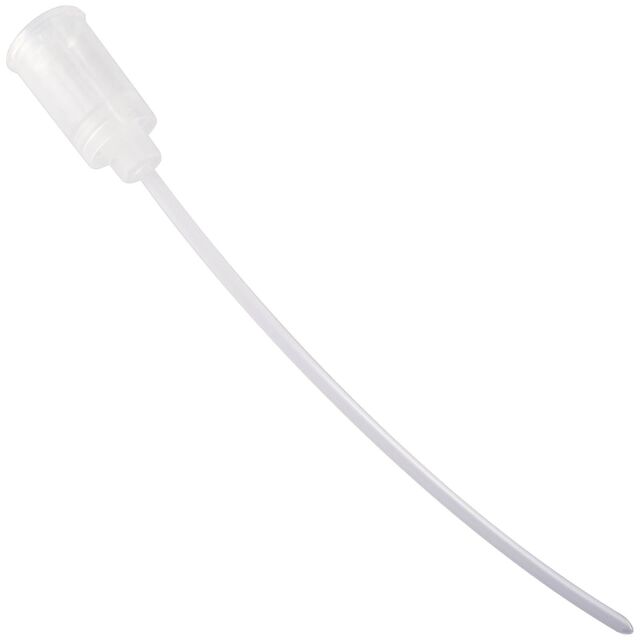
If liquid fertilizers have to be added in larger amounts, using a measuring cup makes sense. Our Aqua Rebell measuring cup has a maximum capacity of 20 ml and can be conveniently screwed onto the Aqua Rebell bottles. Once a bottle has been fitted with a measuring cup, it must always be stored upright so that it doesn't leak! Cup and fertilizer bottle are firmly screwed together, which ensures that one measuring cup isn't used for different fertilizers and that contamination through mixing doesn't occur. If you still want to use only one measuring cup for all fertilizer bottles, you have to clean the measuring cup, including the attached tube, carefully and really thoroughly after every use.
Recommended dosing amounts and aquarium size
Especially for larger aquariums and dosing amounts greater than 10 ml, dosing with a measuring cup is certainly the easiest. This option is especially suitable for aquariums with a volume of at least 100 liters, but also for bolus dosing and particularly for adding macronutrient fertilizers.
Adding with a disposable syringe
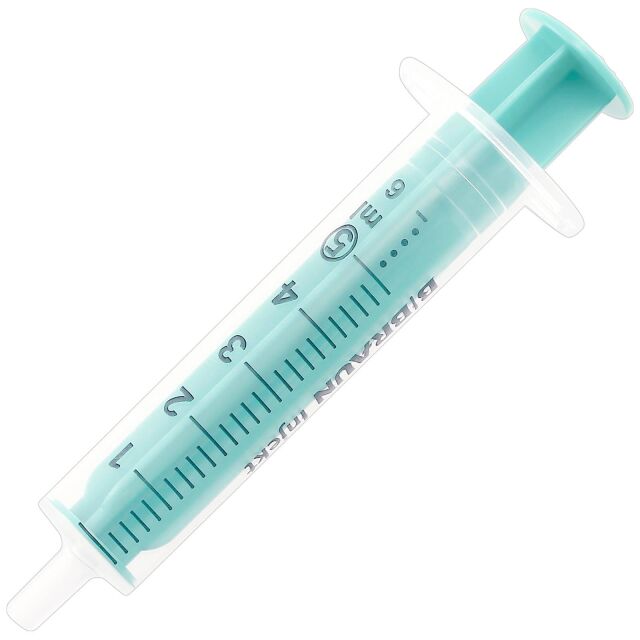
The advantage of using syringes is their fairly high flexibility in terms of dosing amount. Standard disposable syringes can hold up to 5 ml of liquid, but you can also dose very small amounts in 0.2 ml steps. Syringes are therefore suitable for aquariums of various sizes, from nano aquariums to mid-sized aquariums. The somewhat awkward handling is a disadvantage: the syringe has to be drawn up in a rather laborious way every time. After use, the syringe should always be cleaned thoroughly with water, since residues otherwise build up in it quite quickly. These can contaminate the fertilizer or glue the plunger so strongly that the syringe can hardly be drawn up anymore. If the plunger is stiff, reliable dosing of the fertilizer is also hardly possible anymore, and the syringe should definitely be replaced. Still, a disposable syringe is a good solution, for example for fertilizer bottles on which a dosing pump doesn't fit due to their design.
Recommended dosing amounts and aquarium size
The disposable syringe works well as a universal dosing device and is suitable for many aquarium sizes (nano to mid-sized), since it offers quite a wide range from 0.2 ml to 5 ml. The syringe is especially recommended for fertilizer bottles without dosing pumps. The more awkward handling and the regular cleaning of the syringe are a slight disadvantage.
Automated fertilization

If you prefer things a bit more convenient, you can also leave the dosing of aquarium fertilizers and water conditioners to a programmable dosing pump. The time and dosing amount can be chosen freely for each channel. Such pumps usually have several channels, so different fertilizers and water conditioners can be dosed with them. Since this topic is quite extensive, we have described automated fertilization in more detail in this separate article.
Note on dirt and crust formation
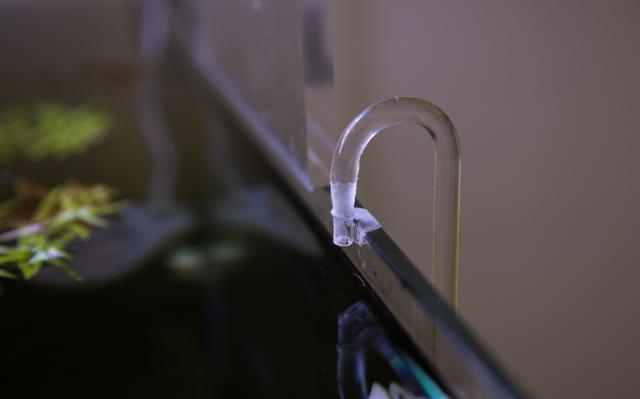
By the way: especially when using nitrogen-containing fertilizers, crystalline-looking whitish deposits form time and again at various points in the fertilizer dosing system. This can be inside a measuring cup, but it also occurs especially at the outlet openings of the dosing pumps. This process is completely normal. To avoid clogging, you should remove these deposits regularly; they can be wiped off quite easily, and the nutrient salts are also easily soluble in water.