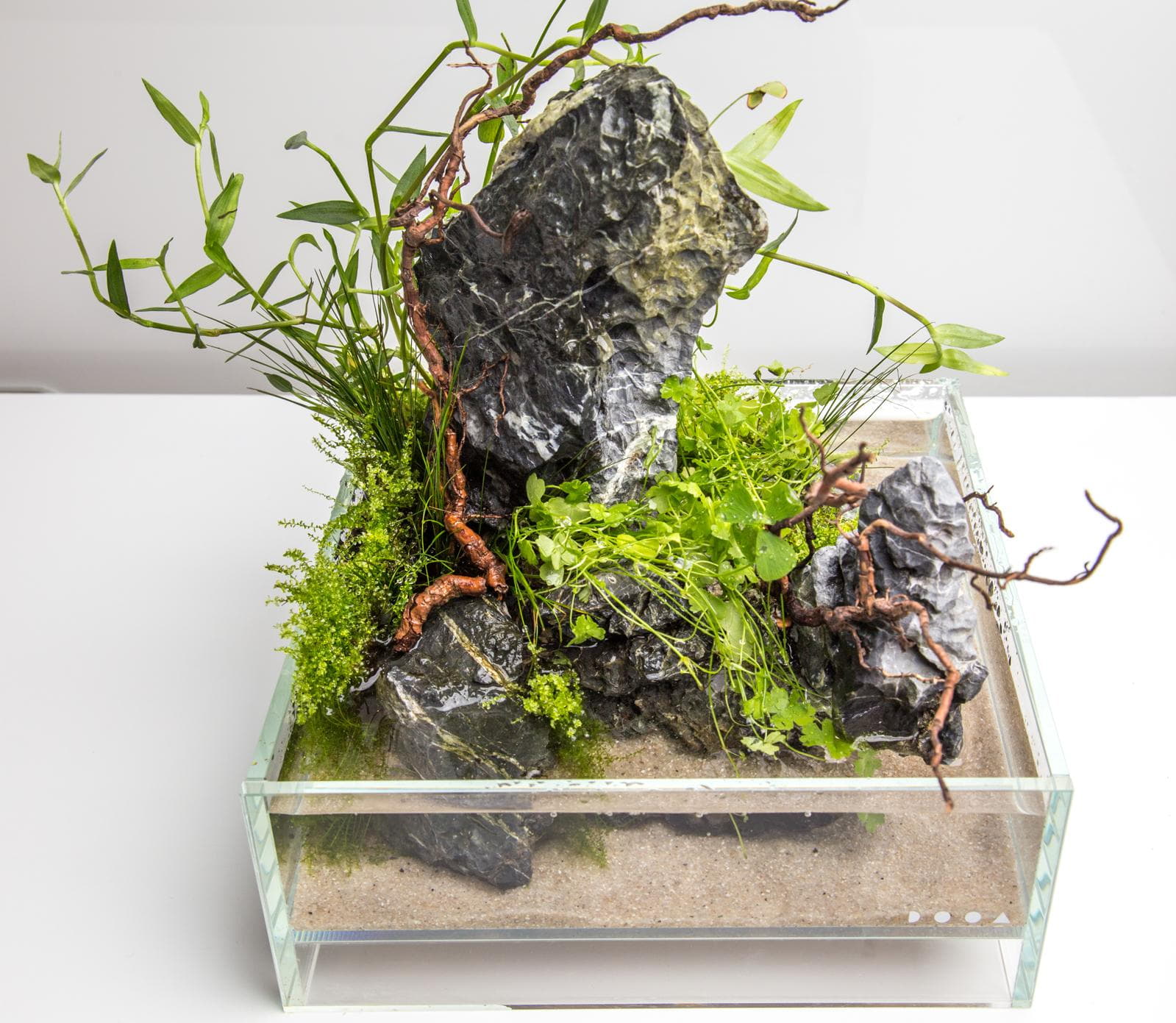
 Iwagumi in the Neo Glass AIR
In this setup example, we show the design of a paludarium in a flat DOOA Neo Glass AIR. It measures 20 x 20 x 8 cm and offers a great base area for designs like this. Following the principle of an Iwagumi, stones are mainly used as hardscape here, in this case Minilandschaft. With various aquatic plants, both a planted land zone and a water zone are then created. This way, aquarium plants can find their suitable place both emersed and submersed. Let's first take a look at setting up the paludarium from scratch.
Step-by-step paludarium tutorial
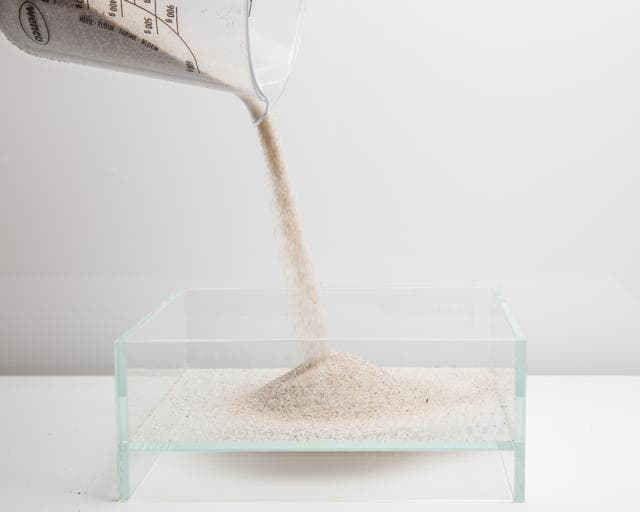
In front of us now stands the empty Neo Glass AIR, measuring 20 x 20 x 8 cm. As the first substrate layer, decorative light-colored sand is filled in. It is spread across the entire surface.
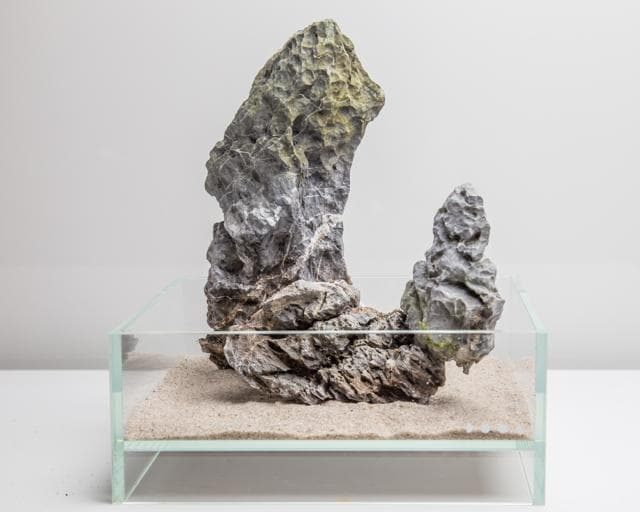
As hardscape, we place a stone structure made of Seiryu stones, which were previously glued using the cigarette filter method. The stones were joined in a U shape and thus offer a dramatic-looking structure.
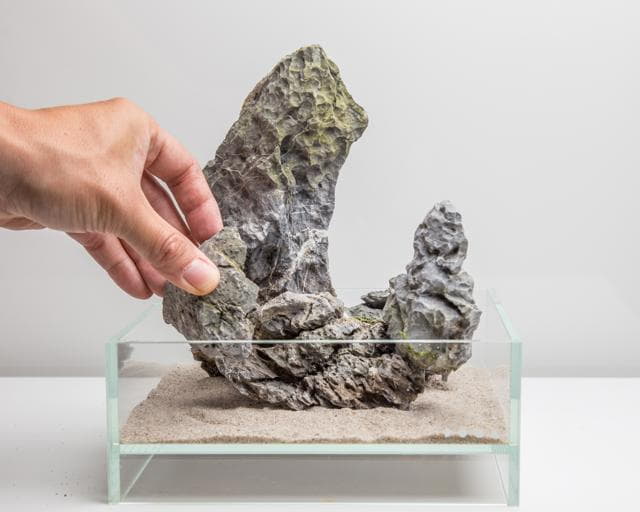
More stones are added here, both in the rear and in the front area. This serves to further delimit the later planting zone. The remaining gaps are closed with filter floss. This helps above all to separate different types of substrate (sand and soil) from each other well.
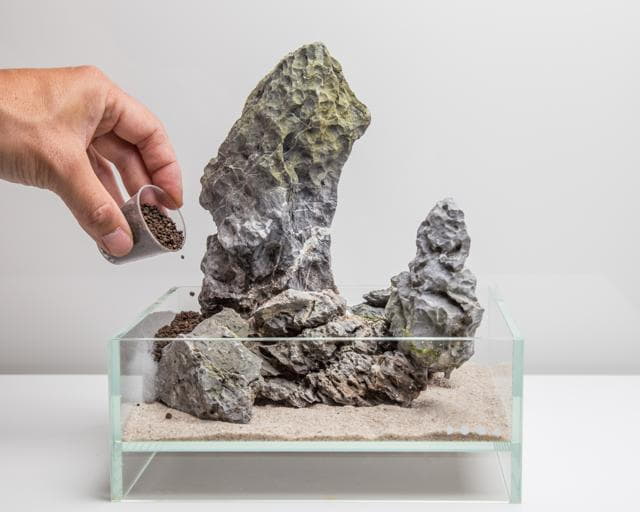
The land section, which will be planted later, is filled with nutrient-rich soil. This supplies the aquatic plants optimally and lets them feed through their roots.
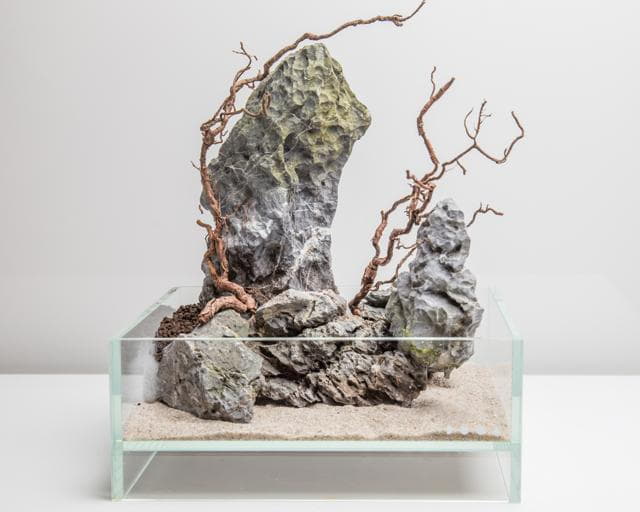
A few fine pieces of driftwood round off the decoration. Now planting can begin. As preparation, the soil in particular is moistened well with water. This makes planting with tweezers easier, so that the soil granules don't stick to the metal as much. All the plants used now are in their emersed state, so they can continue to grow well above water in this paludarium
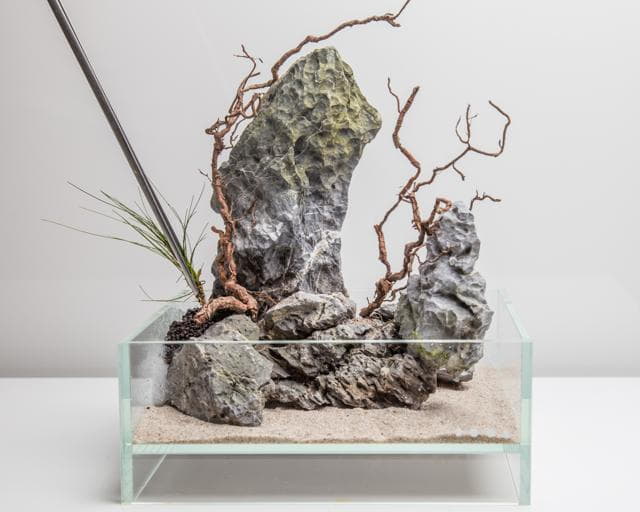
As the first ground cover plant, we plant Eleocharis parvula over a large area. For this we use fine plant tweezers to be able to place the thin blades well.
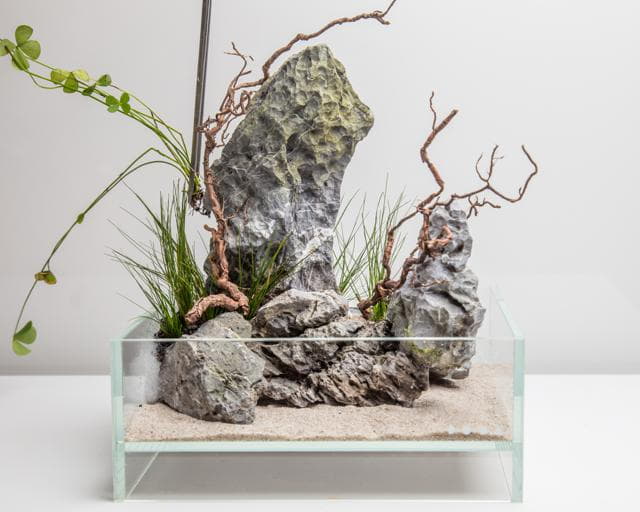
In the rear area, Marsilea hirsuta is used. It grows emersed with fairly tall shoots. The pretty clover-leaf look provides a great contrast.
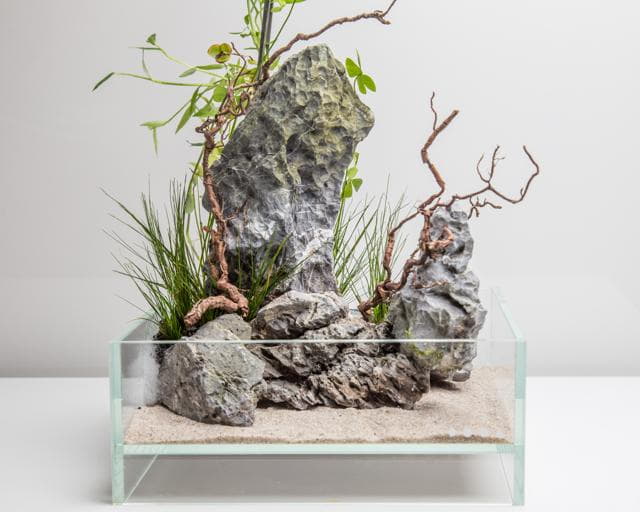
Murdannia keisak is planted at the very back. This aquatic plant grows quite tall and resembles bamboo a little. It supports the Asian look and the grass-like appearance of the layout.
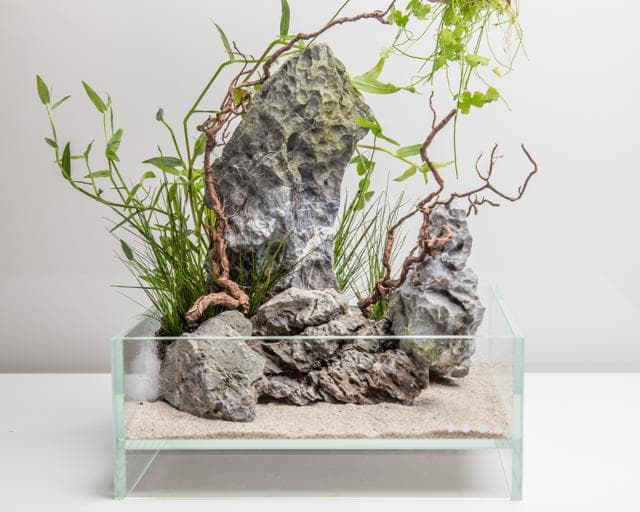
In the midground, Hydrocotyle tripartita is added. This plant provides light green tones and will hopefully then grow low, winding around the stone structures.
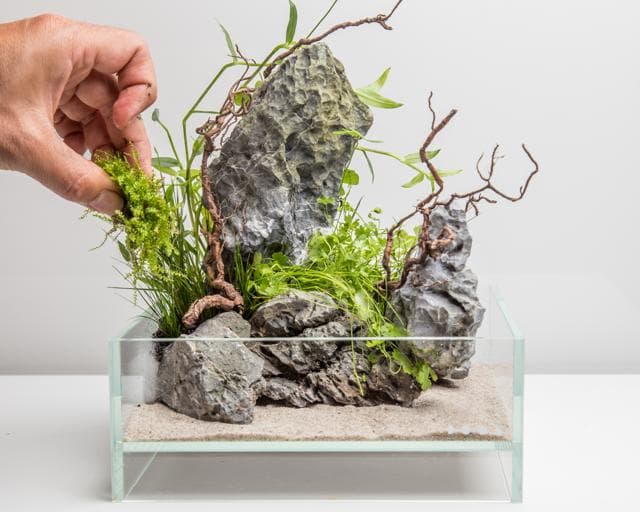
Last but not least, we plant pearl moss to close all free spaces and fill gaps with it. Later, the moss also serves as a good moisture reservoir for the other aquatic plants.
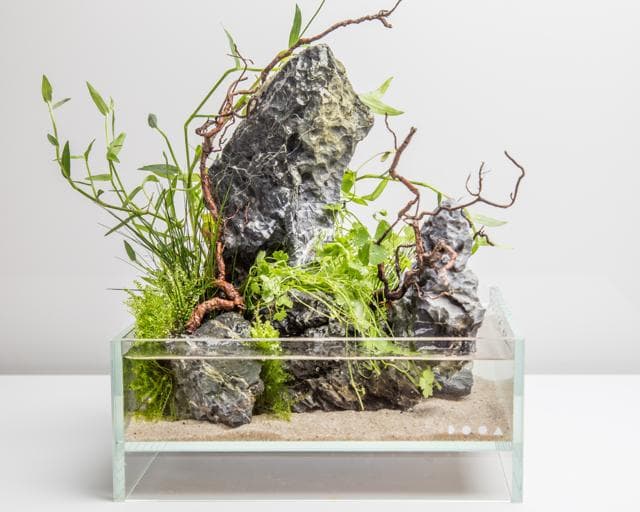
This is what the finished layout looks like for now. This little paludarium is run without any equipment except for the lighting. To keep up the humidity, though, the layout is first sprayed with water twice a day. After a certain acclimation phase, the moisture from the underwater section and the corresponding evaporation will be enough to keep the aquatic plants from drying out too much.
After about 3 months
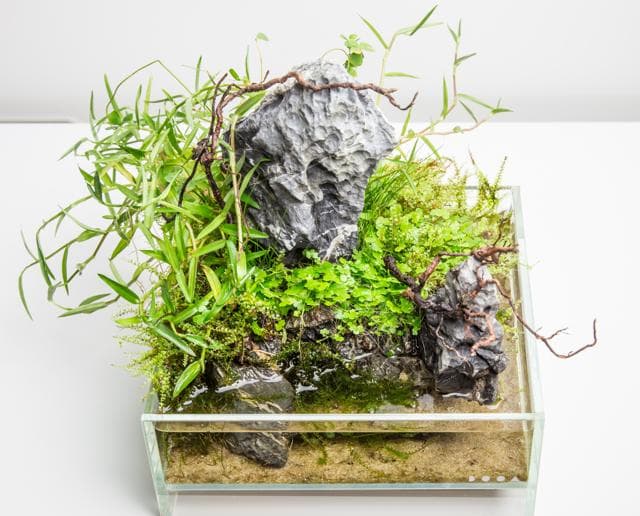
After about three months, this small design has developed steadily and well. All the aquatic plants have grown great. Some of them form clearly hanging shoots, which gives a nice visual effect. In terms of care, this paludarium is extremely uncomplicated. Since the soil is quite rich in nutrients, the nutrient elements it contains are completely sufficient to supply the plants well. Additional liquid fertilization is not necessary up to this point. Apart from daily spraying and topping up the water, no other work is needed. All in all, then, a successful and easy-to-care-for design of such a small aqua-terrarium.
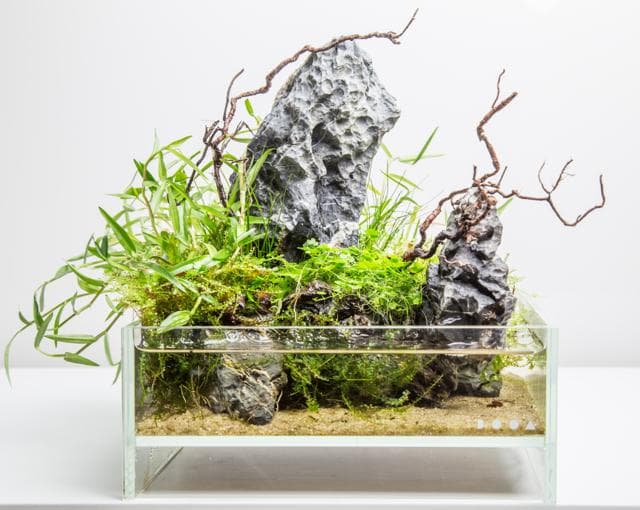
Aquascaper: Aram Schneider