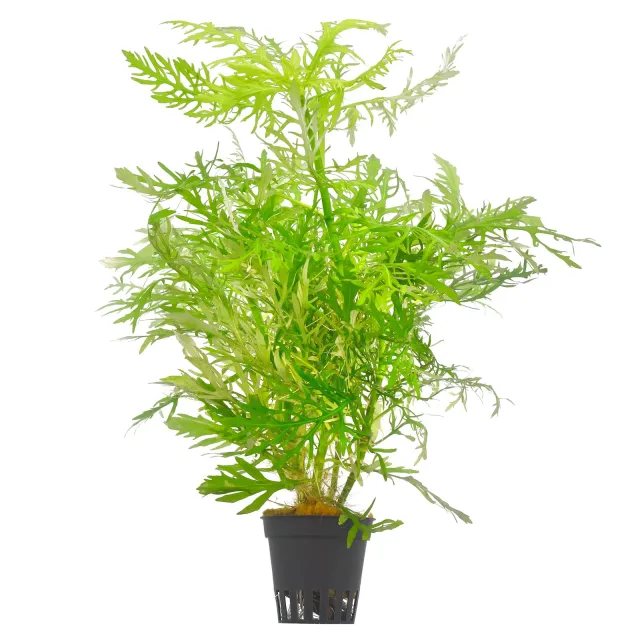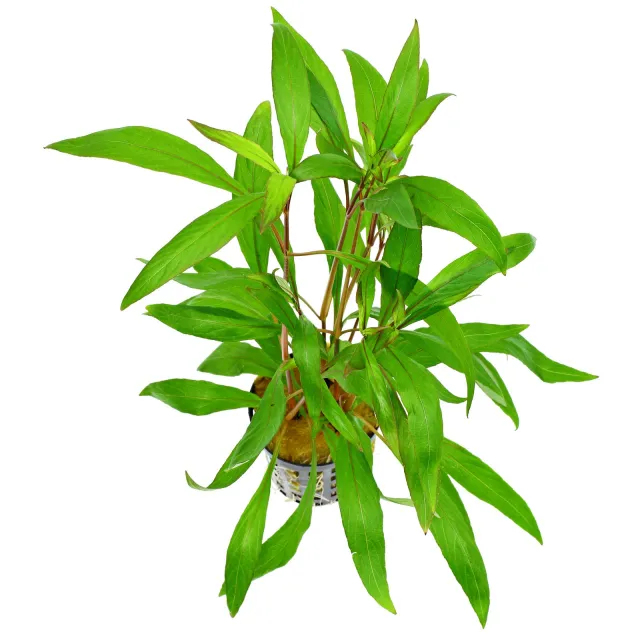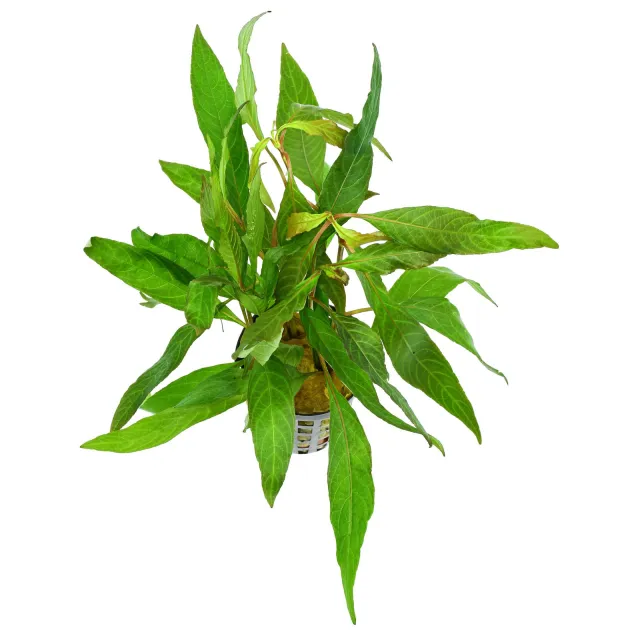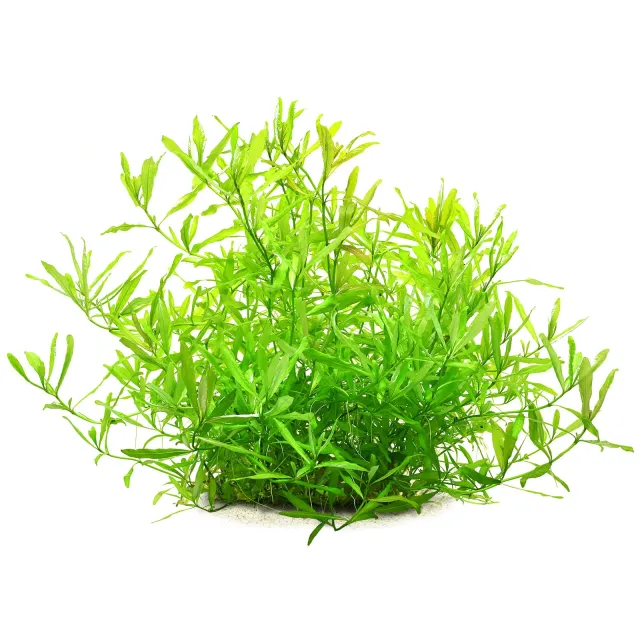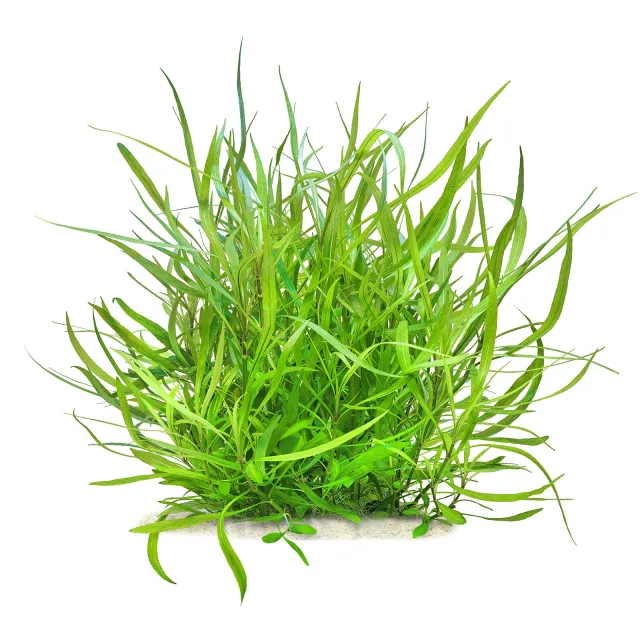
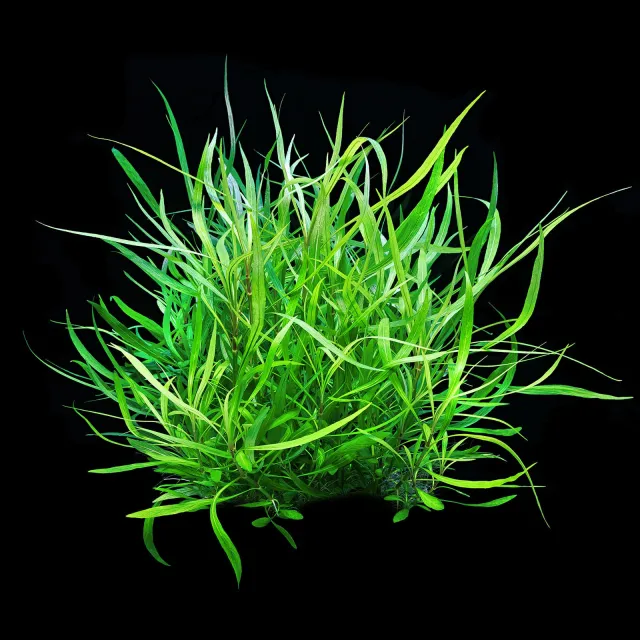

Hygrophila costata
- Also known as Hygrophila guyanensis
- Narrow-leaved stem plant from South America
- Light green
- Upright growth
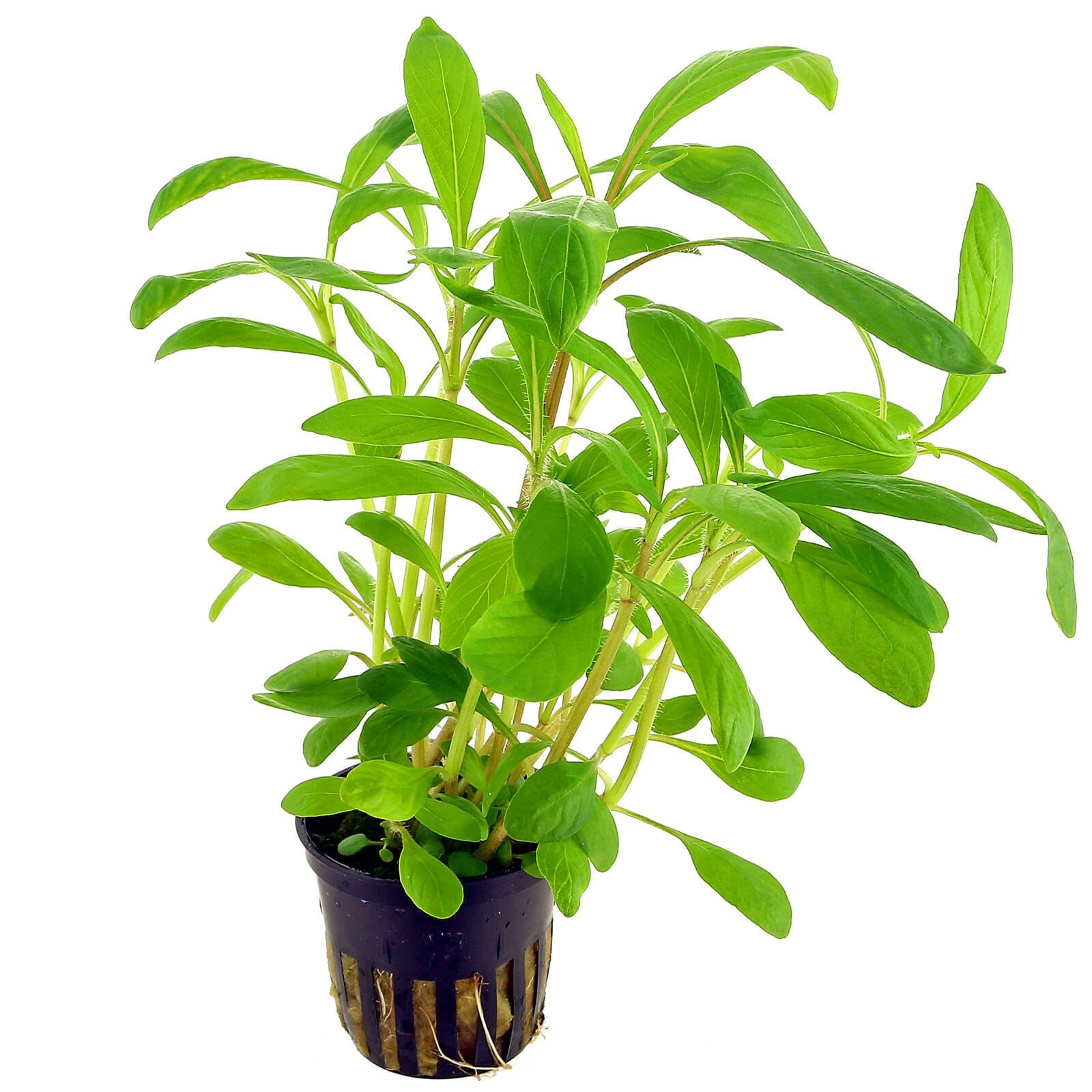
Emersed-grown plants of the genus Hygrophila can occasionally develop small, firm tissue growths ("pustules") on the upper and lower sides of their leaves. These are completely harmless and are not caused by pests or disease. These bumps will no longer appear on newly sprouted submersed leaves.
Curbside delivery: This item ships by freight carrier and is delivered to the curb only, not to your door or into your home. The carrier will call you in advance to schedule a delivery date. Learn more about freight delivery
Customers also bought

Item question
We’re here for you!
Please enter your question and e-mail and we’ll contact you as soon as possible. It usually takes us up to 24 hours during business days to respond.
Thank you for your question!
Thank you, we’ll get in touch!
Close window
You already sent us a question.
Please wait a few minutes
Description
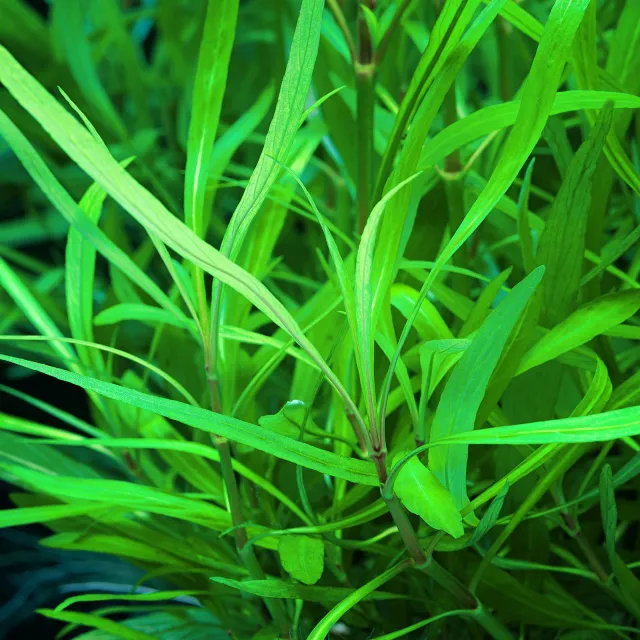
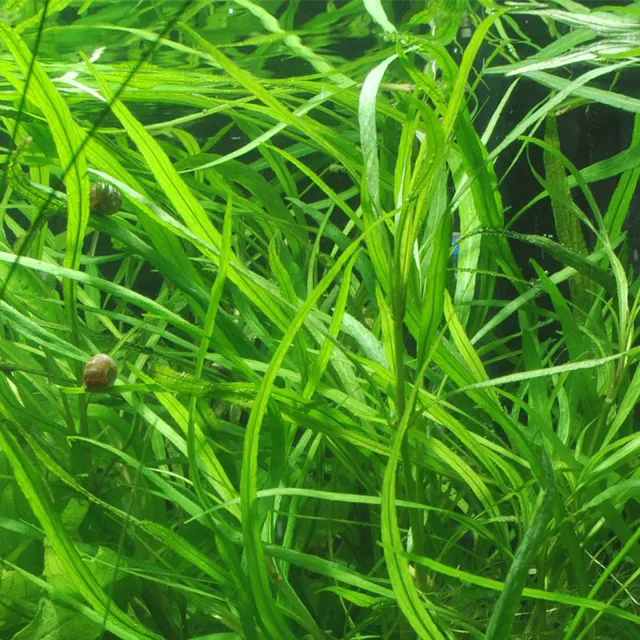
Most Hygrophila species in the aquarium hobby originate from Asia, but Hygrophila costata is native to North to South America. This species is also known as Hygrophila guyanensis and is very variable, with different forms. Our offered plant forms light to medium green, very narrow-lanceolate, almost ribbon-shaped underwater leaves. It has been confused with the similar Hygrophila corymbosa "Angustifolia", but identified as H. costata by its flowers in the terrestrial form. The upright, strong, about 4 mm thick, smooth, rounded square stems grow over 40 cm tall.
The internodes (stem segments between the nodes) are approx. 4 - 5 cm long. The submerged leaves, including the stem, grow to about 20 - 24 cm long and 8 - 10 mm wide.
When the plant grows in the terrestrial form, it develops a broader leaf shape. Small white flowers then appear in the leaf axils. Hygrophila costata is usually supplied in the emersed form and then forms submerged, clearly narrower-leaved shoots in the aquarium.

The Gulf swampweed is not too demanding, but should not be lit too dimly. Before it reaches the water surface, it should be cut back. The cut shoots can be placed in the soil as head cuttings. In tanks without a cover, Hygrophila costata can also be left to grow out of the water as a semi-emerged plant. The plant then forms strong, tall bushes with quite woody stems.
Hygrophila costata looks decorative as a larger group in the mid to background. With its upright, strong stems it creates a vertical structure. The long, narrow, flexible leaves sway in the water current. The Guyanese Water Lily is well suited, for example, to biotope pools that are modelled on a strongly flowing stream or river in tropical America. The plant is also well suited as a semi-emerged plant growing out of the water in open aquariums or as a taller marsh plant in paludariums.
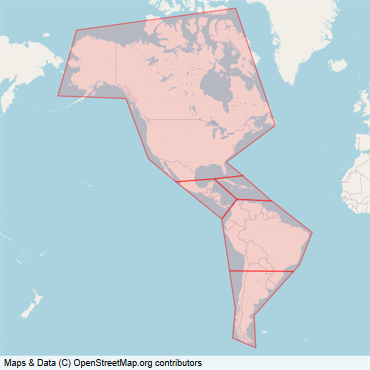
Hygrophila costata is a variable species. Several authors also count H. guianensis and the North-American H. lacustris among it. H. costata originates from the American tropics and subtropics, however, it has been introduced into Australia (Queensland) by the aquarium plant trade and is considered an invasive plant there today.
The stems of the emersed form of H. costata are hairless or have very short hairs (not glandular), the leaves are lanceolate, shaped like a willow leaf, and the small white, 1 cm long flowers stand in groups of up over 10 in the leaf axils. The flowers are followed by spindle-shaped acuminate densely grouped fruits.
H. costata, of American provenience, is quite similar to the plants of the Hygrophila salicifolia complex from Asia. However, it differs from them by its white flowers, among others. (read more)
| Common names | Glush weed, Gulf Swampweed, Lake Hygrophila |
| Synonyms | Hygrophila guianensis Nees ex Benth., Hygrophila lacustris (Cham. & Schltdl.) Nees, Hygrophila lacustris Morong & Britton |
| Complete botanical name | Hygróphila costáta Nees |
| Family | Acanthaceae |
| Genus | Hygrophila |
| Difficulty | medium |
| Usage | Background, Midground, Street (Dutch style) |
| Growth | fast |
| pH value | 5 - 7 |
| Temperature tolerance | 18 - 30°C |
| Carbonate hardness | 0 - 7°dKH |
| General hardness | 0 - 30°dGH |
| Propagation | Seeds, Cuttings |
| Can grow emersed? | yes |
| Source | Flowgrow |
| Common names |
| Glush weed, Gulf Swampweed, Lake Hygrophila |
| Synonyms |
| Hygrophila guianensis Nees ex Benth., Hygrophila lacustris (Cham. & Schltdl.) Nees, Hygrophila lacustris Morong & Britton |
| Complete botanical name |
| Hygróphila costáta Nees |
| Family |
| Acanthaceae |
| Genus |
| Hygrophila |
| Difficulty |
| medium |
| Usage |
| Background, Midground, Street (Dutch style) |
| Growth |
| fast |
| pH value |
| 5 - 7 |
| Temperature tolerance |
| 18 - 30°C |
| Carbonate hardness |
| 0 - 7°dKH |
| General hardness |
| 0 - 30°dGH |
| Propagation |
| Seeds, Cuttings |
| Can grow emersed? |
| yes |
| Source |
| Flowgrow |
How many plants do I need?
General information
| Item no. |
|
| EAN | 5703249052100 |
| Weight | 0,10 kg |
| Shipping weight | 0,10 kg |
Questions and answers about Hygrophila costata
You have questions about this product? Ask other customer or our support team about this product!
Customer reviews
11 Reviews
| 5 Stars(5) |
|
| 4 Stars(1) |
|
| 3 Stars(0) |
|
| 2 Stars(5) |
|
| 1 Star(0) |
|

I never expected such a big plant. Almost 40 cm tall and sturdy. A really thick bush. Thanks for that.
Show original
Eine tolle Pflanze
Mit so einer großen Pflanze hatte ich nie gerechnet. Fast 40cm groß und kräftig. Ein richtig dicker Busch. Danke Dafür.
Good quality. Delivered with somewhat long stems. Top and root cuttings. The top cuttings didn't work out. The root cuttings have all sprouted anew. Slow growth.
Show original
Topfware
Gute Qualität. Etwas langstielig geliefert. Kopf und Wurzelstecklinge. Die Kopfstecklinge sind nichts geworden. Die Wurzelstecklinge sind alle neu ausgetrieben. Langsames Wachstum.
The Hygrophila costata arrived at my place in perfect condition and the quantity was absolutely fine. It took root excellently and quite quickly kicked into turbo growth. (read more)
Show original
Pflanze mit großem Potential!
Die Hygrophila costata kam in einem einwandfreien Zustand bei mir an und die Menge war absolut in Ordnung. Sie ist bestens angewachsen und hat ziemlich rasch den Wachstumsturbo eingelegt. Ich schätze diese Pflanze sehr. Durch einen regelmäßigen Rückschnitt und neu pflanzen der Kopfstecklinge, wächst sie rasch zu einer grasähnlichen Schönheit heran. Ich setze sie im Hintergrund ein, wo sie mit ihren feinen "Wedeln" Auflockerung zum Hardscape schafft. Durch ihren schnellen Wuchs konkurriert sie in der Einfahrphase ganz wunderbar mit lästigen Algen.
Similar products