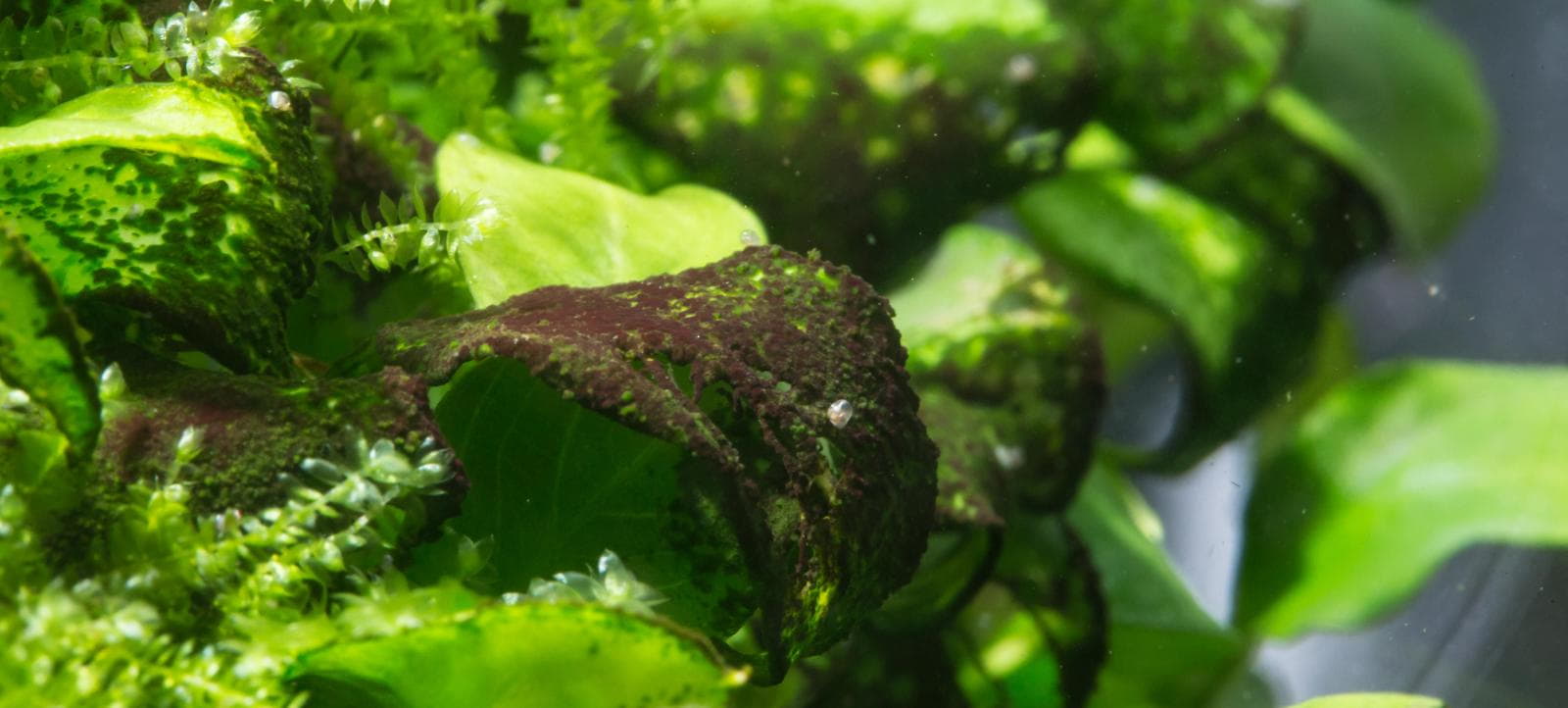
 Rhodophyta sp. 2
To first answer basic questions about algae in the aquarium, we recommend reading this article.
This article is about black algae coatings that we provisionally call Rhodophyta sp. 2 ("red algae species no. 2"), based on the MCI article by Christian Rubilar. They are still scientifically unidentified, but are probably formed by one or more species from the group of red algae. If you put an algae sample into alcohol, it turns reddish, which points to red algae. Unlike other red algae such as beard algae or black beard algae, however, they are not as easy to recognize. They are often quite inconspicuous, dark, firmly attached coatings that settle, for example, on decoration such as stones or driftwood, but also on plant leaves. Slower-growing plant species with long-lived leaves such as Anubias, Marsilea or Lilaeopsis in particular can be affected by this type of algae, more often than fast-growing stem plants. These algae often sit on the leaf edge (see the following photo example, highlighted by the red lines. The additional green spot algae on the leaves are not what is meant here).
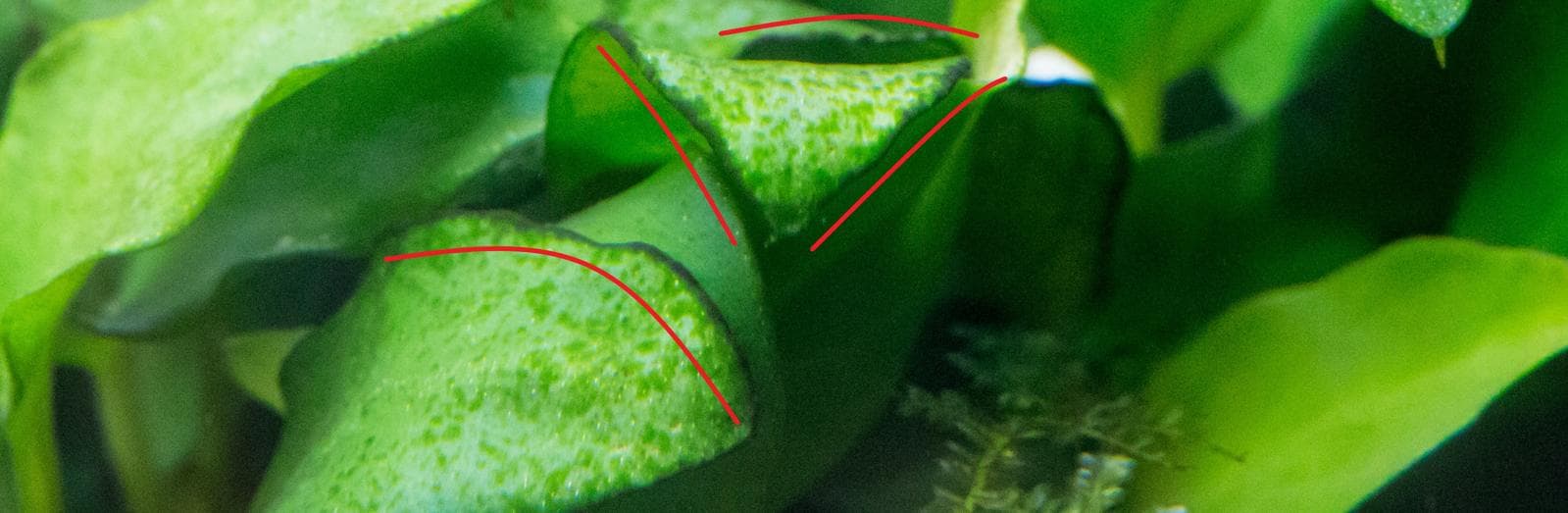
They are also very often mistaken for diatoms. The most common type of diatom coating, in contrast, can be wiped off easily. However, there is also a very firmly attached, flat diatom coating in very dimly lit aquariums. The presumed red alga differs from it by its distinctly darker, blackish color, whereas diatoms (often called "brown algae" by aquarists) are brown. Most algae-eating aquarium animals do not seem to regard Rhodophyta sp. 2 as food; they often leave these coatings untouched.
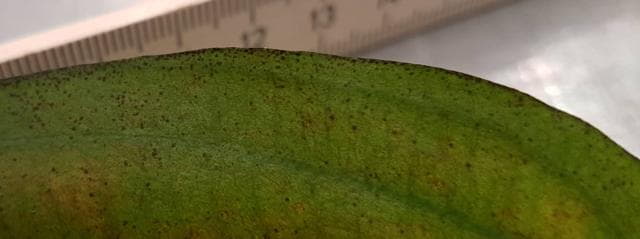
In rare cases, the red algae coatings can also appear as tiny dots.
Common causes
In aquariums with aquatic plants that are supplied with liquid fertilizers, these coatings often appear because of an imbalance in the nutrient balance. It is often missing or insufficiently supplied macronutrients, even with a good micronutrient supply at the same time, that make this alga appear. As a rule, these aquariums are supplied quite well with a complete iron fertilizer and even CO2, but nitrogen, potassium and phosphorus are lacking. An NPK fertilizer is not used in these aquariums, or only in very small amounts. The task here is to add macronutrients through NPK components or to optimize their dosage. Often the nitrate value in particular is simply far too low. For orientation, target values for the plant nutrients mentioned are listed here:
- A CO2 level of about 20 - 30 mg/l, measurable with a drop checker including test reagent
- 10 to 25 mg/l nitrate (NO3)
- 5 to 10 mg/l potassium (K)
- 0.1 to 1 mg/l phosphate (PO4)
- >10 mg/l magnesium (Mg)
In addition, the amount of complete iron fertilizer can sometimes be reduced somewhat to ensure more balanced nutrient ratios. This is especially recommended if the iron content is quite high (>0.1 mg/l Fe) while macronutrient concentrations are low. You can determine the iron in the aquarium water with a suitable water test for iron. As long as the aquatic plants show no corresponding deficiency symptoms (in the form of white shoot tips), you can reduce the dosage step by step.
Since a nutrient imbalance can also arise from neglected maintenance, we would like to point out once more that regular water changes are very important. We recommend a weekly water change of about 50% of the aquarium volume. This also prevents certain substances from accumulating too strongly and nutrient spikes from occurring.
Control measures
Are you having problems with black algae coatings in your aquarium? The growth of these algae is often slowed down by optimizing nutrients. If necessary, you can remove old leaves infested with algae with scissors. For treating certain areas infested with algae, a local treatment with Easy Carbo can sometimes be helpful. You should be careful here not to damage your plants. Sensitive plants in particular, such as many mosses, Hemianthus species or some stem plants, do not like direct treatment with Easy Carbo. Robust plant species such as Anubias or Bucephalandra cope with this procedure better or can be freed of red algae quite well with an Easy Carbo bath.