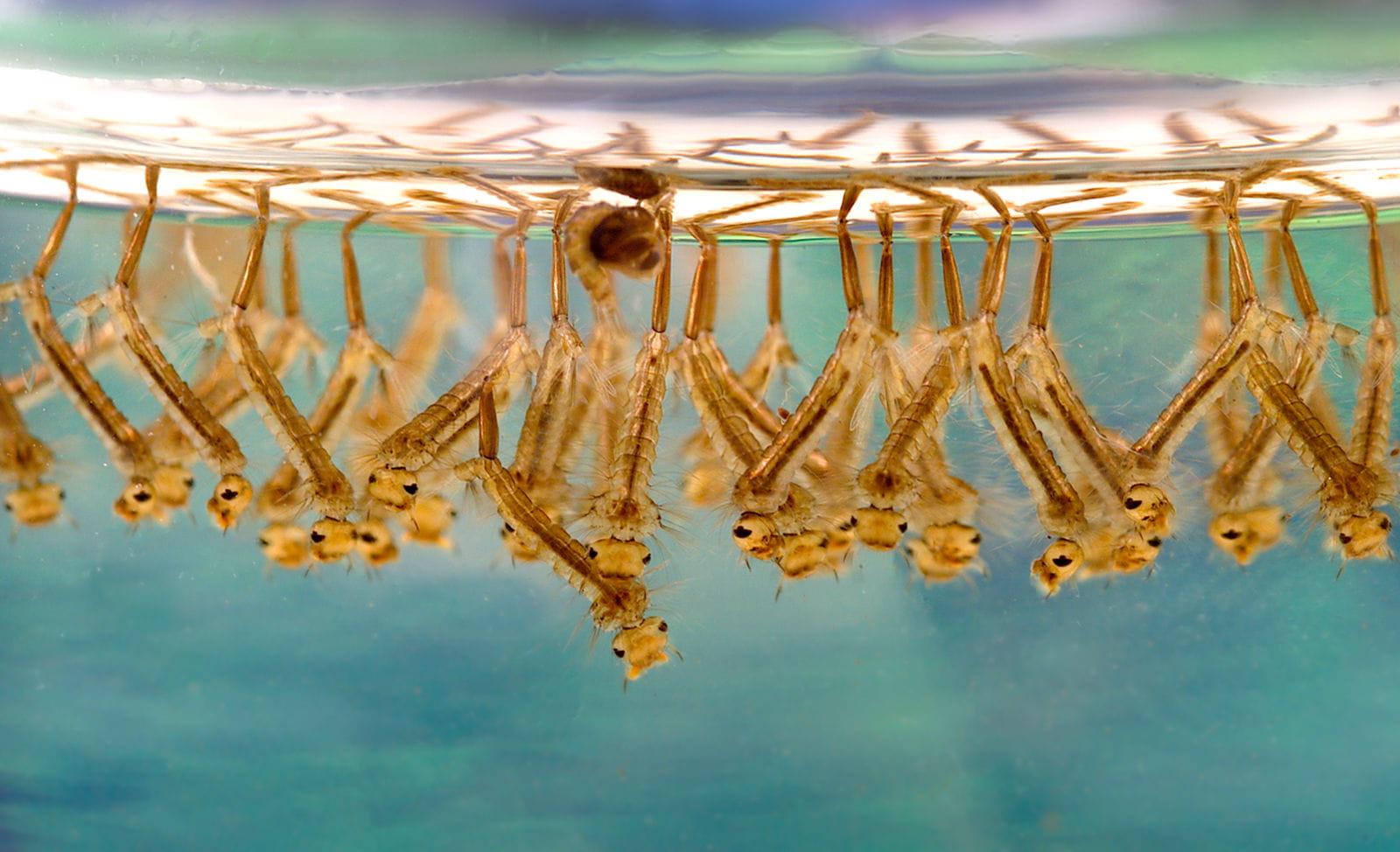
 Black mosquito larvae as live food
Source and copyright of the header photo: James Gathany, CDC - Own work, license: CC BY 2.5.
In the aquarium hobby, "black mosquito larvae" is the popular name for the larvae of mosquitoes that live in water. They hatch from the small black egg rafts that female mosquitoes lay on the water surface, which look a little like caraway seeds.
Black mosquito larvae develop very quickly, so you usually cannot buy them as live food at the pet store. They are, however, an excellent live food for fish and can really get them in the mood for spawning. Mosquito larvae are rich in protein and contain some fat, they provide vitamin A and vitamin D, and thanks to their chitin shell they also supply some roughage.
Black mosquito larvae feed on algae, microorganisms and detritus in the water. They are a live food that is fairly easy to produce outdoors. You should definitely avoid letting mosquito larvae develop indoors!
Because their development time is so short, black mosquito larvae should always be fed in measured amounts so that the larvae do not pupate and hatch - otherwise you would have brought a mosquito plague into your home.
Black mosquito larvae are dark in color and have an elongated body. Their breathing tube, with which they hang from the water surface, is located at the rear end. When danger threatens, they can dive down in a jerky, S-shaped motion. Their pupae are also very agile and can flee in a flash when disturbed. Pupated black mosquito larvae are more spherical, with a very short tail. Their breathing tubes are located on the head and look like two short antennae.
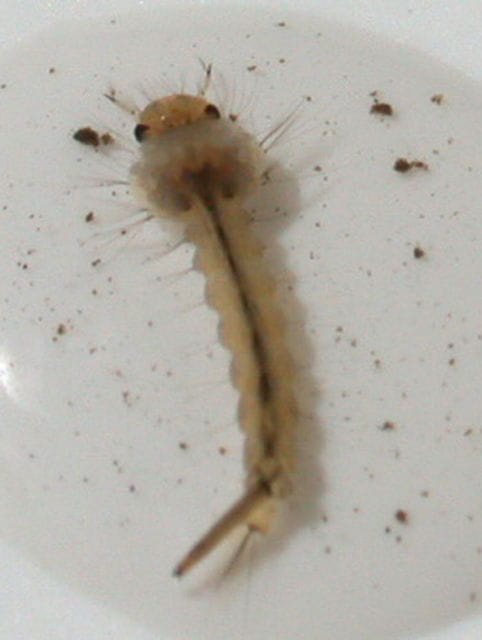
The larva of a Culex mosquito. Image rights: public domain via Public Domain.
Black mosquito larvae as live food for fish
Black mosquito larvae are suitable as live food for all fish. Invertebrates such as shrimp, snails and dwarf crayfish, or large crayfish, cannot easily reach the black mosquito larvae, which stay mainly at the water surface. Too many mosquito larvae would be left over and hatch - which is why invertebrate breeders prefer not to feed live black mosquito larvae. Frozen, however, they are also a popular food for freshwater invertebrates.
Black mosquito larvae are especially well suited for raising slightly larger juvenile fish. Simply place egg rafts collected outdoors on the water surface of the rearing tank. The tiny larvae can then be eaten by the juvenile fish right after hatching.
Breeding black mosquito larvae made easy
Black mosquito larvae are not quite that easy to breed indoors, but under good conditions female mosquitoes will lay their egg rafts all by themselves in just about any water container outdoors. You can encourage the mosquitoes to lay eggs a little by not keeping the rain barrel completely clean, leaving some leaves on the bottom, or by encouraging the growth of green water (suspended algae) a little by placing the container in the sun.
You can then simply remove the black mosquito larvae from buckets and rain barrels with a fish net. When danger threatens, they dive down, so you should use as large a net as possible and not just skim directly at the surface.
If you have a very good harvest, you can also freeze the black mosquito larvae. Pre-freeze them with a little water in an ice cube tray and then transfer them to a freezer bag or freezer box - this way the black mosquito larvae are nicely pre-portioned, and your fish have a great, nutritious and healthy food in winter, too.