 Breeding enchytraeids made easy
Source and copyright of the header photo: Paul Bachhausen via Wiki Commons - Own work, license: CC BY SA 3.0 DE.
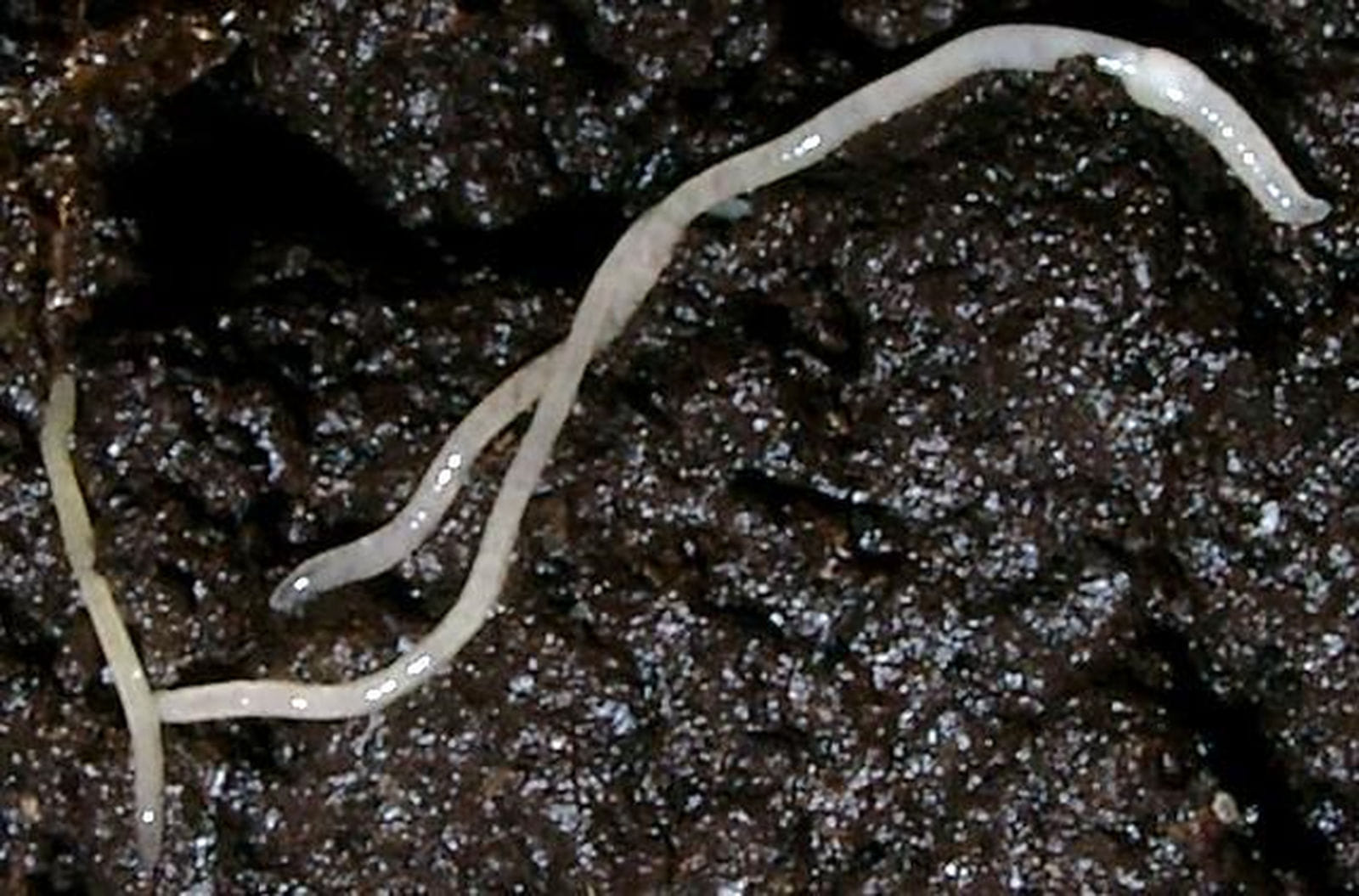
Enchytraeids are whitish worms that, depending on the species, grow to about 0.5 to 3 cm in length. The family Enchytraeidae belongs to the subclass of oligochaetes and is therefore distantly related to earthworms and tubifex. Unlike many members of these worm families, enchytraeids generally stay smaller and thinner. This makes them suitable as live food for more aquarium fish species.
These little worms are very easy to breed in a permanent culture, and the cultures do not smell strong or unpleasant if they are done right. In nature, enchytraeids live in moist to wet habitats. Under good conditions they can live up to a year. Although most of the enchytraeids that live in the soil are not really aquatic worms in the strict sense, they can survive in water, and thus in the aquarium, for several days.
Enchytraeids that are not eaten right away are therefore not a problem at first, because they do not die immediately and can still be eaten before they die.
Enchytraeids as live food for fish and invertebrates
Enchytraeids have a comparatively high proportion of fat and protein, so they should not be fed every day. Since enchytraeids can survive in water for a certain time, they should not be fed in large quantities. They can disappear into the substrate and cause rotten spots there if they eventually die after all.
Enchytraeids are suitable as food for small to medium-sized aquarium fish. Since they are quite soft, even juvenile fish being raised can eat them. Because enchytraeids do not swim and sink quite quickly in water, shrimp, snails and small crayfish in the aquarium can also be fed with them. Here, too: do not feed too often and not in portions that are too large!
How do you get enchytraeids?
The best way to get a starter culture of enchytraeids is from specialist retailers or from other aquarists. Cultures of "enchys" are also frequently offered at aquarium trade fairs. In theory, you could also simply search a compost heap for the little white worms - but the risk of picking up unwanted hitchhikers such as mites is high, and getting cultures from other aquarists should be considerably more pleasant.
Breeding enchytraeids made easy
Enchytraeids reproduce readily in a permanent culture. Although the worms are hermaphrodites, they need a partner to mate. As clitellates, sexually mature enchytraeids have the so-called clitellum, the typical band in which they form an egg cocoon after mating and lay one to three eggs in it. The cocoon is shed and deposited in the soil. Under good conditions, enchytraeids can produce an egg cocoon practically every day.
Since these are not aquatic animals, enchytraeids are raised on a moist substrate. Seramis, for example, has proven ideal here - the clay granules store water, do not compact, and can be cleaned quite well if necessary.
You should rinse the substrate through with water at longer intervals to clean it - washed-out worms can be caught easily in a fine sieve.
You can also breed this live food well on moist soil. Reproduction is extremely good with good feeding. The worms do not need daylight.
The lid of the breeding container should be provided with small air holes. If you simply left the container open, the substrate would dry out too quickly, and worms could also escape. A little ventilation, however, prevents mold and rot.
From time to time it is advisable to split the culture and top it up with new substrate.
Feeding enchytraeids
Enchytraeids are very easy to feed. They like moistened rolled oats or soaked toast, baby cereal and similar food. Now and then you can enrich it a little more with dry yeast. Only feed as much as the worms eat in one to two days so that the culture does not mold. Uneaten food can also attract mites, which you should definitely avoid.
"Harvesting" and feeding enchytraeids
A small pane of glass or plastic placed on the enchytraeid culture is a popular collection spot for the worms. They gather in large numbers on the underside of the pane. This way you can feed your fish this nutritious live food very easily - simply swish the pane in the aquarium water and the worms come loose. This keeps contamination in the aquarium to a minimum.