 Mold on the aquarium driftwood?
Less experienced aquarists in particular get unsettled after setting up a new aquarium when they discover white coatings on the driftwood. What is it, slime or mold? And above all: is it dangerous? In this article we explain these strange formations.
White slime on driftwood
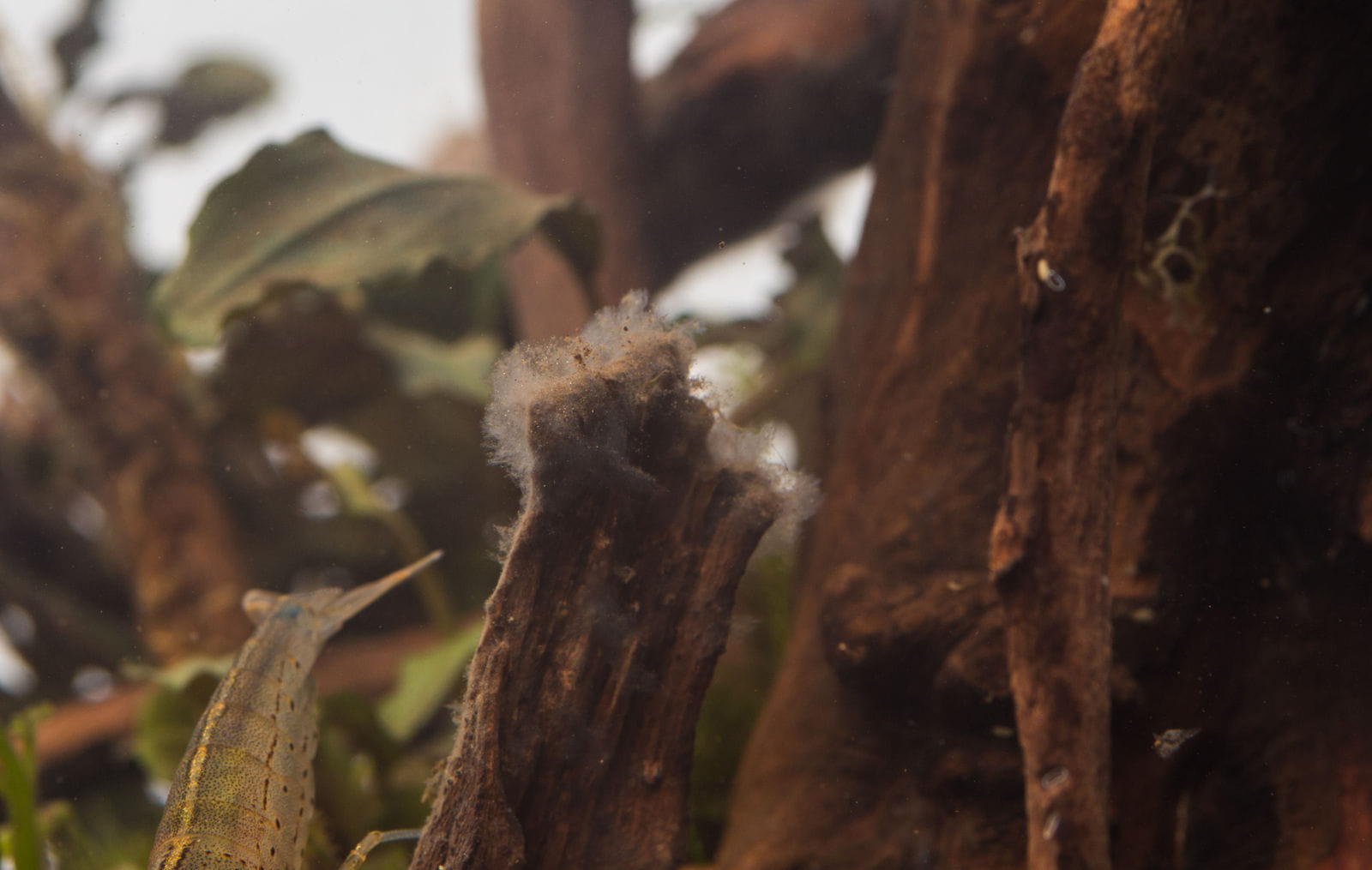
White, light brownish or grayish mold-like coatings with a slimy or fluffy appearance are in truth not mold but accumulations of bacteria. This phenomenon is therefore often called bacterial lawn or bacterial fluff. It can be observed preferably on fresh driftwood in a newly set up aquarium. In general, this slime is not to be regarded as dangerous for the inhabitants of the aquarium. It occurs mainly on wood surfaces; in rare cases it is also found on aquatic plants.
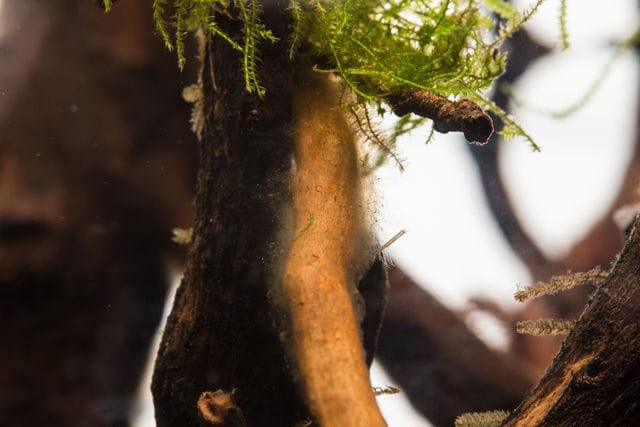
The cottony to stringy bacterial coatings are often Sphaerotilus natans. These are rod-shaped bacteria, which are also called sewage fungus - although they are not a fungus. They feed on organic nutrients located near the surface in the wood of driftwood freshly introduced into the aquarium. This phenomenon can be observed quite often in newly set up aquarium layouts during the so-called cycling phase. As a rule, the "problem" resolves itself after a short time, namely when there are no more nutrients available to the bacteria in the wood. The infestation then recedes on its own.
To a greater or lesser degree, this also depends heavily on the type of wood used. Compact types such as mangrove or pine root are much less prone to forming bacterial lawn than, for example, more delicate types such as red moor root or Talawa.
Removing and controlling bacterial fluff on driftwood
Although these bacterial coatings pose no danger to the inhabitants, they are certainly an eyesore. In the classic case of a new setup and the appearance of the slime during the cycling phase, it is often a problem that disappears on its own over time. Sometimes, however, this bacterium also appears again and again spread over a longer period, or suddenly shows up in aquariums that have already been running for a long time. Also unfortunate: its appearance in display tanks that were set up specially for a trade fair or the like. In that case, the aquarist first of all simply wants to get rid of these coatings. Bacterial fluff can often be scrubbed off a little with a toothbrush, although, depending on the type of microbes it consists of, bacterial lawn sometimes sits quite firmly on the surface. In that case a sharp blade or a metal sponge is needed to remove it.

Invertebrate aquarium animals such as shrimp and snails are especially suitable as natural predators, and they devour these bacterial coatings with pleasure. These invertebrates are often part of the initial stocking of an aquarium and are one more reason why the bacterial film then disappears during the cycling phase. But sucker catfish such as Otocinclus or Ancistrus species also regard this kind of biofilm as food.
Tackling the cause
If such bacterial lawn appears in an aquarium that has already been running for a while and, above all, no longer disappears by itself, the cause may lie elsewhere - the bacterial lawn is then an indication of excess nutrients. Sometimes the reason for its appearance can be a previously unnoticed organic load. Are there rotten spots in the substrate of the aquarium, is a plant rotting, or is a dead animal lying somewhere that hasn't been found yet? Is the last filter cleaning a very long time ago? In such a case, all driftwood already in the aquarium should be checked for rotten spots.
Raising the redox potential in the aquarium can help in fighting bacterial lawn, because the organic load is then broken down better. Appropriate aids such as an oxydator or a Twinstar sterilizer also increase the oxygen input and reduce the germ load in the aquarium water.
Mold on driftwood
"Real" mold in principle does not appear at all on wood under water, as true molds do not feel at home in this habitat. The transition zone from water to air, on the other hand, is at great risk. According to DIN EN 335-1, this zone even has a very high hazard class as far as timber components are concerned. In an aquarium in which parts of the driftwood protrude from the water, mold can also form at these spots, or in corners and crevices under the aquarium cover in the condensation area.
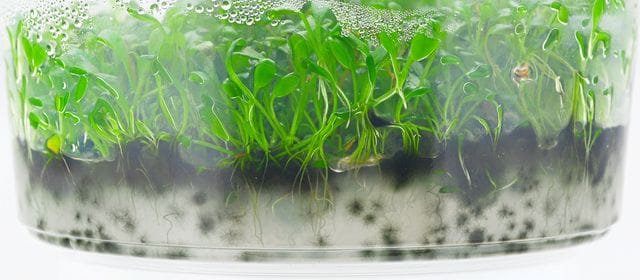
Typical white or greenish fluff can form here, as known from mold on food. As a rule, the infestation in the aquarium is a temporary problem that can be brought under control relatively easily by simple scraping. There should also be no great danger to the aquarium inhabitants. Once the nutrients are used up, the real mold also disappears again by itself.
In aquascapes with driftwood protruding from the water, regularly flooding these zones (that is, slightly raising the water level) also prevents mold formation.