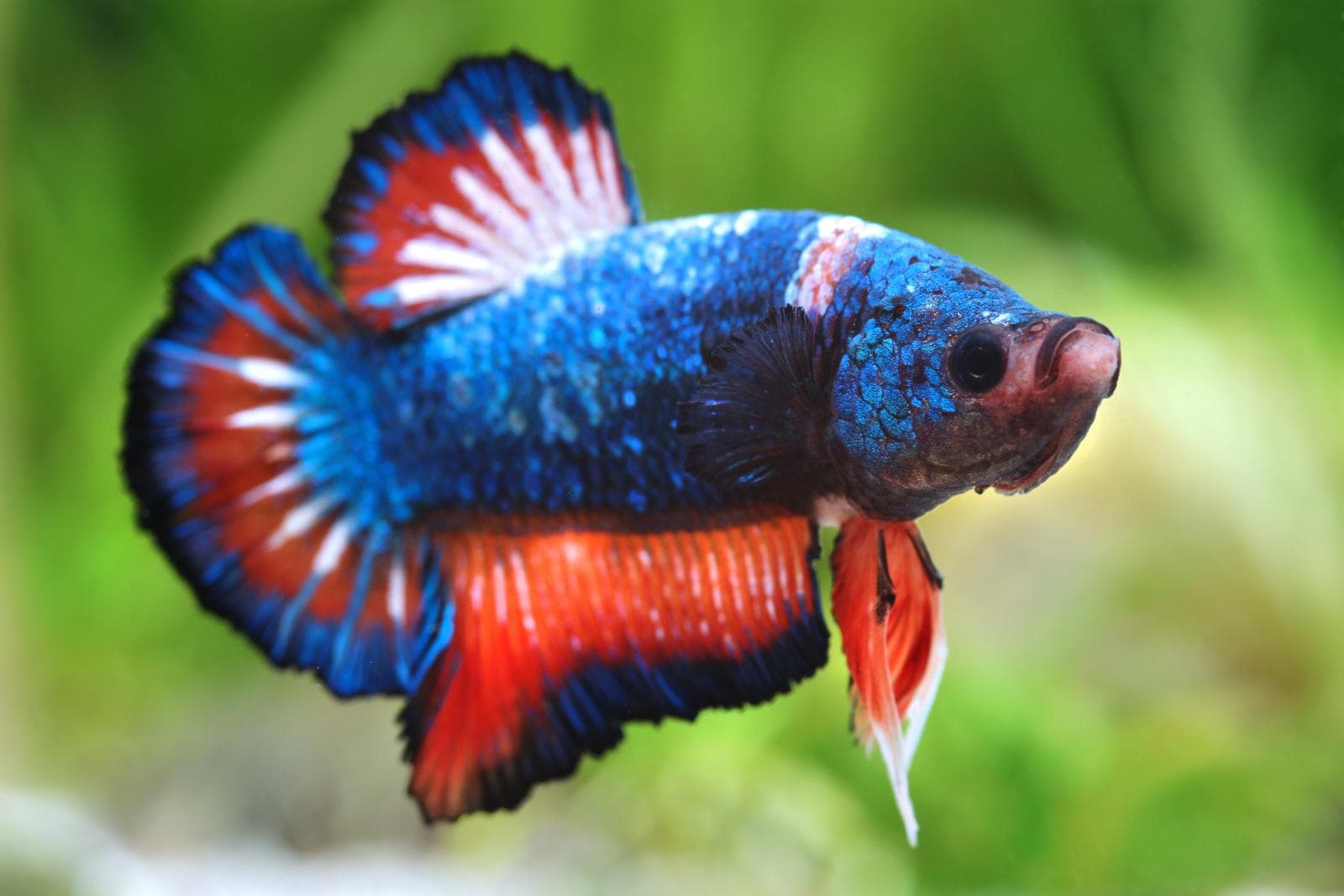
 The betta aquarium
How do you set up an aquarium for a betta? What equipment is needed and which aquatic plants are well suited here? We have put together a short guide for all betta lovers.
The tank for a betta
Bettas (and especially male specimens) are usually kept alone. Otherwise, keeping a pair or a male together with a small harem is advocated. Here we explicitly deal with keeping a single betta. So as not to overstrain the territory size unnecessarily, a glass tank of about 30 liters is entirely sufficient here. Nano cubes are quite popular for this, but other tank shapes are also conceivable. The aquarium should definitely have a good cover. This prevents the fish from jumping out. And the atmospheric air that the betta breathes in when it takes air from above the water surface then stays nice and warm.
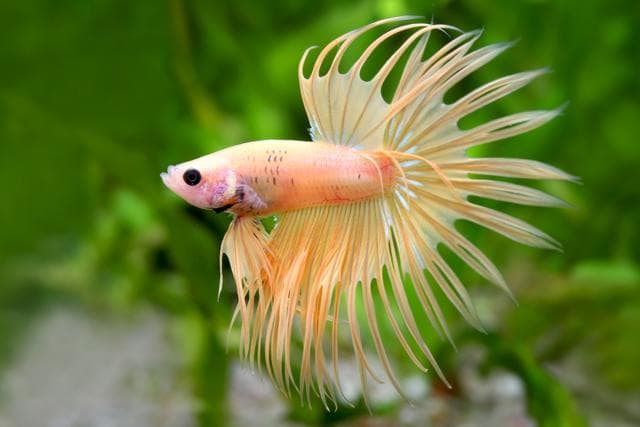
A betta flares its fins. Copyright by Chris Lukhaup.
Equipment
As further aquarium equipment, a betta tank naturally needs suitable lighting, a heater and a filter. For a nano aquarium of about 30 liters, a small heater that can keep the temperature constant at a minimum of 24°C is sufficient. These heaters from Dennerle, for example, are very nice because they are quite small and compact. They can also be easily hidden behind a piece of driftwood.
To monitor the temperature, you can also get an aquarium thermometer.
Since bettas like it a bit darker, the lighting should not be too bright. As a first rough rule of thumb, you can aim for about 15 lumens per liter. This is still enough light for the aquatic plants in the aquarium. For a nano cube or a similar cube aquarium measuring 30 x 30 x 30 cm, the ONF Flat Nano Plus White, for example, is very well suited. Aquarium lights that are too strong for these needs can often be reduced in power with a suitable dimmer.
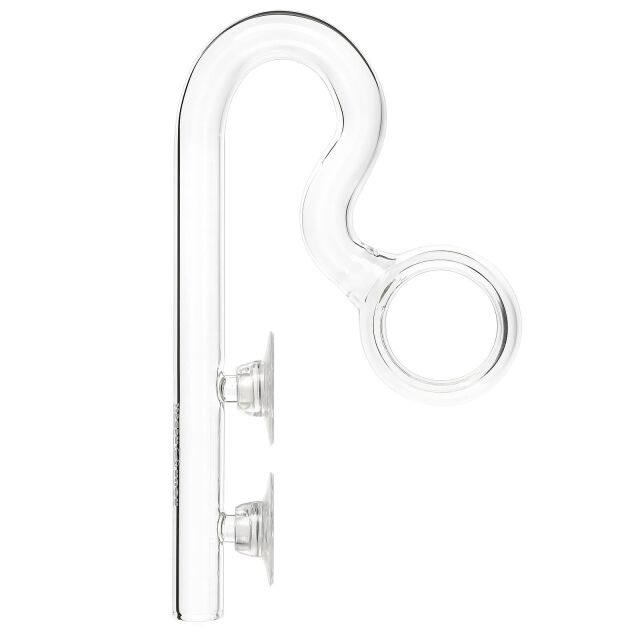
Filtration is also linked to the current in the aquarium. Here you should make sure the current is rather gentle, especially near the water surface. This is particularly important for bubble nest building in some bettas. If the current should be too strong, it can be reduced or weakened nicely with suitable filter outflows. With an adjustable filter outlet, you can, for example, aim it more toward the substrate. A great lily pipe is the Aqua Rebell Loop Pipe, which slows down the water flow through its special shape and distributes it to the sides.
The filter should preferably have a somewhat more generous filter volume to suit the size of the aquarium. Since bettas feed mainly on meat, quite a lot of live and frozen food is given. The water load from the food input is therefore somewhat higher than, for example, in a shrimp aquarium. The filter material should therefore consist largely of biological filter media or high-performance filter media. If a food-related problem with too high a phosphate content should arise, there should be enough room in the filter for a phosphate adsorber.
Substrate
As a substrate, we would suggest a moderately fertilized soil, such as Tropica Aquarium Soil. On the one hand, thanks to its cation exchange capacity, the soil provides good soft-water values with low hardness and an acidic pH, which are preferred by many betta species. On the other hand, it provides a moderate nutrient supply for the aquatic plants so that they are optimally supplied. Since most bettas also prefer it rather dim, the dark color of the substrate works in your favor here.
Decor
Copyright by Chris Lukhaup.
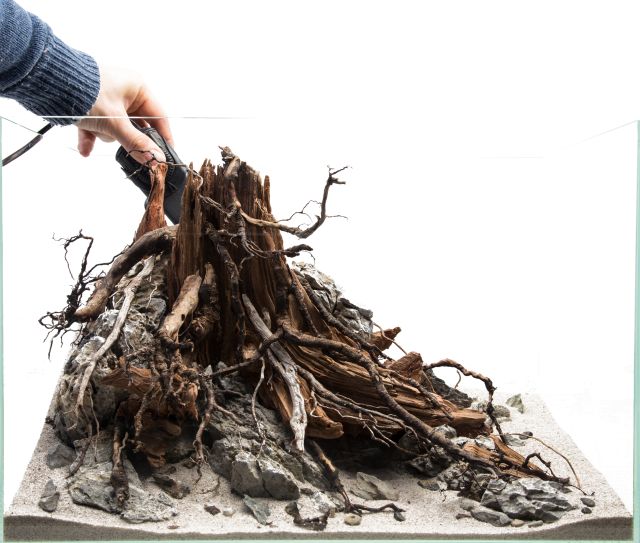
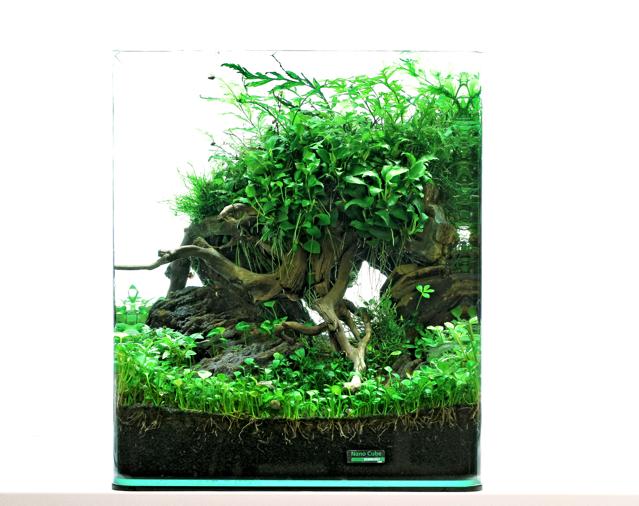
A fairly classic setup for a betta aquarium is a driftwood-focused, vertical layout, possibly supported by a few water-neutral stones. Mosses and other epiphytes can be attached to and on the driftwood very well. This creates a very natural look and offers the betta plenty of hiding places. The tall structure creates many shaded zones, which can be supported by using floating plants. This produces a fairly dim atmosphere that the animals like.
Aquatic plants
The choice of aquatic plants depends primarily on how strong the light intensity of the aquarium light is and whether a CO2 system is present. In many betta aquariums the lighting is rather weak and there is no carbon fertilization. Our plant suggestions are therefore adapted to this situation and also cope with little light, as they are fairly undemanding but no less attractive aquatic plants.
Foreground plants
Ground cover plants are not particularly important for a betta aquarium, but they round off the overall picture and increase the plant mass. It is important here to choose aquatic plants that cope well with the weaker light situation. Here are a few suggestions:
-
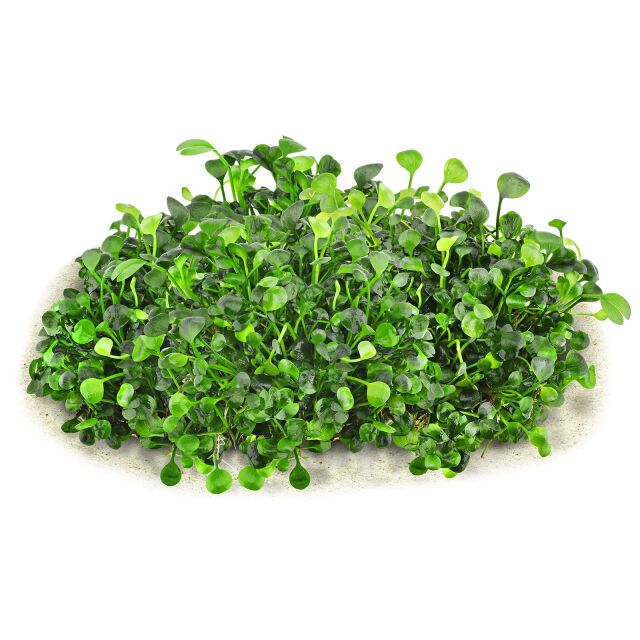
Marsilea hirsuta: A dark green ground cover plant with roundish leaves that is somewhat reminiscent of clover. Quite frugal and slow-growing.
![Marsilea hirsuta]()
-
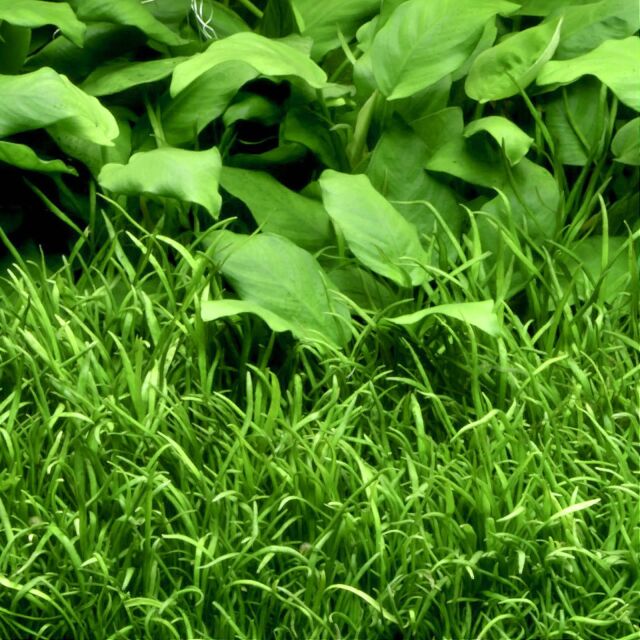
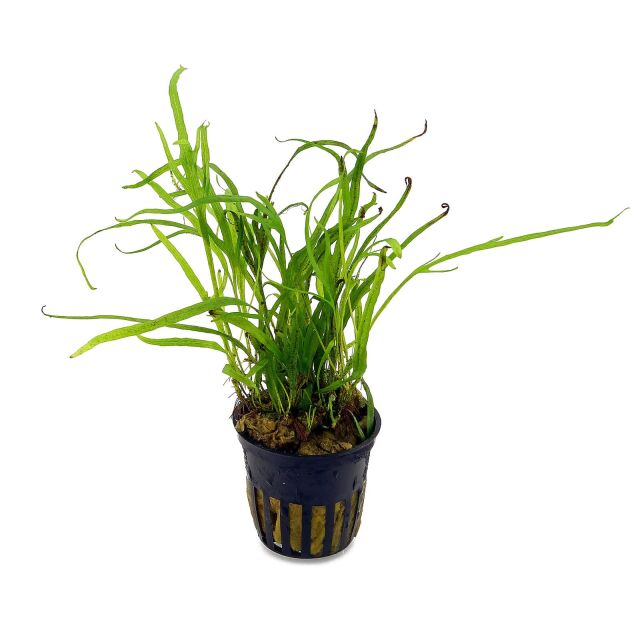
Lilaeopsis brasiliensis: A grass-like foreground plant with light green blades. Also quite undemanding and slow-growing.
![Lilaeopsis brasiliensis]()
-
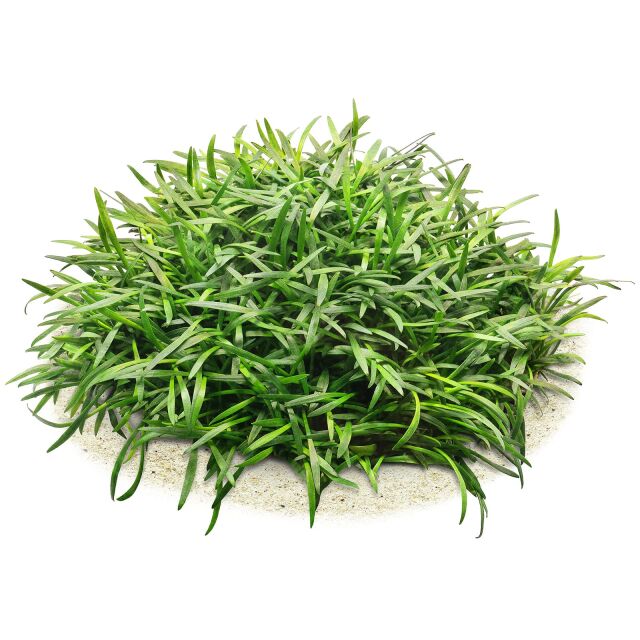
Cryptocoryne parva: A small-staying water trumpet with green, slightly elongated leaves. Growth is rather solitary, meaning it does not spread by runners.
![Cryptocoryne parva]()
Midground
The midground means the next level behind and above the foreground. Here you can use mainly plants of medium height. Cryptocorynes in particular are very well suited for this purpose. Here are a few suggestions from us:
-
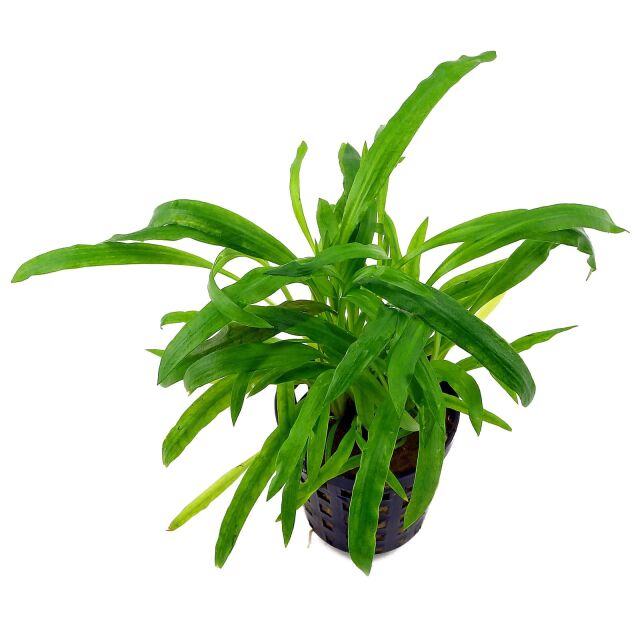
Cryptocoryne albida: A pretty Cryptocoryne with narrow green leaves. Easy to care for and slow-growing.
![Cryptocoryne albida ("Costata")]()
-
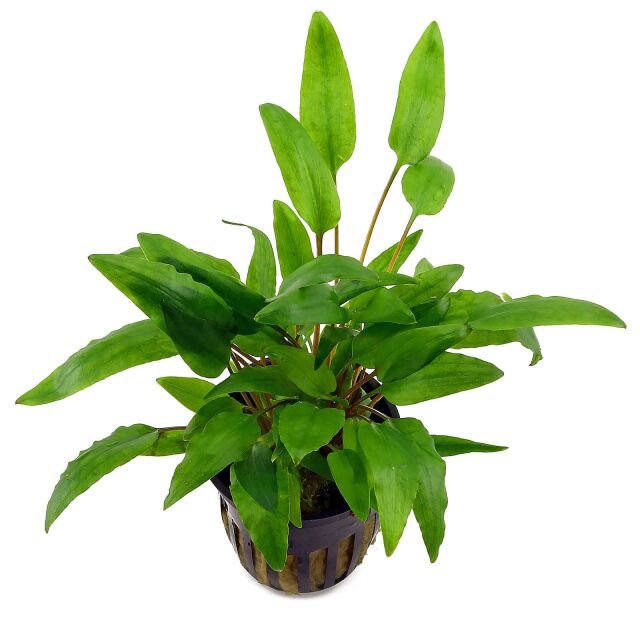
Cryptocoryne wendtii "Green": A medium-sized, compact water trumpet with green leaves that have a slightly broader shape. Extremely easy and undemanding to keep.
![Cryptocoryne wendtii "Green"]()
-
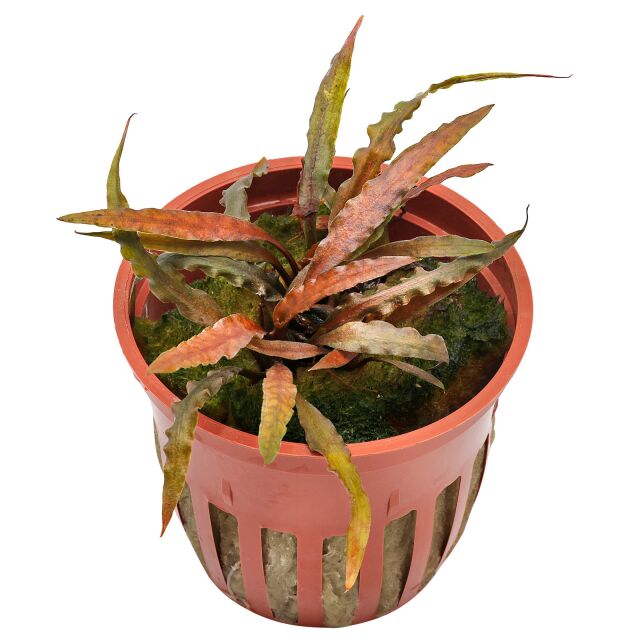
Cryptocoryne albida 'Brown': This is the brownish-red variant of a Cryptocoryne albida. This pretty water trumpet has elongated leaves and forms a nice splash of color and a contrast to green aquatic plants.
![Cryptocoryne albida 'Brown']()
Epiphytes and mosses
Epiphytes and aquarium mosses are used to green hardscape such as stones and driftwood. In terms of design, this also usually counts as part of the midground of an aquarium layout. Some epiphytes such as ferns, however, can grow quite large. We therefore give recommendations here for species that stay rather compact and fit into a nano aquarium:
-
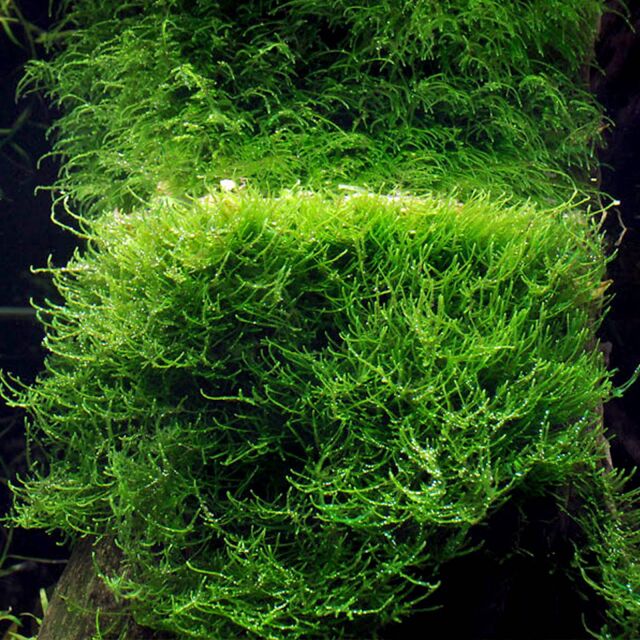
Taxiphyllum barbieri: The classic Java moss is easy and undemanding to keep. A delicate moss that attaches itself to decorative objects over time.
![Taxiphyllum barbieri "Javamoos"]()
-
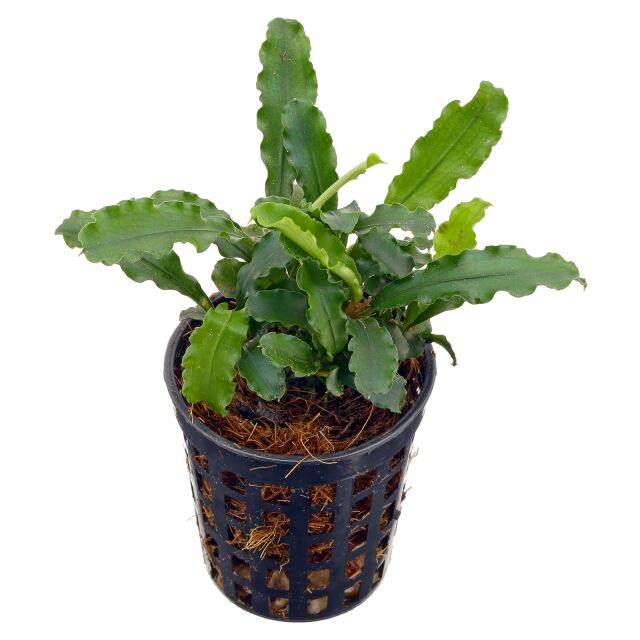
Bucephalandra pygmaea "Bukit Kelam / Sintang": An easy-to-keep Bucephalandra species with pretty green leaves with a wavy shape.
![Bucephalandra pygmaea "Bukit Kelam / Sintang"]()
-
Microsorum pteropus 'Trident': This three-pronged Java fern grows extremely compact and, with its delicate leaves, looks less bulky. It can therefore also be used well in a nano aquarium.
![Microsorum pteropus 'Trident']()
Background
Background plants grow taller and find their place near the back glass. They can happily grow up to the water surface. Because of their shape, they are also well suited for concealing aquarium equipment. Here are a few examples:
-
Vallisneria nana: The narrow-leaf vallisneria is visually well suited for a smaller aquarium thanks to its delicate leaf shape. The tall stems serve the betta as a hiding place and retreat zone.
![Vallisneria nana (gracilis)]()
-
Cryptocoryne spiralis var. caudigera: The Shola water trumpet, with its narrow leaves and low growth height, is very well suited as a background plant for a betta aquarium. Other characteristics are the light green color and a fairly bushy appearance.
![Cryptocoryne spiralis var. caudigera]()


Floating plants
Floating plants in a betta aquarium serve to shade and calm the water surface. Species with longer underwater roots can also serve as hiding places for the betta. Here are a few examples:
-
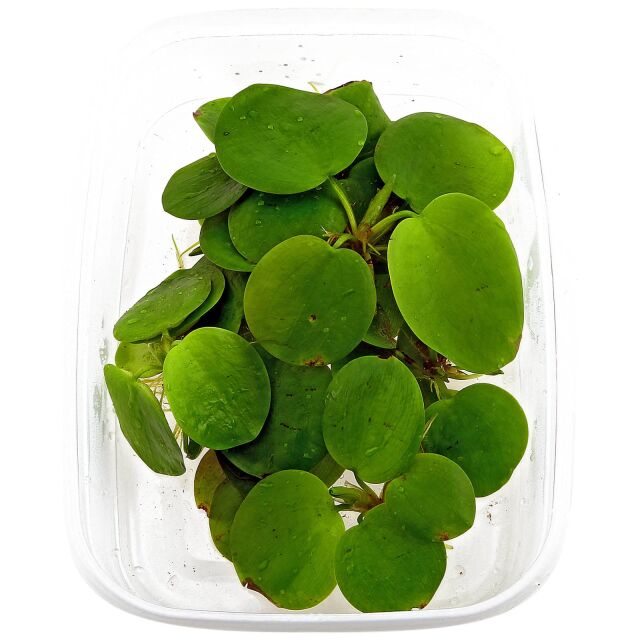
Limnobium laevigatum: The South American frogbit is a popular floating plant in the aquarium hobby. It has quite long roots and is characterized by fast growth.
![Limnobium laevigatum]()
-
Salvinia auriculata : The eared watermoss is a fast-growing floating plant with rather small green leaves that are slightly hairy.
![Salvinia auriculata]()

Copyright of the header photo: Chris Lukhaup