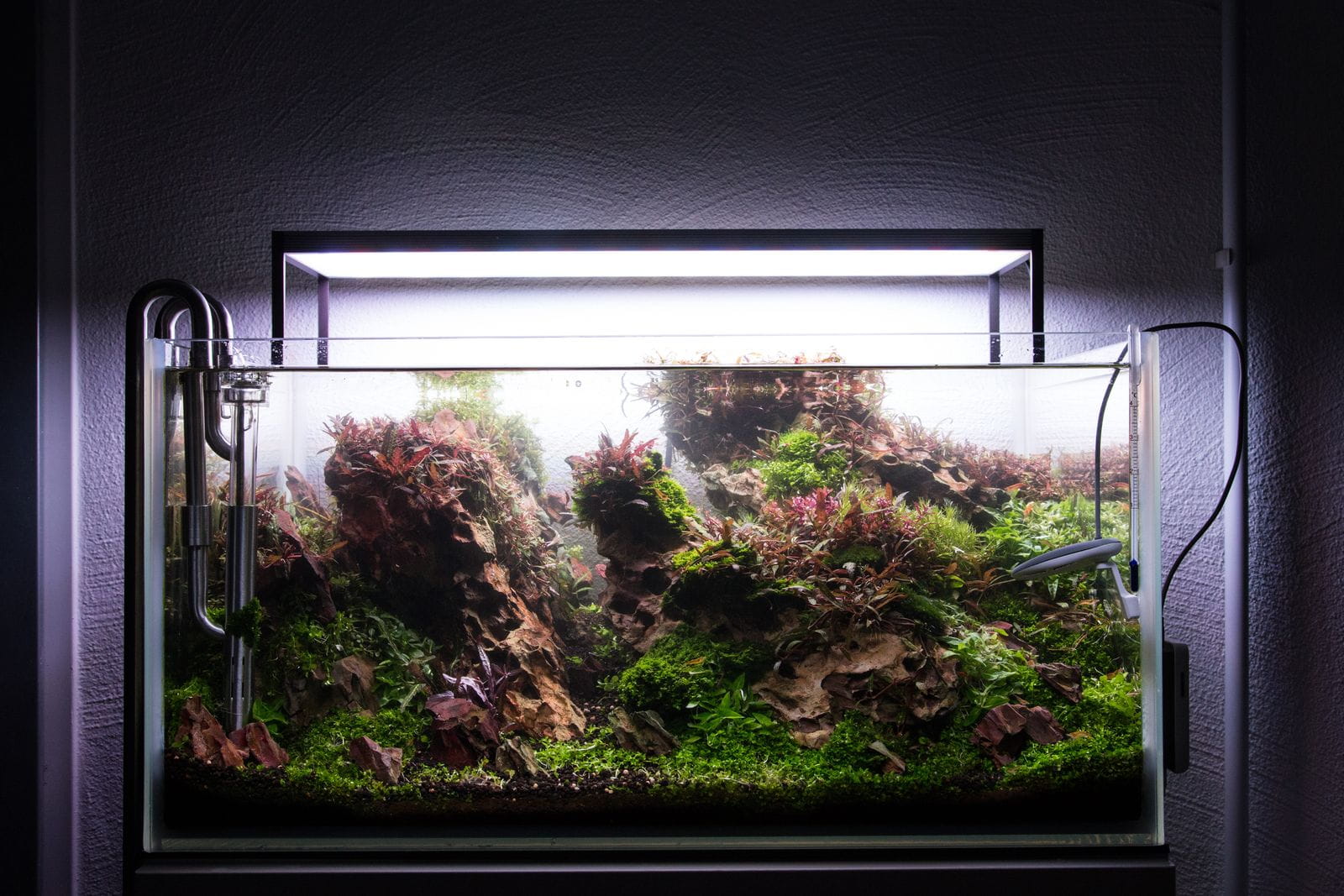
 Water zones in the aquarium
In principle, every body of water can be divided into different zones that look different depending on the distance from the water surface. The same is true of an aquarium. Let's take a closer look at the different water zones.
Division into water zones
In contrast to the layout planes in aquascaping, which are expressed as foreground, midground and background and thus define a division by the depth of the aquarium, the water zones are based on height. This results in a lower water zone near the substrate and, conversely, an upper water zone just below the water surface. Between them lies the middle water zone. Taking the water zones into account is an important aspect above all when choosing the livestock for the aquarium, because the different fish species divide themselves up across the water zones.
The upper water zone
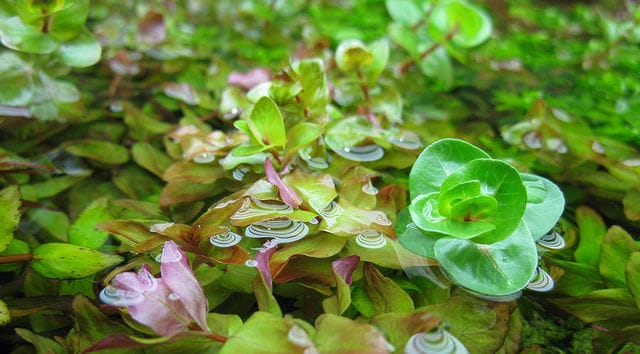
The upper area of an aquarium is located directly below the water surface. Fish with an upturned mouth, such as the popular guppies, but also halfbeaks and panchax killifish, stay predominantly in this area. This is because they feed mainly at the water surface, for example by hunting and taking flying insects or pollen.
The aquatic plants best suited for this area are primarily floating plants, but also background plants, which then grow up to the water surface (or even beyond). As a rule, the upper water zone is fairly free of decoration materials, but there can certainly be driftwood and stone structures that reach into this water region and sometimes break through the water surface. In that case, the hardscape can be nicely greened with mosses and epiphytes.
Depending on the fish stocking, the current in this area matters and can be either particularly strong (for animals that love current) or rather weakened (for example for labyrinth fish that build bubble nests).
The middle water zone
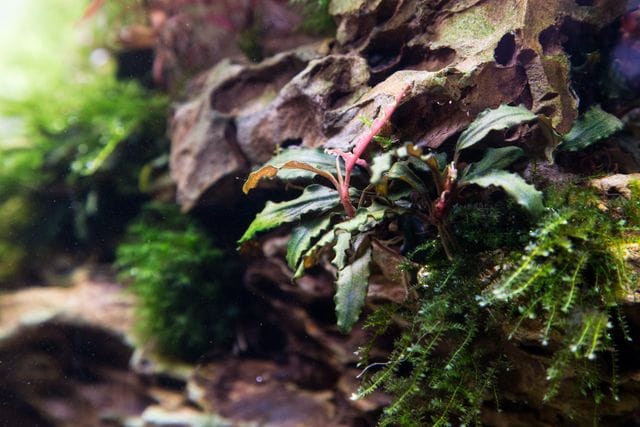
The middle water zone is the area between the upper and lower water zones and is therefore not firmly delimited by a hard boundary such as the water surface or the substrate. Many fish species, such as most tetras, barbs and danios, stay in this area. It is often used as open swimming space, but also as a place to retreat and hide. This can be achieved by structuring the aquarium accordingly, for example with dense planting along the edges, as well as driftwood and stones rising from the bottom.
Many species and varieties can be used as aquatic plants for this area. This is in the nature of things: since almost all aquatic plants that hold on with their roots in the substrate grow upward, they eventually also reach the middle water zone, depending on their growth height. In some cases they even grow beyond it (above all the so-called background plants) and then take over the upper water zone. Quite fitting for the middle water zone, however, you can use midground aquatic plants, which have a moderate growth height and are intended for the midground layout plane.
Stones, driftwood and other furnishings are also generally placed on the bottom and, depending on their height, also reach areas of the middle water zone. Looking at the whole area, it is characterized by structured zones with aquarium plants and decoration, but also by open swimming space.
The lower water zone
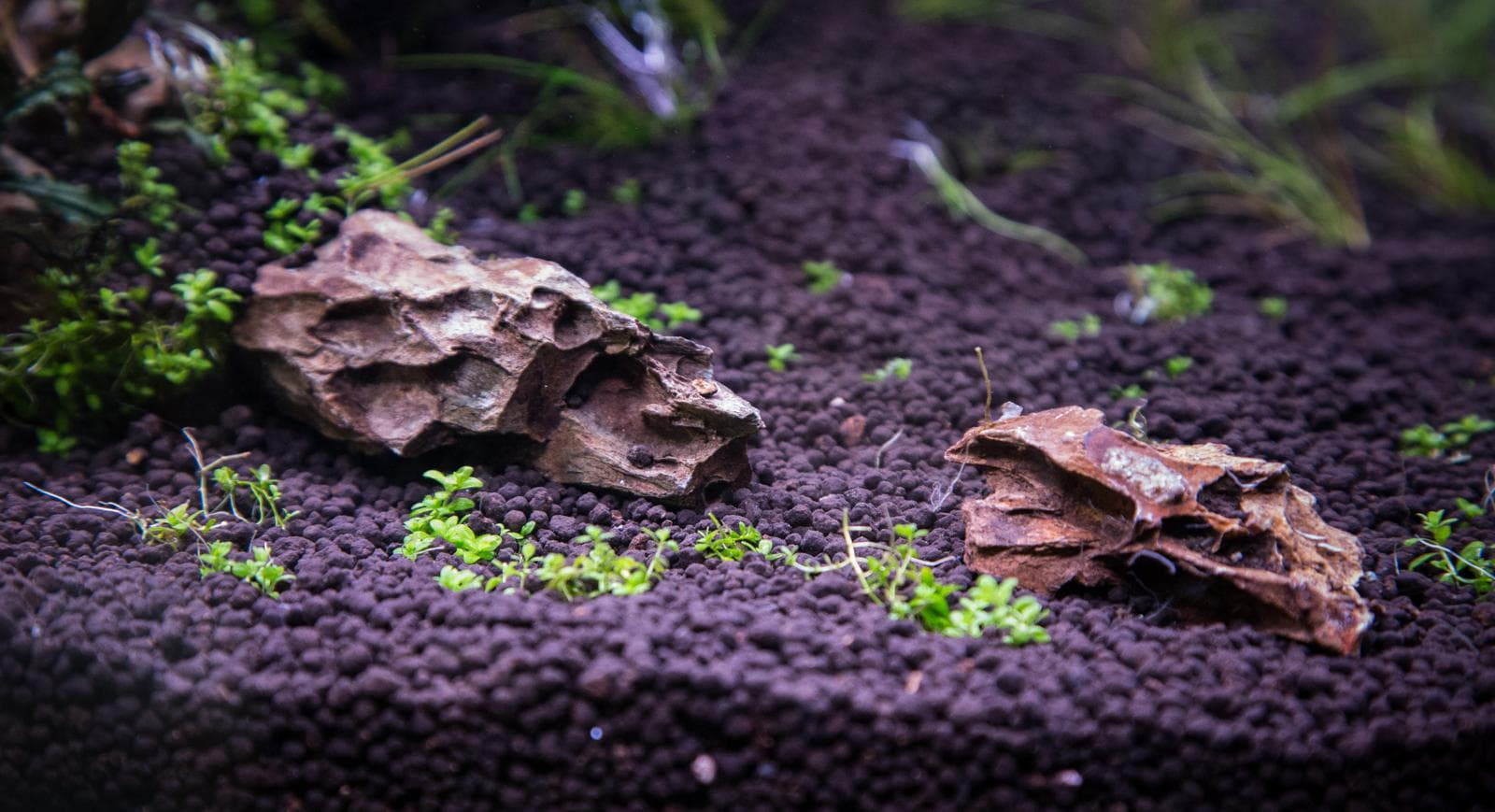
The lower water zone takes place at the substrate of the aquarium. Here there is usually a suitable bottom substrate such as sand, gravel or soil. Bottom-oriented animal species such as catfish, gobies, loaches, snails and shrimp stay mainly in this area. The substrate is often sifted through and searched for food. For such animals, which often have a downturned mouth, food that sinks quickly to the bottom is especially suitable.
Typical aquatic plants for this zone are mainly low-growing species that are grouped together under "ground cover plants". These plants often propagate by lateral runners and then form a dense carpet. In the lower water zone, decorative items such as stones and driftwood, but also caves or tubes, are also placed. This way the animals find suitable hiding or spawning spots in this area as well.