 Oliver Knott: Cleaning Glassware
Glass filter inflows and outflows and glass CO2 diffusers are stylish elements with which you can once again beautify an aquascape or planted aquarium in an aesthetic way. The material makes the aquarium equipment almost invisible, but glassware in the aquarium should also be cared for. Here, Oliver Knott shows you how these products can be cleaned.
Separating glassware from the tubing
Both glass lily pipes and glass CO2 accessories such as diffusers or bubble counters should form as stable a connection as possible with the tubing for leak-tightness reasons. For this reason, the connection pipes of the glass products are usually dimensioned somewhat larger than the diameter of the tubing to be connected. Unfortunately, this not only makes connecting the glassware to the tubing somewhat harder, but also disassembling it. Things often break during disassembly, especially when brute force is used. There is, however, a simple trick for removing the tubing more easily: with heat, you can make a filter hose softer and more flexible again, for example, and thus pull it off a glass pipe more easily.

Here, Oliver Knott warms the tubing with a cloth that was previously soaked in hot water. Other options are a warm water bath for the connection point or brief warming with a hair dryer. You can find more tips on this topic in our article "Hose sizes & glassware".
Cleaning with a hose brush
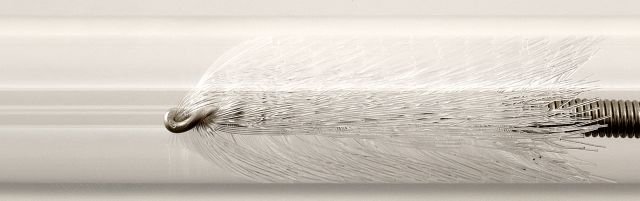
Especially glass filter inflows and outflows tend to get dirty after a long running time. Once you have successfully separated the tubing from the lily pipe, you can remove the coarse dirt from straight sections quite well with a suitable hose brush. Pay attention to the right hose diameter and choose a brush with as short a head as possible. With curvy glass pieces, hose brushes can cause problems (risk of breaking the glass when force is applied), and with them you sometimes cannot remove all coatings (such as hard spot algae) from the glassware. For such problem cases, the method with a cleaning liquid, which we explain in the next section, is the better choice.
Soaking glassware in chlorine bleach
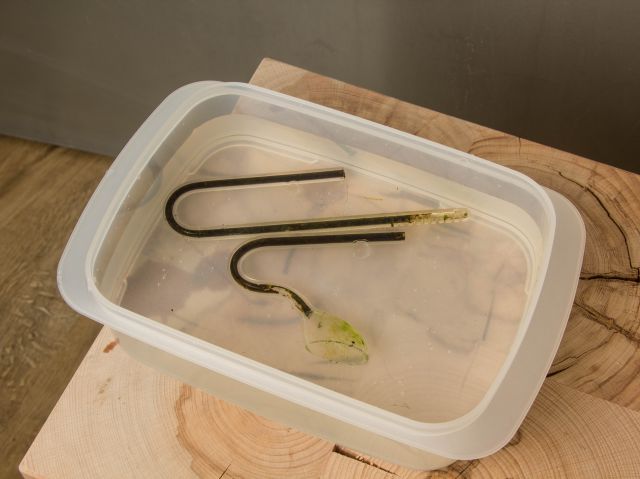
Chlorine bleach can be used to clean not only lily pipes but also other glassware such as CO2 diffusers very effectively. In a container of suitable size, prepare a bath of a mixture of water and chlorine bleach at a ratio of 1:1. Commercially available chlorine bleach from the drugstore can be used for this.
Note: The relevant safety instructions of the respective product must be observed without fail! Avoid direct contact with the bleach. We recommend using tweezers or wearing gloves. Also make sure the room is well ventilated.
Before putting the glassware in the bath, all suction cups and tubing should be removed from it. Then place the dirty glass parts in the liquid. Depending on the degree of soiling, it can take 1 to 2 days until the cleaning effect becomes visible. With very heavy contamination, you may need to increase the proportion of chlorine bleach in the bath.
After cleaning, the glass parts are taken out of the bath and rinsed thoroughly under running water. If you want to be on the safe side, put the now-clean glassware in another bath of only water and add a little water conditioner, which removes the last traces of chlorine. The glassware is then ready for use in your aquarium again.
You can find more information, by the way, in our guide "Cleaning glassware" in our Aquascaping Wiki.