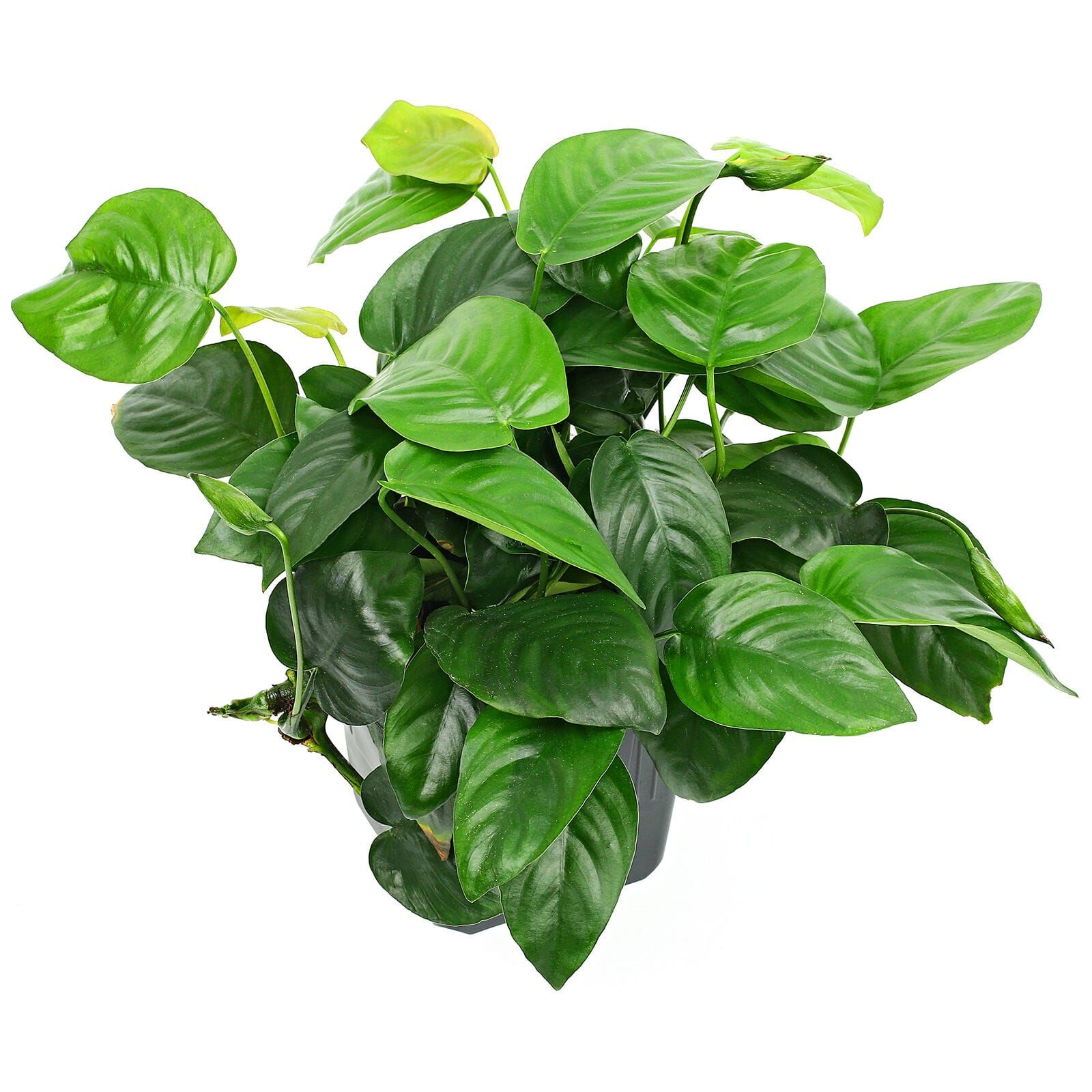
 Shade Plants in the Aquarium Hobby
Anubias, mosses, ferns, but also cryptocorynes count among the so-called shade plants in an aquarium. But what exactly is meant by that? We explain it to you in this article.
Shade plants are aquarium plants that also do well under weak lighting. They are therefore also called low-light plants. These are often very undemanding, easy-to-keep aquatic plants that also tend to have a slower metabolism. They therefore do not need as many nutrients and cope quite well with the situation even under adverse circumstances.
It depends on the light
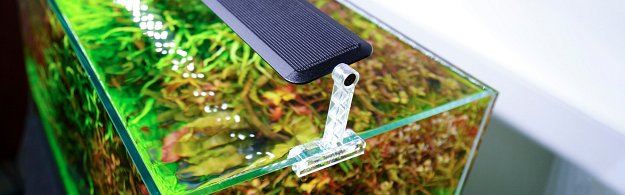
The decisive factor for being classified in the shade plant category is whether the plant also gets by well with lower brightness. For this, you should know in advance that the light requirement of aquatic plants is generally divided into the following ranges:
- low light requirement: approx. 0.2 to 0.3 W/l with old light sources corresponds to approx. 15 to 20 lm/l with LEDs.
- medium light requirement: approx. 0.5 W/l with old light sources corresponds to approx. 30 lm/l with LEDs.
- high light requirement: approx. 1 W/l with old light sources corresponds to approx. 60 lm/l with LEDs.
Shade plants, or low-light plants, do very well with the "low light requirement" category. Of course, keeping them under stronger lighting is also conceivable. But in some cases it also makes sense to place shade plants in darker areas. If they are lit too brightly, species such as anubias can tend to get too much algae. Shade plants are therefore suitable for the middle and lower water zone and also tolerate shaded areas well, which arise, for example, from other plants with large leaves or hardscape structures.
Feeding shade plants
Even though shade plants do not need much light and are generally also very undemanding when it comes to other nutrients: for a particularly vital impression, low-light plants also appreciate a full supply. Fertilizing with carbon dioxide in particular can make a very striking difference in the health of the plant. In addition, shade plants can be fed with liquid fertilizers to a small extent. Especially for heavy root-feeding species such as water trumpets or sword plants, a supply via the roots is also a good option, for example through a nutrient-rich substrate or corresponding fertilizer balls.
Caring for shade plants
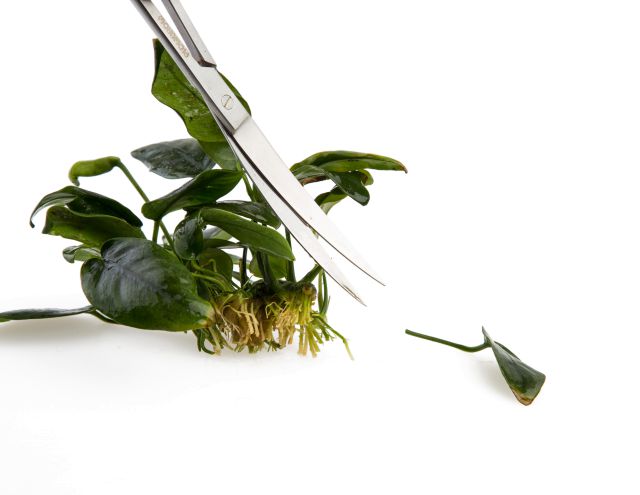
Since low-light plants generally also grow only slowly, maintenance is not needed as often. Fast-growing stem plants, on the other hand, have to be trimmed quite often (for example every two weeks). This is not needed as often with shade plants because of their slow metabolism. This of course simplifies the care of these plants. Now and then you can cut off unsightly or overgrown leaves to trim the plant back into shape. Since shade plants are often rhizome plants (such as ferns, Echinodorus or cryptocorynes), cut-through leaves do not keep growing but die off. The plant then sprouts new leaves from the rhizome. It therefore makes sense, when trimming, to cut the leaf stalk back as far as possible too, so there are no visual impairments.
Examples of shade plants
Java fern
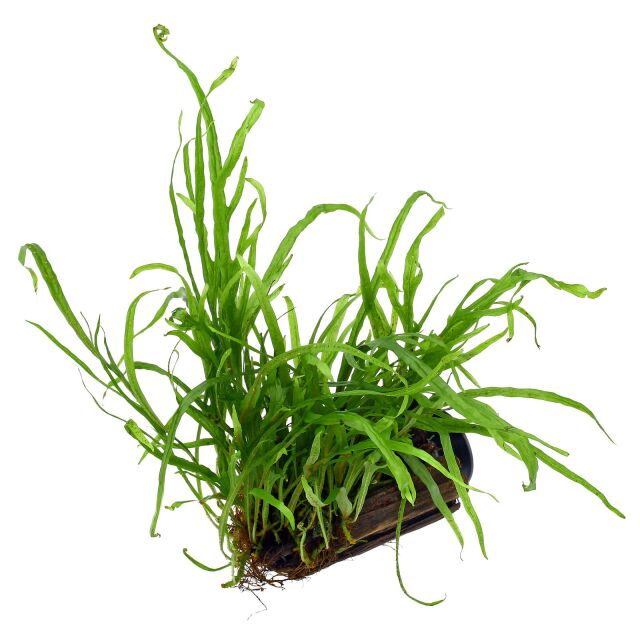
Java ferns (Microsorum pteropus) are quite undemanding and attractive epiphytes that can also grow quite large and lush. They are therefore well suited to larger aquariums. They do not need much light, but still benefit greatly from added CO2 and sufficient liquid fertilization with micro- and macronutrients. Many different forms of Java fern, differing in size, coloration and leaf shape, are now available in the aquarium hobby and thus offer pretty alternatives. Microsorum pteropus is an ideal aquatic plant for the midground.
Water trumpets
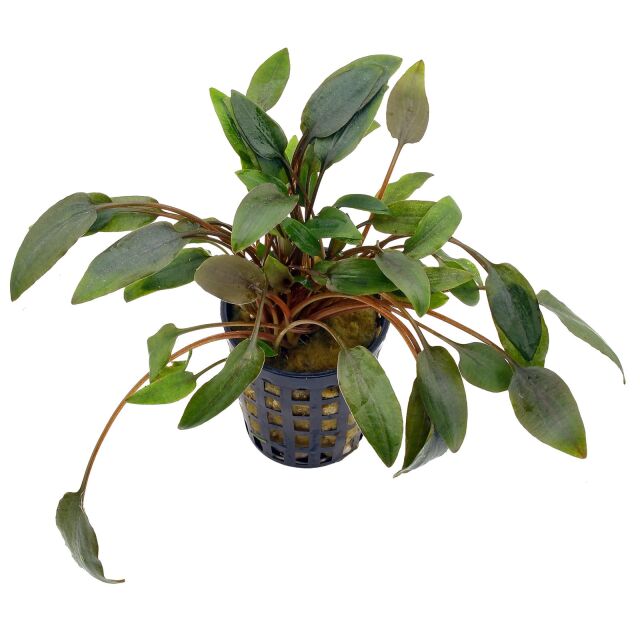
Most species of cryptocorynes have only a low light requirement. Many different varieties are now available, for example for the background, midground and foreground in the aquarium. Besides different leaf shapes and sizes, there is also a great selection of colors. Water trumpets belong to the rosette plants and therefore do not multiply so strongly via runners. Cryptocorynes are thus very easy to care for and can be used well as so-called solitary plants.
Congo fern
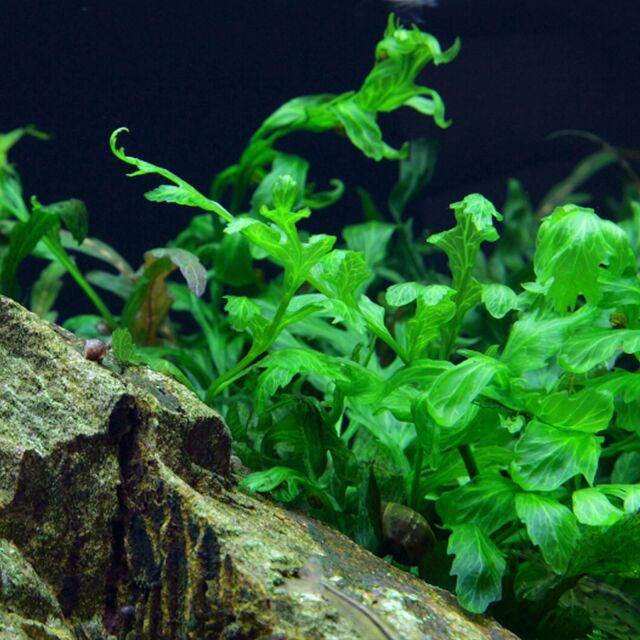
The dark green Congo fern (Bolbitis heudelotii) is a robust fern that is easy to keep in the aquarium and can be used as an epiphyte. This African fern is very easy to keep, and its hard leaves can also be classified as cichlid-proof. The Congo fern gets by well with only low lighting and is otherwise rather undemanding. Nevertheless, liquid fertilizer and carbon may gladly be added to ensure a corresponding vitality of the plant.
Anubias
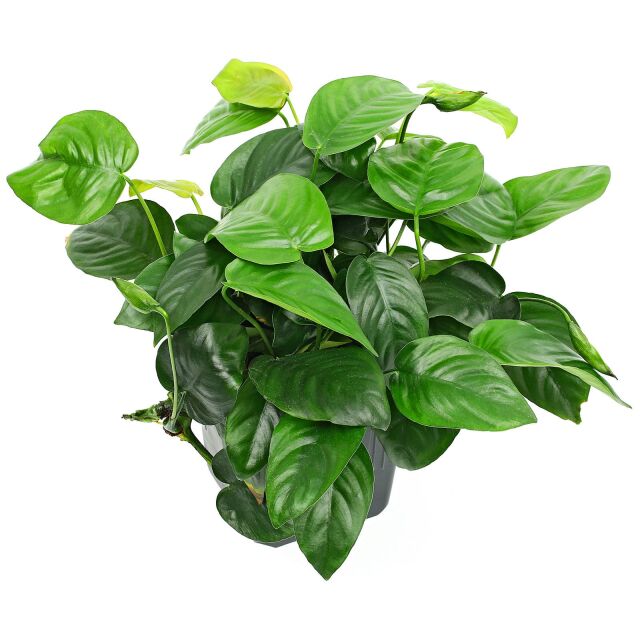
The genus Anubias is now represented in the aquarium hobby with a great many species. Anubias are distinguished by their robustness, undemandingness and their hard and sturdy leaves. This makes these epiphytes popular cichlid-proof aquatic plants. The spectrum of different anubias is now very large, ranging from the tiny Anubias barteri var. nana 'Pangolino' to a stately growing Anubias gracilis. Anubias are therefore very widespread and popular, from small nano cubes to large cichlid aquariums.
Mosses
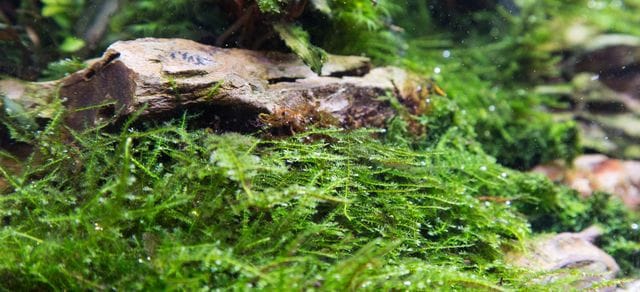
Mosses also certainly count among the shade plants, since they cope very well with little light and a scarce nutrient supply. Many moss species attach themselves to surfaces with their rhizoids. It creates a very natural impression when mosses overgrow decorative items such as driftwood and stones in the aquarium. Mosses are therefore very gladly used in aquascaping, but also in shrimp aquariums, because dwarf shrimp use these delicate plants as hiding places and grazing spots. In general, most aquarium mosses are quite undemanding and impress with a crisp dark green shade.