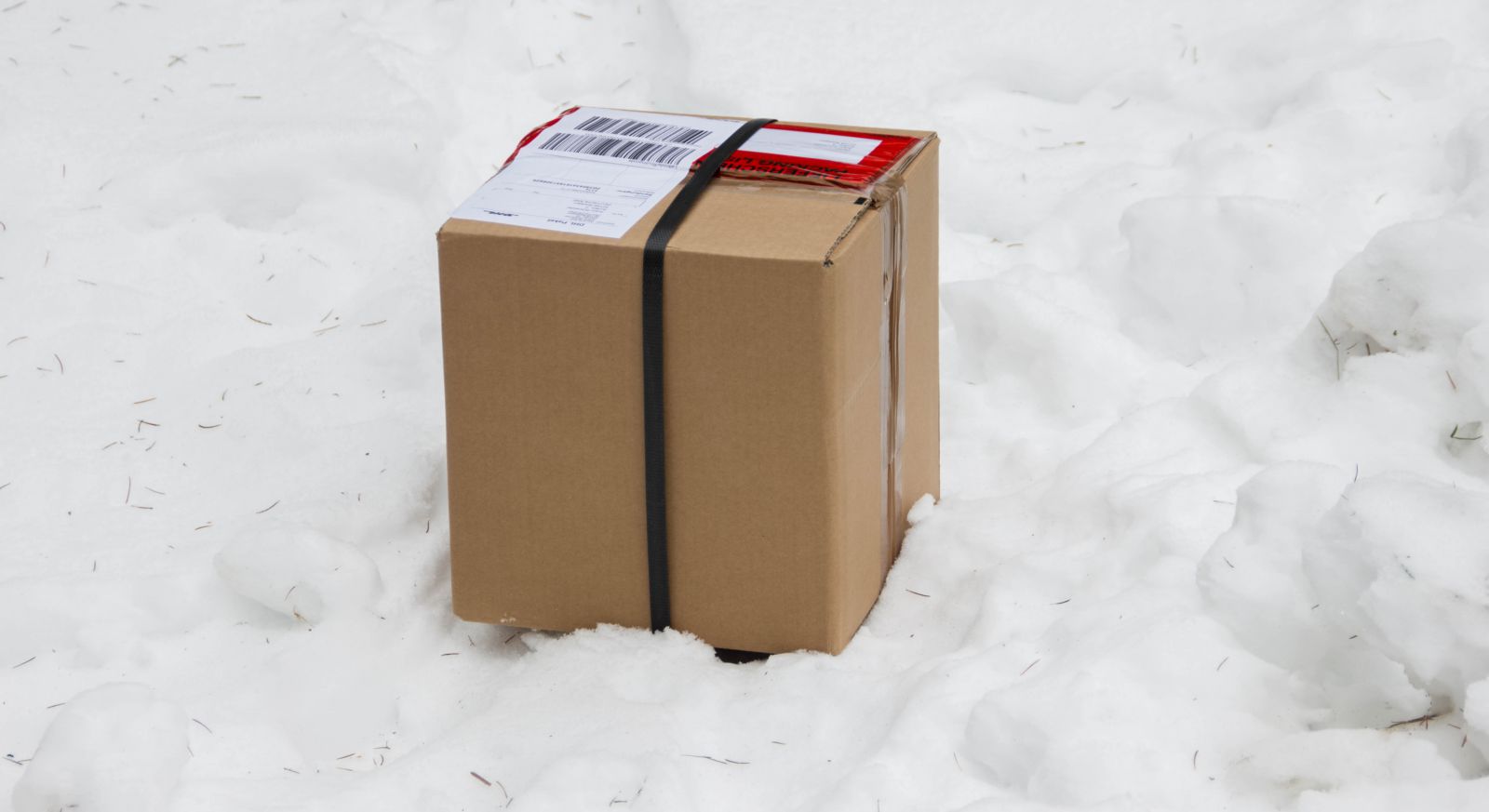
 Shipping aquatic plants in winter
Of course, aquarium plants can also be shipped in winter without any problems! In general, low temperatures slightly above freezing (1 to 4° Celsius) are absolutely tolerable for aquatic plants. On the contrary: they even stay fresh much longer than at higher temperatures. In these cases, conventional shipping in a cardboard box is possible without any drawbacks. In mild winter weather, you don't need to worry about frost damage to your new aquatic plants.
Using a styrofoam box for shipping aquatic plants
In principle, when outdoor temperatures are lower (-5 to -1 °C at night, up to +1 °C during the day), we ship aquatic plants purchased in our online shop in a thick-walled styrofoam box to protect them from the cold. However, this doesn't mean that we always choose this type of packaging in winter. For every single aquatic plant shipment, we carefully weigh up individually whether using a styrofoam box makes sense or not, if only for reasons of environmental protection and to avoid waste, especially plastic waste. Even with slight below-freezing temperatures at night, packaging in a conventional cardboard box is usually completely sufficient for shipping. Various aspects play a role in deciding for or against a styrofoam box, such as the chosen shipping method and nationwide weather forecasts. With express shipping, for example, the supply chain ensures that temperature-sensitive goods are hardly ever exposed to large temperature fluctuations. As a customer, you therefore have the option here of choosing a particularly low-risk shipping method for your new aquatic plants.
If only light ground frost is forecast at the destination (that is, temperatures are around freezing), the risk of frost damage to the aquarium plants is extremely low. Inside a package, it is normally always somewhat warmer than outside, and unless the package happens to be lying on the ground outdoors, the plants are generally not at risk even without a styrofoam box. Only when nighttime temperatures drop clearly below freezing do we always use styrofoam packaging.
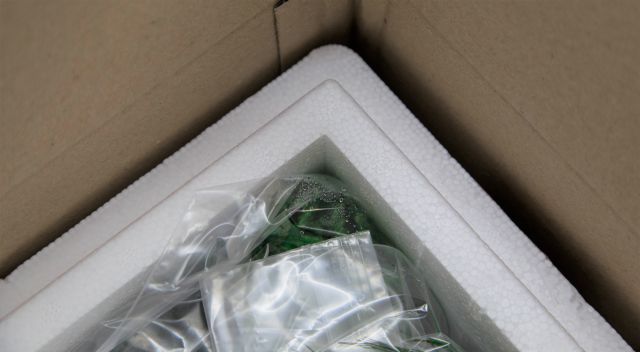
You can of course keep using our high-quality styrofoam boxes as often as you like. If you can't or don't want to, please dispose of the styrofoam packaging via the yellow bin (Gelbe Tonne) or the yellow bag (Gelber Sack).
Using a heat pack when shipping aquarium plants
Using one or more heat packs when shipping aquatic plants has to be weighed carefully, because the likelihood of the plants suffering damage from overheating is high. Even with slight below-freezing temperatures, using a heat pack is not necessary.
Only at very low temperatures (well below freezing) and during sustained frost (below-freezing temperatures day and night) do we additionally put 72-hour heat packs in the package, so that the plants don't cool down too much on their way from the online shop to the customer.
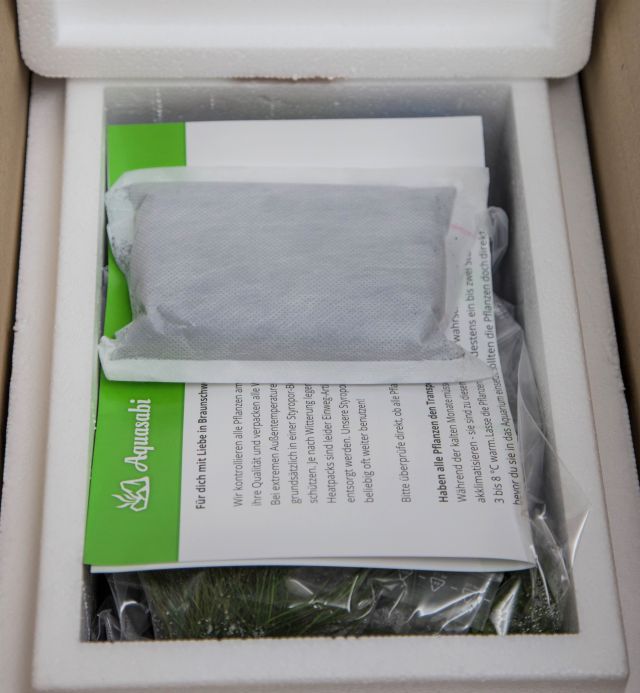
Unfortunately, heat packs are single-use items and have to be disposed of after being used once.
Receiving the goods
Please open the styrofoam box and check right away whether all plants have arrived in optimal condition. We check their quality carefully once more on the day of shipping - nevertheless, it can unfortunately happen that a plant arrives in less than optimal condition.
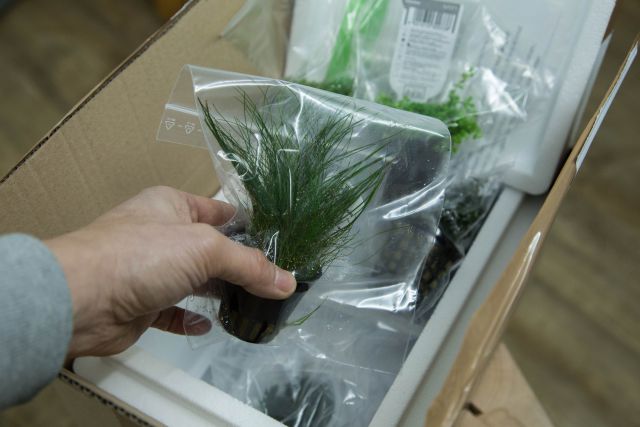
Did all the plants arrive well? Wonderful!
Let them stand in the opened styrofoam box for at least one to two hours before you put the plants into the aquarium. The aquatic plants first have to acclimate during this time - at this point they are probably only about three to eight °C.
If the aquarium plants are put directly into warm water without acclimation, this can lead to permanent damage or even to the death of the plant(s).
A plant is (almost) spoiled? We'll take care of it!
In such cases, please take a photo of the plant(s) right away, before you put them into the aquarium. The photo must show the condition of the aquatic plant as well and as completely as possible. Please then send us this photo with a short message that also includes your order number at yoohoo@aquasabi.com - we will find a solution to the problem.
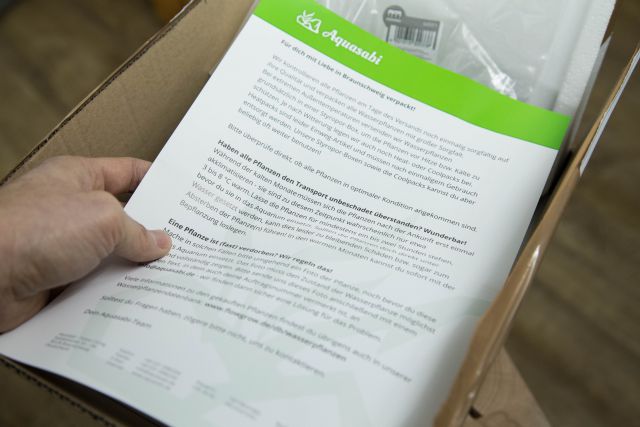
This information is also included as a slip of paper in every package with plants. You can find further tips and tricks for properly handling the plants you bought in our aquatic plant database.
Recognizing frost damage
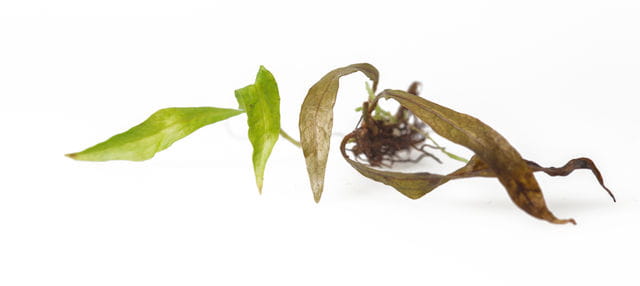
A Java fern: vital on the left, after frost damage on the right.
What does frost damage on aquatic plants actually look like? If there is indeed impairment from temperatures that are too low, it shows up on plants in a fairly typical way, though sometimes slightly different depending on the species. Described in general terms, the leaves look wilted and simply no longer vital. They often lose their healthy color across the entire surface and sometimes their intense green, and turn grayish, brownish or dark green. With partial frost damage, these symptoms can also appear only in certain spots.
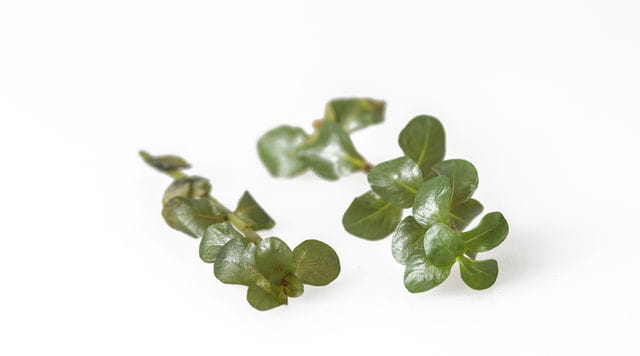
A Rotala rotundifolia: with frost damage on the left and in a healthy state on the right. You can see a slight color difference; the affected plant looks somewhat grayer and dark green.
The feel of aquatic plants after frost damage doesn't necessarily have to be extremely soft and mushy. This also depends greatly on the species. Stem plants in particular, however, often lose their firmness and let their leaves and stems droop. More robust species such as ferns and Anubias are often not quite as susceptible and look somewhat more stable.
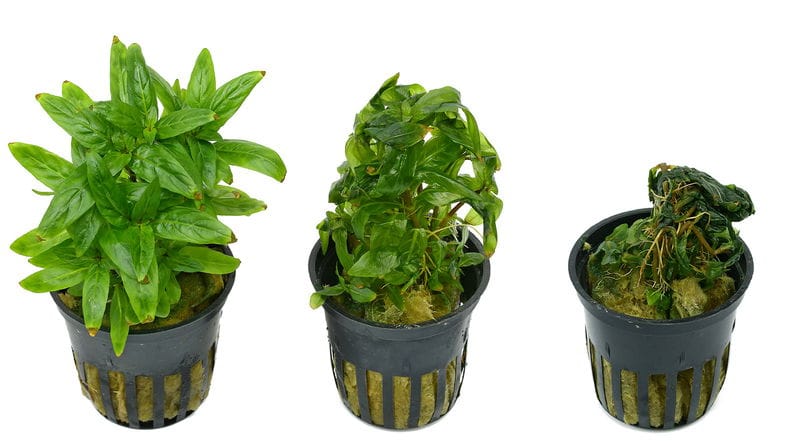
A Staurogyne repens: healthy on the left, with frost damage in the middle. The drooping leaves are easy to see. On the right, 24 hours after the initial frost damage.
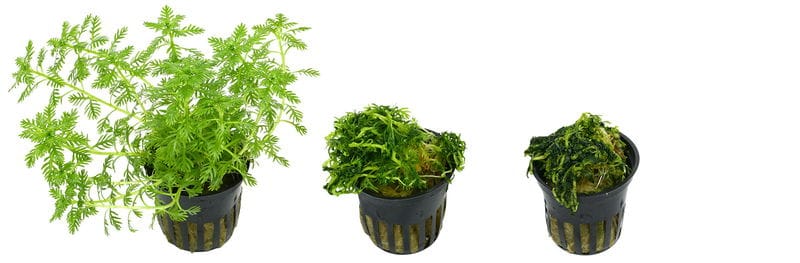
Hottonia palustris: with frost damage in the middle, 24 hours after the frost damage on the right and vital on the left. In the damaged plant, the stems have also become much less stable.
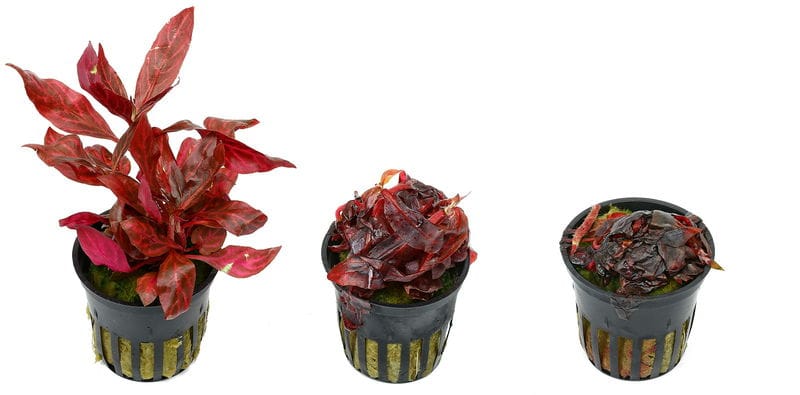
An Alternanthera reineckii 'Rosanervig': in a healthy state on the left, in the middle after frost damage and on the right 24 hours after the frost damage. The color is darker, and leaves and stems lose their firmness.
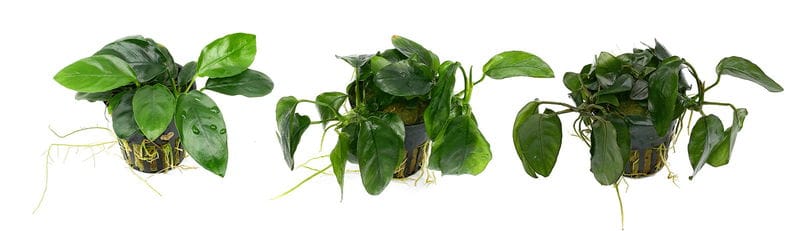
An Anubias barteri var. nana: with frost damage in the middle and 24 hours after the frost damage on the right. The vital plant is on the left. Here too, the drooping leaves are easy to see.
If you put plants damaged by frost into the aquarium, they will very likely dissolve and fall apart into mush within 24 hours. Thinking about it the other way around, though, you should keep in mind that not every plant that has turned mushy previously suffered frost damage. There can be other reasons as well, such as problems with the transition from emersed to submersed. Certain plant species also tend to be more likely to dissolve in a freshly set-up aquarium. We go into this topic in somewhat more detail in this article.