 Fish that go after aquatic plants
There are some animals in the aquarium hobby that unfortunately go after aquatic plants . With some species it is obvious, with others rather less so. Here we show you how to identify feeding damage on aquarium plants.
Recognizing feeding damage
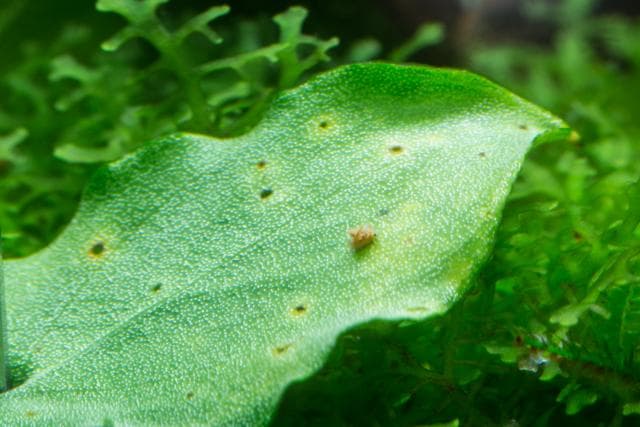
The risk of confusion with a deficiency symptom (see picture) is relatively high with feeding damage. As a rule, a damaged aquatic plant is first assumed to have a nutrient problem. Leaves with holes, leaf loss or bare stems are typical examples. If the water parameters are all in the green range, however, and/or optimizing your fertilization brings no improvement, you should look into the topic of plant eating by aquarium animals. In principle, any plant-eating creature in the aquarium can be considered here. You should not accuse the animals of malice, though. Often such behavior only shows up after some time, for example when there are no more algae left that the fish can eat enough of.
Holes in the leaves of large-leaved stem plants
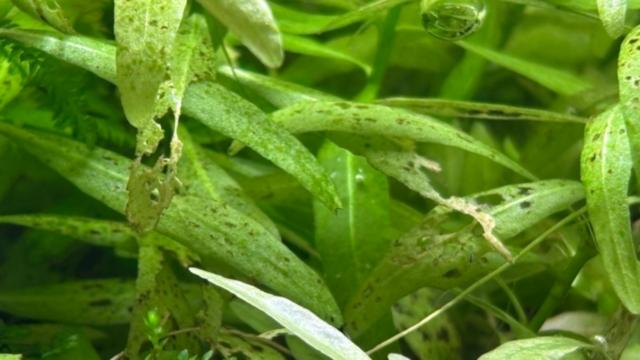
Somewhat large-leaved stem plants such as Hygrophila and Alternanthera, but also Echinodorus, sometimes show a perforated appearance. The aquarist often suspects a potassium deficiency then. As a rule, however, this is feeding damage, especially from shrimp. They pick algae off the leaves and in doing so "perforate" the leaf tissue. The edges of the holes are in some cases clearly frayed, which distinguishes them from necroses and similar deficiency symptoms. The shrimp, especially Amano shrimp, are not necessarily to blame here, because they knowingly do not want to damage the plant. This happens more as collateral damage when grazing the leaves to feed on the algae and biofilms. But suckermouth catfish can also be responsible for this damage. Even otherwise harmless catfish such as Otocinclus sometimes go after weakened plant leaves.
Bare stems
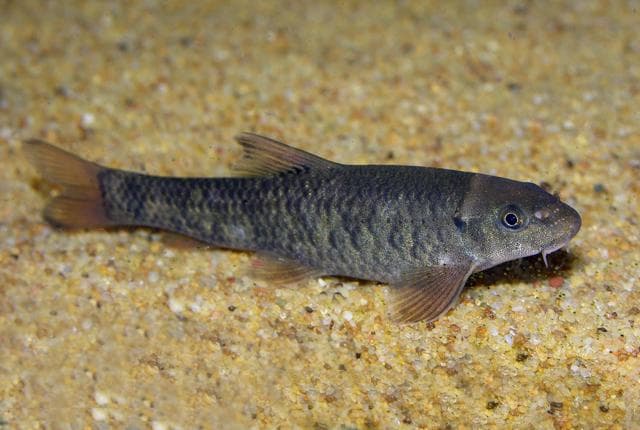
Source and copyright: Dances - Own work via Wiki Commons, license: CC BY-SA 3.0.

If fine-leaved or small-leaved plant species in particular have been eaten bare (such as mosses, Cuba dwarf baby tears, fine Rotala species), then fish that were bought as "black beard algae eaters" are the most likely suspects. Often only bare stems are left on the plants. Examples of such ornamental fish mentioned here are Garra rufa or Crossocheilus reticulatus. In fact, you never see these animals at the plants and therefore have very little suspicion. It does make a difference, however, when you remove these ornamental fish from the aquarium and relocate them. Very often the plant stock then recovers. But Amano shrimp, too, can cause a similar damage pattern if they are hungry enough.
Eaten shoot tips on ferns
Copyright by Roland Emmenlauer
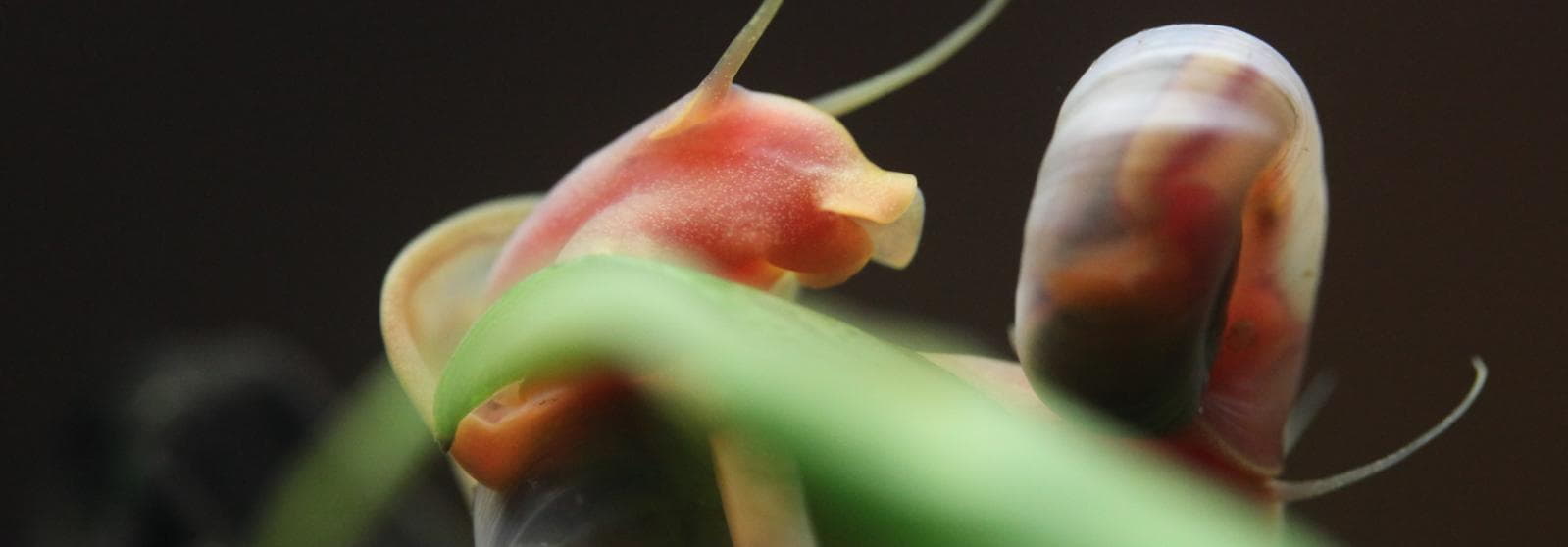
Especially with Java fern species, the shoot tips, in contrast to the leaf, are often dark green-transparent in color and therefore easy to recognize. The fresh tissue is very readily nibbled by ramshorn snails, while the rest of the leaf stays rather untouched. Since the snails can also multiply quite quickly, the ratio of animal stock to food supply is often unfavorable. We present suitable countermeasures in the next section.
Countermeasures
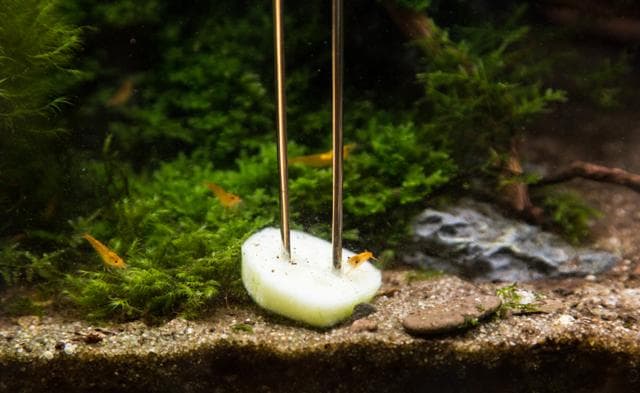
In principle, the goal here is to create a good balance between the appetite of the plant-eating animals and the food supply. If feeding damage occurs, you can therefore approach the problem from two sides: reduce the animal stock, even remove species that go after plants from the aquarium, and/or significantly improve the food supply for these animals so that they no longer go after the plants. Supplementary plant-based feeding with fresh vegetables, leaves, etc. can be very helpful here. We have described in more detail how to add vegetables to the aquarium in this article.
Another adjusting screw is the health of the plants. If they are vital and free of algae, this increases their robustness and they are less susceptible to feeding attacks. The aquarist should therefore ensure balanced fertilization with light, CO2, macronutrients (NPK) and micronutrients (iron and trace elements) so that the aquatic plants lack nothing.
Cichlid-proof plants
With some fish species, however, it is obvious that they go after aquatic plants. These include above all African cichlid species, which are kept, for example, in a Lake Malawi or Lake Tanganyika aquarium. You can still green up such an aquarium quite well, though, by resorting to hard-leaved plants that are described as "cichlid-proof". These include, for example, many ferns or Anubias, which can withstand feeding attacks much more resiliently. Would you like more information about cichlid-proof aquatic plants? Then take a look here.