 Mixing liquid fertilizers together
All these fertilizer bottles! Wouldn't it be helpful if you could simply mix together all the individual liquid fertilizer components you use for the planted aquarium? Dosing would be so much easier then. In this article, we explain whether and how mixing different aquatic plant fertilizers works.
Note: This article refers to mixing fertilizers directly in a shared bottle, not to adding different liquid fertilizers to the aquarium together or at the same time.
Does mixing liquid fertilizers make sense at all?
The motives for this approach are of course varied and, for the most part, understandable, whether it is simply convenience or saving time. If the aquarium setup hardly changes, or doesn't change at all, in terms of nutrient consumption and the dosages of the liquid fertilizers, and you can therefore accept the loss of flexibility that comes with mixing, it can certainly make sense to combine several individual fertilizers into one fertilizer mix. However, there are a few things you have to take into account here, which we go into in more detail.
What to keep in mind when mixing
Not all components of the various liquid fertilizers are chemically compatible with each other. During mixing, different components that were not in contact before meet. This can sometimes lead to chemical compounds that are undesirable in the aquarium, for example because solids form or important nutrients are precipitated and are therefore no longer available to the plants. A rather well-known classic is mentioned very often in aquaristics: complete iron fertilizers and phosphate-containing liquid fertilizers should not be mixed, because the combination can cause iron phosphate precipitation. The literature also very often mentions that these two components should preferably not be added to the aquarium at the same time, to prevent such reactions. Adding them at different times is better.
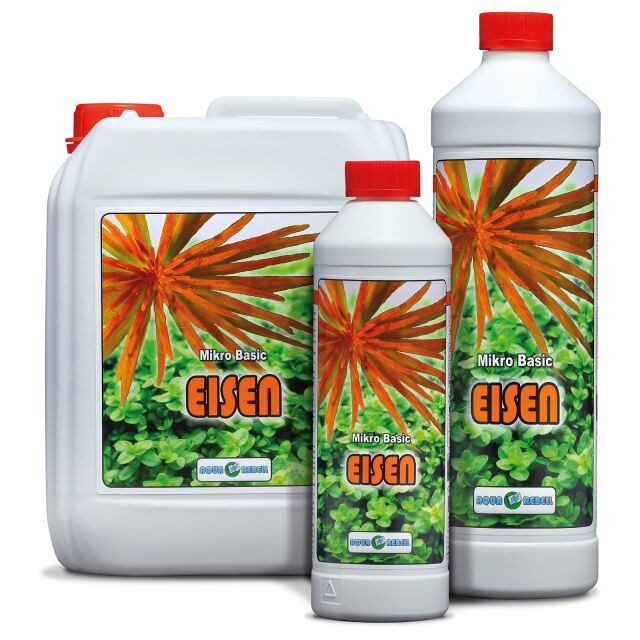
A classic complete iron fertilizer, Aqua Rebell Micro Basic Iron.
In fact, this depends above all on the chelation of the complete iron fertilizer. If strong chelators such as EDTA are used here, this complete iron fertilizer can be mixed with a phosphate fertilizer. These complexing agents can protect the micronutrients from unwanted reactions and precipitation.
Disclaimer: However, we give no guarantee that no reactions (especially precipitation) will occur when mixing EDTA-based complete iron fertilizers with fertilizers containing phosphate-based nutrient salts!
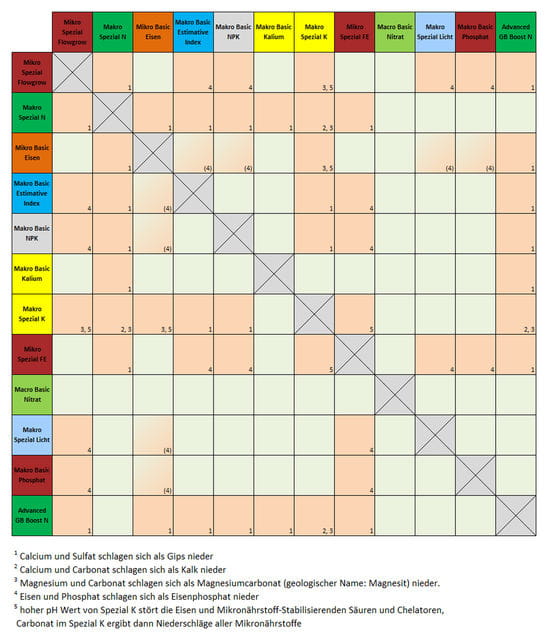
But other combinations of liquid fertilizers can also sometimes have unwanted consequences. When calcium meets carbonates or sulfates, chemical precipitates such as gypsum or lime form. One example: Aqua Rebell Advanced GH Boost N should therefore not be mixed with other macronutrient fertilizers that contain potassium on a potassium carbonate basis.
When magnesium and carbonate meet, a solid called magnesium carbonate (also known as magnesite) likewise forms.
A drastic change in the pH of a fertilizer solution can also have effects. Gently stabilized complete iron fertilizers such as Micro Special Flowgrow in particular contain special acids to stabilize the micronutrients. As a result, the pH of such a fertilizer is strongly acidic. If this liquid then meets another fertilizer solution with a very high pH due to its carbonate content (such as Aqua Rebell Macro Special K), all micronutrients precipitate, and the fertilizer solution becomes unusable.
Which fertilizers can you mix with each other?
To avoid all these eventualities and to create clarity, we have listed all combination possibilities of all available Aqua Rebell liquid fertilizers and their consequences in the following table. If the corresponding intersecting field is green, the combination of the respective aquarium fertilizers is possible without drawbacks. With a red field, precipitation or other negative consequences are to be expected. An explanation of the individual cases can be found in the legend of this table.