 Reactions of Aquatic Plants
If aquarium plants show deficiency symptoms, optimizing the nutrient supply often helps. But how, and above all when, do the plants react to it? We explain this in this article.
Basically, deficiency symptoms cannot really be "fertilized away". Once damaged, leaves, especially older ones, are not "repaired" again by improved nutrition. This applies especially to necrosis or other holes in the leaves. In some cases, such damage is additionally worsened by plant-eating aquarium inhabitants such as shrimp or suckermouth catfish when they go after the weakened leaves.
An iron deficiency or similar damage patterns in the form of missing chlorophyll (pale shoot tips), on the other hand, can be remedied quite well. If you correct an iron deficiency, the health of an aquatic plant can improve quite quickly. Depending on the metabolism and species of the respective aquarium plant, this can happen in hours or a few days. A pure iron fertilizer with quick nutrient availability, such as Aqua Rebell Mikro Spezial Eisen, is particularly helpful here.
Mobile and immobile nutrients
To better understand how a plant can recover, where exactly deficiency symptoms can occur and which nutrients are behind them, it is worth looking at the transportability of nutrient elements within a plant. Here, a basic distinction is made between mobile and immobile nutrients. Although this refers primarily to land plants, it can still be transferred to underwater plants to a certain extent. This allows you to roughly classify which nutrient elements are responsible for certain deficiency symptoms. The mobile ones include nitrogen (N) in the form of nitrate, phosphorus (P) as phosphate, potassium (K), magnesium (Mg), and also chlorine (Cl), zinc (Zn) and molybdenum (Mo). Immobile nutrients are the important iron (Fe), but also calcium (Ca), sulfur (S) and other trace elements such as boron (B) and copper (Cu).
If a deficit of mobile nutrient elements occurs, a corresponding deficiency symptom shows primarily on older leaves. This is because the missing nutrients are transported from these areas into the new growth. This means that a deficiency of important macronutrients such as nitrogen, potassium and phosphorus shows rather on older leaves.
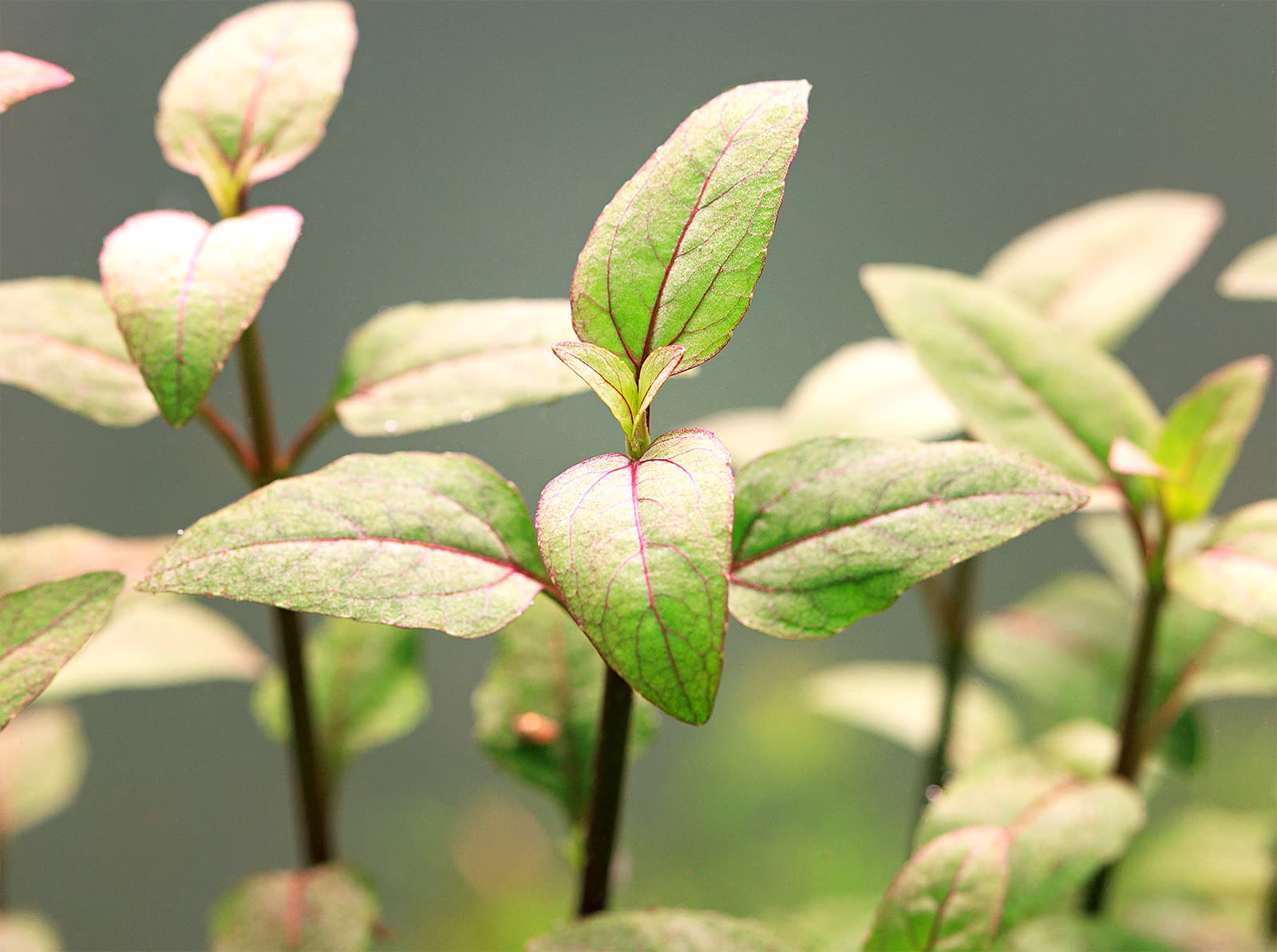
With immobile nutrients, on the other hand, the growth problems can be seen on the new growth, the shoot tips. Typical of this would be an iron deficiency, which shows in the form of light shoot tips. The plant is not able to take up enough of these nutrient elements and transport them into the (new) leaves. Shoot tips that become smaller or stunted are also typical deficiency symptoms for immobile nutrients.

Waiting time
Basically, you should take the respective plant species into account when it comes to plant reactions. Fast-growing aquarium plants have a fast metabolism and can sometimes show a reaction quite quickly. Shade plants, which have only a slow metabolism, often need significantly longer for a visible result. Fast-growing plants also show a nutrient deficiency sooner. Certain species can be defined here as indicator plants.
As a rule, after a deficiency and a nutrient optimization, you can set a period of about 3 weeks until the majority of the plants in the aquarium show a visible reaction. This depends, however, on how serious the damage is and whether the plants have lived in this deficiency situation for a longer time.
Conclusion
The aquarist should bear in mind that after a fertilizer optimization, you cannot expect the plants to recover as a whole. It is much more important and sensible to assess the new growth, the coloration and the growth rate. If these improve noticeably, you are on the right track. After some time with improved fertilization, so much new and healthy plant mass has been added that you can remove old and damaged leaves. Especially with stem plants, it is worth cutting through the stems. The new healthy top cuttings can be replanted, and the damaged lower plant parts can sometimes be removed.