Animals on newly purchased, emersed plants
Published
Translated from German with AI assistance and reviewed by our editors.
We at Aquasabi’s receive our plants from renowned nurseries such as Tropica, Dennerle and Anubias. Most potted plants are cultivated in their emersed form in large greenhouses. To ensure that these plants are harmless for shrimp and sensitive fish in the aquarium, no insecticides are used during cultivation. In individual cases, however, this can lead to small animals such as insects, spiders or land snails clinging to the aquarium plants as “stowaways”. Usually this is not a problem for the plants and animals inside the aquarium designated to receive new aquatic plants. Most animals brought in with emersed plants are unable to survive underwater and drown. Many fish are also happy to have this live feed.
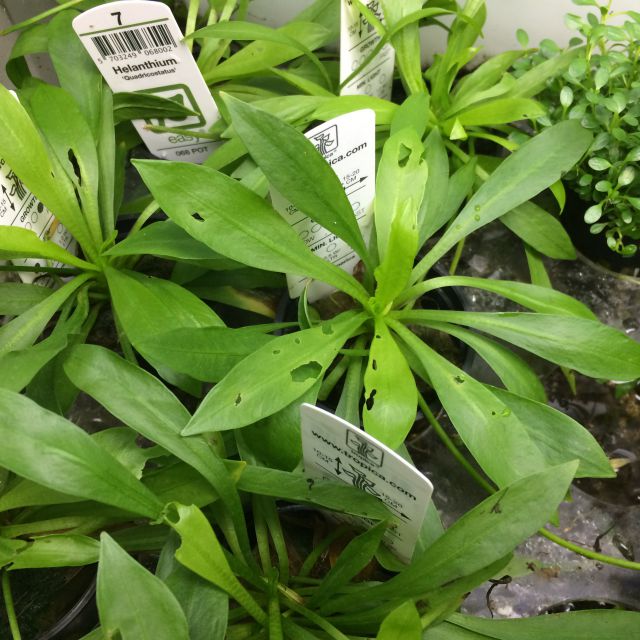
Some of these animals are plant pests and may e.G. cause holes in the leaves or cripple shoots on emersed plants. But even this has no real disadvantages concerning the quality of the sent aquarium plants. First of all, we weed out damaged plants before shipping. On the other hand, those animals can not survive underwater, and even IF the plants show slight damage, it does not affect their further growth development once they’re in the aquarium.
Below we’ll list typical stowaways on emersed plants, which are, as already mentioned, absolutely harmless for underwater use inside the aquarium. However, if the acquired aquatic plants are kept in their emersed state, one should try to remove or fight any pests. Caution should be excercised in aquaristic set-ups like a Wabi-Kusa, during the Dry Start, in paludariums or aquaterrariums.
Common animals on emersed plants
Aphids
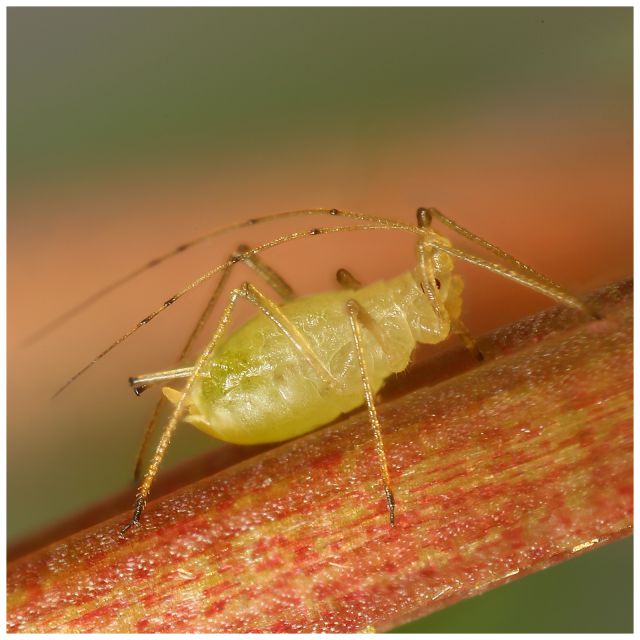
These insects are only a few millimeters small and comprised of many different genera and species. Aphids are grouped in the suborder Aphidoidea and are related to scale insects. Depending on the type, they have a roundish, soft, varicolored body (often green or blackish), six thin legs, two long antennae and a proboscis with which they pierce a host plant and feast on the juice from the so-called sieve-part (phloem) of the vascular bundles. Aphids usually sit quietly on the plants and shuffle off slowly when disturbed. Usually they are wingless, but especially in cases of overpopulation, winged aphids will occur, which are able to fly to new food sources. Plants suffering from strong aphid infestation often have crippled young leaves and shoot tips. Honeydew, a sugary aphid-excrement, will stick to plants and nearby objects.
Aphids form both oviparous and viviparous generations, and through the latter they can proliferate rapidly. Aphids are not able to survive underwater and are usually quickly eaten by fish because of their small size if they don’t drown first. One peculiar case is the water-lily aphid (Rhopalosiphum nymphaeae), which often infests floating leaves and even submersed plants flooding at the surface, turning obnoxious very fast. Thanks to its water-repellant body, it can move pretty well on the water surface. Water-lily aphids can be controlled by removing them with a fishnet and/or removing all plants from the water surface.
Thrips
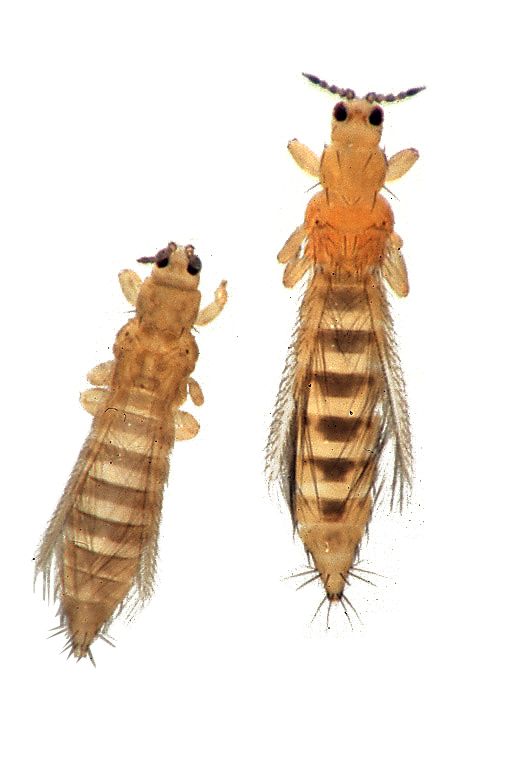
Copyright: Alton N. Sparks, Jr., University of Georgia, Bugwood.org source link - own creation, license: CC BY 3.0.
These are tiny insects, also known as thunderflies or thunderbugs. They form a kinship (order Thysanoptera) with many genera and species. They are longish bugs with a tapering abdomen, and only a few millimeters long. Often they are brownish or gray-colored with black and white stripes. Except for some wingless species, they indeed do have wings, but rarely ever actually fly. The insects often flee by jumping. Most thrips suckle on plants, and some species are pests in nurseries. They suck out individual plant cells, resulting in silvery-gray speckled spots on the leaves with black stains (droppings).
Thrips on emersed plants are unproblematic, if they are planted under water. Just like aphids, thrips cannot breathe underwater and are little more than a tiny live-feed morsel for your aquarium inhabitants.
Spider mites
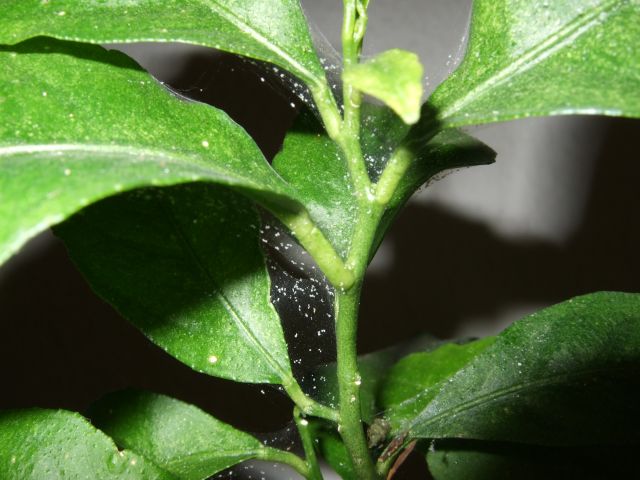
Copyright: Paramecium - own creation, license: CC BY-SA 3.0.
These tiny (smaller than 1mm) animals form the family Tetranychidae within the mites (acari) and are distant relatives of spiders. Like them, spider mites have eight legs. They count more than a thousand species. Typical is their more or less pear-like shape. Their body color varies according to species; reddish species such as the common spider mite, Tetranychus urticae, are colloquially called "red spider mite". These mites feed on plant sap by pricking and sucking out individual plant cells. For their protection they spin fine nets in which they crawl around - especially on the undersides of leaves and stems.
Spider mites multiply especially in dry air and a lot of heat. Similar to thrips, they form silvery mottling on the leaves. In cases of severe infestation, the leaves will dry up and die. In contrast to a thrip infestation, there are no black dots (droppings) to be found on the leaves, also, thrips do not spin nets.
Spider mites are also not capable of surviving under water. So it is unproblematic, when they sit on emersed aquarium plants, as long as they are planted under water.
Springtails
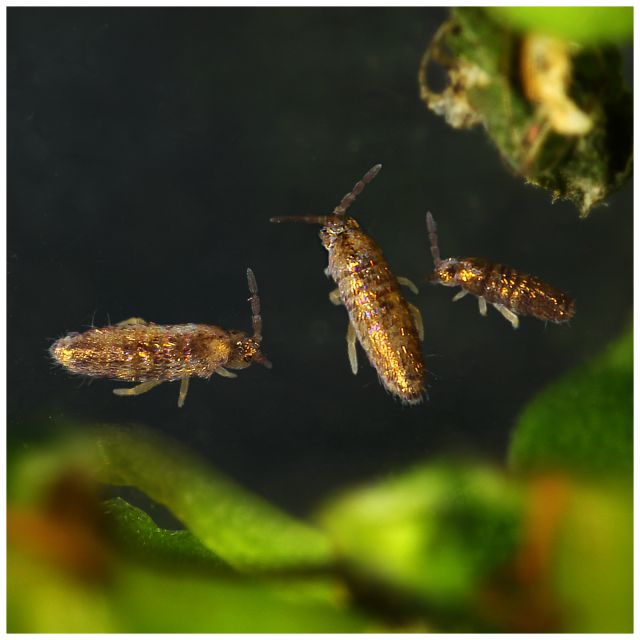
Springtails (Collembola) are a class of hexapods and therefore related to insects. These 0.1 to 17 mm long animals count thousands of species, and -depending on the type -and live in the humus of moist soil, on rotting plants, tree bark and water surfaces. Many species eat organic waste and are therefore very important for the formation of humus, but also fungi, pollen, algae or microorganisms can serve as food. Springtails have been found as fossils in approximately 400-million-year-old strata and are thus one of the oldest land animals ever.
Springtails are wingless and have their name from their typical so-called forcula on the bottom of their abdomen. If disturbed, they can catapult themselves away distances many times their body length. Many species are longish, the so-called globular springtails, however, have a roundish body shape.
Sometimes, springtails sit in the moist rock wool substrate of emersed aquarium plants. In the aquarium they’ll sit on the water surface with their water-repellant body and can survive there for a very long time, as long as they are not eaten as live food by fish (springtails are even bred as feed animals). Since they live off dead plant matter and can’t survive under water, they are perfectly harmless for the aquatic plants and inhabitants.
Not infrequently you may see tiny globular springtails (probably a
Spiders
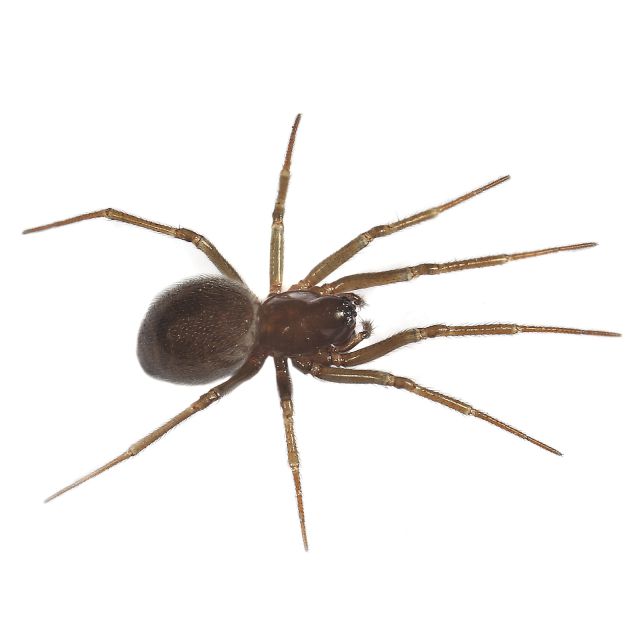
The "real" spiders (genus Araneae) can be identified, amongst other things, by their four pairs of legs, also found in other arachnids like, e.G. scorpions, mites and harvestmen. Also typical of weaving spiders is the unstructured, distinct abdomen, which is connected to the prosoma only by a thin stem. Spiders live predatory and usually build nets, but there are also species that hunt their prey without a net. Spiders are represented practically everywhere in a huge variety, with thousands of genera and species.
Sometimes small spiders are hiding in and on emersed aquatic plants, but they are no problem for aquarium plants and inhabitants because they are land creatures and can not survive underwater. They may just be eaten by larger fish while or after drowning. These animals are harmless for humans as well. Sometimes we’ll find flat cocoons on the leaves of emersed aquarium plants and on the underside of their plant pods which were spun by a small spider species, which we can not yet specify (see photo below). You can just unceremoniously remove them from the leaves.
The tiny spider mites described above could be mistaken for spiders because they also have eight legs and weave fine nets. Mites, however, don’t have the typical abdomen/forelimbs separation.
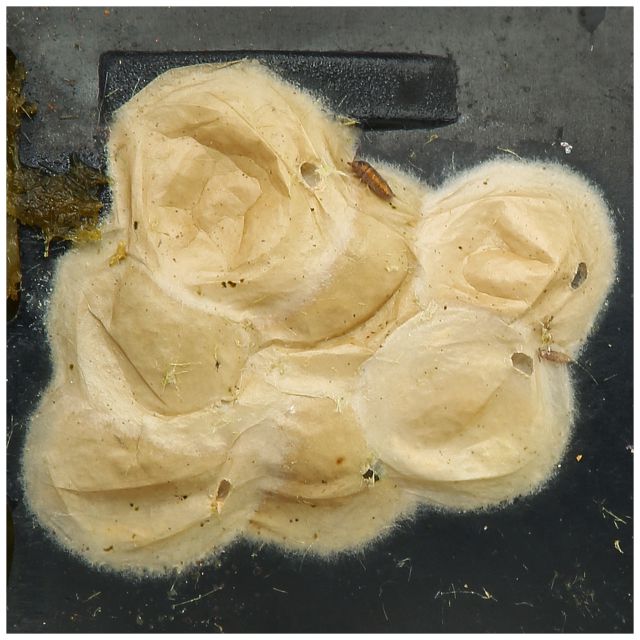
Animals that are found on emersed aquarium plants should not be released outdoors because they might be non-native species. This naturally also applies to spiders and their cocoons.
Slugs
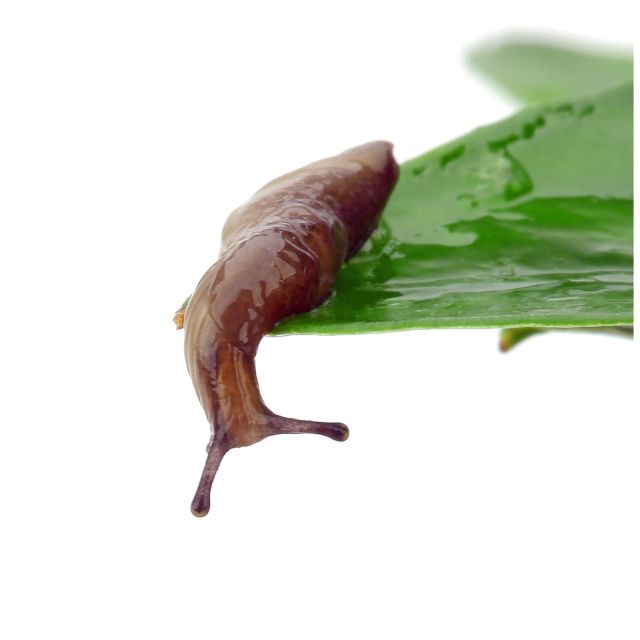
In rare cases, small grey to brownish slugs may come as stowaways in your aquarium plants straight from the nursery. These are probably mostly so-called field slugs from the genus Deroceras. They can be harmful as herbivores in garden centers, but also feed on organic waste, algae coverings, mushrooms and the like. With their rasping tongue (radula) they’ll scrape holes in leaves.
Slug infestation is also evident in shiny mucus on the plants. Those slugs are terrestrial gastropods (Stylommatophora) with a receded shell. In the evolutionary course of their ancestors, the shell has become continuously smaller and overgrown by the slug’s body, with the internal organs shifting into the cephalopod part of the body. There are SO many slug species in different length, shape, color and design. Although some, such as the spanish slug (Arion vulgaris ), can cause great damage to garden plants, but this is not the case with the vast majority of species. Slugs are also an important component of ecosystems.
Should slugs pop up on emersed aquatic plants, it is actually not that big of a problem, if those plants will eventually end up underwater. These slugs are lung breathers and unable to survive underwater. They might even get eaten by bigger, predatory fish! Like any animals found on emersed aquatic plants, slugs should not be released into the wild, especially since they might be non-domestic species.
Earthworm-like annelids
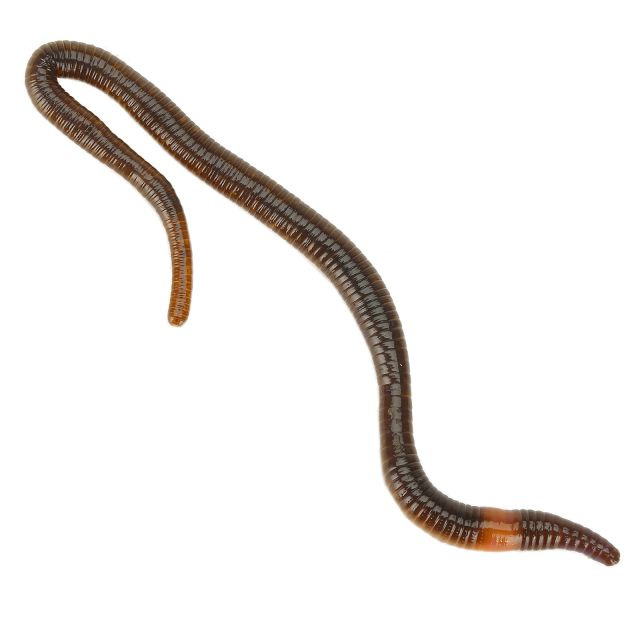
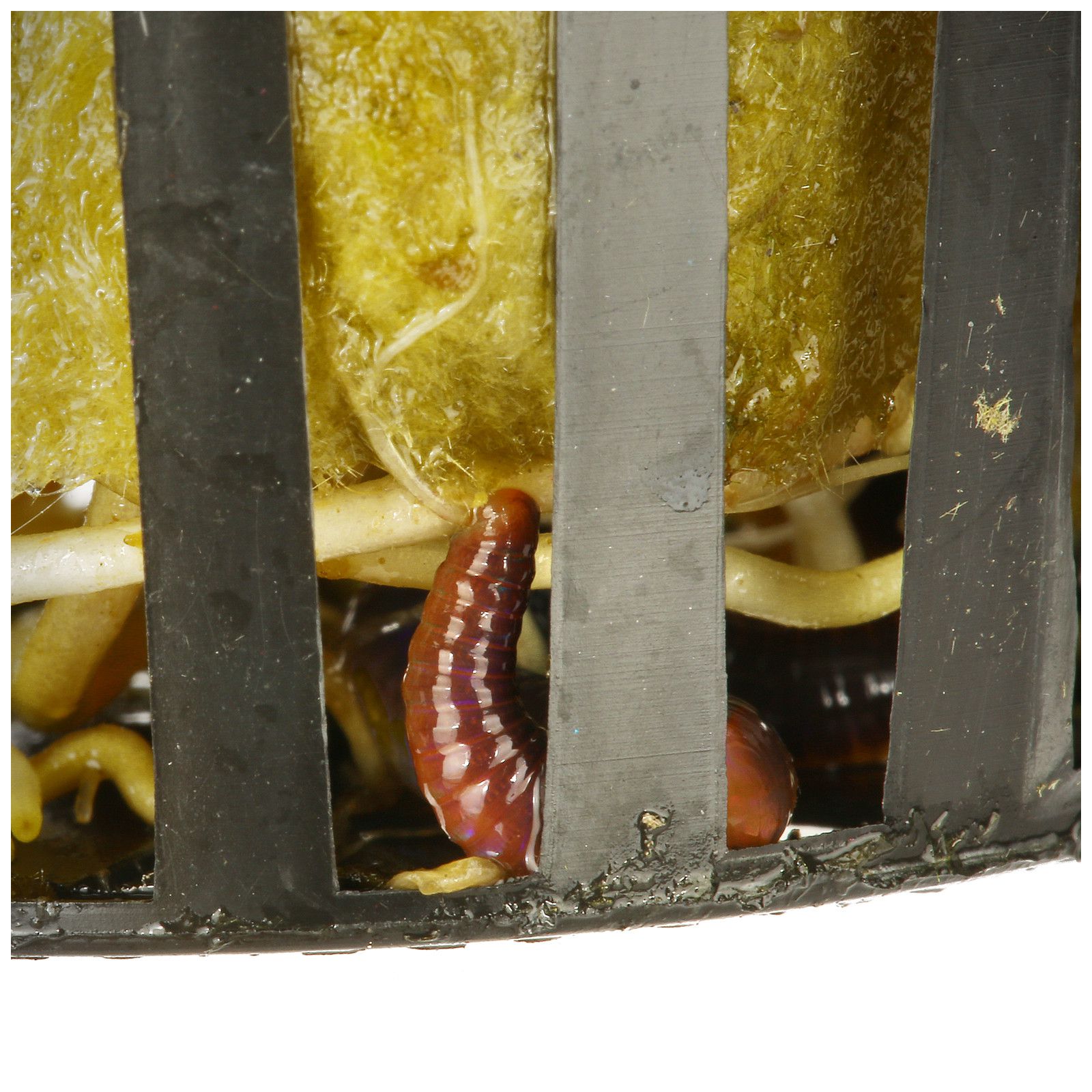
In rare cases worms can hide in the rockwool- or coconut fibre substrate that comes with emersed aquarium plants, and they might look like the widely-known and familiar earthworm. We can’t really tell what species they belong to, but they are definitely oligochaets, from the phylum annelidae. It’s not only the earthworms (lumbricidae) that are among the oligocheats, but also many other phyla like enchytraeidae, sludge worms (tubifex) and blackworms (lumbriculidae), known to many aquarists as live feed. The segmented body, often with a thickening in the “belt” (clitellum) - which plays a role in reproduction - is typical for such worms. The head is usually hardly recognizable as such, so it’s easy to confuse front and rear end. Bristles are located on the sides of the worm which are usually short and inobtrusive. Often these animals are of a reddish colour because their blood contains hemoglobin. They usually move by contracting and stretching the body.
Many annelids live in the soil, earthworm-style and are of immense importance for their ecosystems and soil fertility, because, as decomposers, they break down dead, organic substances and loosen and intermix the soil. Still others live in the wet soil of riverbanks and temporaily or permanently in the water, like the already mentioned sludge- and blackworms as well as the earthworm species Eiseniella tetraedra.
But there are also tiny, aquatic oligocheatas that hardly look like earthworms at all. We cover those in a dedicated article.
If earthwormy oligocheatas survive on aquatic plants at all, depends on their respective species and modus vivendi, but those species are difficult to determine. Even terrestrial annelids can endure in oxygen-rich water for a long time, as long as they are not captured by aquarium dwellers. But even if you ARE dealing with aquatic annelids that like to hole up in the soil, you need not worry about the safety of your plants and animals.
Needless to say, annelids found with aquatic plants should not be released into the wild, because they might be non-domestic species.
Whiteflies
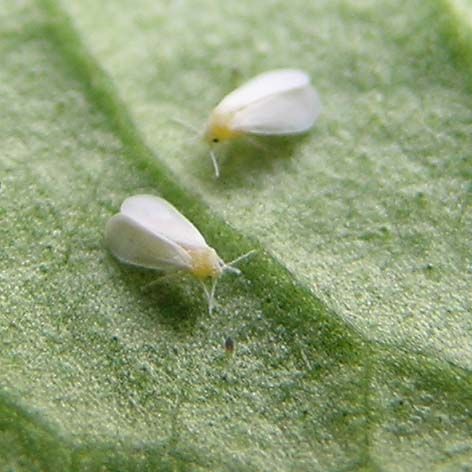
These insects suck plant sap, just like the related aphids and scale insects. There are about 1500 species of whitefly (superfamily aleyrodoidea), especially in the Earth’s warmer regions. A number of species have been introduced to Europe, and especially the greenhouse whitefly (Trialeurodes vaporariorum) is a dreaded plant pest in nurseries.
The adult animals are reminiscent of tiny white moths. They are about 1.5 cm long; The whole body, including the wings, is covered by a white, floury, water-repellent wax. When disturbed, they buzz around for a bit and soon sit down again. They lay eggs on the undersides of plant leaves. Larvae will hatch from those, which have a very flat, wingless body similar to scale insects. Leaves attacked by whitefly get spotty and yellow; in severe infestations they dry up and fall off. In addition, honeydew sticks to the plants, which often becomes blackish due to sooty mold fungi.
If whiteflies from aquatic plant nurseries travel on emersed plants as stowaways, they too are harmless to aquarium plants and animals; they drown in the water or may be eaten. If the plants are not damaged too much, they will easily grow in the aquarium. Whiteflies can get annoying in emersed setups. For control measures, please refer to relevant literature.
Creator of the picture: Gaucho~commonswiki - own creation, license: CC BY-SA 3.0.
Mealybugs
Urheber des Bildes: D-Kuru - Eigenes Werk, Lizenz: CC BY-SA 3.0 AT.
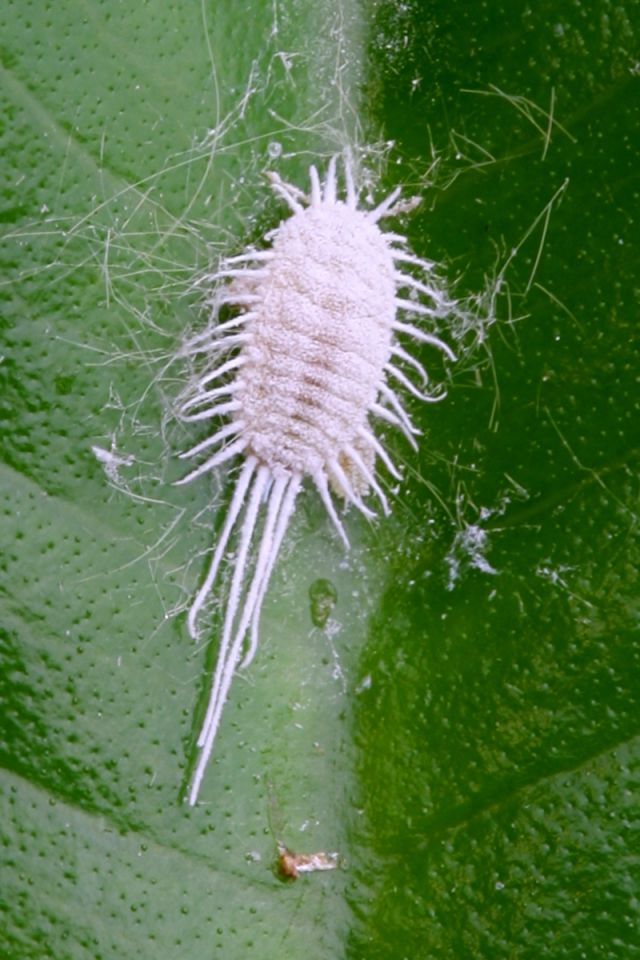
These plant juice-sucking insects are sometimes found on emersed aquatic plants. Mealybugs are a member of the scale insects (superfamily coccoidea) and form their own family with about 1000 species (pseudococcidae). They occur predominantly in warm regions of the earth, and various species are pests on indoor plants as well as in horticulture and agriculture.
The females have a very flat, wingless body and are usually pretty immobile. If they move at all, then very slowly. Once they have sucked themselves onto the plant they won’t leave their spot anymore. The male specimens look entirely different and have got wings.
Especially the females are covered with peculiar, white, water-repellent wax excretions that look hairy or mealy (hence the name “mealybugs”) and feel greasy. Like aphids, lice excrete sticky, sugary honeydew, which is often colonized by blackish sooty mold fungi.
Even those bugs won’t pose a threat to your aquarium, because they die underwater like any other land-dweller. If you want to cultivate aquarium plants - but emersed, these plant suckers can get annoying pretty fast. For example, emersed echinodorus are easily affected by lice, which then sit on the youngest leaves in the middle of the leaf rosette and in the pits of the inflorescence’s whorls. Relevant literature lists various methods of control, including biological methods.
Caterpillars
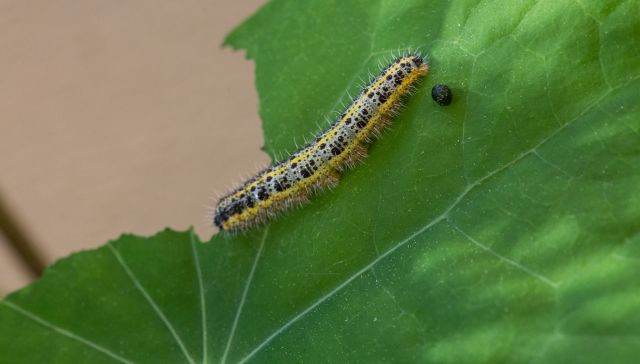
Caterpillar of the cabbage white butterfly next to its tiny poop (right).
Even small caterpillars can sometimes sit on emersed aquarium plants and eat them. Initially, caterpillars are the typical larvae of butterflies (insect order Lepidoptera), but also several other insect groups such as sawflies have caterpillar larvae. Butterfly caterpillars have a more or less cylindrical body, which is divided into 14 segments. The head has a solid chitin shell (the head capsule), the trunk is soft-skinned. On the front body, there are six small so-called thoracic legs, which are tapered. On the following segments are broad, short abdominal legs, usually with sucker-like "soles". At the rear end, there are two particularly strong, broad legs, called the pygopodium.
Most butterfly species have herbivorous caterpillars that are often specialized in certain plant species, genera or families. Caterpillars of the cabbage white, for example, feed on cruciferous plants and are unlikely to appear on aquarium plants (the photo above is just an example of a butterfly caterpillar). Other caterpillars form filaments or webs. They usually eat leaves from the edge, while snails often grate holes into them. Caterpillar infestation can also be detected by small droppings lying on the ground or on plant parts, hanging in the webs etc. Unlike slugs, caterpillars do not leave slime trails.
Caterpillars also pose no danger to aquarium animals and submerged plants. They unsurprisingly drown or get eaten by larger fish or other aquarium animals. Although there are exceptions such as the brown china mark (elophila nymphaeata) with water-dwelling caterpillars, but these are unlikely to end up in aquariums. Caterpillars, which are not too severely damaged by caterpillars, can recover under good growth conditions and continue to grow underwater without any problems.
"Pimples" on Hygrophila leaves
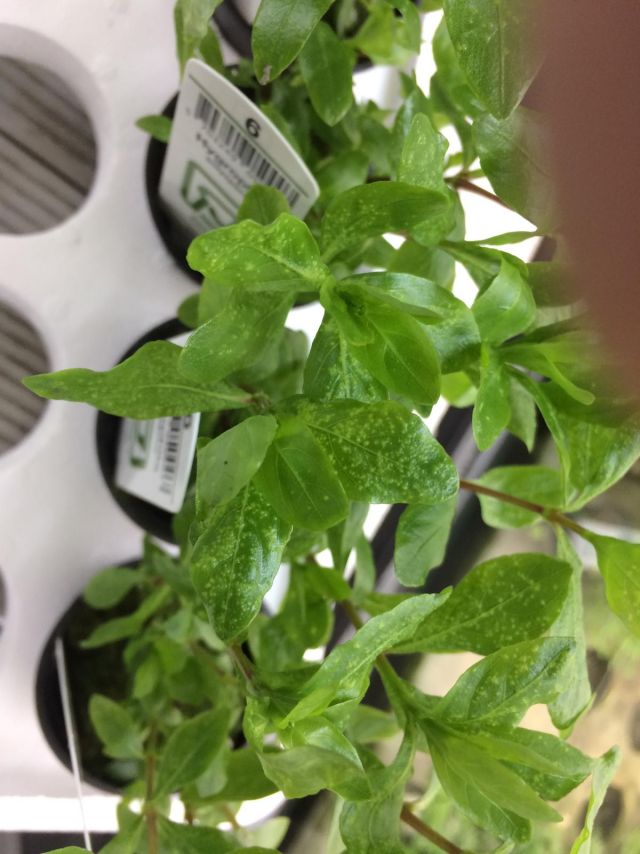
Especially on emersed leaves of hygrophila plants, strange little pustules sometimes appear. One might suspect that these are damage patterns or eggs of small animals, like for example gall mites. But we can not attest any animal infestation; it seems to be tissue growth (callus) with no reason. Such "pimples" may show up on Hygrophila under certain keeping conditions. There is thus no risk of pest infestation or transmission. Although these growths may look unpleasant, they are completely irrelevant to the normal use of the plant in the aquarium. Underwater, the plant will develop normal, submersed leaves without those "pimples".
Small, aquatic animals living on aquarium plants
With new aquatic plants you can sometimes introduce small aquatic animals into your aquarium, which will continue to live there and sometimes multiply - such as aquatic snails and their clutches, various "worms", freshwater polyps or ostracods. Normally, this is the case with plants that have been cultivated underwater, but even with emersely cultivated potted plants it can’t be completely ruled out. Such aquatic animals can come either directly from the nurseries, but also from the cultivation facilities of the seller, especially in shops usually all plants supplied in emersed form, are kept underwater in large sales basins. Only in-vitro plants are guaranteed to be free from pests on the plants themselves as well as the containers, as these plants are produced under sterile laboratory conditions and are traded in their sealed culture containers.
Aquatic animals that have not been deliberately introduced might’ve gotten there with plants, but also with newly acquired fish and other animals, live feed or hardscape. Many aquarium owners would like to get rid of the "vermin" quickly, but not all of these animals are harmful to the aquarium inhabitants; many can be considered harmless and even interesting “roommates”. Tips for differentiation, avoidance and possibly combating unwanted accompanying fauna can be found in our article "Parasites in your aquarium".