We use cookies to offer you an optimal shopping experience. These cookies can be grouped into categories. The necessary ones are essential for your purchase. Functional services enable additional content such as videos and maps. With further cookies we produce anonymized statistics. Others serve primarily marketing purposes and are used for the personalization of advertising. These cookies are used by 11 Services used in the shop. You can decide for yourself which cookies you want to allow.
We store your choice on your device (“local storage”) and ask you again after 12 months at the latest. You can change it at any time under “Cookie Preferences” in the footer. You can find details on cookie lifetimes and necessary cookies in our privacy policy.
These services are required to run the shop and for your purchase and cannot be switched off.
Strictly necessary cookies enable basic functions and are required for the website to work properly.
Description:
Shop functions: Essential Shop functions This includes: JTLSHOP (cookie, until you close the browser; keeps your session, the cart and your login), consent (browser storage; remembers your cookie choice, 12 months at most, during the session also in session storage), has_starting_point, cur_product_id and product_page_visits (session storage; navigation between products) as well as aquasabi-search-index-last-url, aquasabi-search-index-results and aquasabi-search-index-data (session storage; search results and lists when paging).
easyVision: easyVision lets website visitors customize the display – e.g. by adjusting contrast, font size, line and letter spacing, color rendering, a blue light filter or by disabling animations. Developed and hosted in Germany, the service is GDPR-compliant and supports statutory accessibility requirements (BFSG) from 2025. The service loads its scripts from cdn.sitecockpit.com and stores your settings (easy-vision-*) in your browser storage (no cookies).
Reviews: aquasabi_guid (cookie, 12 months) is only set when you click “Helpful” under a review. It stores a random ID so that the same person cannot count a review as helpful more than once.
Sorting and view: aquaSort and aquaDisplayType (cookies, 90 days) store the sorting or view (gallery or list) that you choose in a product list. They are only set when you choose a sorting or view.
Amazon Pay: Payment processing with Amazon Pay.
The service provider is Amazon Payments Europe S.C.A. Where Amazon Pay is offered (e.g. in the cart and at the checkout), the shop loads scripts and images from static-eu.payments-amazon.com, payments-eu.amazon.com and m.media-amazon.com and sets cookies (language, ledgerCurrency, apay-session-set). You can find out more in the privacy policy at https://www.amazon.de/gp/help/customer/display.html?nodeId=GRFTMVHP4HXMESSP
PayPal: Payment processing with PayPal.
The service provider is PayPal (Europe) S.à r.l. et Cie, S.C.A. Where PayPal is offered (e.g. in the cart and at the checkout), the shop loads scripts from www.paypal.com; for invoice payment via PayPal, c.paypal.com is added for fraud prevention. PayPal stores an entry in your browser storage (__paypal_storage__), and the shop remembers the chosen PayPal payment method in session storage (chosenPPCPaymentOption). You can find out more in the privacy policy at https://www.paypal.com/en/legalhub/paypal/privacy-full
Sofortüberweisung: On the confirmation page after an order with this payment method the shop loads a Klarna logo from x.klarnacdn.net.
Additional functions such as embedded videos and maps, spam protection in forms or the rating badge. Data is transferred to the respective provider when they load.
Show Youtube Videos
Description:
Displaying videos
Processing company:
Google Ireland Limited, Google Building Gordon House, 4 Barrow St, Dublin, D04 E5W5, Ireland
Helps us understand how the shop is used so that we can improve it.
We measure which pages and products are viewed and how visitors move through the shop. Google Analytics sets cookies (_ga, _ga_*) and sends usage data to Google.
Description:
Audience measurement and analysis of how the shop is used
Measures our advertising and enables personalised advertising on other sites.
We measure whether an ad on Facebook or Instagram led to a purchase and show visitors relevant ads again. Cookies are set for this: _fbp and _fbc (Meta) and as_fbclid (ours, 30 days; remembers the ID of the ad click). Meta receives data about your actions in the shop (e.g. product views, cart, purchase), your IP address and browser information; for a purchase our server may also send them directly to Meta (Conversions API). More in our privacy policy (retargeting/remarketing and conversion tracking).
Description:
Measure advertising success and show relevant ads again (Facebook, Instagram)
We measure whether an ad on TikTok led to a purchase. Cookies are set for this: _ttp, ttclid and _tt_* (TikTok) and as_ttclid (ours, 30 days; remembers the ID of the ad click). TikTok receives data about your actions in the shop (e.g. product views, cart, purchase), your IP address and browser information; for a purchase our server may also send them directly to TikTok (Events API). More in our privacy policy (retargeting/remarketing and conversion tracking).
We measure whether an ad in ChatGPT led to a purchase. Cookies are set for this: __oppref and __obref (OpenAI) and as_oppref (ours, 30 days; remembers the ID of the ad click). OpenAI receives data about your actions in the shop (e.g. product views, cart, purchase), your IP address and browser information; for a purchase our server may also send them directly to OpenAI (Conversions API). Data may be transmitted to OpenAI OpCo, LLC (USA). More in our privacy policy (retargeting/remarketing and conversion tracking).
Description:
Measure the success of ads in ChatGPT
Processing company:
OpenAI Ireland Limited, 1st Floor, The Liffey Trust Centre, 117-126 Sheriff Street Upper, Dublin 1, D01 YC43, Irland
We measure whether an ad led to a purchase and show visitors relevant ads again. Google Ads sets cookies (e.g. _gcl_*) and receives purchase data, where applicable in hashed form (SHA-256).
Description:
Measure advertising success and show relevant ads again (remarketing)
We use cookies that are essential for payment processing through our partners. Please select which payment providers you would like to use.
In order to unlock offers for extended payment options, in particular express checkout and payment in instalments, we require your consent to the data transfer and storage of third-party cookies of the payment provider PayPal. This allows us to also offer you express checkout and payment by instalments. Without your consent, only the technically necessary data transfer to PayPal will take place, but you will then not be able to use the express checkout or extended offers for payment by instalments on this site.
Description:
Using express checkout and Displaying offers for payment in instalments for individual items or your entire purchase.
Your consent ID:With this randomly generated number we can show on request what you selected. It contains no information about you.
Data privacy settings
Would you like to see these contents? Activate the desired contents for one session only or allow the website to remember these settings. Once you have given your consent, the third-party data can be loaded. For this, third-party cookies might be stored on your device. You can change these settings at any time (footer: “Cookie Preferences”). For further details, please see the Privacy notice.
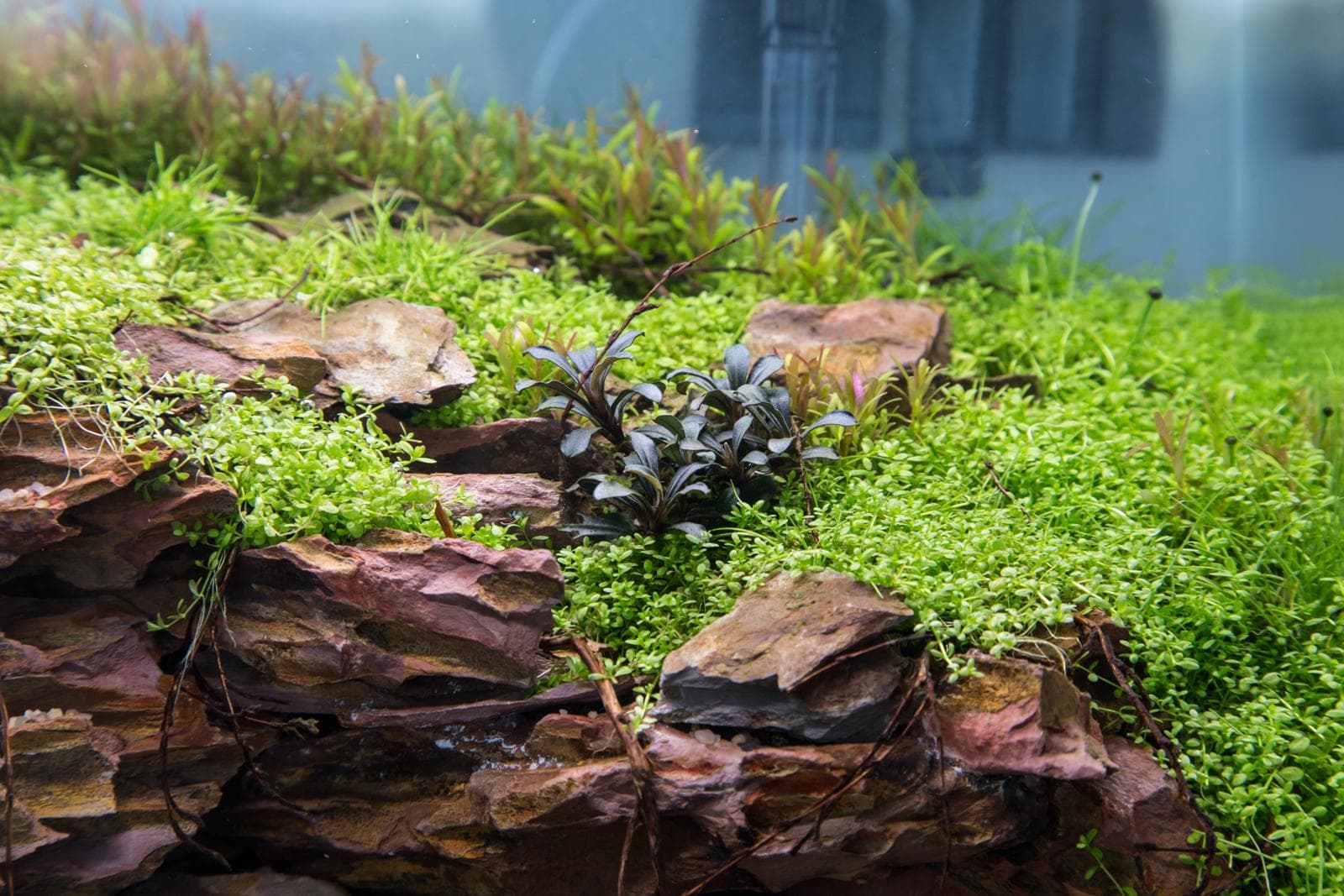
Sometimes strange holes are discovered in aquatic plants, or whole shoots are suddenly 'defoliated' so that only bare stems remain – a phenomenon that occurs above all with mosses, ground cover plants or fine-leaved aquarium plants. The first assumption is then usually that the plant is suffering from a deficiency symptom. This is not always the case, though. Plant-eating animals can also have caused the damage.
Feeding damage on large-leaved aquatic plants
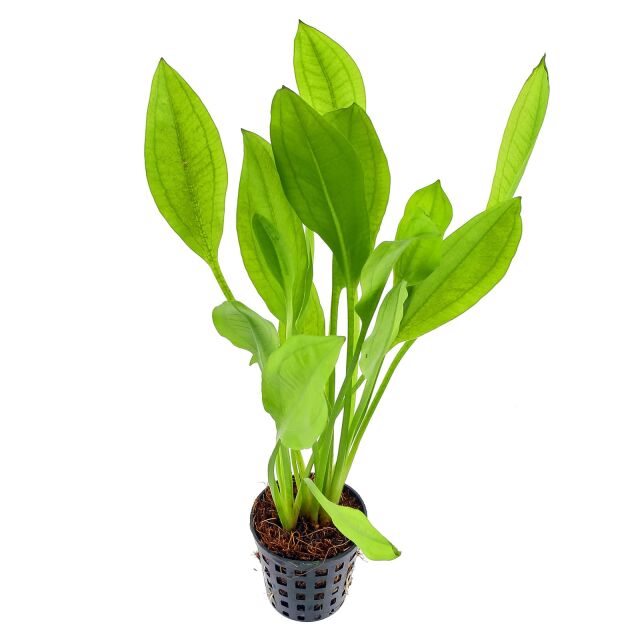
A typical example is when plecos such as the blue bristlenose pleco are kept together with large-leaved aquatic plants of the Echinodorus type in a community or South America aquarium. If the catfish lack plant-based food, it is quite possible that they will then start eating the leaves of the Echinodorus plants. This often shows up as perforated leaves whose surface looks roughened and frayed. The holes are not clearly delimited and perfectly round, however, but have rather ragged edges. These damages are often mistaken for a deficiency symptom, and the cause is then sought in inadequate plant nutrition. Holes caused by nutrient deficiency, however, usually have a clear structure and are less frayed. The boundary between hole and leaf is much clearer than with feeding damage. In some cases there is a ring-shaped lighter discoloration around the hole (see photo below); this is then a nutrient deficiency.
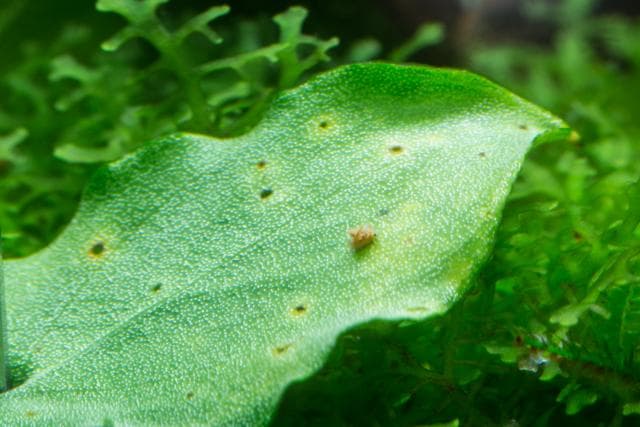
Holes in the leaves, here not feeding damage but a deficiency symptom.
Algae infestation and feeding damage
A typical example of the combination of feeding damage and algae infestation is the appearance of fur algae or fuzz algae that settle on the leaves of aquatic plants. A similar effect can also occur with green spot algae or general algae coatings. Algae eaters in the aquarium, especially Amano shrimp, begin grazing the algae off the leaves. If the plants have soft leaves, they are affected by the shrimp's claws, so that the leaves are perforated or even partly eaten along with the algae.
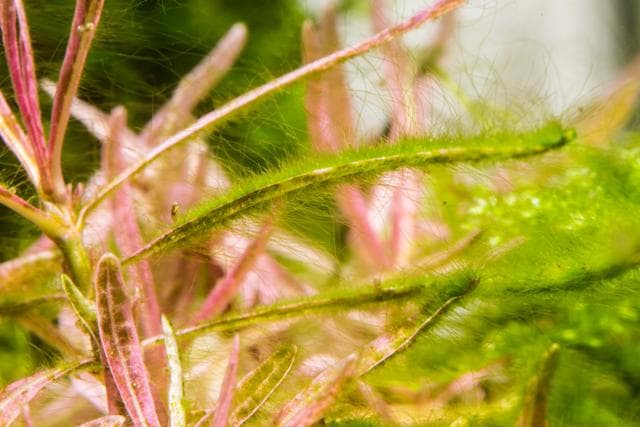
Species such as Hydrocotyle tripartita or red-leaved stem plants such as Alternanthera reineckii 'Mini' are frequently affected. This feeding damage was not caused by the algae eaters out of malice at all, since the animals are after the algae on the leaves. The perforated plants are then rather collateral damage. Hard-leaved species such as Anubias are almost never affected, since they can withstand being grazed on by the shrimp.
The interplay of deficiency symptoms and feeding damage
It is not that rare for the phenomenon to occur in the aquarium that an aquatic plant suffers from certain deficiency symptoms. These often show up as small holes or other kinds of necrosis in the leaves, caused by a lack of carbon or macronutrients. You may not notice the small damage that already exists at first, but plant-eating animals do notice it. They now start at the holes in the leaves and eat the leaves from there. This creates even larger holes and damage, which now look considerably more frayed. In some cases only the skeleton of the leaves is left. At the latest now the damage becomes clearly visible, but cannot be attributed unambiguously.
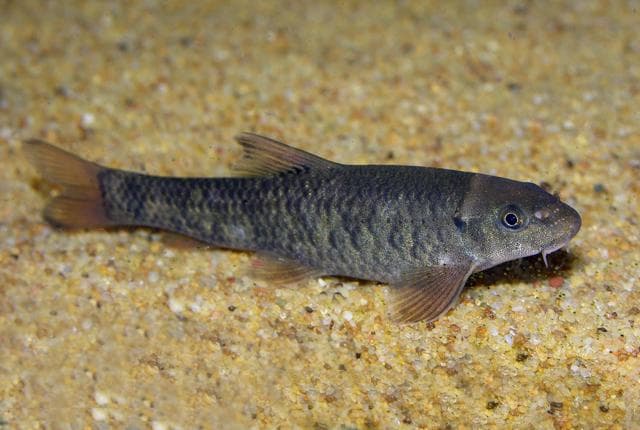
If fine ground cover plants (such as Hemianthus species) or fine-leaved mosses are present in an aquarium, you sometimes wonder about their poor growth. The plants look stunted, and in some cases only small bare stems without foliage can be seen. This is then mistaken for a deficiency symptom. If certain ornamental fish or an overpopulation of shrimp are present, however, they may have damaged the plants. This includes above all algae-eating animals such as Siamese algae eaters, reticulated Siamese algae eaters, or garra species (e.g. Garra rufa). These fish are often acquired as useful animals to eat black beard algae or thread algae. Usually you do not suspect these aquarium inhabitants of also eating plants, since you almost never catch them in the act. Field reports do confirm the incidents, however, as do A/B comparisons when you then keep such planted aquariums under the same conditions without these animals. The fine-leaved plants recover again without this animal stock.
Snails on java fern tips
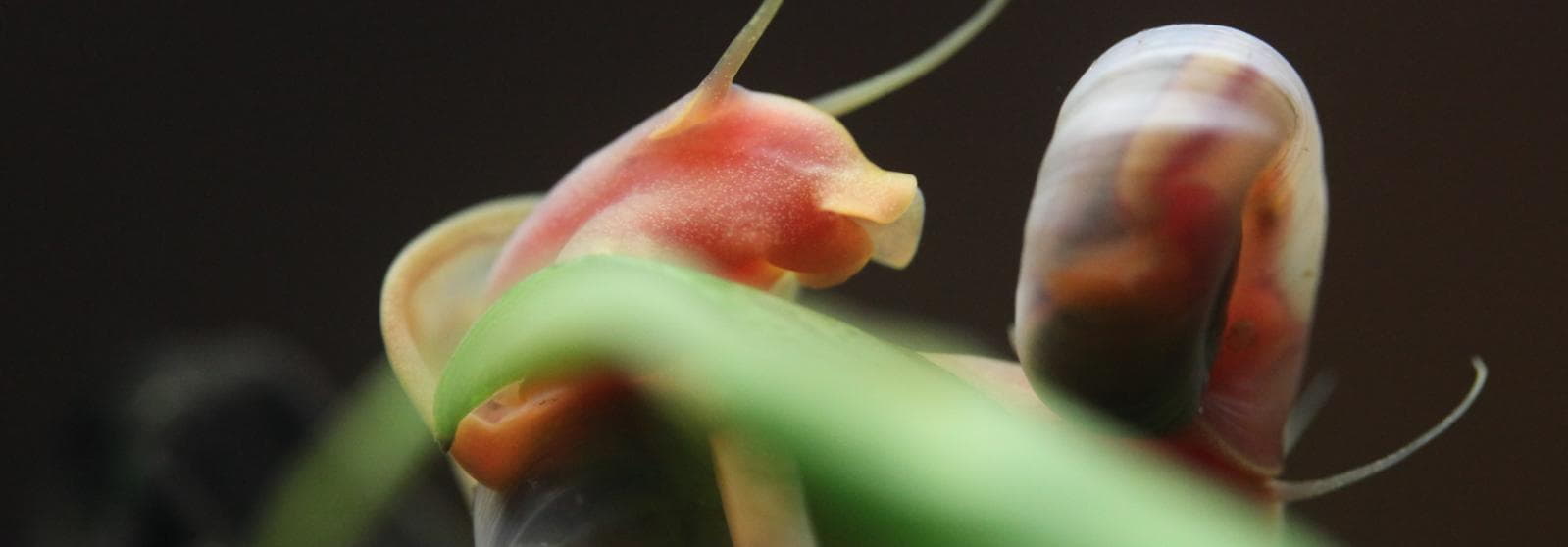
Copyright by Roland Emmenlauer
The shoot tips of java ferns stand out because they visually have a different shade of green than the rest of the fern's leaf. At the front tip the green is darker and more transparent. The tissue in this growth zone is probably also somewhat softer than in the rest of the leaf. Some snail species such as ramshorn snails can go after these shoot tips and nibble on them when there is a corresponding lack of food. The rest of the leaf tissue is usually too hard and is left alone. A remedy here is targeted supplementary feeding of the animals with greens or a reduction of the snail population.
Preventing feeding damage on aquatic plants
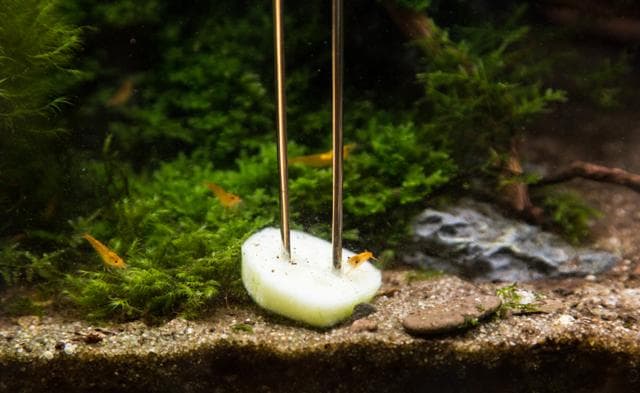
When aquarium animals go after aquatic plants, they obviously have a need for plant-based food. Plant-eating animals are often kept in the aquarium as useful animals to curb algae growth. Beyond that, though, such creatures also need other plant food, and if it is not available, they will take it elsewhere. Targeted supplementary feeding with suitable greens therefore helps. It is a common remedy in the aquarium hobby to give appropriately prepared vegetables. For example, blanched spinach, cucumber or zucchini in organic quality can be fed. The vegetables should be untreated and free of pesticides. Leftover food should be removed after a few hours so that it does not pollute the water. Do you want to learn more about the topic? Then take a look here.
It should also be mentioned, however, that some predominantly plant-eating animals also need animal protein now and then. These include, among others, Amano shrimp or certain catfish species. Frozen and live food can be used well here, but should be fed sparingly.