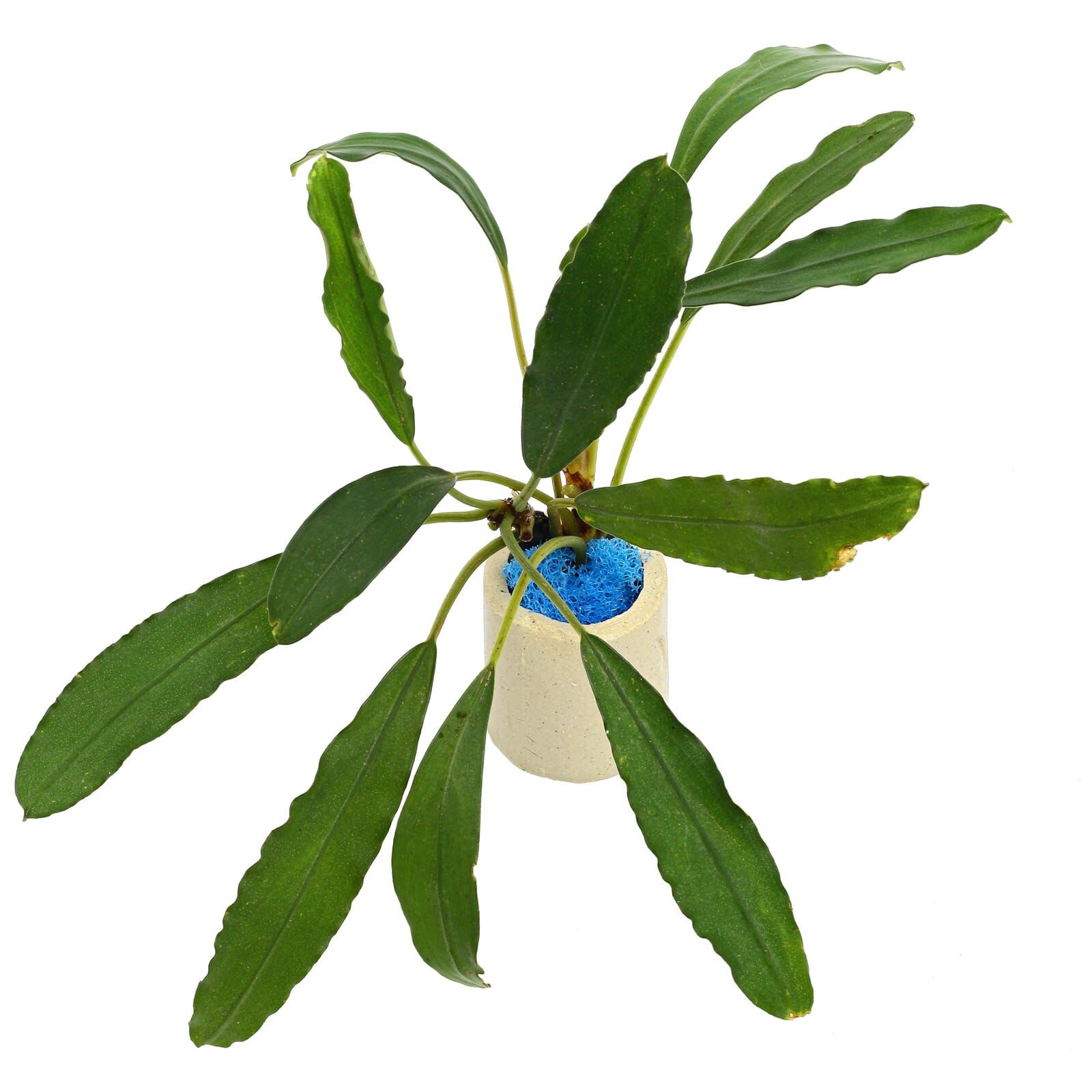
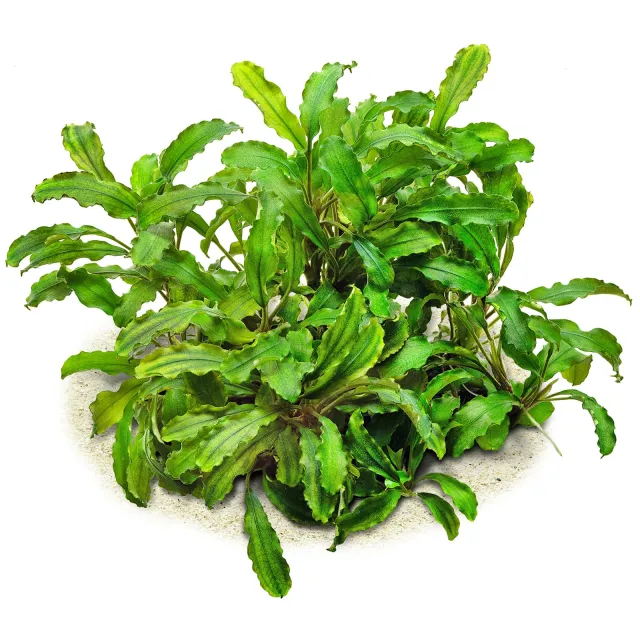
Bucephalandra sp. "Antyovani"
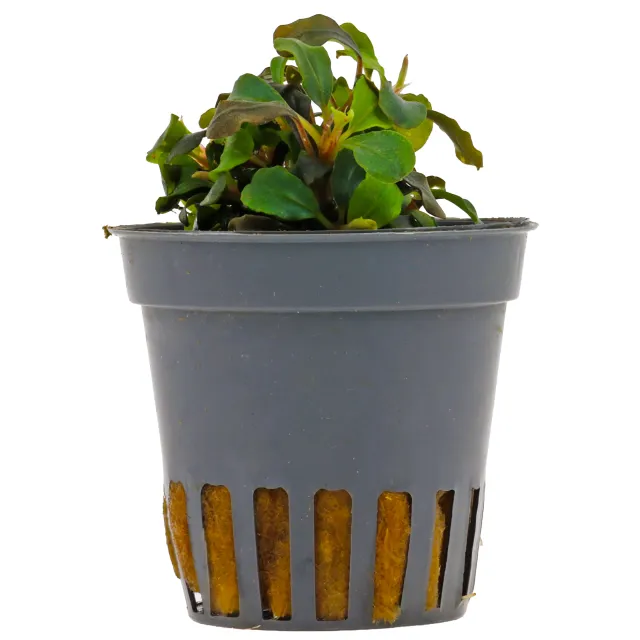
- Large Bucephalandra with narrowly lanceolate leaves
- Dark green tones
- About 8 to 10 cm high
Curbside delivery: This item ships by freight carrier and is delivered to the curb only, not to your door or into your home. The carrier will call you in advance to schedule a delivery date. Learn more about freight delivery
Customers also bought
Item question
We’re here for you!
Please enter your question and e-mail and we’ll contact you as soon as possible. It usually takes us up to 24 hours during business days to respond.
Thank you for your question!
Thank you, we’ll get in touch!
Close window
You already sent us a question.
Please wait a few minutes
Description
This decorative, quite large Bucephalandra is produced in an Indonesian nursery under the trading name "Antyovani". It resembles the species Bucephalandra kerangas, however its exact origin and species belonging is unknown to us. As well as all Bucephalandras, it originates from Borneo island, growing as a rheophyte (adapted to strong current) on rock in the flood zone of rainforest streams. Bucephalandra sp. "Antyovani" has up to 8 cm long, lanceolate, dark green leaves with wavy edge.
Bucephalandra species and forms are primarily epiphytes on rock or wood where they attach themselves by their roots. They can also be fixed to the bottom, however the rhizome must not be buried to avoid rotting. The plant will root on its own and benefit from the nutrients in the substrate. The growth is generally slow to very slow.
Bucephalandras cope with poor light conditions, however they develop their most beautiful look with medium lighting, good water current and constant nutrient and CO2 supply. They also tolerate strong lighting, sufficient CO2 and nutrient supply provided. The favourable temperature range is about 20 to 27°C.
We recommend to put Bucephalandras into already cycled aquariums. It is best to leave the plants in peace so they can grow. Sudden changes of parameters may lead to shedding of leaves, normally, however, the plants regrow slowly and produce new shoots on the rhizome. Bucephalandras are easily propagated by cutting terminal and side shoots that also promotes the ramification of the plant.
How many plants do I need?
General information
Please choose a variant to see more information.
| Item no. |
|
| EAN | |
| Weight | |
| Shipping weight |
Questions and answers about Bucephalandra sp. "Antyovani"
You have questions about this product? Ask other customer or our support team about this product!
Customer reviews
4 Reviews
| 5 Stars(2) |
|
| 4 Stars(0) |
|
| 3 Stars(1) |
|
| 2 Stars(1) |
|
| 1 Star(0) |
|

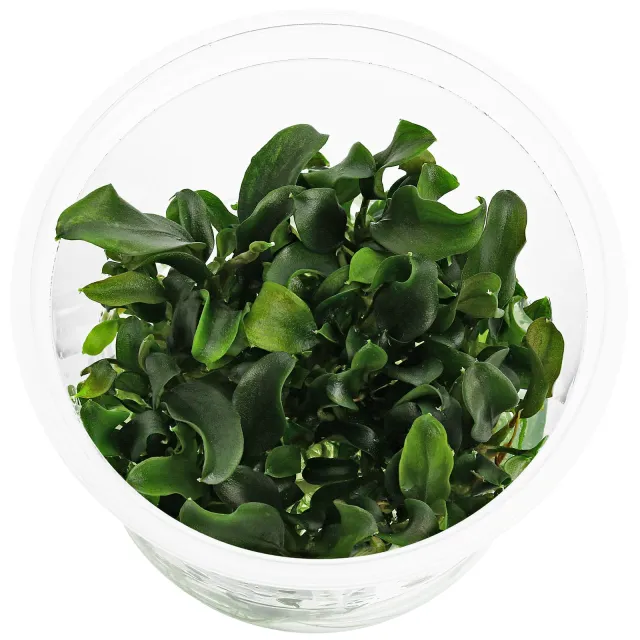
The cup was filled just like in the example picture, lots of individual plants. In my case there were 7 rhizomes in total and I could have divided them even further.
Show original
Schöne Pflanze
Der Becher war genauso gefüllt wie auf dem Beispielbild auch, viele Einzelpflanzen. Bei mir waren es insgesamt 7 Rhizome und ich hätte sie noch teilen können.
I got 4 bunches out of the pot. One was already too beat up to go into the tank. Otherwise very nice, grows very, very slowly, even after 2 weeks it hasn't properly taken root. (read more)
Show original
Sehr kleine Pflanze Qualität ist ok
Aus dem Topf habe ich 4 Bünde rausbekommen. Einer war schon etwas zu sehr mitgenommen um ins Aquarium zu wandern.
Sonst sehr schön, wächst sehr sehr langsam ist auch nach 2 Wochen noch nicht richtig angewachsen. Hat sehr kleine Blätter. Ich nehme die Art nicht wieder, ist mir zu klein-blättrig für meinen Geschmack.
In April I bought 2 in-vitro cups of this Bucephalandra, unfortunately only 3 plants survived, which can always happen in newly set up aquariums, though. (read more)
Show original
Sieht leider nicht aus wie Beschrieben oder auf den Bildern zu sehen
Ich hab im April 2 in Vitros von dieser Bucephalandra gekauft, leider haben nur 3 Pflanzen überlebt was bei neu eingerichteten Aquarien aber immer sein kann.
Was mich aber wirklich stört ist dass die überlebenden Pflanzen überhaupt nicht so aussehen wie in der Beschreibung steht oder auf den Bildern zu sehen ist. Möglicherweise trifft die Beschreibung nur auf die emerse Wuchsform zu, denn submers sieht sie ganz anders aus, wenn das der Fall ist sollte man das auch dazu schreiben. Statt schmal-lanzettliche, dunkelgrüne, bis etwa 8 cm lange Blätter mit welligem Rand hat sie ca. 4 -5cm runde, hellgrüne Blätter. Habe auch noch andere B. im Aquarium und alle sehen so aus wie sie aussehen sollten.
Die Deckel der in Vitros waren auch alle offen und die Nährlösung war im Beutel in dem die in Vitros waren. Liegt aber eher am Paketdienst als bei Aquasabi.
Auch wenn diese Bewertung negativ wirkt möchte ich hier anführen dass generell die Planzen von Aquasabi eine gute Qualität haben. Hatte bei dieser Bestellung in Vitros im Wert von 185 Euro und nur mit dieser einen Bucephalandra Art bin ich nicht zufrieden, alle anderen 17 in Vitros waren gut gefüllt und auch so wie beschrieben.
Similar products