The cichlid aquarium

By Aram Schneider Published Updated
Translated from German with AI assistance and reviewed by our editors.
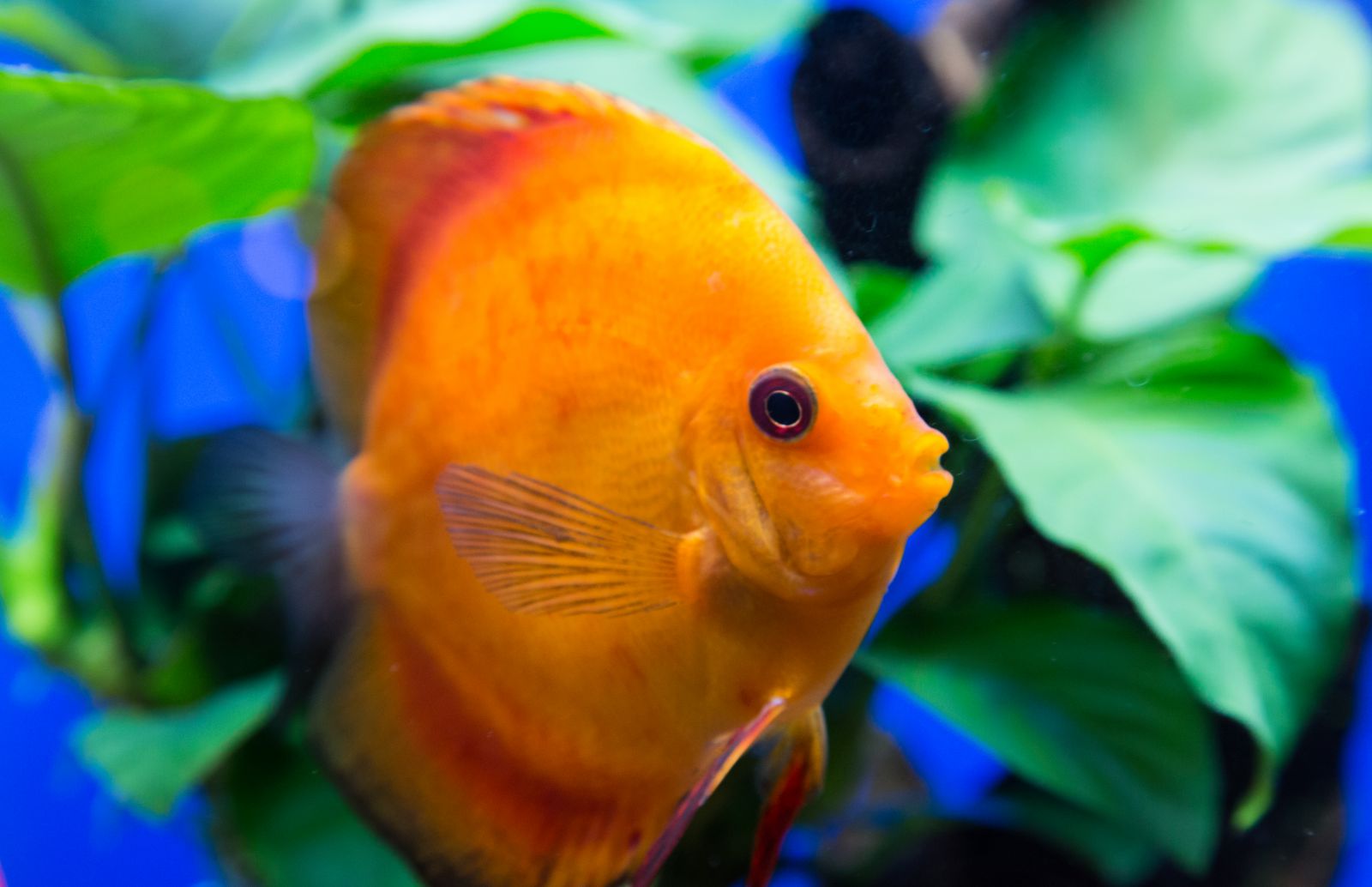
A cichlid aquarium is an aquarium that is generally designed for stocking cichlids. The species and their care requirements can of course differ significantly depending on the habitat. Popular cichlids in aquaristics often come from South America (such as discus, angelfish, eartheaters or dwarf cichlids) or from Africa (such as cichlids from Lake Malawi and Lake Tanganyika). Here we show you what to pay attention to when setting one up.
General information about the cichlid aquarium

Copyright by Chris Lukhaup.
Most cichlids kept in aquaristics are already fairly large ornamental fish, and as schooling animals several of them are sometimes even kept together. Because of their size, an aquarium of appropriate volume is needed above all; you won't get far with the standard size of 54 liters. Suitable aquariums for larger cichlids often start at an edge length of 1 to 1.2 m and have a volume of at least 250 liters. Upward, of course, there are no limits.
Because of the size of the animals, which also have a correspondingly high metabolism, there is a correspondingly high water load. This applies especially if a lot of feeding is done. Very frequent feeding of frozen food in particular can cause the phosphate level in the aquarium water to rise sharply. Furthermore, a heavier water load in terms of the nitrogen cycle results in a higher nitrate concentration. To counteract the "pollution" of the water, suitable and sufficient filtration of the aquarium is necessary. For this, the filter should be equipped with appropriate filter media. Nitrate and phosphate adsorbers can sometimes help here to reduce the concentrations of these substances to a normal level if aquatic plants cannot process enough of them as nutrients. Regular maintenance such as weekly water changes also helps keep the water clean and clear.
In principle, a distinction can be made between aquariums for African cichlids and for South American cichlids. Especially when it comes to water parameters and setup, the requirements for these two aquariums are very different. We will therefore now deal with the two types of aquariums separately.
The South American cichlid aquarium

Copyright by Chris Lukhaup.
Cichlids from South America are extremely popular in aquaristics. These include discus fish, angelfish, dwarf cichlids, eartheaters or ram cichlids, to name just a few. The diversity of species among cichlids is enormous, and the range of colors, sizes and social behavior among these ornamental fish is correspondingly wide. Husbandry conditions in the aquarium can therefore certainly differ, but there are still some things in common that can be taken as a basis for setting up and maintaining a South American cichlid aquarium.
Water parameters in the South American cichlid aquarium
As in almost every South American aquarium, the cichlid aquarium based on this theme is preferably set up with soft and acidic water parameters. This includes an acidic to slightly acidic pH value of up to slightly below 7 and a low carbonate hardness and general hardness. If the carbonate hardness (KH) is very low, the aquarist should add humic substances, which act as an additional pH buffer. This also increases the well-being of the animals in the aquarium if they are used to the presence of humic substances from their original habitat. Depending on the biotope and the animal species to be kept, the water can be quite warm, sometimes up to 30 °C, though sometimes somewhat cooler temperatures are also desired. With a suitable heater in the aquarium, the temperature can be set and held at the right level with ease.
Aquatic plants in the South American cichlid aquarium

Aquatic plants are not important for all cichlid species from South America, but can still be used in a cichlid aquarium. They help break down macronutrients such as nitrate and phosphate, serve as an oxygen supplier and provide the necessary structure. Weaker animals in particular can retreat well into the thicket of plants. However, depending on the cichlid species, you should check whether aquatic plants might be seen as food. Fine-leaved species with soft leaves are especially at risk here. Hard-leaved varieties are better suited. Certain cichlids also tend to dig through the substrate in the aquarium heavily, so that aquarium plants are sometimes dug up. Here, epiphytes can alternatively be used well, fixed to stones or driftwood. You can find more information about this in the article "Cichlid-proof aquatic plants".
Decorative elements in the South American cichlid aquarium

Since most cichlid species are territorial and especially the males establish fixed territories, sufficient structuring of the aquarium is necessary. Structures made of natural materials such as driftwood and stones offer suitable options here. When choosing stone types, the aquarist should make sure to use types that are as water-neutral as possible and do not harden the water. It should also preferably not be sharp-edged, so that the animals cannot injure themselves on it. With driftwood, some types release tannins into the water and tint it brownish. Sometimes, however, this effect may be wanted, because many South American ornamental fish come from blackwater biotopes and are used to water containing humic substances.
If the fish dig a lot, it can't hurt to secure the hardscape a bit to prevent a risk of collapse through undermining. A base made of egg crate (light diffuser panels) can help here, for example.
Substrate in the South American cichlid aquarium

Fine sand is the right choice as bottom substrate for a South American aquarium with cichlids. Most ornamental fish species are also used to this kind of ground from their original habitat. When buying the substrate, the aquarist should make sure that it behaves neutrally and does not harden the water. Among the cichlids in particular there are quite a few that also work the substrate heavily, whether by sifting through it to feed or by digging nest pits for reproduction. The so-called eartheaters in particular are very busy in this respect. If this is the case, the aquarist should make sure to build the decoration in the aquarium as stably as possible. Stone and driftwood structures should be arranged as broadly as possible; overhangs and physically rather daring arrangements should be avoided. To keep decoration from being undermined, it often helps to place stones or driftwood on a piece of egg crate, as is also often done in marine aquaristics.
Aquatic plants should either have a pronounced root system or be kept from losing their hold and floating up through any digging by the animals by weighted planting pots. Using epiphytes can sometimes also be a good choice, even though most epiphyte species usually do not come from South America but from Asia and Africa.
Tank mates in the South American cichlid aquarium

Keeping other fish with cichlids in one aquarium is a great enrichment, but depending on the species it is not always possible. Some cichlids are indeed too aggressive and rough and can stress other tank mates heavily, especially during the breeding season. In that case, setting up a pure species tank is probably the better choice. Tank mates and other animals such as invertebrates should also not be chosen too small, so that they are not seen as food and eaten. Combining cichlids with other species therefore needs consideration, but species such as catfish and tetras are sometimes possible, though they should be of appropriate size and hardiness.
The African cichlid aquarium

Image credit: Haplochromis via Wikimedia Commons (Public Domain), license information, source.
An aquarium with African cichlids usually refers to various cichlid species native to Lake Malawi or Lake Tanganyika. These ornamental fish are distinguished above all by their colorful splendor, and the diversity of species is also enormous. Lake Malawi alone contains between 600 and 800 different species of cichlids. Depending on the lake of origin, the aquarist tries to recreate a corresponding biotope. The habitats of these African cichlids offer clear, oxygen-rich water, a warm temperature and rocky stone structures. Aquatic plants are generally not found there, nor is driftwood. Of particular importance is the alkaline pH value, which is often above 7.5, and depending on the lake even well above that. Because of the soda springs in the tributaries, general and carbonate hardness are rather high.
Water parameters in the African cichlid aquarium

In principle, a distinction can be made here between the two biotopes Malawi and Tanganyika. Most cichlid species known in aquaristics come from these two lakes, so the aquarist decides to recreate the biotope of one of the two lakes. For a Malawi aquarium, the pH value should be in the range of about 7.5 to 8.2, so it is clearly alkaline. General hardness is often in the range of 5 to 10 °dGH, carbonate hardness similarly in the range of 5 to 9 °dKH. With a temperature range of approx. 22-25 °C, the water is warm, but not as markedly so as in a South American discus aquarium, for example. The water should not get higher than 26 °C here either, since otherwise an increase in germ density and a shortage of oxygen threaten. Especially in summer, you should therefore make sure that the water does not get too warm. An adequate oxygen level is important for the animals, which can be achieved by using air stones, enough current at the water surface, diffusers or oxydators.
For a so-called Tanganyika aquarium, somewhat different conditions sometimes apply than in a Malawi aquarium. The pH value is at least 7.5 but can in part reach up to 9. The temperature is given as a little warmer, at 24 to 26 °C. Carbonate hardness is correspondingly high and can reach values of 8-20 °dKH. General hardness is in the range of 6 to 8 °dGH. Compared with a Malawi aquarium, there is thus a somewhat higher pH value and a higher carbonate hardness here.
Aquatic plants in the African cichlid aquarium

Aquatic plants are actually not present in the African habitats of the cichlids. Nevertheless, such plants can be used in the aquarium for decorative purposes and also offer biological benefits, such as breaking down nutrients in the water. However, the aquarium plants have to withstand the conditions in a cichlid aquarium well. Since many cichlids nibble on the plants or dig them up, corresponding resilience is required. Epiphytes with rather hard leaves are therefore especially well suited. The genus Anubias in particular falls into this category. You can find more information about cichlid-proof aquatic plants here.
Decorative elements in the African cichlid aquarium

In a Malawi or Tanganyika aquarium, specific water zones of those lakes are mainly recreated. These are often very rocky, and you will often look in vain for aquatic plants and driftwood. For that reason, an African cichlid aquarium is generally set up mainly with stones. Types of stone that harden the water and contain lime are often used for this. Holey rock is a popular choice here, but Moon Stones or Mini Landscape are also conceivable.
Because of the stocking, the aquariums for these ornamental fish are already very large, and accordingly many kilograms or tons of stone are built into the aquarium. It should therefore not go unmentioned that the structural load capacity of the location where the aquarium is placed has to be taken into account. If you want to use impressive and lavish stone structures but still save some weight, artificial rocks and back panels are recommended. Manufacturers such as Back to Nature offer a wide range of decoration options here that look attractive and natural but are much lighter than real stones.
Substrate in the African cichlid aquarium
The substrate of an African cichlid aquarium should also be adapted to the needs of the animals. In principle, types of sand or gravel are suitable for this purpose. It should preferably not be too light but rather somewhat darker in color so that the animals do not become too shy and skittish. Somewhat more muted ground colors also make the colorful splendor of the fish shine out much more, since there is then a stronger contrast. If there are ornamental fish in the aquarium that dig through the substrate heavily, the substrate should not be chosen too fine. Particles that are too fine (and thus light) can otherwise cause permanent cloudiness or clog filters and circulation pumps.