 Vinegar eels as live food and rearing food
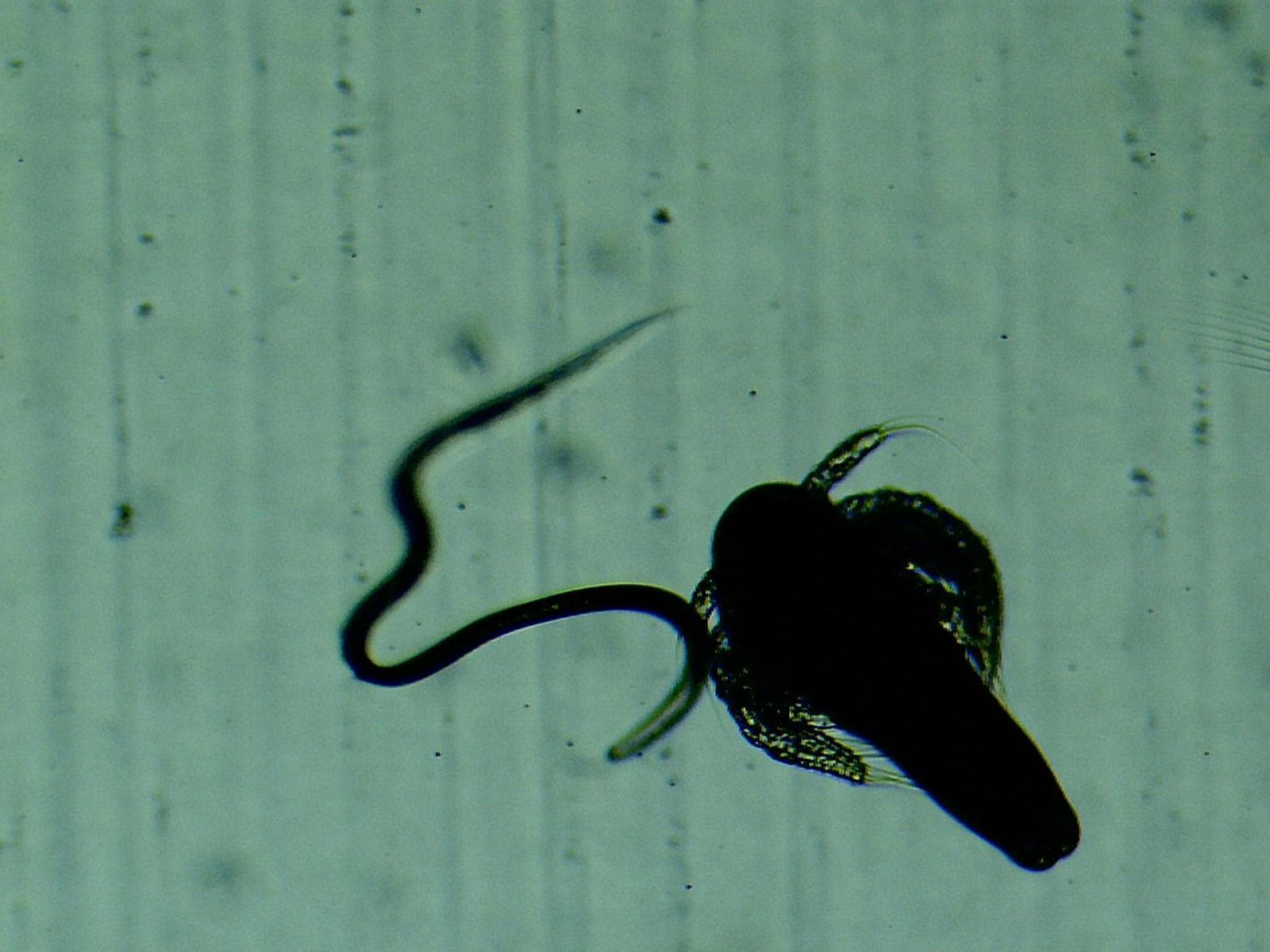
Vinegar eels next to a freshly hatched brine shrimp. Source and copyright of the header photo: Andrew Bogott - Own work via Wiki Commons, license: CC BY-SA 4.0, source credit.
Vinegar eels (Turbatrix aceti) belong to the nematodes, that is, the roundworms. They are whitish and have no segments. The front end is round, while the rear end tapers to a point. The tiny vinegar eels only grow 1-2 mm long and are as thin as a hair. Vinegar eels are a valuable live food for small fry and also for small to medium-sized ornamental fish species. Shrimp also like to snap up these tiny worms. Vinegar eels contain a high proportion of protein and fat. Because they are so nutritious, you should not feed them every day.
When raising fish, you can go directly from artemia nauplii as a first food (you can learn more about them in this article of the Aquasabi Wiki: "Aquarium live food: Artemia nauplii") to vinegar eels.
Vinegar eels are good, active swimmers and live partly on fermenting fruit, partly in watery, often very acidic environments, in liquids containing sugar or alcohol, and also in vinegar. They feed as predators on the acetic acid bacteria that occur there in large numbers.
Breeding vinegar eels
You can often get a starter culture in suitably equipped online shops, at trade fairs or from fellow aquarists. Vinegar eels are cultured in liquid: you mix water and apple cider vinegar in equal parts and add a little sugar.
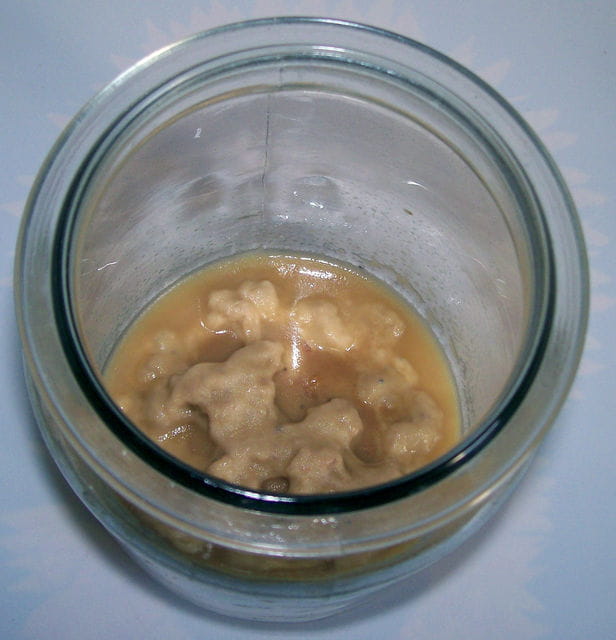
A starter culture for vinegar eels. Image rights: Ewkaa - Own work, license: CC BY SA 3.0.
It is best to fill this mixture into a small, rather tall bottle with a narrow neck. Add the vinegar eels to this mixture. They quickly start to multiply there. When the reproduction rate slows down, add new sugar. With a slight delay - the acetic acid bacteria have to multiply first - this also boosts the reproduction rate of the vinegar eels. From time to time you have to split the culture and set it up again. Then it is topped up with a fresh 50-50 mixture of apple cider vinegar and water.
"Harvesting" vinegar eels
Vinegar eels are a little harder to remove, because you can hardly filter the whole culture with the worms swimming in it. There is a trick, however: because of the lack of oxygen in the tall bottle with the narrow neck, the vinegar eels tend to move up in large numbers into the upper layers of the liquid, where they collect. For feeding, you can therefore simply suck off the top layer of liquid of the culture with a syringe and strain it through a coffee filter. If you have fairly hardy fish, it is even conceivable to put the liquid together with the eels directly into the aquarium. With less robust aquarium fish, the vinegar may cause problems. Here you should definitely strain the vinegar eels through a coffee filter before feeding.