 Aquarium Plants for Hard Water
In many places, our tap water offers quite high starting values for carbonate and general hardness. This also goes hand in hand with an alkaline pH. For such aquariums with hard water, which is also intended for an aquarium for African cichlids (Malawi, Tanganyika), only certain aquatic plants are suitable. Here we give you some recommendations for greening.
General recommendations
In general, a high water hardness (especially carbonate hardness) goes hand in hand with an alkaline pH. This is due to certain relationships between KH, pH and the CO2 content, which are expressed in the carbonate-carbonic acid equilibrium. Above all, a higher pH goes along with poorer nutrient availability. For planted aquariums, a slightly acidic pH of around 6.8 would be ideal.
If the general hardness is also very high, this is usually due to a large share of calcium. Magnesium, in turn, is then present in relatively too small an amount. An ideal ratio is about 3:1 between calcium and magnesium. A significantly less favorable calcium-magnesium ratio can lead to corresponding deficiency symptoms in the plants that are quite similar to an iron deficiency (light, faded leaves, though in part with green leaf veins).
Especially in African cichlid aquariums, an alkaline pH is desired in order to offer the fish the right conditions. A CO2 system is therefore not used, since it would be counterproductive. For aquatic plants, however, the important building block carbon is then often not sufficiently available.
Overall, then, hard water is rather suboptimal for healthy growth of aquatic plants. You can compensate for this somewhat by choosing quite robust and undemanding species that cope comparatively well with the conditions. Here we have listed a few examples, sorted by design layer:
Background plants for hard water
Of course, there are also tall-growing aquarium plants that are easy to keep and also tolerate harder water well. These include some fast-growing stem plants, as well as easygoing cryptocorynes or bulb plants.
Limnophila sessiliflora
The Asian marshweed is a tendentially fast-growing stem plant from Asia. It has quite light green shoots that are very finely feathered. In appearance it resembles a Cabomba, but is significantly less demanding. It also tolerates hard water well, but is not cichlid-proof.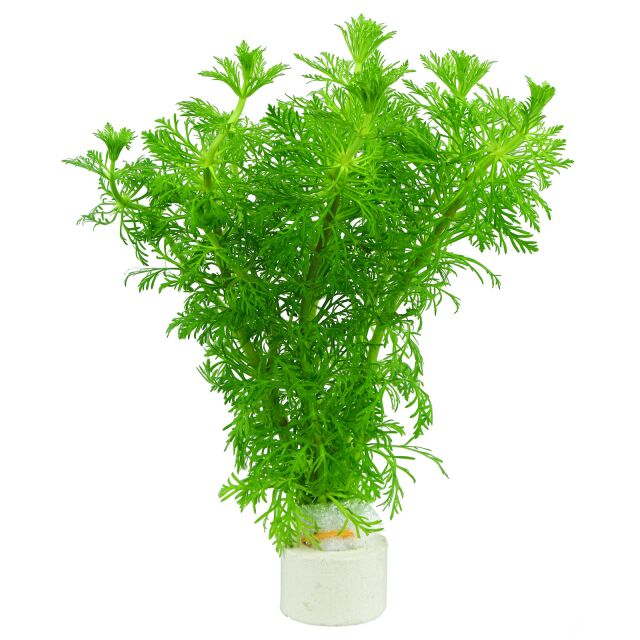
Hornwort
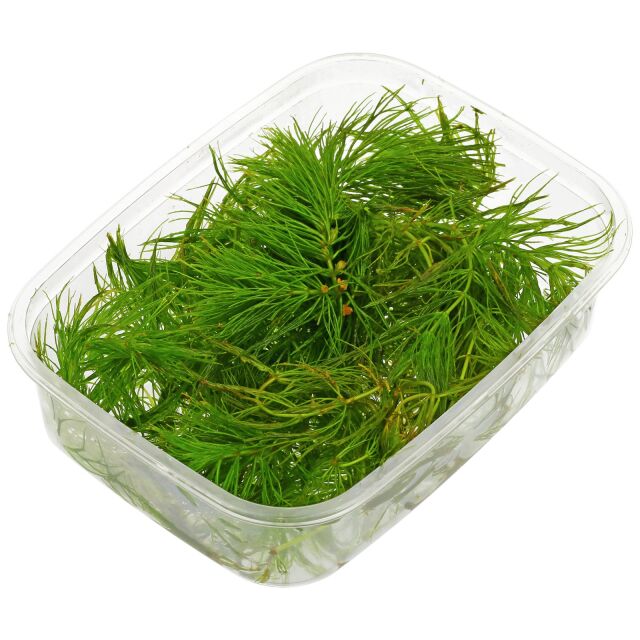
Hornwort here means, for example, Ceratophyllum demersum 'Foxtail'. This is actually a floating plant with long stems that can be comparatively fast-growing. You can let it drift at the water surface or use it as a background plant by sticking it into the substrate. The plant is relatively finely feathered and is therefore not to be considered cichlid-proof. It tolerates a wide range of water parameters, including harder water and an alkaline pH.
Water nymph
As a water nymph from the genus Najas, we offer the plant Najas sp. "Roraima" in our shop. In general, water nymph is well suited to hard water, likewise fast-growing and finely branched. The shoots are, however, relatively hard and therefore easily breakable. These plants are not necessarily to be considered cichlid-proof. Water nymph can be used as a loose floating plant or planted in the substrate as a background plant.

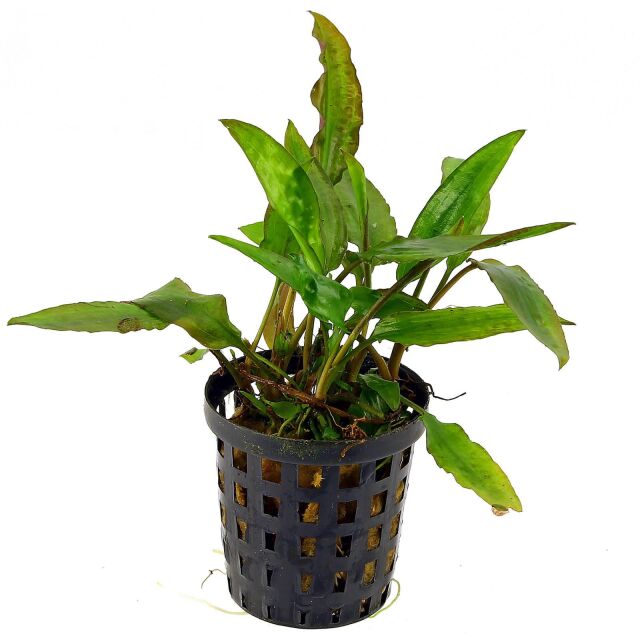
Cryptocoryne usteriana
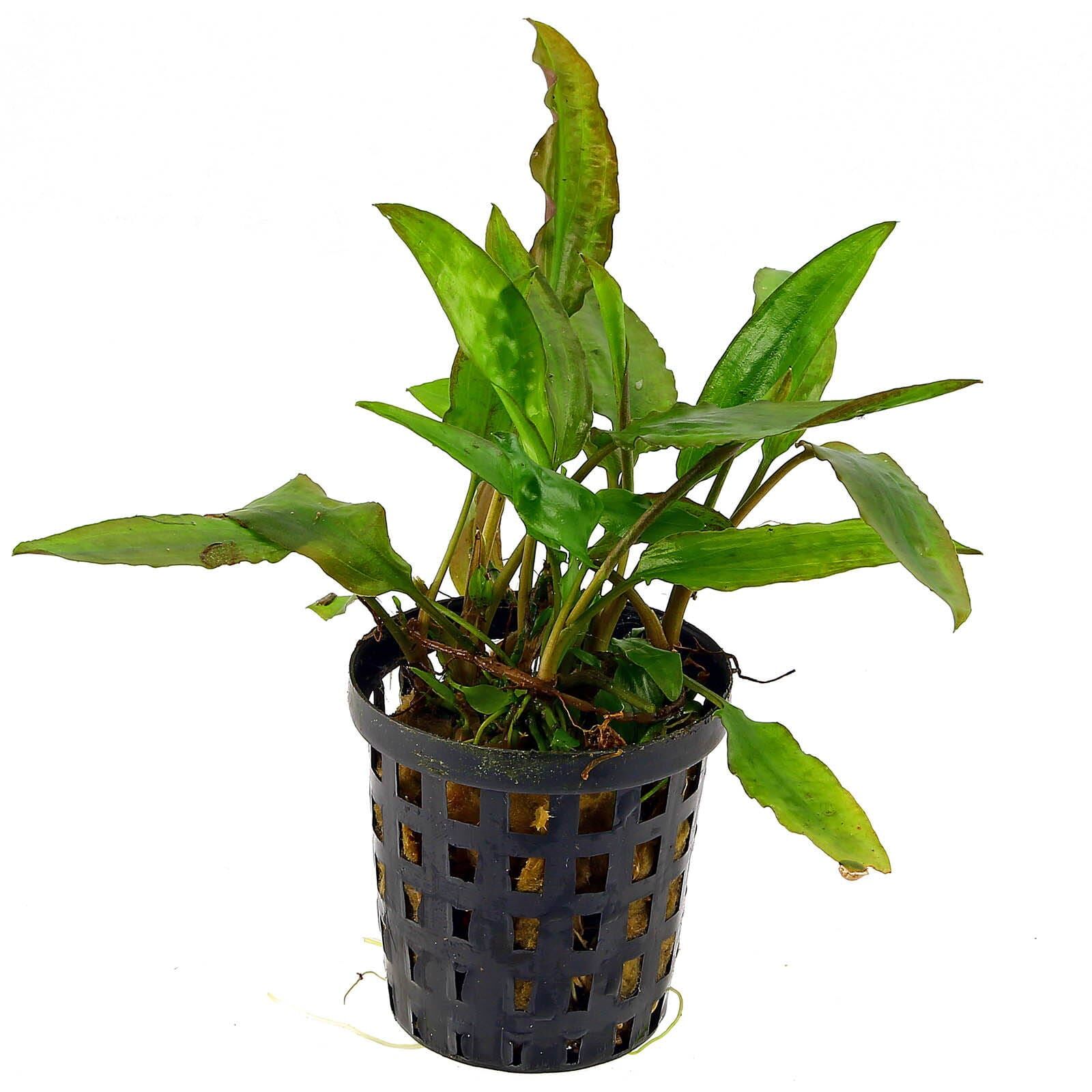
The so-called giant water trumpet is quite suitable for cichlid aquariums as well and is a robust, large-growing Cryptocoryne. It can reach growth heights of up to 70 cm. This undemanding aquatic plant also tolerates harder water, but as a root feeder it appreciates corresponding fertilization via the substrate. The greenish-brown leaves are also attractively bumpy.
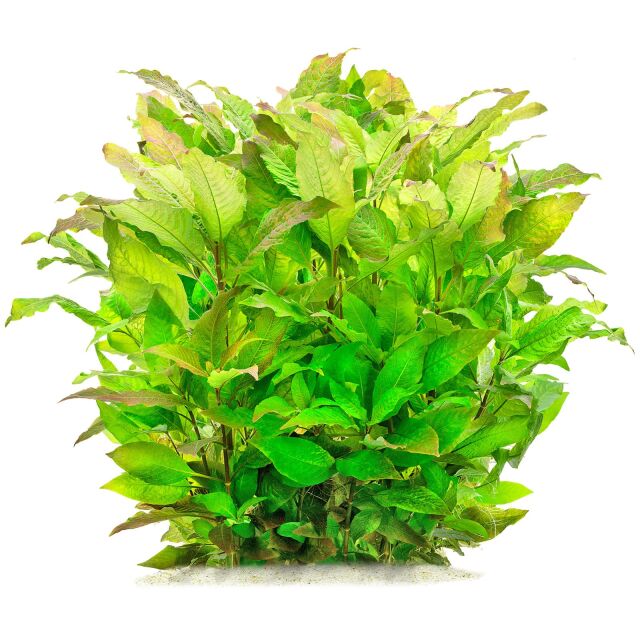
Hygrophila corymbosa
The giant hygro is a proven classic among aquarium plants. Hygrophila corymbosa is a fast-growing stem plant with large leaves and is not very demanding. Hard water should not be a problem for this plant. In addition, this hygro is quite tolerant and adaptable.
Midground plants for hard water
For the midground, too, there are aquatic plants that only reach a medium growth height and tolerate hard water well. These include some stem plants, but also root-feeding varieties such as cryptocorynes.
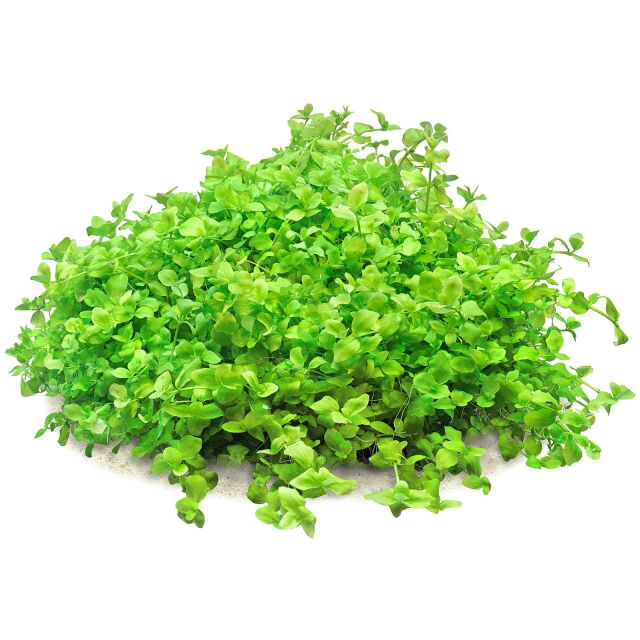
Bacopa australis
A good example of a medium-height-growing stem plant for which hard water is no problem would be Bacopa australis. It has small round leaves in a light green color and is considered undemanding. In nature, too, it is found, among other places, in quite calcareous waters in Brazil. You can achieve even better growth with added CO2, more light and enough micro- and macronutrients.
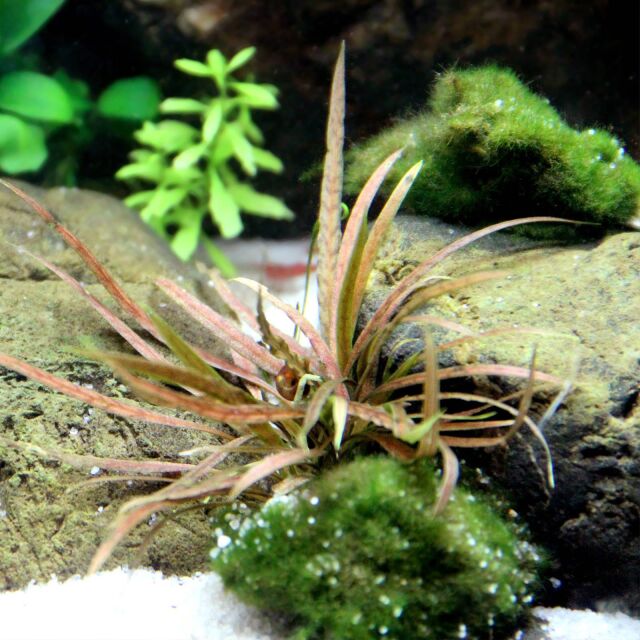
Cryptocoryne albida 'Brown'
This very attractive water trumpet stands out with its great reddish coloring and is one example of many cryptocorynes, which are generally easier to keep. This includes the fact that they tolerate harder water quite well. This beautiful specimen has thin leaves and grows extremely compact. It is therefore an ideal aquatic plant for the midground.
Schismatoglottis prietoi
This comparatively new aquarium plant comes from the Philippines and is well suited to harder water. It can be planted regularly but also used as an epiphyte on stones. Schismatoglottis prietoi looks quite similar to water trumpets, but is nevertheless a very distinctive plant with pretty light green leaves that are slightly wavy.
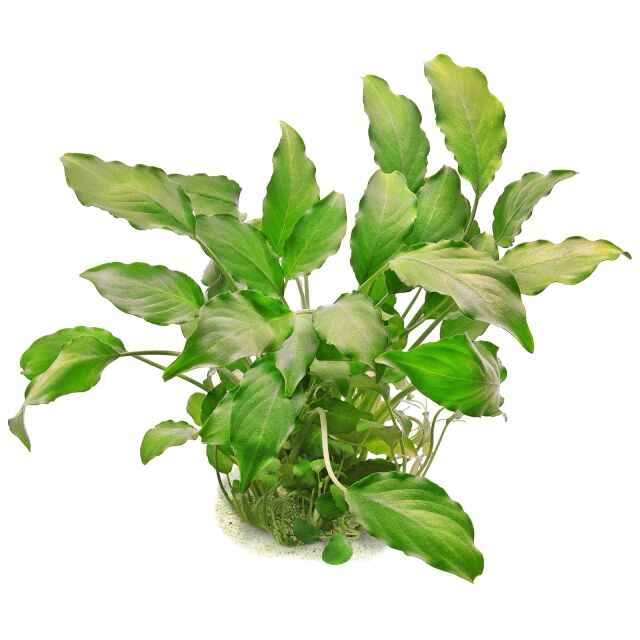
Cryptocoryne beckettii "Petchii"
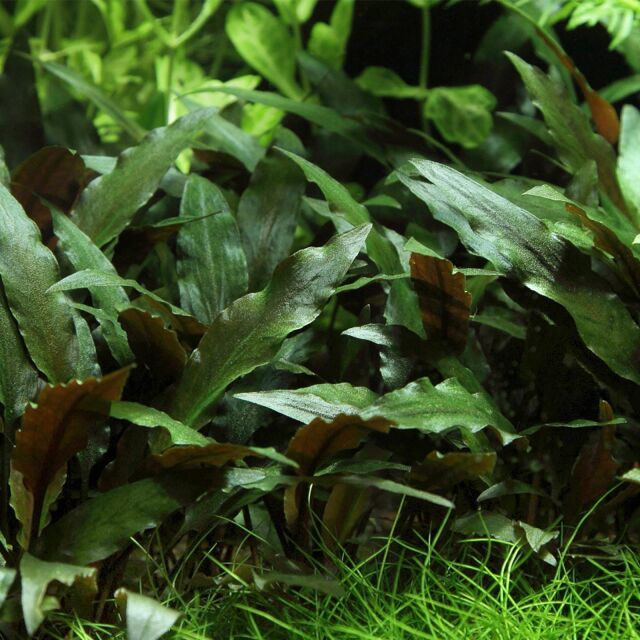
Petch's water trumpet is also a typical Cryptocoryne that grows to medium size and is easy to keep. These undemanding aquarium plants are also suitable for hard water and extremely robust. The elongated leaves develop green to brown shades, and the underside of the leaf can even turn slightly reddish. As a heavy root feeder, this water trumpet appreciates a nutrient-rich substrate.
Foreground plants for hard water
Even among the ground-covering plants, there is enough choice for an aquarium with hard water to green the foreground.
Lilaeopsis brasiliensis
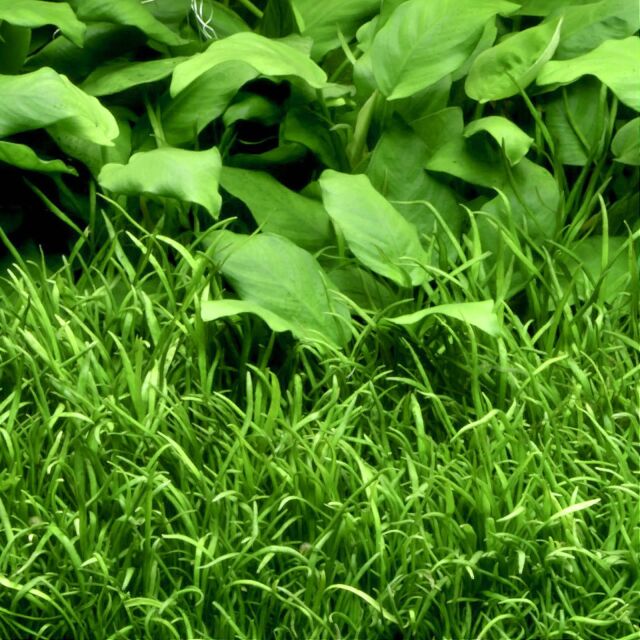
With Lilaeopsis brasiliensis, the aquarist gets a pretty grass-like foreground plant that is not very demanding. It tolerates a wide range of different water parameters, including a higher degree of hardness. Over time, the light green blades spread across the surface in the aquarium, so a pretty underwater lawn can develop.
Marsilea hirsuta
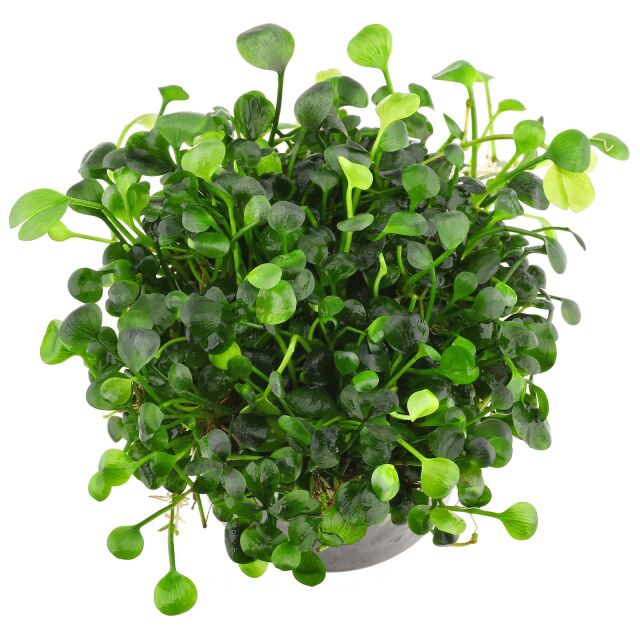
Marsilea hirsuta offers dark green and partly divided leaves on elongated stalks. The look of this foreground plant is slightly reminiscent of clover and thus creates a very natural impression. It grows at an easygoing pace, is quite modest in its needs and can also tolerate hard water quite well. It propagates via runners.
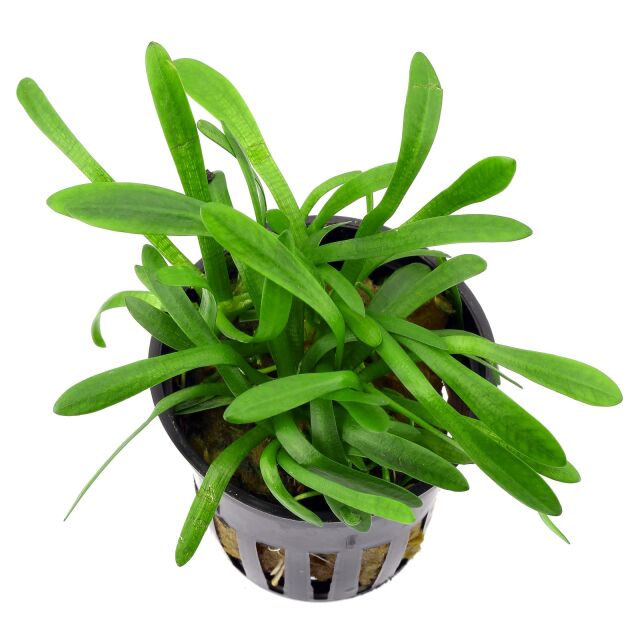
Sagittaria subulata "Pusilla"
Above all, the very robust, grass-like ground cover plant Sagittaria subulata "Pusilla" is also suitable for aquariums with harder water. This foreground plant spreads like a lawn and is tendentially undemanding. The dwarf sagittaria originally comes from North America and stays somewhat lower in growth than its parent form.
Epiphytes for hard water
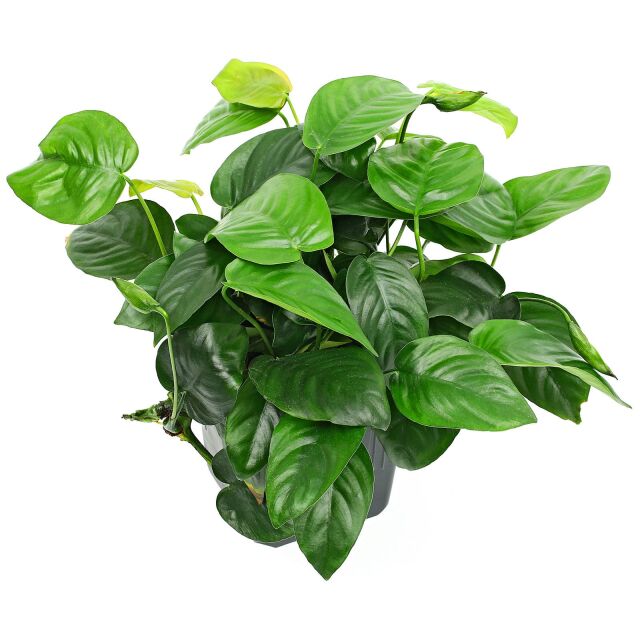
The genus Anubias
The very robust anubias from Africa are very easy to keep and typical epiphytes that you can attach to hardscape such as stones or driftwood. As a rule, the leaves are dark green in color and very firm. Anubias are therefore ideal plants for a cichlid aquarium. Their requirements are not very high, and harder water is no problem for these aquatic plants either.
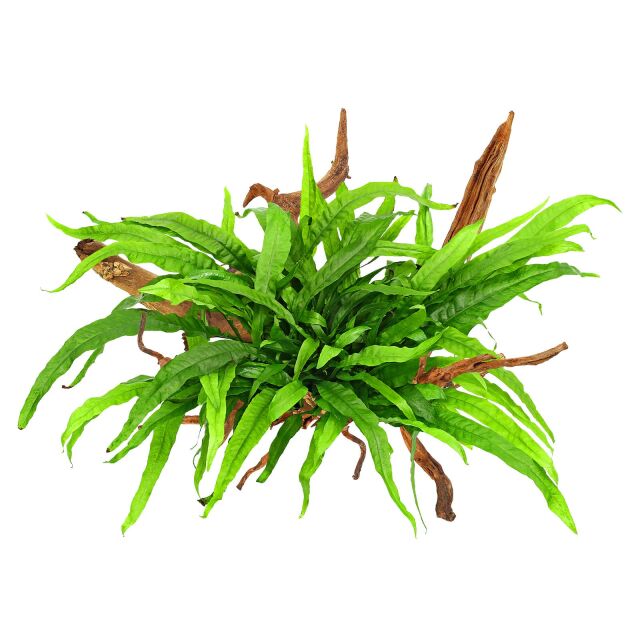
Java fern
The genus Microsorum also has some beautiful specimens to offer that fall into the category "aquatic plants for hard water". Java ferns are likewise undemanding in themselves and do not need many nutrients. The leaves are somewhat softer than those of anubias and therefore only conditionally cichlid-proof. Like other epiphytes, Java ferns can be attached to aquarium decoration (stones, driftwood) and grow firmly attached there over time.
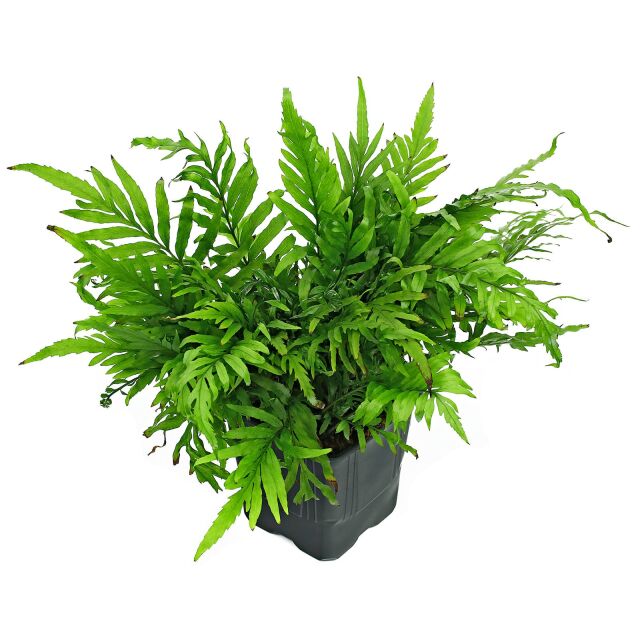
Bolbitis heudelotii
With its dark green and firm leaves, the Congo fern offers a good cichlid-proof alternative as an epiphyte. Like many ferns, Bolbitis heudelotii is not very demanding and also tolerates water with a higher hardness well. The leaves are prettily branched, and the plant can be placed decoratively on stones or driftwood.
Floating plants for hard water
Some aquarium plants that float at the water surface also thrive in hard water. Floating plants serve for shading and as hiding places for juveniles and other creatures that live in this water zone.
Ceratopteris pteridoides
The bushy water sprite is a floating plant that grows quite large and, as a quasi-cosmopolitan, has adapted well to various water conditions. This will certainly include harder water. However, this water sprite needs a good nutrient supply via the water column.
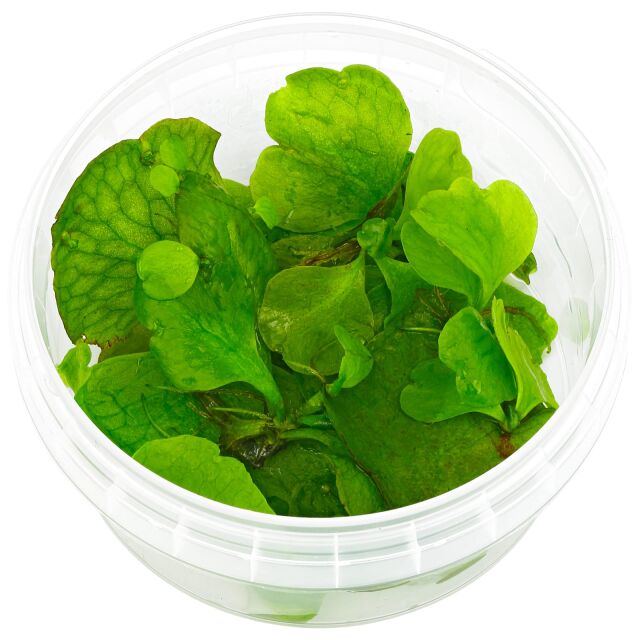
Ceratopteris cornuta
Ceratopteris cornuta is also called the horned water sprite and is an easy-to-keep floating fern of light green color. It also tolerates hard water and can even be planted underwater. You should not stick the rosette deep into the substrate, however. Under good conditions in the aquarium, this water sprite is even quite fast-growing.
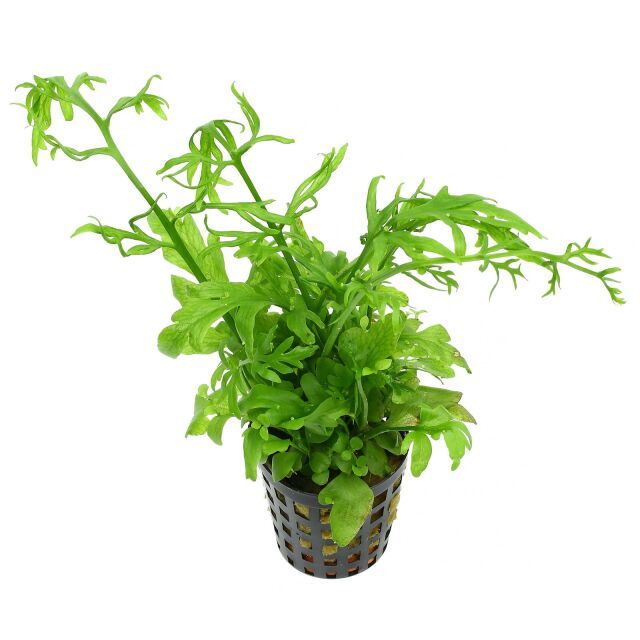
Ceratopteris thalictroides
The floating fern, also known as Sumatra fern, is a proven classic in the aquarium hobby, which is also gladly used underwater. This light green fern is prettily and delicately branched, but therefore not cichlid-proof. It is considered comparatively undemanding and fast-growing, and aquarium water with a higher degree of hardness should not pose a big problem for it.