 Delivery Size of Aquarium Plants
Who as a customer doesn't know this: you buy aquatic plants for your aquarium online, then you receive your package, open it and are appalled at first. The plant looks completely different from the photo!
How should you deal with this situation? In this article, we talk about the appearance and delivery size of aquarium plants and about customers' expectations.
First of all: stay calm! At Aquasabi, we take our customers' needs very seriously and, especially when it comes to shipping aquatic plants, we take meticulous care that only vital-looking plants leave our house. Of course, in the worst case, accidents can happen in transit and plants can sometimes be damaged. If damaged aquatic plants arrive at your place, we will do our best to find a solution. In this case, please be sure to contact our customer service. We will gladly help you!
In case an aquarium plant looks healthy but not exactly like the product picture, we would like to give some information about certain things here.
Deviations from the product picture
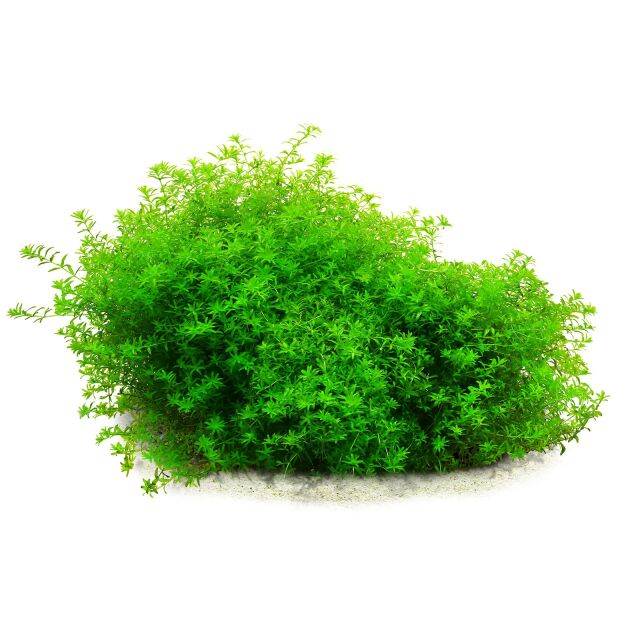
All of our product pictures of aquarium plants are example pictures that we have all created ourselves in our own photo studio. We really choose with care photo models that do not represent plants that are too large, so that expectations do not become unrealistic. Sometimes, though, only somewhat larger plants are present in the first delivery, which by default has to serve as our photo model. Nevertheless, this means: this one picture represents a group of naturally grown products, which may therefore differ from this product photo in terms of size or length, number of leaves or density of stems. Of course, we offer and watch for a high quality standard where the health of the plant is concerned. This is something different from the points listed above, though. What matters is a healthy leaf color and intact, undamaged plant parts such as leaves, roots and stems - not so much the size or the number of leaves.
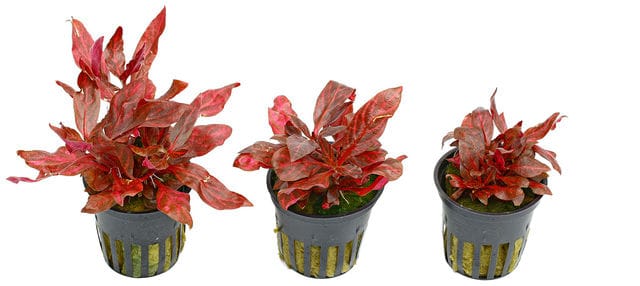
Alternanthera reineckii 'Rosanervig' in different delivery sizes.
These example pictures are expressly not to be understood as product pictures that depict exactly what you then receive. In these cases, people often speak of WYSIWYG product pictures ("What you see is what you get"), which show truly one-of-a-kind individual pieces. In the saltwater field, corals are often sold according to the WYSIWYG principle. For aquarium plants from our online shop, however, this does not apply. As said, in this category they are always "just" example pictures, regardless of the form of cultivation, whether potted plants, bunch plants or in-vitro plants in a sterile cup.
Aquatic plants are natural products
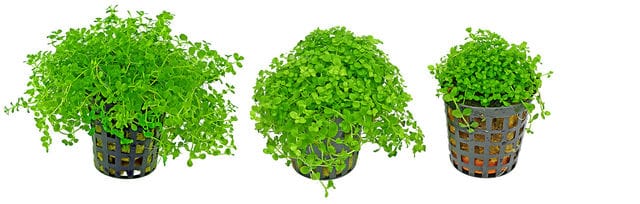
Micranthemum tweediei in different delivery sizes.
Plants for an aquarium are grown professionally, but they are and remain natural products. And just as we humans all look different, aquatic plants are also individual living things that do not all look completely identical, even though there are of course shared characteristics within a species.
In the cultivation of aquarium plants, too, there are circumstances that depend on nature and are therefore subject to certain fluctuations. This does not reduce the quality of a plant, but it does affect its growth length and lushness.
Different sizes over the course of the seasons
Aquarium plants are still grown mainly as potted plants in nurseries. There they are subject to natural influences such as differing sunlight, and this results in certain growth differences, mostly caused by the seasons. In winter the sunlight is less intense than in the summer months. Because of this, you can see clear differences between the summer and winter variants in some plants: in summer the plants grow faster and therefore have a greater height and more shoots. Nevertheless, the quality - as far as health is concerned - is always at a high level with reputable aquatic plant suppliers. Whether in winter or summer, healthy plants are always offered.
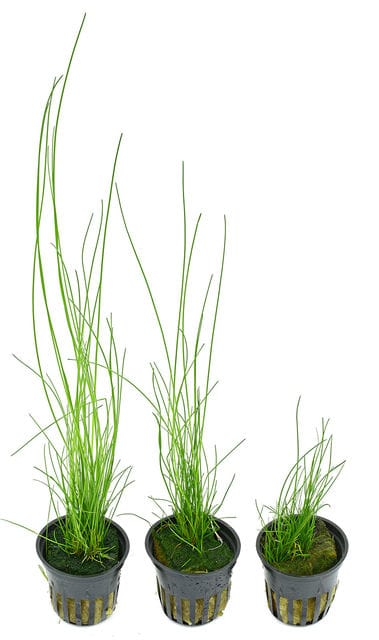
Eleocharis sp. Montevidensis in different delivery sizes.
Growth differences between nurseries
Since we source our aquarium plants from various nurseries, differences in growth or lushness can certainly occur because of the different suppliers. Aquatic plants are not subject to any special growth standards that define what the plants that can be sold must look like. Rest assured, however, that all renowned producers of aquarium plants pay attention to good quality, as do we as sellers of these plants.
Growth differences due to different forms of cultivation
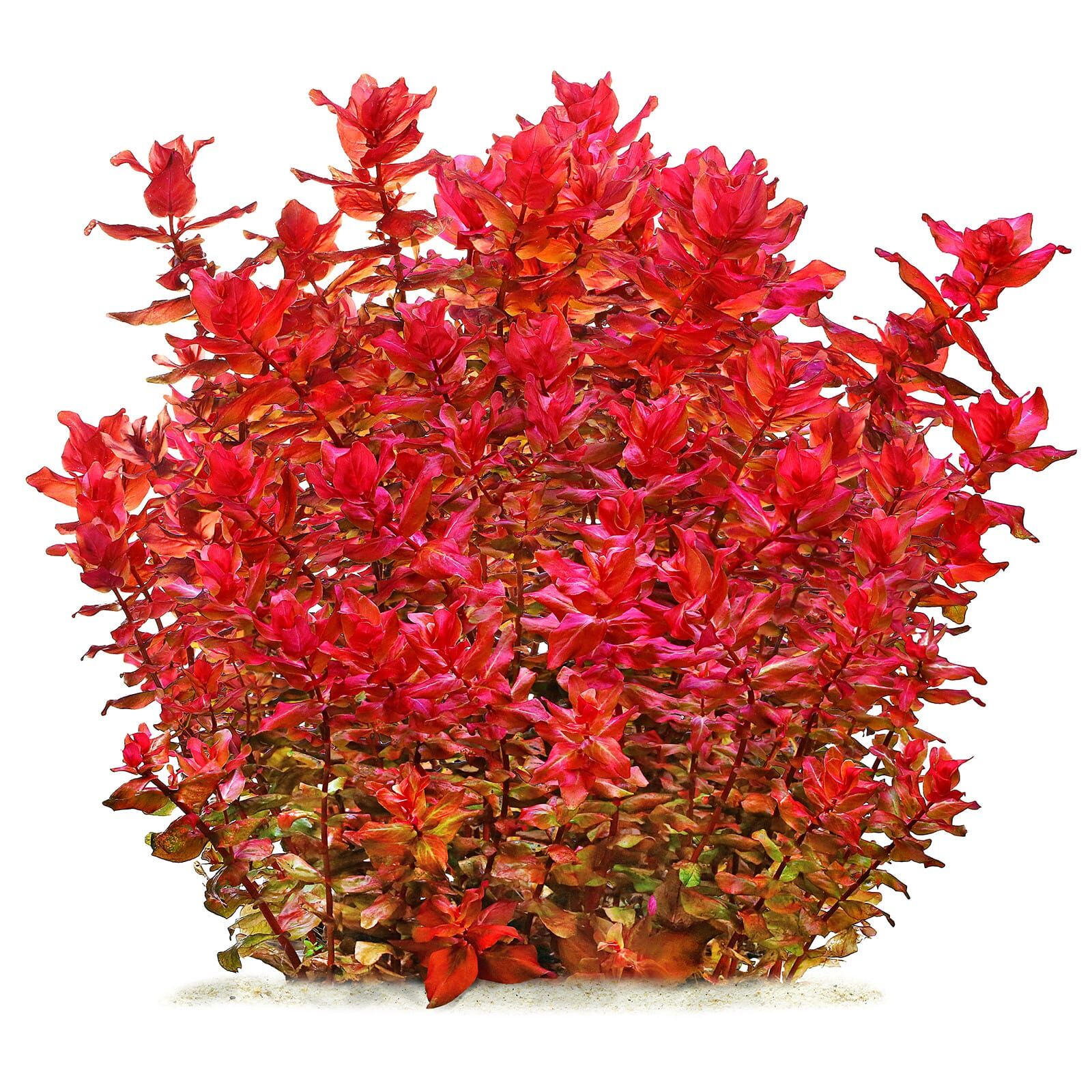
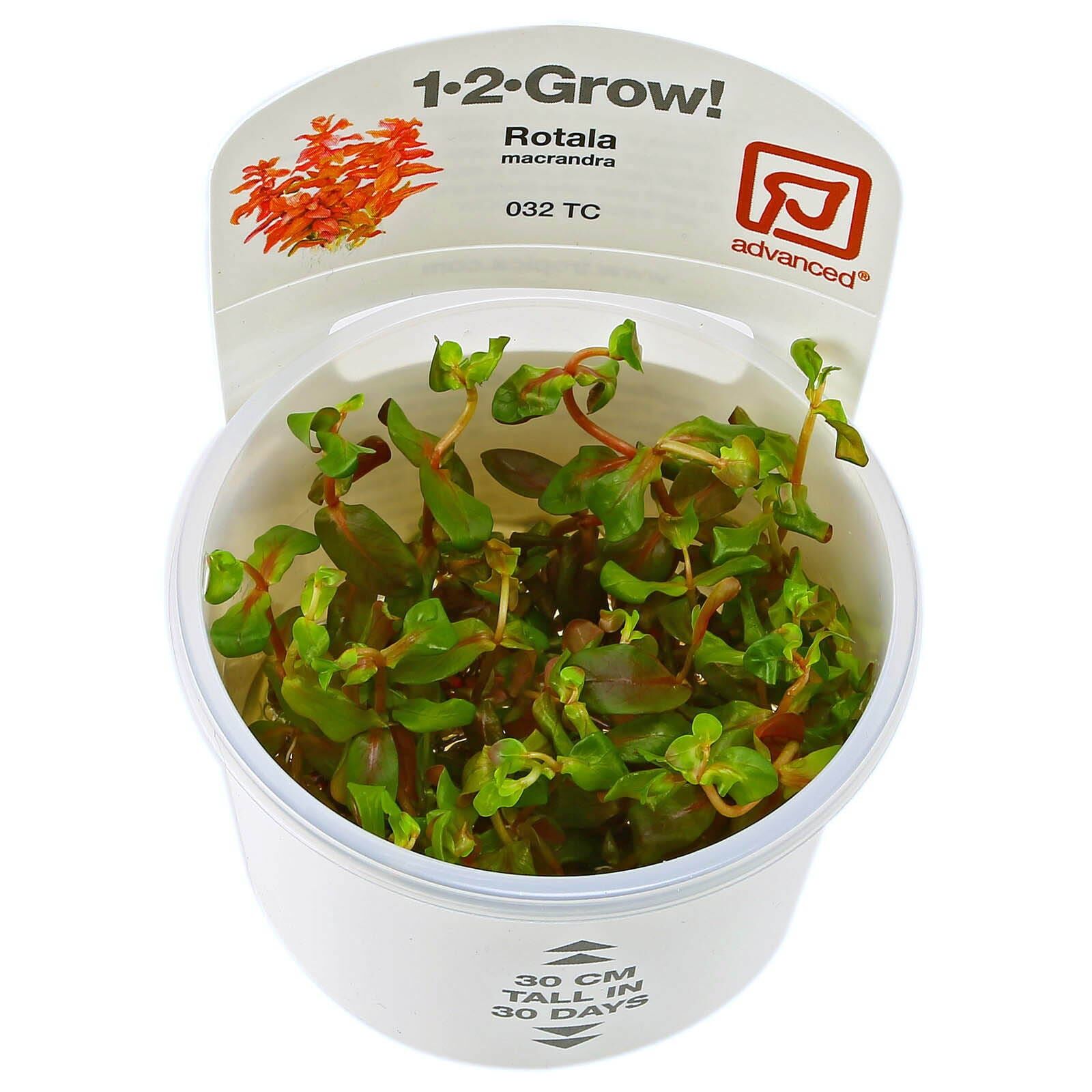
Rotala macrandra in different forms of cultivation.
We offer aquarium plants in various cultivation and sales forms. These look different and all have their own advantages and disadvantages (see also: "In vitro or potted?"). These include potted plants (aquatic plants in the emersed state), bunch or portion plants (often kept submersed from our own growing facility) or in-vitro plants in a sterile cup. It is important to know here: even within one plant species, the appearance can differ significantly because of different forms of cultivation. With emersed potted plants, the plants are still in their above-water form and therefore often have a different color and leaf shape. Only once they begin to grow underwater do the plants take on their submersed shape. If you buy bunch plants, they are usually already in their submersed growth form. In-vitro plants, on the other hand, have an appearance all their own, since they are grown under special conditions in the lab. Their dwarf-like size is particularly striking (see also: "Appearance of in-vitro plants"). In the aquarium, under good conditions, these shoots also develop into stately aquatic plants, and they offer precisely the advantage of a cultivation that is absolutely free of pests, algae, pesticides or foreign plants.
All forms of cultivation take on their submersed form over time in the aquarium under good conditions (light and nutrients). Their condition at purchase allows no conclusions about the quality of a form of cultivation. An example: in-vitro plants do not look like the plant from submersed cultivation when you buy them - over time, however, the plants develop identically.
Special features of the delivery size of in-vitro plants

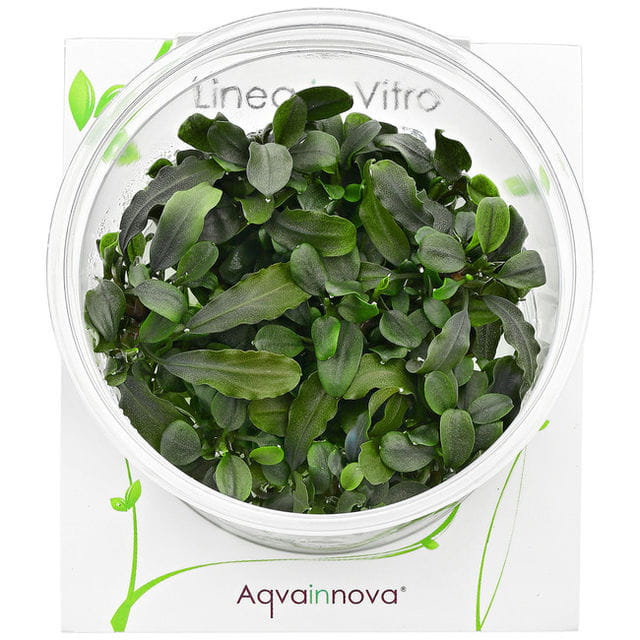
Bucephalandra sp. "Deep Purple" as in-vitro plants in different delivery sizes.
Thanks to being grown in a lab, in-vitro plants are much less dependent on natural conditions. There are no seasonal differences in growth here. Nevertheless, the amount of plants in the in-vitro cups does vary. This depends, on the one hand, on the manufacturer and, on the other, on the ratio of supply and demand. If demand for a certain plant is especially high, the lab will sometimes decide to deliver somewhat less abundantly filled cups with smaller plants in them. Nevertheless, a certain minimum amount is specified, and of course the size has no negative consequences for the quality, that is, the health of the plant. In our in-house quality assurance process, we regularly reject portion sizes of in-vitro plants that are too small, and these do not go on sale to customers. The amount of plants in an in-vitro cup also depends on the age of the in-vitro plant. Older cups are sometimes quite full, but have other disadvantages, such as chlorophyll breakdown in the lower, low-light areas of the in-vitro container. It is thus a fine line between joy at the large delivery amount and surprise at discolored leaves in the lower part of the cup - which, however, are absolutely harmless.