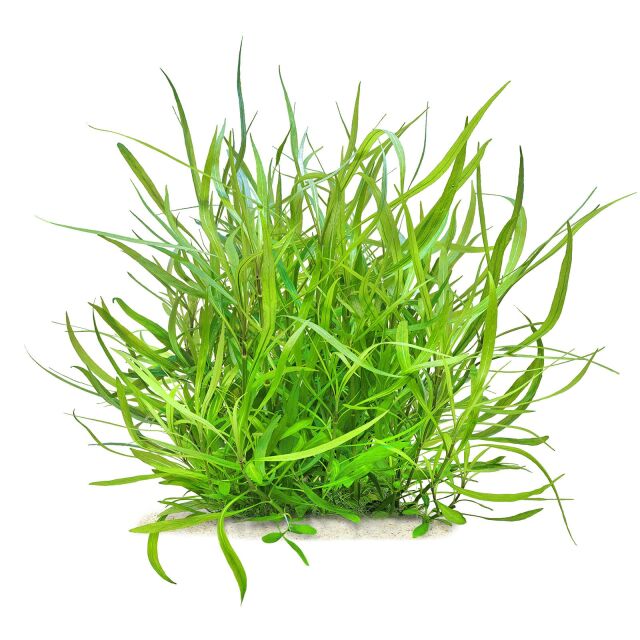
<i>Hygrophila</i>
Published
Translated from German with AI assistance and reviewed by our editors.
The "Wasserfreunde" ("water friends"), plants of the genus Hygrophila, have long been part of the aquarium plant "staple". Some of the most undemanding and most common tropical aquatic plants of all belong to it, as do species and forms that have only recently become known in the hobby. Besides unmistakable plant shapes such as the pinnate-leaf hygro and the water wisteria, there is a series of Hygrophilas that resemble each other but belong to different and moreover highly variable species. Unfortunately, their designations in the trade are in part very confused, which makes telling them apart even harder. With this article, we give an overview of the Hygrophila species and species complexes in the aquarium hobby.
General
Hygrophila species occur in almost all tropical and subtropical regions of the Earth. They mostly inhabit wet sites, floodplains and waters, hence the genus name established by Robert Brown in 1810 - from Ancient Greek hygro-, "moist, wet" and phila, "loving". The German name "Wasserfreund" ("water friend") is derived from this. Some species such as Hygrophila auriculata are medicinal plants in their home regions, and, e.g., the leaves of Hygrophila ringens are used as a wild vegetable in Asia. Over 100 species names have been published over time. However, the genus urgently needs a revision, a critical treatment on a worldwide basis. It could turn out that far fewer than a hundred species can be distinguished. Nevertheless, the aquarium hygros certainly make up only a small part of all Hygrophila species; most species are therefore still unknown as aquarium plants. Some genera distinguished earlier, such as Cardanthera, Nomaphila and Synnema, are now regarded as synonyms of Hygrophila. The genus belongs to the acanthus family (Acanthaceae), an extremely species-rich, predominantly tropical plant family. Among its roughly 250 genera are, for example, also Acanthus, Aphelandra, Fittonia, Thunbergia and Staurogyne. There are also a few aquarium plants from the latter genus, but within the family it is far removed from Hygrophila. Staurogyne belongs to the tribe Nelsonieae, Hygrophila to the tribe Ruellieae.
Hygrophila species are generally stem plants with oppositely arranged leaves. At least the species kept in aquariums can grow both above and below water, but they only flower in the above-water form (emersed form). The flowers are bilaterally symmetrical, their petals are divided into an upper and a lower lip and fused into a tube at the base. They can have blue, purple, pink or white shades, and the lower lip often has a blue-violet net pattern. The fruits are elongated capsules and, when ripe, scatter the disc-shaped seeds by splitting open into two valves. Hygrophila species also propagate asexually through prostrate or water-floating shoots that form roots. As aquarium plants, like other stem plants, they are easily propagated by cuttings, and young plants (adventitious plants) also often develop at the break points of detached leaves drifting in the water.
Hygróphila species and forms as aquarium plants
Hygróphila polyspérma, Indian swampweed (many-seeded hygro)
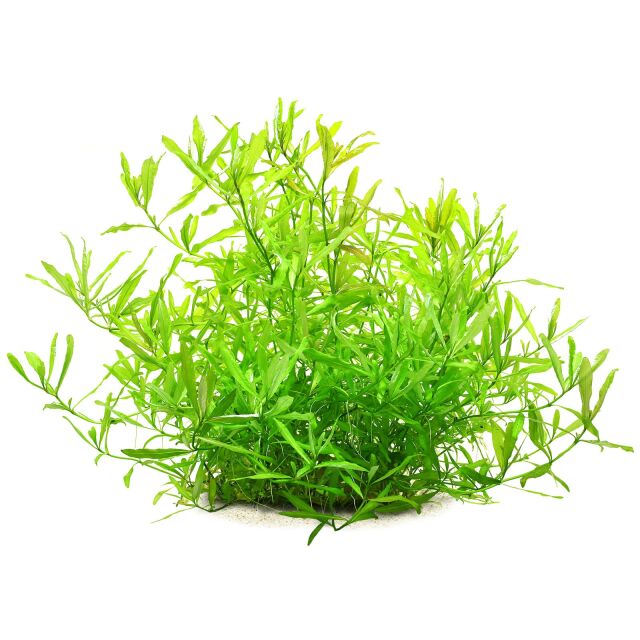
This species comes from tropical Asia - from India to China and Malaysia - and forms long, branched shoots that float in the water or creep along the ground in the land form. It differs from other Hygrophila species essentially in that its flowers have only two stamens rather than four. The very small, inconspicuous, white or pale blue-violet flowers appear at the shoot tips, in spike-like inflorescences. There are different forms of the many-seeded hygro. The "normal" form in particular is among the best-known and most common aquarium plants. It has very narrowly elliptical, entire-margined leaves up to about 7 cm long, with no stalk or a short one, in light or yellow-green to reddish-brown shades underwater.
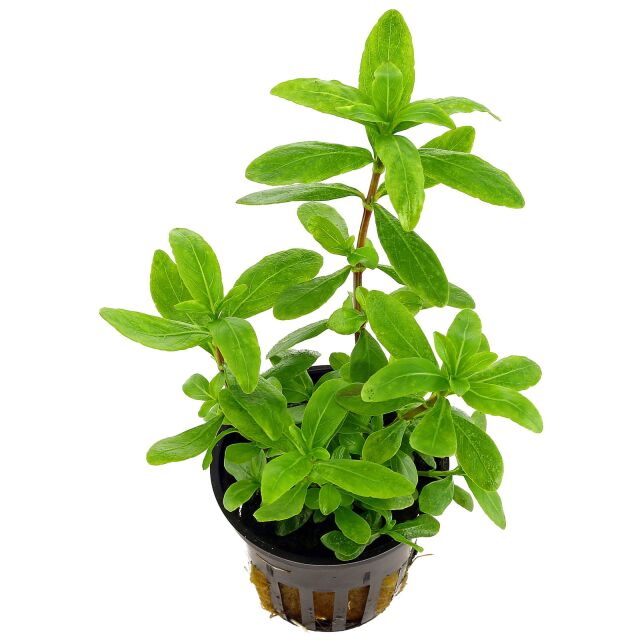
This plant is also particularly undemanding and fast-growing; it is well suited to tanks with harder water, moderate lighting and no carbon dioxide added. There, its growth is not quite as rapid as in those with CO2 fertilization. The cultivar 'Rosanervig' or 'Sunset' has white to pink leaf veins. Some forms such as Hygrophila polysperma "Tiger", "Bold" and "Ceylon" have very narrow, more or less brown-marbled leaves with a slightly notched margin. The shoots often grow partly horizontally and, with their many side shoots, can form a large, tangled stand. Very probably, Hygrophila sp. "Brown" with conspicuous leaf marbling also belongs to H. polysperma, as does a creeping, ground-covering plant that appeared in the trade as "Staurogyne sp. 'Brown'" and is labeled Hygrophila sp. "Creeping" by Aquasabi.
Hygróphila corymbósa group: giant hygro, Thai hygro and others
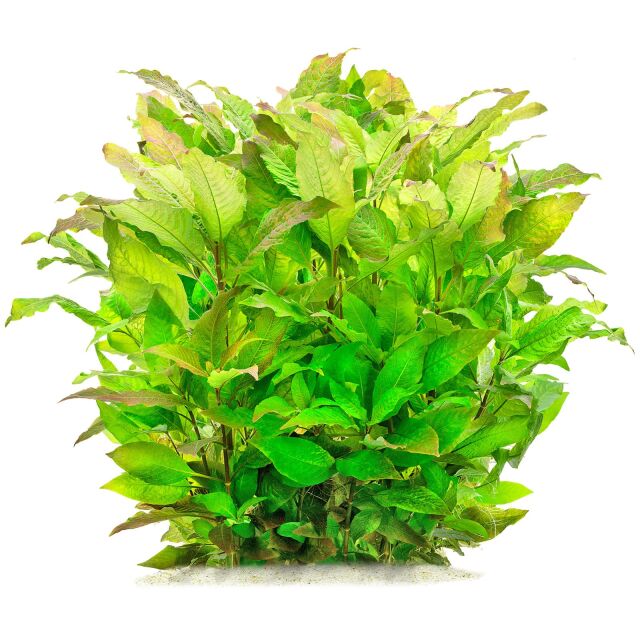
These plants also come from tropical Asia and have long been known as robust aquarium plants. They are sometimes still listed today as Nomaphila species, for example Nomaphila stricta or N. siamensis. They are generally quite large plants with partly very different appearances, but they agree in their flower characteristics. They are probably all best counted as the same species, Hygrophila corymbosa. In the land form, these hygros develop branched, horizontal inflorescences in the axils of the foliage leaves with many handsome purple flowers. The emersed stems are upright and also become somewhat woody over time. The leaves are undivided (simple), entire-margined and stalked. The leaf shapes range from broadly ovate or elliptical in the "giant hygro", through lanceolate, for example in Hygrophila corymbosa "Siamensis" and "Thailand", to very narrow and long, quite ribbon-like in Hygrophila corymbosa "Angustifolia". This plant is often labeled "Hygrophila angustifolia", but that name originally refers to a plant from the Hygrophila ringens group (see further below). In general, plants from the H. corymbosa group, but also those from the H. ringens and H. costata groups, are often wrongly named with species names from other groups, and the trade designations are also very inconsistent.
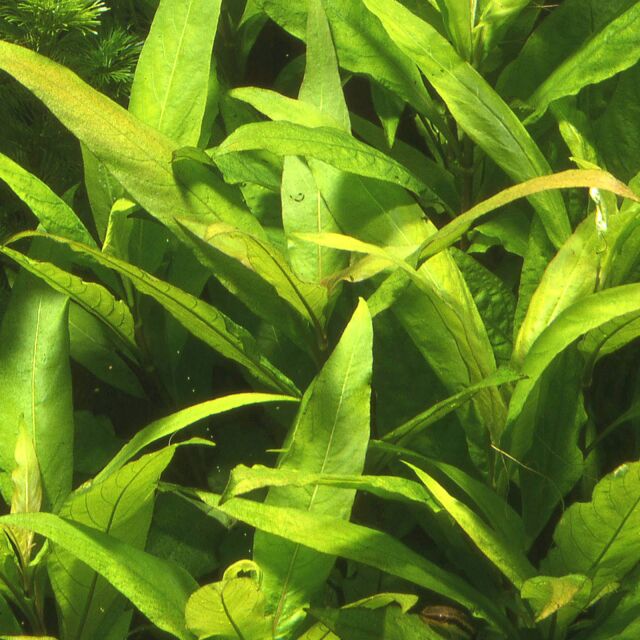
A submersed Hygrophila corymbosa 'Siamensis'.
Apart from the dwarf form Hygrophila corymbosa "Kompakt", which looks good as a bush in the foreground, the plants of the H. corymbosa group need a lot of space and look best as a group in the midground to background of larger aquariums. You can also let them grow out of the water and then count on their pretty little flowers.
Hygróphila ríngens or H. salicifólia group: willow-leaf hygro, lance-leaf hygro and others
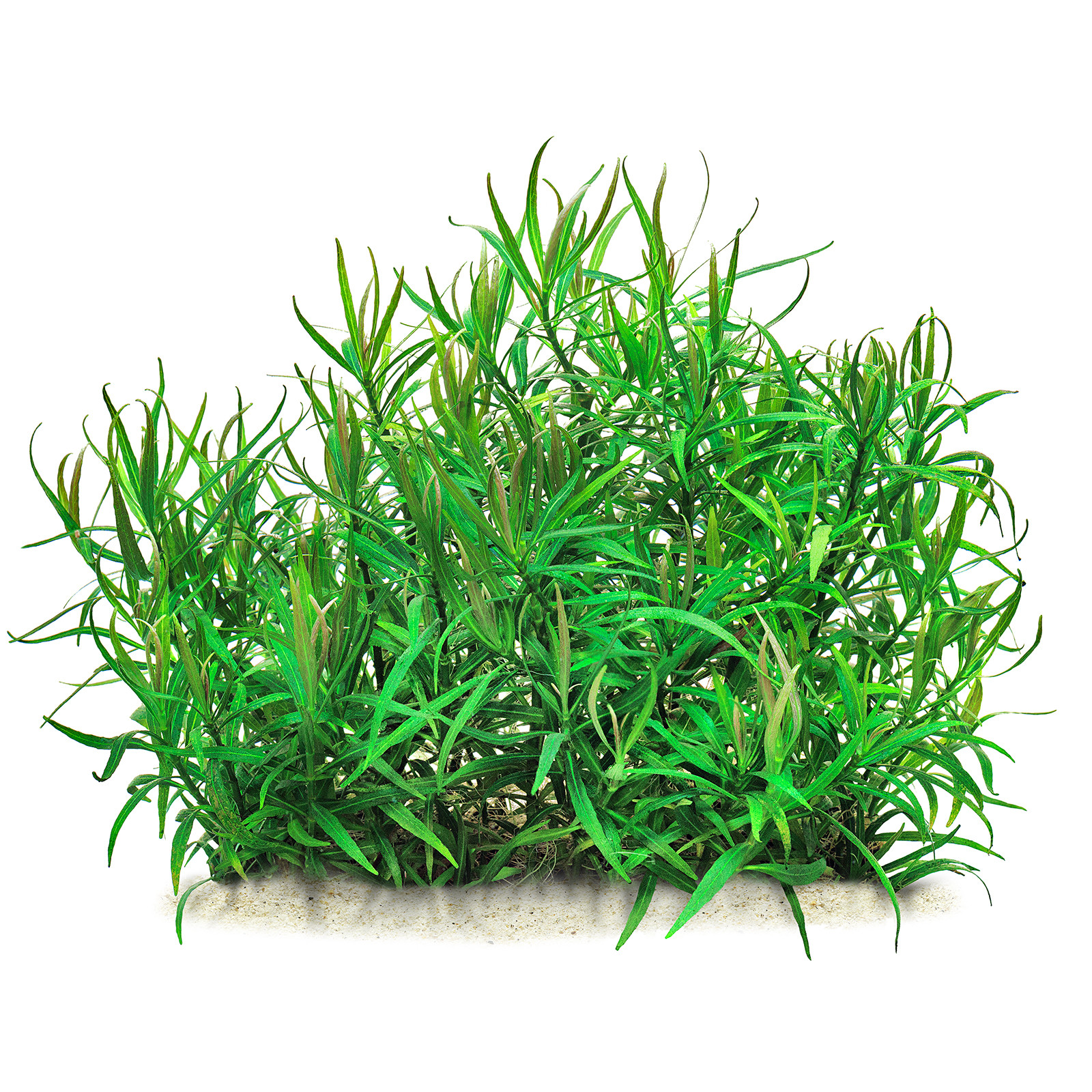
Submersed Hygrophila salicifolia - Narrow Leaf.
This too includes very different plants from tropical and subtropical Asia, from India to Japan and New Guinea, as well as from northern Australia. Their flowers in the land form do not appear in branched inflorescences as in the Hygrophila corymbosa group, but sit several together closely in the axils of the foliage leaves. Otherwise, they are likewise quite handsome and light purple in color. The plants originally described as Hygrophila angustifolia, H. salicifolia and H. lancea belong here. In the "Flora of China", they are counted as a single species, Hygrophila ringens. Under the name Hygrophila salicifolia, willow-leaf hygro, an aquarium plant with long, narrowly lanceolate, light green to brownish leaves has long been known. Without flowers, it resembles narrow-leaved plants from the Hygrophila corymbosa group. The names H. salicifolia and, as already mentioned, H. angustifolia are also wrongly used for similar Hygrophilas from other groups, however. Completely different in appearance is Hygrophila lancea, which is gladly used in aquascaping, grows low and bushy, grows relatively slowly and also makes higher demands on the CO2 and nutrient supply. It was introduced as Hygrophila sp. "Araguaia", but does not come from the Araguaia River in Brazil, but from Asia. A spectacular variegated selection is Hygrophila lancea 'Chai', which forms a strong pink color accent. Hygrophila sp. "Green Olive" from India with reddish-brown, elliptical leaves and strictly upright stems, as well as Hygrophila sp. "Red-Green", probably also belong to the H. ringens group. There is also a very slow-growing plant from the H. ringens group, wrongly labeled Hygrophila lacustris, with narrow leaves similar to H. lancea. The name H. lacustris actually applies to a plant from the H. costata group, which is presented next.
Hygróphila costáta group: hygros from the New World
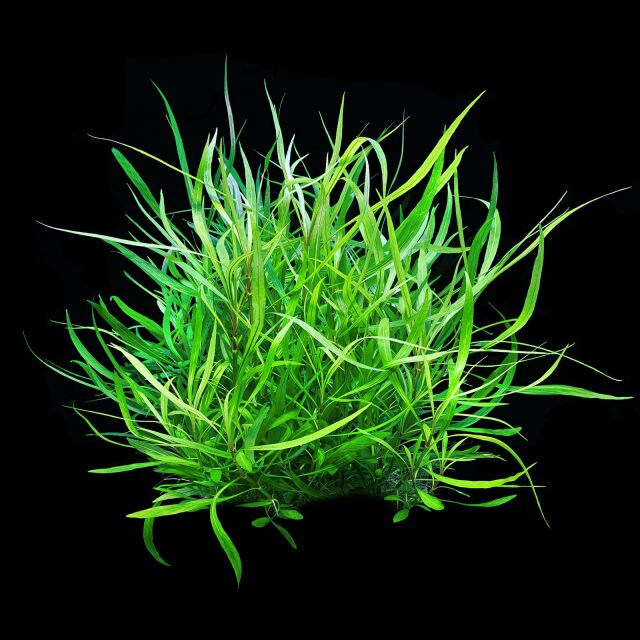
These plants are distributed not in Asia but on the American double continent - from the southern states of the USA, Central America and the Caribbean to Argentina in southern South America. Like the hygros from the H. ringens group, their emersed stems are upright with groups of sessile flowers in the leaf axils. The flowers are smaller, more inconspicuous and mostly white, however. The leaves are lanceolate and of varying width. In the aquarium hobby, above all the names Hygrophila lacustris and H. guianensis are known. Various authors combine them into one variable species, Hygrophila costata. The name H. lacustris is also wrongly used in the trade for hygros from other groups. In the trade there is a form of H. costata that, submersed, resembles a narrow-leaved Hygrophila corymbosa and was also mistakenly called H. corymbosa "Angustifolia". Emersed, it has narrowly elliptical leaves, but the underwater leaves are very narrowly lanceolate to linear and light green. It suits, for example, layouts modeled on flowing waters. In the land form, this plant easily sets seed capsules with viable seeds.
Hygróphila diffórmis and H. triflóra: water wisteria and three-flowered hygro
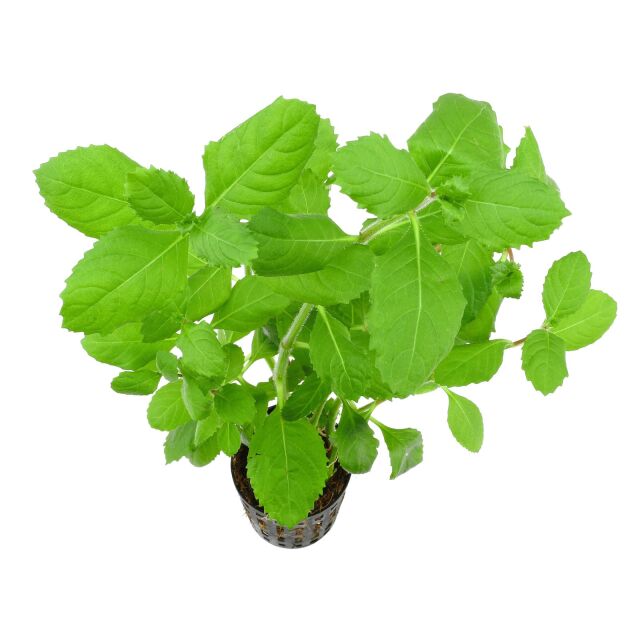
These are two vigorous and easy-to-care-for plants from tropical Asia that closely resemble each other and have often been counted as the same species. For a long time, the water wisteria, Hygrophila difformis, has been a popular aquarium plant and stands out with large, feathery, deeply incised, light green, sometimes slightly reddish-tinged underwater leaves. Hygrophila triflora is probably less well known. This plant was introduced from India as Hygrophila difformis "Red" and differs submersed from H. difformis in more coarsely lobed, less deeply incised leaves that often show pretty reddish-brown shades. The stems of both species grow upright to ascending underwater, in part also creeping over short distances. They often form new shoots at the base. In the land form, these two Hygrophilas resemble each other even more. They then form long, prostrate to ascending, branched shoots. Their dark to medium green emersed leaves are undivided, smaller than the submersed ones, roundish ovate with a serrated margin. The emersed plants are covered with sticky glandular hairs and have a strong scent. Their light purple flowers with violet veining are short-stalked; in H. difformis they usually sit singly and in H. triflora up to four in the leaf axils.
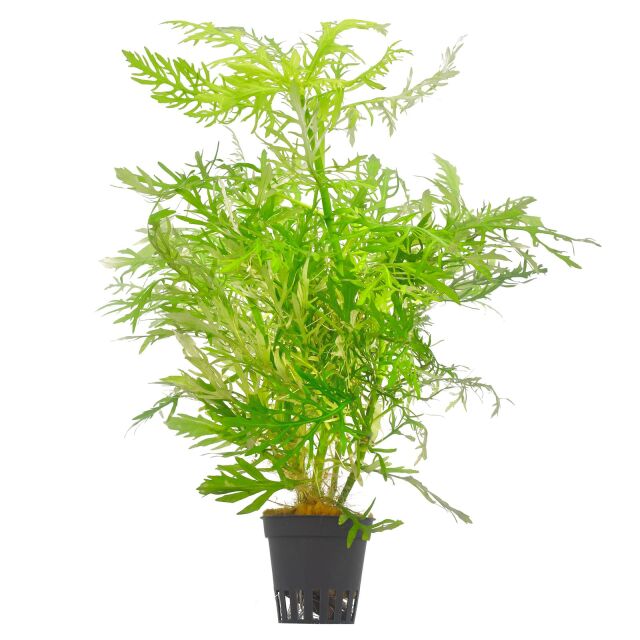
Hygróphila balsámica, the balsam hygro
This too is one of the unmistakable species with strongly divided underwater leaves. The balsam hygro comes from India and Sri Lanka. In the emersed form, it has upright shoots and several pale violet flowers in the leaf axils. The emersed leaves are oblong with a toothed to serrated margin. They are sticky-haired and give off an intense aroma when you crush them. The underwater leaves are strikingly comb-like pinnately cut, with finer, narrower pinnae than in Hygrophila difformis. Hygrophila balsamica became known in the hobby around 1980 and at first fell somewhat into disrepute because poisoning of fish was observed after emersed shoots were put into the aquarium, and it is recommended to soak them for at least three days beforehand. Shoots that have already grown submersed are said to be harmless, however. In general, though, it is advisable to soak aquatic plants from the trade before planting them in the aquarium.
The balsam hygro makes higher demands than the similar Hygrophila difformis; a good nutrient supply and added CO2 are very beneficial.
Hygróphila odóra, the fragrant hygro
Tropical Africa is home to a number of endemic Hygrophila species. This is probably hardly known to aquarists, and Hygrophila odora also seems so far to be the only African hygro species in the aquarium hobby. It was introduced more than 10 years ago as Hygrophila sp. "Guinea" and H. sp. "Africa" and has remained more of a rarity. The fragrant hygro is a marsh plant up to almost one meter tall from riverbanks and other wetlands in several countries of West Africa. The emersed plant is covered with sticky glandular hairs and gives off a strong, resinous smell when touched. Its flowers are the largest and most conspicuous of all aquarium Hygrophilas and sit in the axils of lanceolate leaves. The underwater form of the plant looks quite different and much more graceful, without hairs and with pinnately cut, narrow, light green leaves on relatively thick, rigid, likewise light green stems. In the aquarium, it is a somewhat demanding, nutrient-hungry, slow-growing plant that can be grown into a moderately tall, dense bush. The likewise West African Hygrophila senegalensis seems to be similar. Pinnate underwater leaves have also been described for this species, and an introduction as an aquarium plant would be interesting.
Hygróphila pinnatífida, the pinnate-leaf hygro
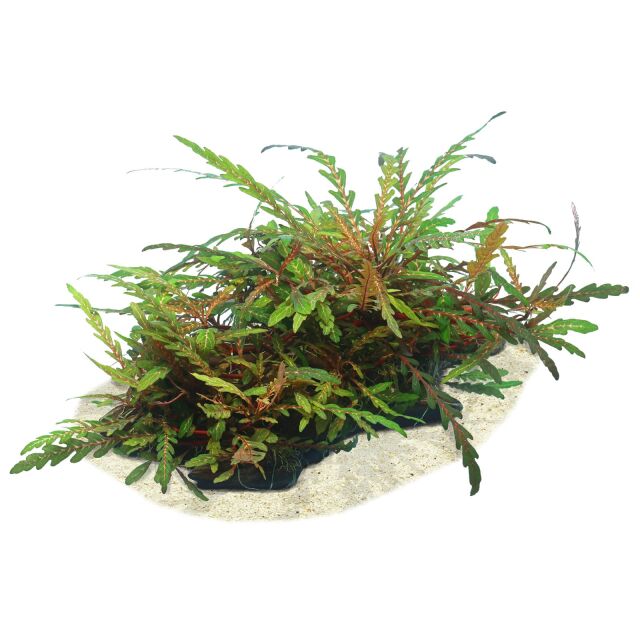
This species, with its peculiar habit and almost ornamental, deeply lobed, uniquely colored and patterned foliage, is a wonderful discovery for the aquarium hobby. Scientifically described more than 150 years ago, the pinnate-leaf hygro only became known as an aquarium plant in 2008 and quickly gained popularity in aquascaping. This species comes from fast-flowing, rocky streams and rivers at the foot of the Western Ghats in India. Its adaptation to strong current shows in the fact that it attaches itself with its roots to solid objects and forms narrow leaves reminiscent of fern fronds on tough stems. Besides upright stems, it forms runner-like creeping shoots, at the end of which the leaves are often clustered in rosettes. The emersed shoots are less showy than the submersed ones, have shorter, uniformly green leaves and small light violet flowers in spike-like inflorescences at the shoot tips.
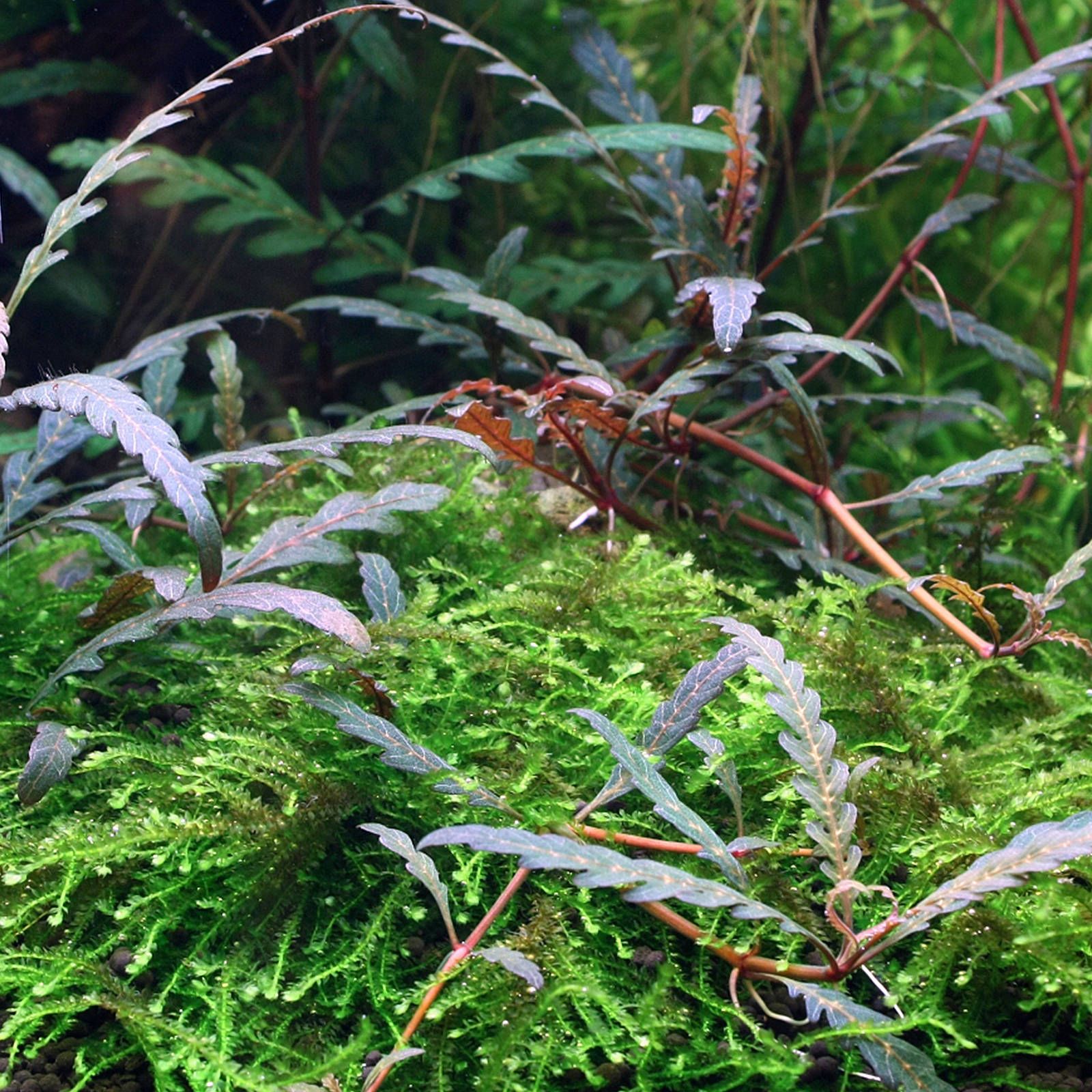
Hygrophila pinnatifida is suitable as an epiphyte for hardscape as well as a "normal" stem plant rooting in the substrate. It can be shaped well by cutting and kept low. It has medium requirements and should be well supplied with nutrients and CO2. Potassium deficiency can quickly show in this species as "pinpricked" older leaves. A form with more deeply lobed leaves has become known as Hygrophila pinnatifida "UK". "UK" here does not stand for the United Kingdom, but for the district of Uttara Kannada in the Indian state of Karnataka.
Hygróphila serpýllum
This species is also native to India and has been known to science for over 150 years, but is probably still quite new to many aquarium hobbyists. Unlike what you are used to from Hygrophilas, it grows underwater with creeping, ground-covering shoots. With its roundish, light green leaves and also in size, it is very reminiscent of the creeping Jenny (Lysimachia nummularia), native to Europe, which, however, creeps only in the land form and grows upright underwater. In nature, on moist meadows and in floodplains, Hygrophila serpyllum, which in English is fittingly called marsh carpet, forms low carpets that in the land form are covered with many purple and white patterned flowers.