Scientific Names of Aquarium Plants

By Aram Schneider Published Updated
Translated from German with AI assistance and reviewed by our editors.
When you read the "Latin", or rather the scientific, name of an aquatic plant, aquarists sometimes notice different typefaces and markings. When is a plant name written in italics, and what do the abbreviations and the additions in quotation marks mean? In this article of our Aquascaping Wiki, we give the answers.
Scientific naming
In biology, living things are classified according to their relationships. This is the subject of systematics. The groups distinguished in this way are given scientific names; this is the task of so-called taxonomy. Scientific names are also called taxon names or taxa. They make it possible to communicate in an internationally understandable way about the many different plants, animals, fungi and other groups of organisms on Earth. Although all languages also have vernacular names, so-called common names, they are often ambiguous and differ regionally. For example, the German name "Wasserstern" (water starwort) can refer to Hygrophila or Callitriche species or even Pogostemon helferi. Likewise, there are countless species on Earth for which, in German for example, there is no specific name at all. That is why scientific names are also useful for the hobby and for trade.
So-called nomenclature sets internationally binding rules for the correct scientific naming of all living things. Different groups of living things each have their own sets of rules (nomenclature codes). For example, there is the International Code of Nomenclature for algae, fungi, and plants (ICNafp) and, for animals, the International Code of Zoological Nomenclature (ICZN). A scientific name is valid if it has been published according to certain rules set out in the nomenclature codes.
Central to this is the naming of species. Its basis today is binomial ("two-part") nomenclature, which goes back to Carl Linnaeus in the 18th century. Every species name consists of two parts: the first part of the name gives the genus of the organism. It begins with a capital letter. The second part is written in lowercase and designates the respective species within the genus. It is called the species epithet, or specific epithet. Sometimes it is also simply called the "species name", but a species name always consists of the genus name and the specific epithet. These two parts of the name are usually written in italics. As an example, take the aquatic plant species Rotala rotundifolia (roundleaf rotala). Rotala is the genus name and rotundifolia the specific epithet.
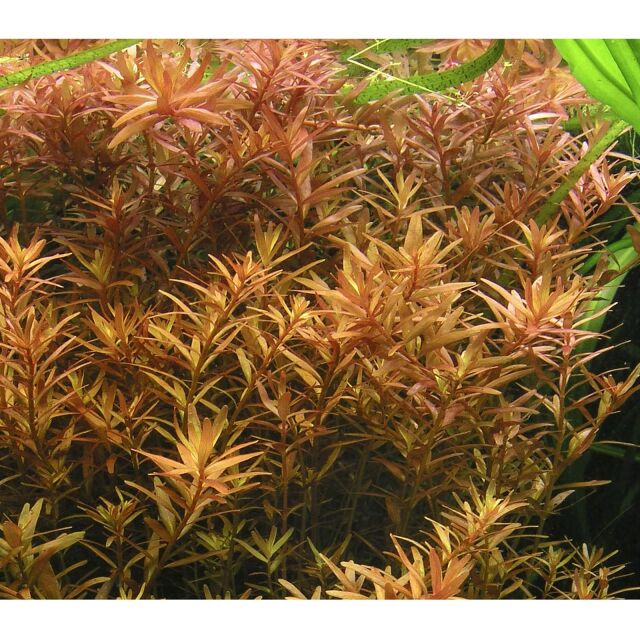
There are also scientific names for higher-ranking groups of relatives. For example, the genera Rotala, Ammannia and Didiplis are counted in the family Lythraceae (loosestrife family) and Ludwigia in the family Onagraceae (evening primrose family). These two families in turn belong to the order Myrtales (myrtle order). Such names for groups above the genus are not written in italics.
For historical reasons, scientific names are fundamentally based on Latin and its grammar and pronunciation rules, which is why they are often called "Latin names". But they can also come from Ancient Greek and many other languages, be derived from people's names or even be artificial words. You do not need to know what they literally mean, but it can be quite interesting and can also help you remember them better.
The names by no means always describe specific characteristics of a species. Ludwigia repens, for example, means "creeping Ludwigia"; this plant does in fact grow creeping in its land form, but so do many other Ludwigia species. The name, however, is the key to exact descriptions and a wealth of other information about the respective species.
The pronunciation of scientific names is sometimes made easier by stress marks. As is usual in Latin, the stress falls either on the second-to-last or the third-to-last syllable of a word. For example Hydrocótyle verticilláta: Hy-dro-có-ty-le (third-to-last syllable stressed) ver-ti-cil-lá-ta (second-to-last syllable stressed).
Author names and abbreviations
Behind the species names there are sometimes abbreviated or spelled-out personal names and also years. They are not written in italics. These are author citations; they state who first validly published the respective name, and when. Such an author citation actually belongs to the complete scientific name, but in practice it is usually not that important and can then be left out.
Example: Egeria densa Planchon (1849), abbreviated Egeria densa Planch.: this species was first scientifically named and described in 1849 by Jules Émile Planchon.
Author names are not infrequently also in parentheses. This is the case when the species was later transferred to a different genus.
Example: Rotala rotundifolia (Roxburgh) Koehne (1880), abbreviated: Rotala rotundifolia (Roxb.) Koehne. This species was first described by Roxburgh under the name Ammannia rotundifolia and transferred to the genus Rotala by Koehne in 1880.
Subspecies, varieties and forms:
ssp., subsp., var., f.
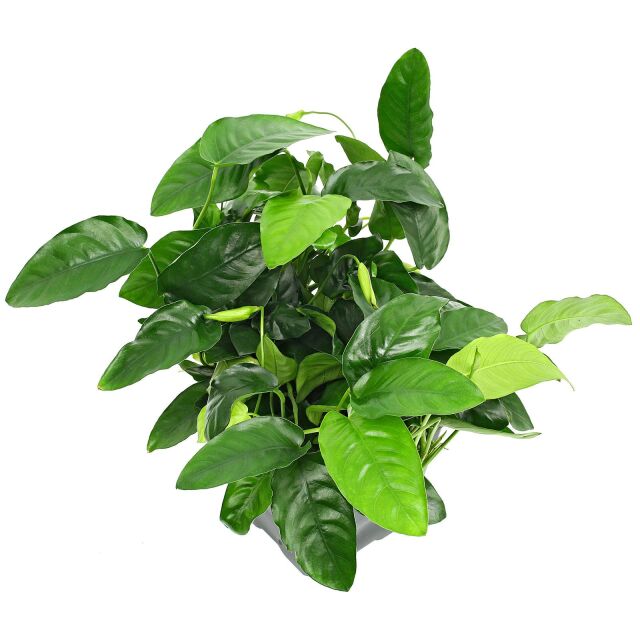
Subspecies or varieties are distinguished for many plant species. Subspecies or variety additions are marked in botanical names by the preceding abbreviations subsp. or ssp. (for subspecies) and var. (for varietas, variety). These abbreviations within the name are not written in italics.
Examples are Nechamandra alternifolia subsp. angustifolia and Anubias barteri var. nana.
Rarely, you also find the abbreviation f. (for forma, form) in botanical names. The rank "form", however, hardly plays a role anymore today.
By the way: in zoology, subspecies names are not marked with an abbreviation. Here the second word is the species epithet and the third the subspecies epithet, for example the eagle owl: Bubo bubo bubo or the Monrovia killifish: Epiplatys dageti monroviae.
Other abbreviations: sp., spec., spp., cf., ×
The abbreviation sp. (or spec.) stands for the Latin word species and is likewise not written in italics. The abbreviation is used when the genus of an organism is known but not the species, or when the species is not named for other reasons. It then serves as a "placeholder" for the missing specific epithet.
For example: Riccardia sp. or Riccardia spec.: "a Riccardia species". If you mean several species, this is expressed by the abbreviation spp., e.g. Riccardia spp., "Riccardia species".
There are also provisional names with the abbreviation cf. between the genus name and the specific epithet. Such designations are found more often with ornamental fish than with aquarium plants. The abbreviation cf. stands for the Latin "confer", which means "compare". This can have several meanings: for example, that an organism has not yet been determined with certainty, but it is already suspected which species it belongs to. Or it resembles a known species but does not quite correspond to it, and possibly even belongs to a new, not yet described species. With the abbreviation cf., this organism is then assigned to the species it is being compared with. This abbreviation is also not written in italics.
Example: the Caribbean mint, Clinopodium brownei, was at first provisionally called Clinopodium cf. brownei in the aquarium hobby. It had not yet been determined with certainty, but it was already suspected that it belongs to the species Clinopodium brownei.
You sometimes also find the sign × in plant names. It is often mistaken for the letter x and also written that way, but it is actually a "multiplication sign" and is also read as "times". It marks hybrids (crosses) of plants.
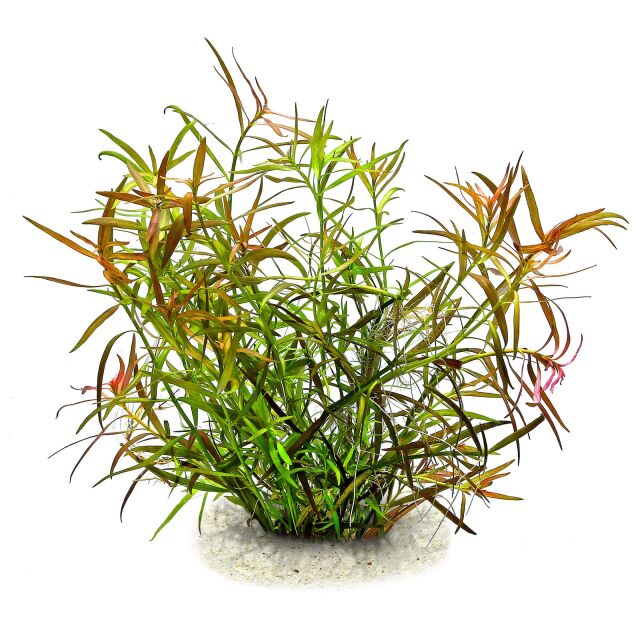
A name for a "hybrid species" (a so-called nothospecies) is, for example, Ludwigia × lacustris. This plant, the lake Ludwigia from North America, was originally regarded as an independent species (Ludwigia lacustris) and later turned out to be a natural cross between the species Ludwigia brevipes and Ludwigia palustris. In such cases, the × is placed before the specific epithet.
Hybrids can also be indicated by a hybrid formula. The × is then placed between the names of the parent species. In the case of Ludwigia × lacustris, that gives Ludwigia brevipes × Ludwigia palustris or, in short, Ludwigia brevipes × palustris.
Non-scientific name appendages:
Working names, collection-site names, trade names, cultivar names
Not infrequently, the scientific name alone is not enough to designate a plant as precisely as you would need. Rotala sp., for example, is the correct botanical name for a Rotala that has not yet been determined to species level. You can call such a plant, for example, by its collection site Rotala sp. "Cambodia", but even then descriptions and pictures are needed to explain what is meant, since various Rotalas occur in Cambodia. Or the species is known, but you want to name a particular collection-site variant or selection for which there is no recognized scientific name. This is the case, e.g., with Ludwigia inclinata var. verticillata "Araguaia" or the water lily Nymphaea micrantha "Gefleckt" ("spotted"). Traders also often create sales-promoting fantasy names, so many not more closely determined Bucephalandra forms come onto the market under hundreds of trade designations such as Bucephalandra sp. "Brownie Ghost" or Bucephalandra sp. "Velvet Tricolor".
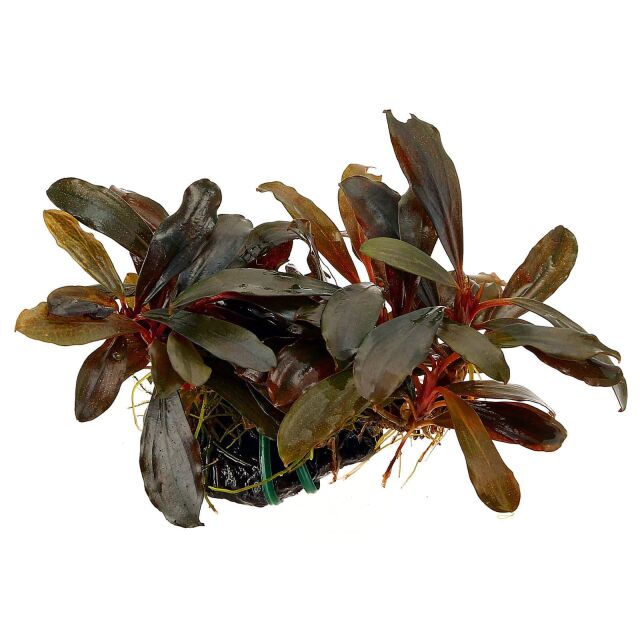
Such name appendages are not written in italics and should always be in double quotation marks to set them apart from the scientific part of the name.
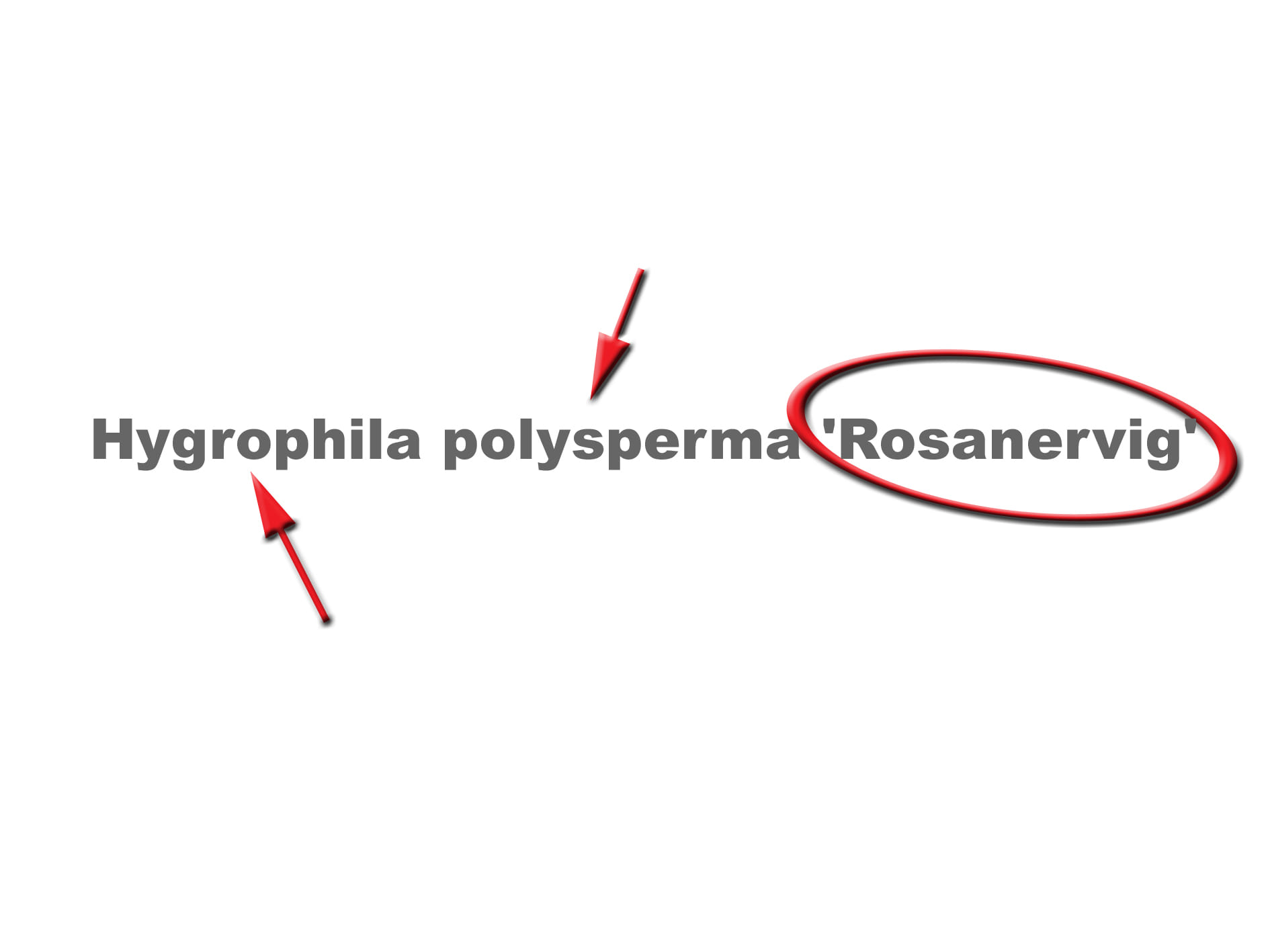
A special case are cultivar names. They are marked by a cultivar epithet. This is likewise not written in italics, but is put in single quotation marks. There is even a set of rules for cultivar naming, the International Code of Nomenclature for Cultivated Plants (ICNCP). Cultivar epithets can be attached to species, subspecies or variety names. An example is Hygrophila polysperma 'Rosanervig', a selection of the species H. polysperma with white to pink leaf veins. Many cultivar names, however, consist only of the genus name and the cultivar epithet. The cultivar Echinodorus 'Kleiner Bär', for example, has a complex origin; it was bred through multiple crosses from various Echinodorus species. You can therefore assign it to the genus Echinodorus, but not to any species.
