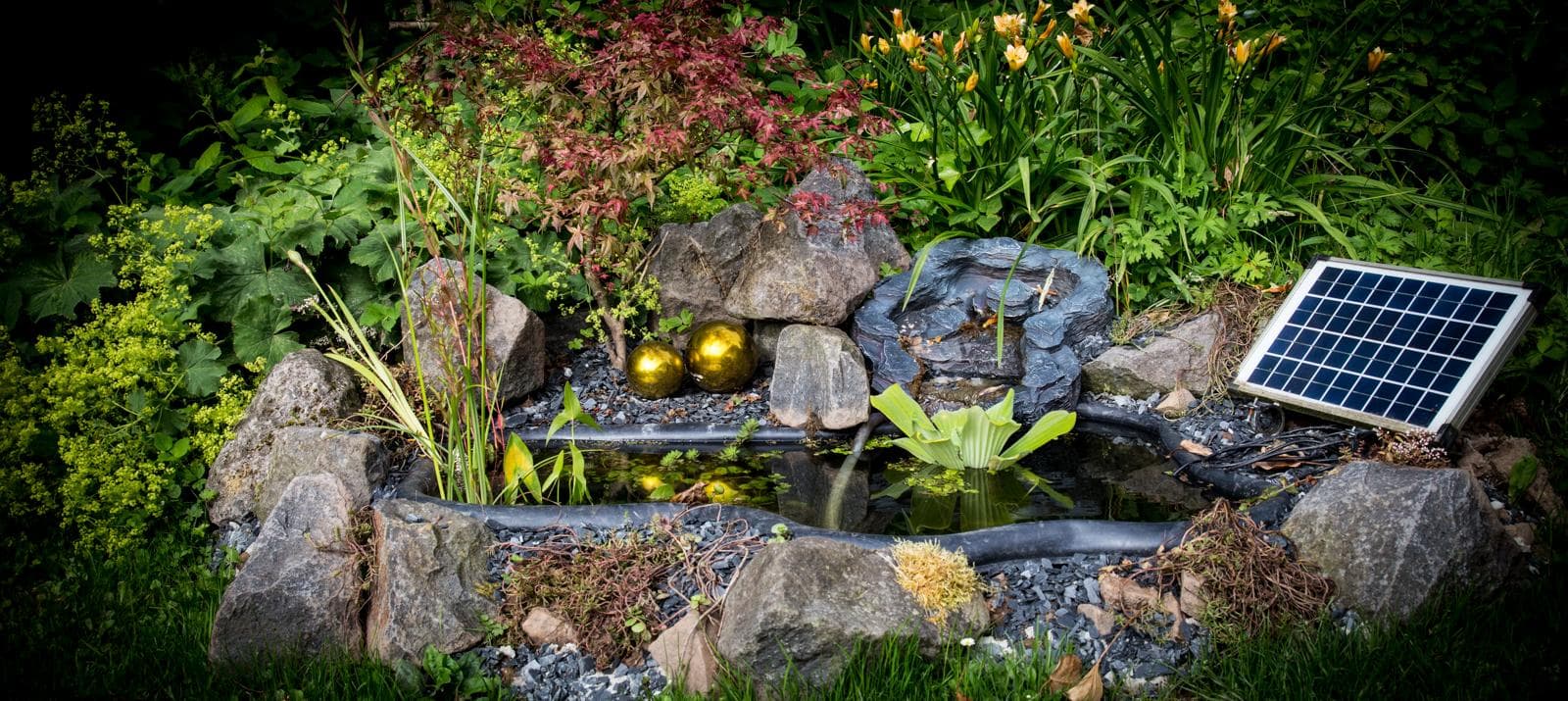
 Using Aquarium Plants for the Pond?
Can you actually also use aquatic plants for the aquarium in a garden pond? We deal with this question today and give you a lot of tips and information.
The idea of using aquarium plants for the pond is actually quite obvious. Many aquarists extend their wet hobby to the outdoors as well, whether through small planted mini tubs on the roof terrace or even larger permanently built ponds in the garden.
The majority of aquatic plants are basically marsh plants. This means that they can grow both underwater (submersed) and above water (emersed). So you can certainly also use plants for the aquarium in the pond, both for the underwater zone and for the shore zones where the plants stand moist but also stick out of the water. It is important here to choose species that withstand our European temperatures and, at best, are even hardy in winter. You then choose the sales form depending on where the plant is to be used. Emersed potted plants are therefore also well suited to shallower water zones. Submersed plants can be used fully submerged underwater.
In addition, it should also be legally permitted to release the respective plant species outdoors, so to speak. Invasive exotic species can otherwise displace native species and throw entire biotopes out of balance. Such non-native species are called neobiota. Aquarists should take this circumstance into account. It therefore makes sense to fall back on plants that are already present in the Central European region anyway.
You can filter out varieties suitable for the garden pond well if you search for cold water plants. Below we now give a few examples of great aquarium plants that you can also use in your outdoor project.
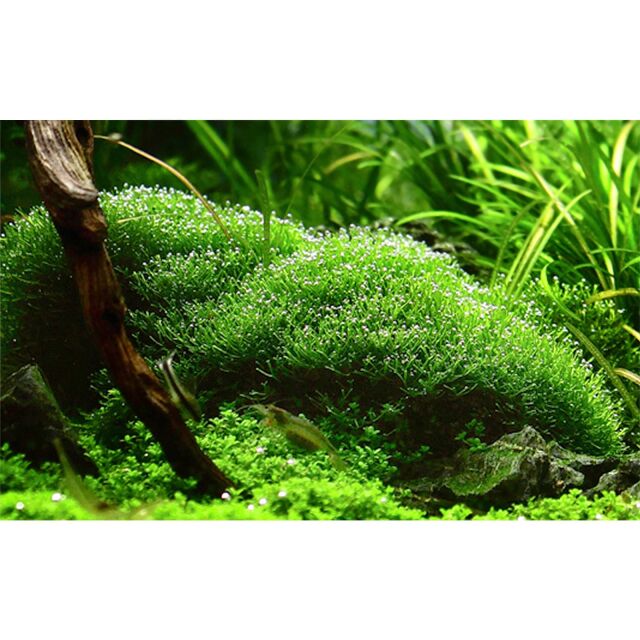
Eleocharis acicularis
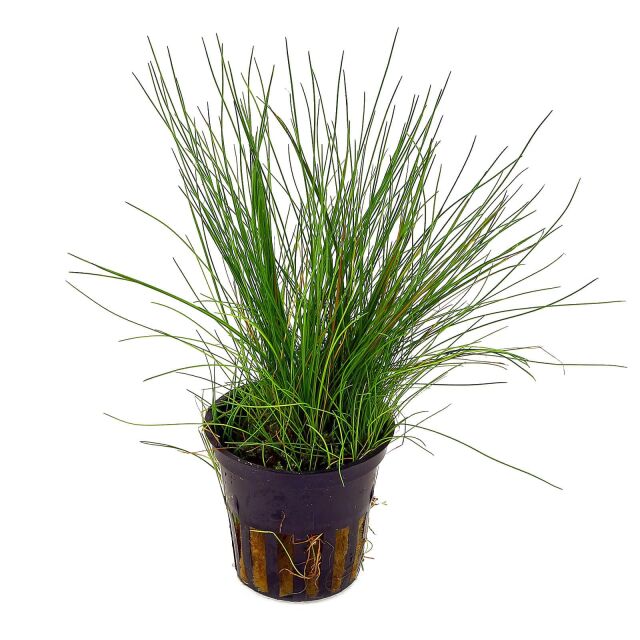
The needle spikerush is a cosmopolitan and distributed everywhere on Earth, including in Europe. This fine grass-like plant also tolerates cold water temperatures and is therefore relatively well suited to the garden pond. It is very probably not hardy in winter, however. Eleocharis acicularis propagates by runners and can then form a nice dense carpet. Emersed, the blades grow up to approx. 10 cm tall. It can therefore be placed well in small ponds in the shallow water zone so that the blades still stick out.
Waterweed
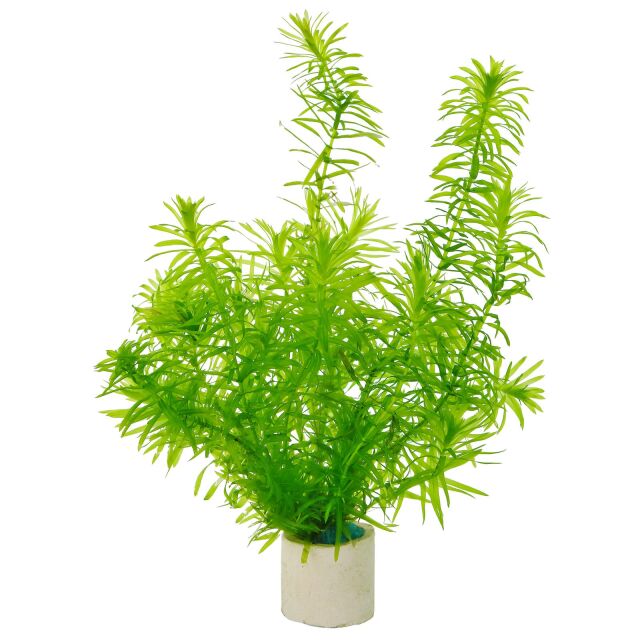
The waterweed, Egeria densa, is a true classic for cold water aquariums, but also for garden ponds. It is a pure underwater plant, which should therefore be placed completely underwater. In the pond it is thus predestined for deeper water zones. This quite fast-growing stem plant is a good oxygen supplier and offers good hiding places for fish. Egeria densa is not reliably hardy in winter, because it originally comes from South America. In warmer countries it is partly regarded as an invasive species, but in Germany (North Rhine-Westphalia and Bavaria) as established.
Hornwort
Ceratophyllum demersum is known by the name hornwort. It occurs everywhere in the world and is a ubiquitous underwater plant. Hornwort can be found as a floating plant or anchored at the bottom in many kinds of standing or slow-flowing waters. This plant has been an established aquatic plant since the early days of the aquarium hobby, but can also be used well as a floating plant or in the deep-water zone in the garden pond. It is easy to keep and quite fast-growing.
Hottonia palustris
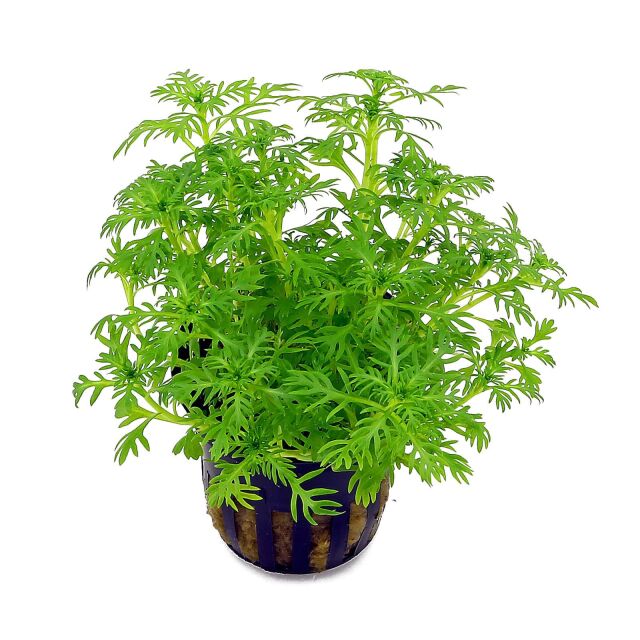
Hottonia palustris, the water violet, comes from Europe and occurs even in Scandinavian countries. It therefore also tolerates cooler temperatures well. This finely feathered stem plant is legally protected and must not be taken from the wild. Of course, though, you can buy it in the aquarium or pond trade. In natural waters it often grows submersed, with the inflorescences then sticking decoratively out of the water. In the garden pond, it can therefore be placed well in shallow water and shore zones.
Rotala rotundifolia
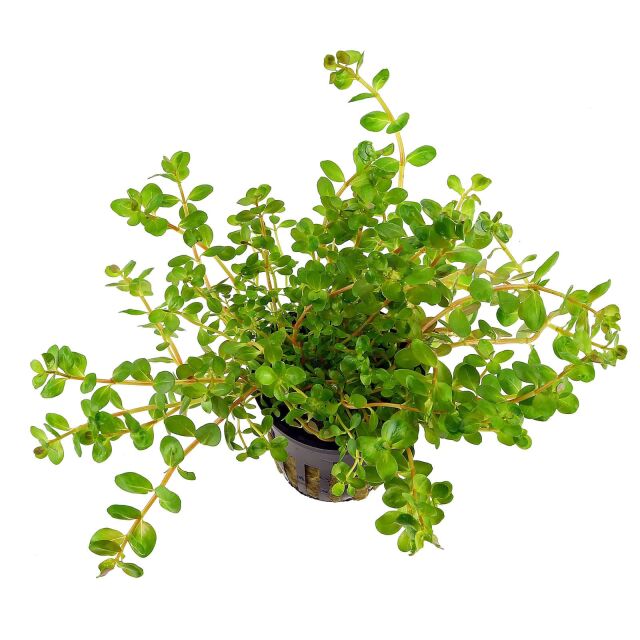
The roundleaf rotala is also often offered as a pond plant. It originally comes from Asia and is widespread in countries such as India, Thailand and China. This pretty stem plant can also be used quite well outdoors in our latitudes, though, and even survives mild winters. It can be used well in shallow water zones, where it grows submersed underwater and then forms emersed shoots above water.
Litorella uniflora
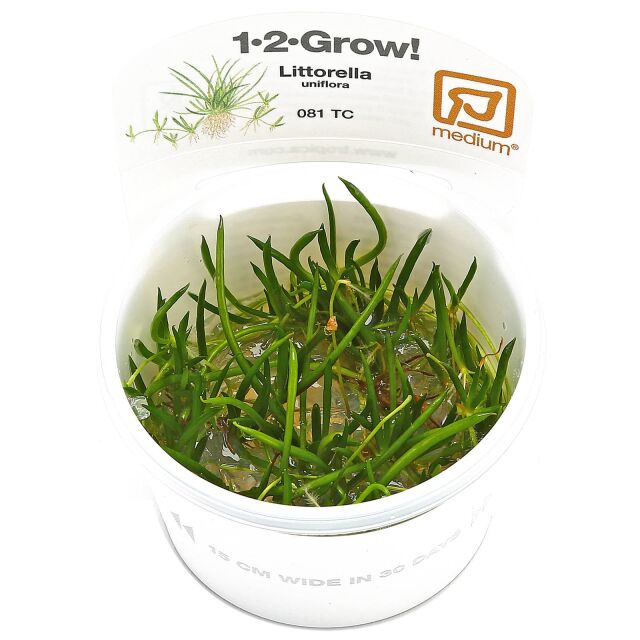
The shoreweed is widespread in Europe and is gladly used in the aquarium hobby as a grass-like ground cover plant. Because of its small size and slow growth, it is also suitable for smaller mini ponds. The shoreweed is a plant for the shallow water zone.
Lysimachia nummularia
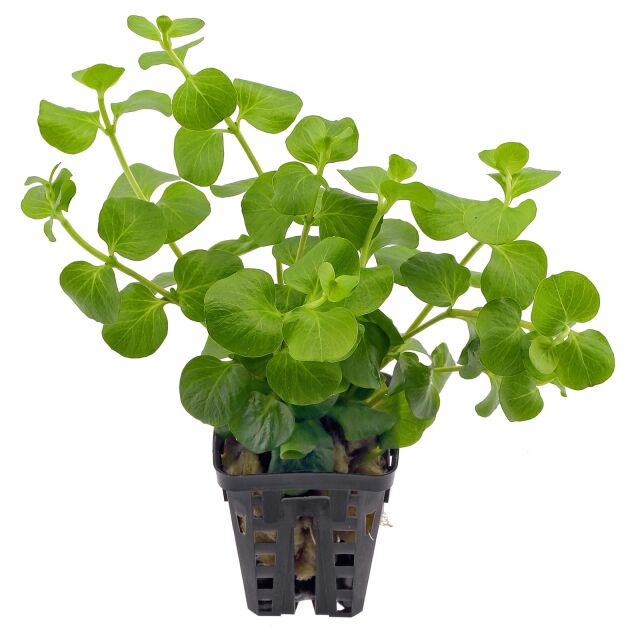
Creeping Jenny is a popular pond plant and, because of its creeping emersed growth, is gladly used in the edge area of the pond. It forms pretty yellow flowers and is even hardy in winter. Creeping Jenny is widespread in Europe and an easy-to-keep plant that is in part even offered in the garden sector as a ground cover plant (for moist locations).
Ricciocarpos natans
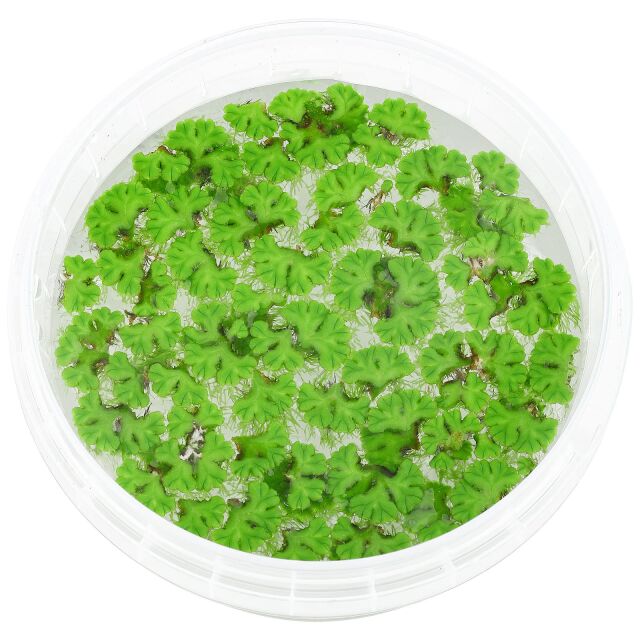
Ricciocarpos natans, also called floating liverwort, is a rare small floating plant with a unique appearance. As a cosmopolitan, Ricciocarpos natans is distributed all over the world and occurs (if rarely) in Germany. It will certainly not be hardy in winter, but still tolerates cooler temperatures quite well. It should not overwinter in the garden pond. Preferably, you do not plant floating liverwort together with other floating plants such as duckweed, which grow much faster. Otherwise, this rare moss can be displaced by competition in this water zone.
Riccia fluitans
Even Riccia fluitans, the pond liverwort, can be used as a floating plant in the garden pond. This liverwort occurs everywhere in the world, even in Germany. It grows in shaded still waters. The pond liverwort copes with many different water parameters and can be quite fast-growing under good conditions. This fine liverwort is an excellent hiding place for fry and other small animals. It is probably not hardy in winter, though, and should therefore better be kept in the aquarium during the cold seasons.