 The Bucephalandra Aquarium
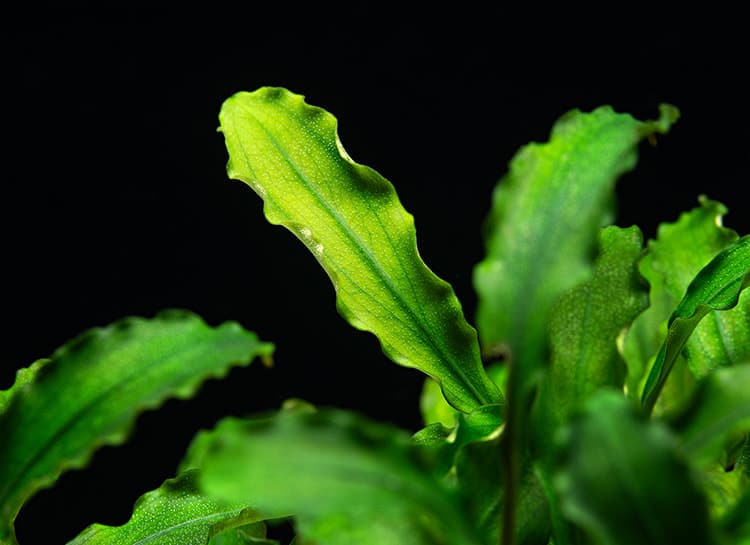
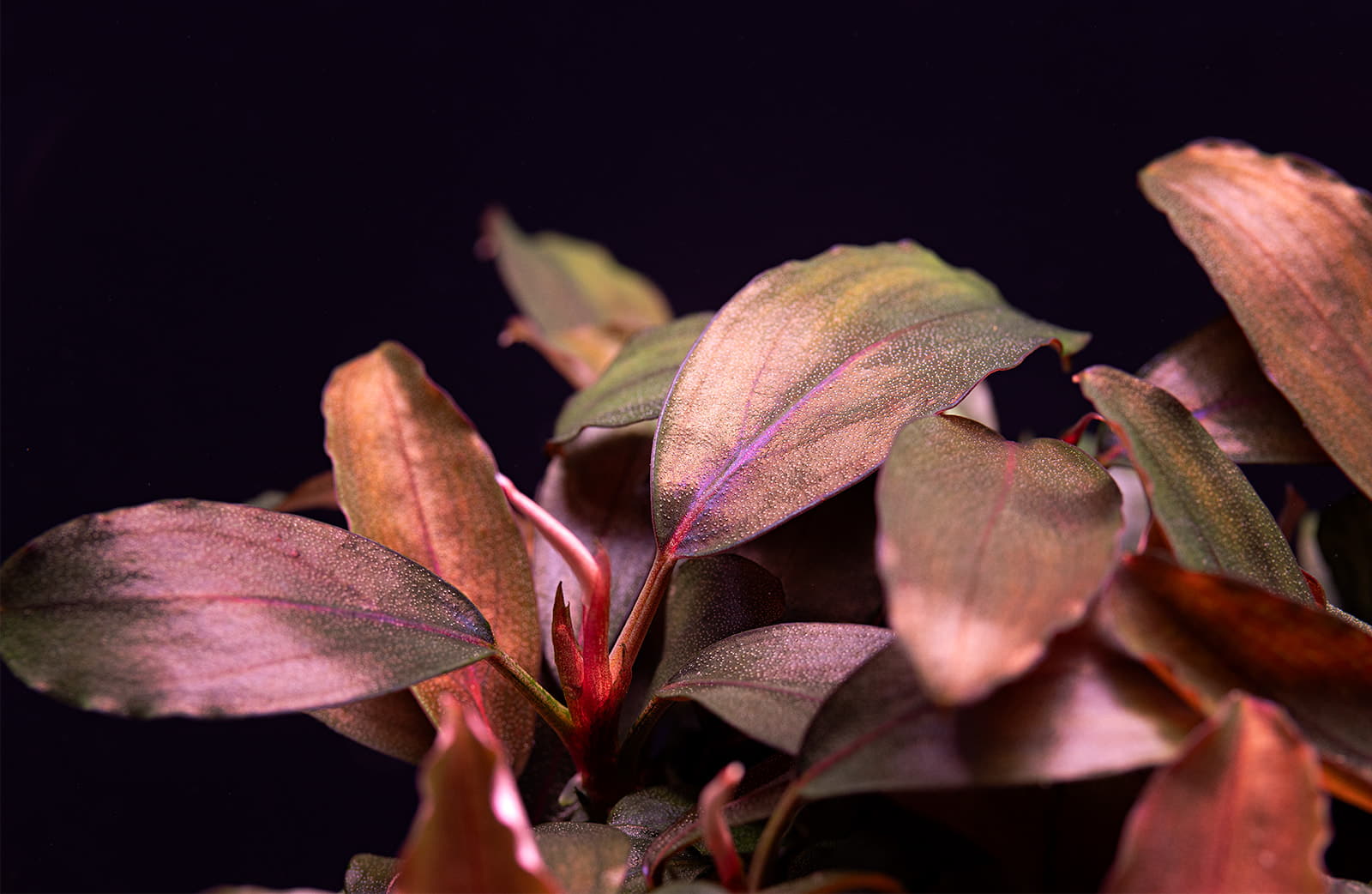
The Bucephalandra aquarium is all about keeping and collecting these colorful epiphytes, which have taken the aquarium hobby by storm in recent years. Bucephalandra, also affectionately called "Buce", is a slow-growing aquarium plant from Southeast Asia, especially from the island of Borneo. It belongs to the family Araceae and is distinguished by its sturdy leaves and a wide variety of colors and shapes, ranging from deep green to violet or even metallic shimmering shades.
An aquarium with Bucephalandra plants is ideal for aquascapers and plant lovers looking for a long-lived, easy-care and aesthetically pleasing planting. The plants thrive both underwater (submersed) and above water (emersed), which makes them extremely versatile. They are especially popular in aquascaping layouts and also in shrimp keeping.
Design options
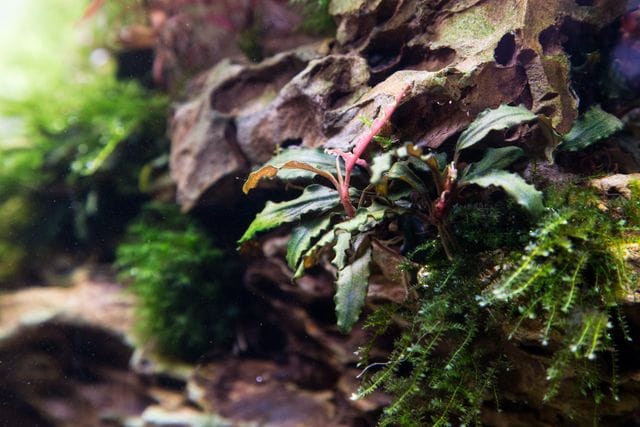
Bucephalandra plants grow splendidly as so-called epiphytes on stones and driftwood. The Buces can be wedged in, tied on or glued on there. Over time, the plants form anchoring roots and then grow firmly attached. They do not need a substrate the way stem plants do, and you should not bury their rhizomes completely. Nevertheless, you can also plant Bucephalandra loosely in the substrate to use it as a foreground plant. Otherwise, a Bucephalandra is an ideal midground plant, since it grows slowly and needs rather little light. This also makes it a very easy-care aquatic plant.
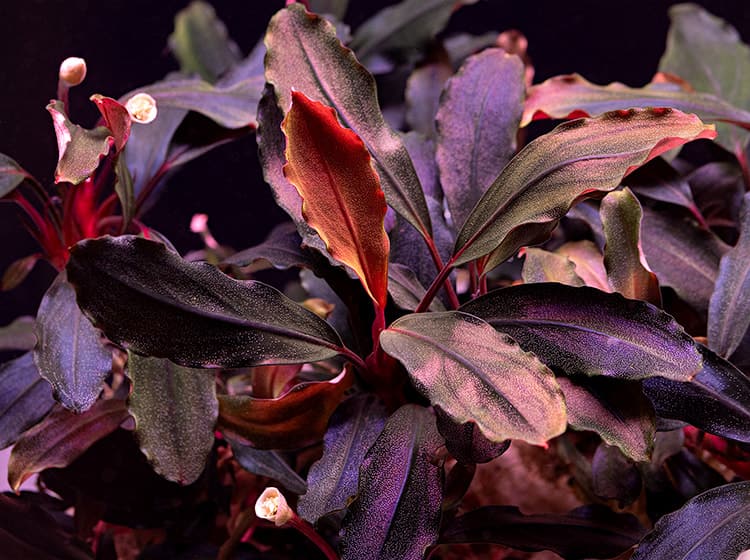
Thanks to their variety of leaf colors and sizes, you can create high-contrast arrangements that bring depth and dynamics to the aquarium. A special highlight is that Bucephalandra plants can also form small white or cream-colored flowers underwater. This is a very special and pretty sight.
Care and requirements
Bucephalandra are generally undemanding to keep, similar to anubias, and extremely robust. This plant is adaptable and thrives even in low light. More colorful species with reddish leaves, however, appreciate somewhat stronger lighting.
While the plant can also grow without CO₂, adding carbon dioxide promotes faster and healthier growth. Regular fertilization with micro- and macronutrients is recommended to prevent deficiency symptoms. Basically, though, a Buce is not very demanding in that respect and will forgive an aquarist's occasional fertilizing mistakes. It is therefore also a good beginner plant. As for water parameters, it prefers soft to medium-hard water with a pH between 6 and 7.5. Temperatures of 22 to 28 °C are ideal. In itself, Bucephalandra is extremely tolerant and adaptable here.
Special case: the cycling phase
However, Bucephalandra can be quite sensitive during the cycling phase of an aquarium. This applies especially to the in-vitro form in which it is sold. This can show up as the plant dissolving, with certain plant parts disintegrating into mush (you can find more information on this here). In such a case, Buces often do not tolerate the acidic and soft environment very well, which is often produced too strongly by fresh soil. It can help to harden the water a little during this period. A so-called dark start can also help to get around this problem. If you want to play it safe, though, only plant Bucephalandra in well-cycled aquariums. If your Bucephalandra is affected by mushy decay, there is still hope. Often the plants only lose their leaves. If the rhizome is still firm and intact, there is a good chance that the plant can sprout anew and healthy under good conditions. That takes time, however, so please be patient.
Advantages of Bucephalandra
Buces are distinguished by their longevity. The plants grow very slowly but keep their beauty for a long time, which makes them ideal for long-term aquarium projects. Another advantage is that they are very easy to care for. These aquatic plants are robust and tolerant of different water conditions, which makes them equally attractive to beginners and professionals.
Whether a nano aquarium or a large tank, Bucephalandra fit any size and any design.
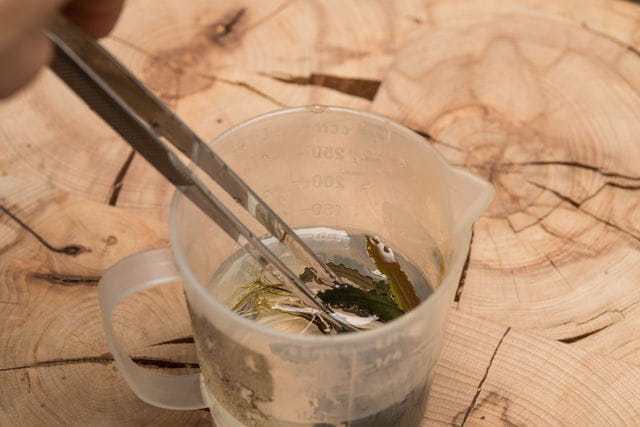
The fairly hard leaves tend to give the plant a certain cichlid-proofness and resistance to grazing attacks. If the leaves ever get too much algae, you can combat attached algae very well with, for example, an Easy Carbo bath. Unlike other aquatic plants, Buces tolerate this method surprisingly well.
Disadvantages of Bucephalandra
Apart from a certain sensitivity during the cycling phase, Bucephalandra have no notable disadvantages. Moreover, this problem is only temporary and easy to get around. Occasionally, Buces tend to get algae on the leaf edges more than other aquatic plants that have a faster metabolism. Because of the robustness of Bucephalandra plants, however, the algae can easily be removed again with a bath or local treatment with Easy Carbo.
Conclusion
Bucephalandra are great aquatic plants because they are easy to care for, versatile and visually appealing. They grow slowly, need little light and can thrive both emersed and submersed. Thanks to their robust leaves and the variety of colors and shapes, they are perfectly suited for aquascaping. They also attach easily to driftwood or stones, which opens up creative design possibilities. Their adaptability makes them ideal for beginners and experienced aquarists alike.