 Influence of hardscape on the water in the aquarium
Various types of stone and driftwood are often used in the aquarium hobby as natural decoration material. However, these materials can also influence the water parameters in some cases, which aquarists should be prepared for. We have summarized what to watch out for in this short report.
Stones in the aquarium
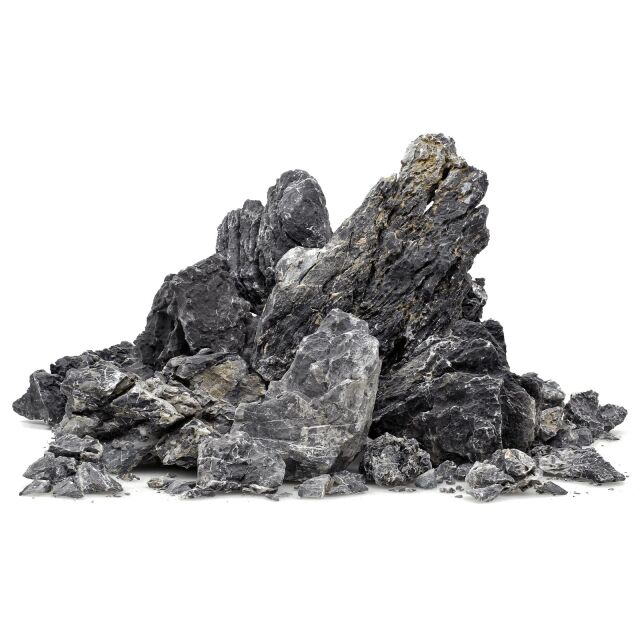
Among the various types of stone found for designing aquariums, they can be divided primarily into two groups: water-neutral types and stones that harden the water. While the first group has no or hardly any noteworthy influence on the water parameters, specimens of the second group often contain lime inclusions. Under the influence of acids, this lime can dissolve back into the water, so that the amount of calcium and carbonates in the water rises. As a result, the general hardness increases, as does the carbonate hardness. The latter causes a stronger pH buffering effect, so the pH also settles at a higher level. The hardening from such types of stone is further intensified by the use of a CO2 system, since introducing carbon dioxide also produces a small amount of carbonic acid, which reacts with the lime inclusions in the stones. This effect is therefore considerably greater in an aquascape or planted aquarium.
Because of the larger number of ions dissolved in the water, the conductivity in the aquarium also increases, which improves the electrical conductivity of the water. This can influence sterilizers based on electrolysis, such as those of the Twinstar brand, and intensify their processes. In harder water, the reactors of these products often show a higher incidence of calcium deposits. These can, however, be removed again quite easily with a targeted cleaning.
While hardening is even desired in African cichlid aquariums, it can have rather negative effects in planted aquariums. Hard water and the associated alkaline pH value in some cases impair the uptake of important nutrients (see also "Liquid fertilizer and water hardness"). Since most types of stone release only calcium and no magnesium (dolomite rock may be an exception), the calcium-magnesium ratio can also shift to the detriment of plant health. In these cases, adding Epsom salt can supply enough magnesium again, so that no deficiency symptoms develop in the aquatic plants.
If you want to make your water softer and more acidic, there are still some options. They include using soil substrate, agents that lower KH and pH, and using demineralized water. We go into this topic in more detail in this article. The ADA Softenizer is also a useful tool for keeping the water in the aquarium permanently soft and acidic.
In this overview we have sorted all the important types of stone so that you can see at a glance whether they are water-neutral or can harden the water. With the help of this list you can very conveniently search for the right type of stone for your aquarium project.
Driftwood in the aquarium

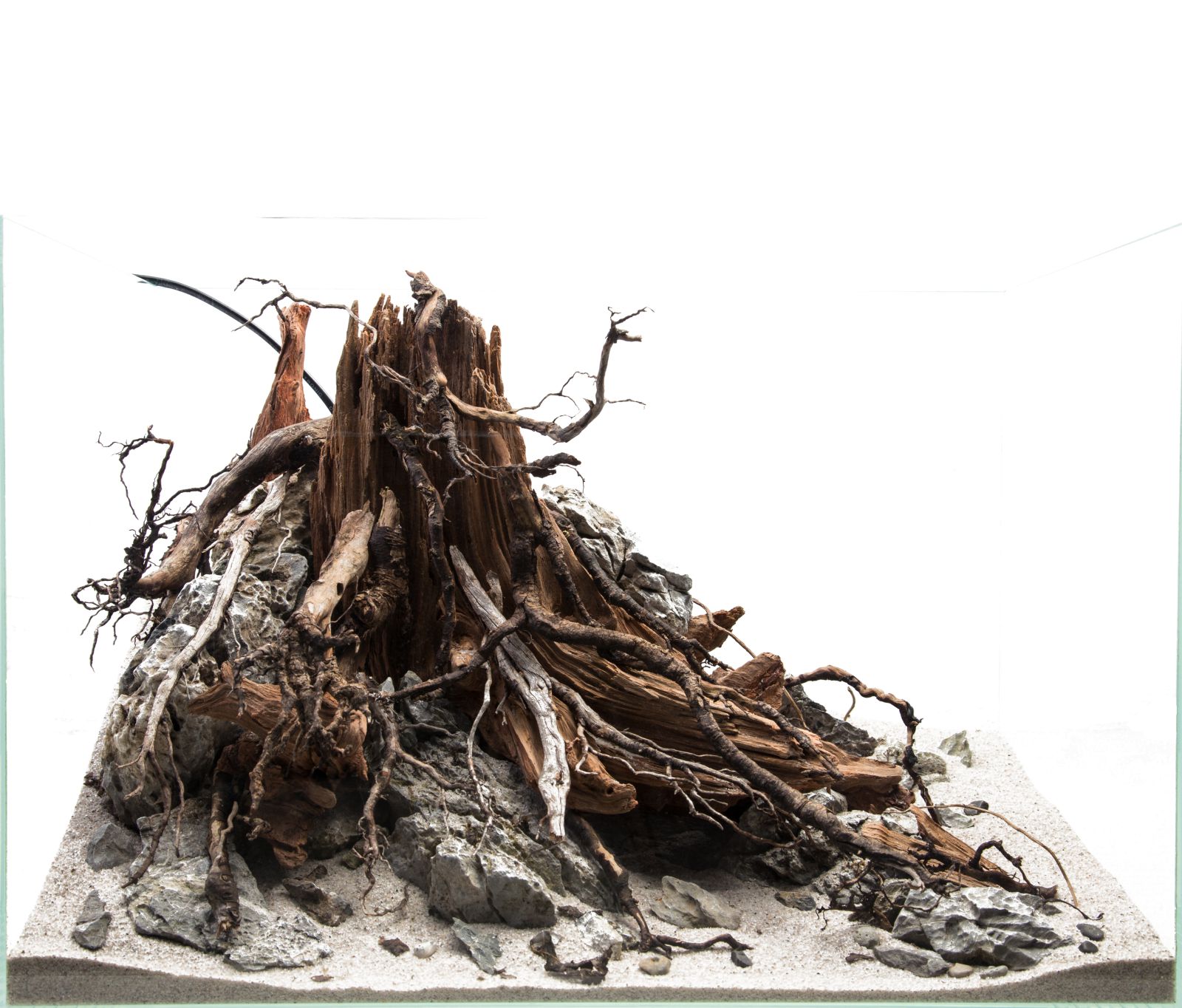
The hardscape category "driftwood" is now very rich in different types of wood for the aquarium hobby, which differ quite clearly in appearance, density and other properties. There is light or dark wood, smooth or with strong grain, light or heavy, heavily branched or quite compact. What matters most for the influence on the water parameters is simply the mass of the wood. Here, too, we have compiled a detailed list of the different types of wood in this overview article. If a lot of hardscape in the form of driftwood is used, the water takes on a more or less strong brown tint, depending on the type. This is caused by humic substances, and this process takes place mainly in the early period of an aquarium. You don't necessarily have to see this as a disadvantage; in biotope aquarium keeping, blackwater biotopes and a corresponding addition of humic substances are often even desired and create a natural environment.
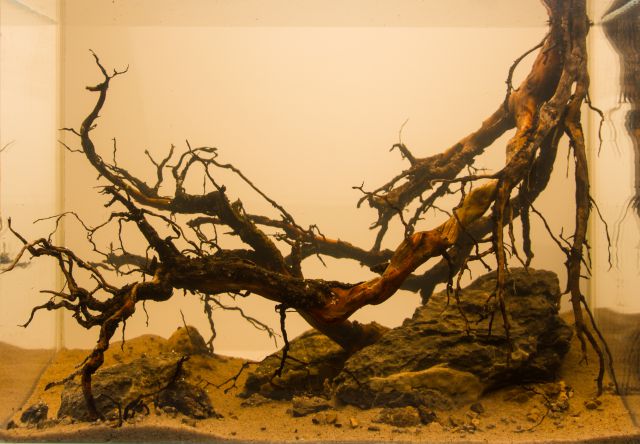
If this effect is rather undesirable, it can be eliminated with sufficient water changes or by using special filter media such as Purigen, and you get crystal-clear water again.
The aquarist should also bear in mind that wood in the aquarium, unlike stone, is in a certain way a finite story. Wood is, in principle, dead organic material, while stones are of mineral origin. Even though driftwood has a certain durability, it is nevertheless broken down by bacteria over time and keeps losing mass. This is easy to observe if you compare your aquarium driftwood over the years: after a long period, the pieces of wood have noticeably become "smaller". In very few cases does this have anything to do with rotten spots or a rotting process, and the speed of the process depends heavily on the type of wood. In some cases it can take centuries, or a noticeable "shrinkage" of the material can already be seen after only a few years. Note that wood in the aquarium causes a certain organic load.
To break down the organic load again, various products can be used in the aquarium. Devices that introduce oxygen and raise the redox value in the water can help. These include, for example, the sterilizers of the Twinstar brand or the Söchting oxydators. These also introduce considerably more reactive oxygen compounds such as the hydroxyl radical, which strongly promote the breakdown of organic loads in the water.
Filtration specially adapted to the situation, with more biological filter media and the Purigen mentioned above, can also help counteract the load somewhat in an aquarium with a lot of driftwood.
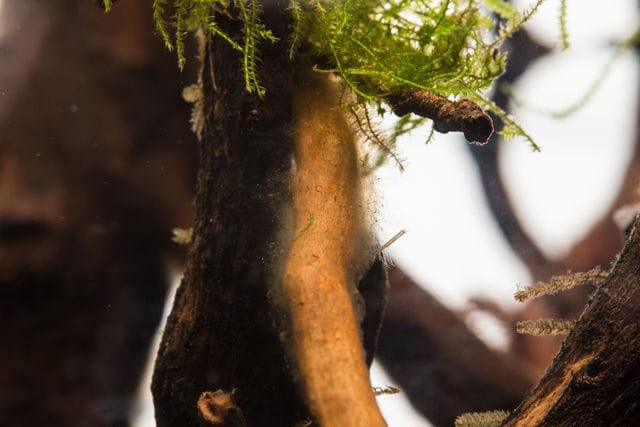
In aquariums with mainly wood as hardscape, a different bacterial environment also develops than in a pure stone aquarium. This too is noticeable mainly in the cycling phase, when the wood has only recently been introduced into the aquarium. Depending somewhat on the type of wood, certain bacterial coatings develop on the roots. These coatings, which look rather slimy, can usually be traced back to what is known in the hobby as sewage fungus, and are generally only a temporary visual problem. Often this fluff disappears by itself after a while or is eaten with relish by snails and shrimp. You will find more information on this topic in the article "Mold on the aquarium driftwood?".