 Which soil substrate for my aquarium?
In our soil article, we have already explained in detail how active soil substrates work for aquaristics, along with their advantages and disadvantages. There are now quite a few soils from different manufacturers on the market with very different properties. In this article, we show you which soil is best suited to your purposes.
Soil is not the same as soil
By definition, all soils have in common that they consist of natural earths that are fired in a special manufacturing process and, as cation exchangers, actively influence the water parameters in the aquarium. However, there are clear differences among the soils available in aquaristics in terms of color, composition, behavior and loading with various cations that can be used as plant nutrients. Different soils are, after all, designed for very different needs of the aquarist. In principle, a distinction is therefore made between rather nutrient-poor soil substrates, which are often used, for example, in keeping bee shrimp and other shrimp from soft-water biotopes, and nutrient-rich substrates, which are then used more in planted-aquarium keeping.
Additives are sometimes also mixed into the soil substrates that provide special properties. These can be, for example, components of activated carbon or other substances that bind pollutants, which clarify the water and remove cloudiness. Some soils contain humic substances such as fulvic acids, which are very useful for fish and invertebrates in the aquarium.
Different grain sizes
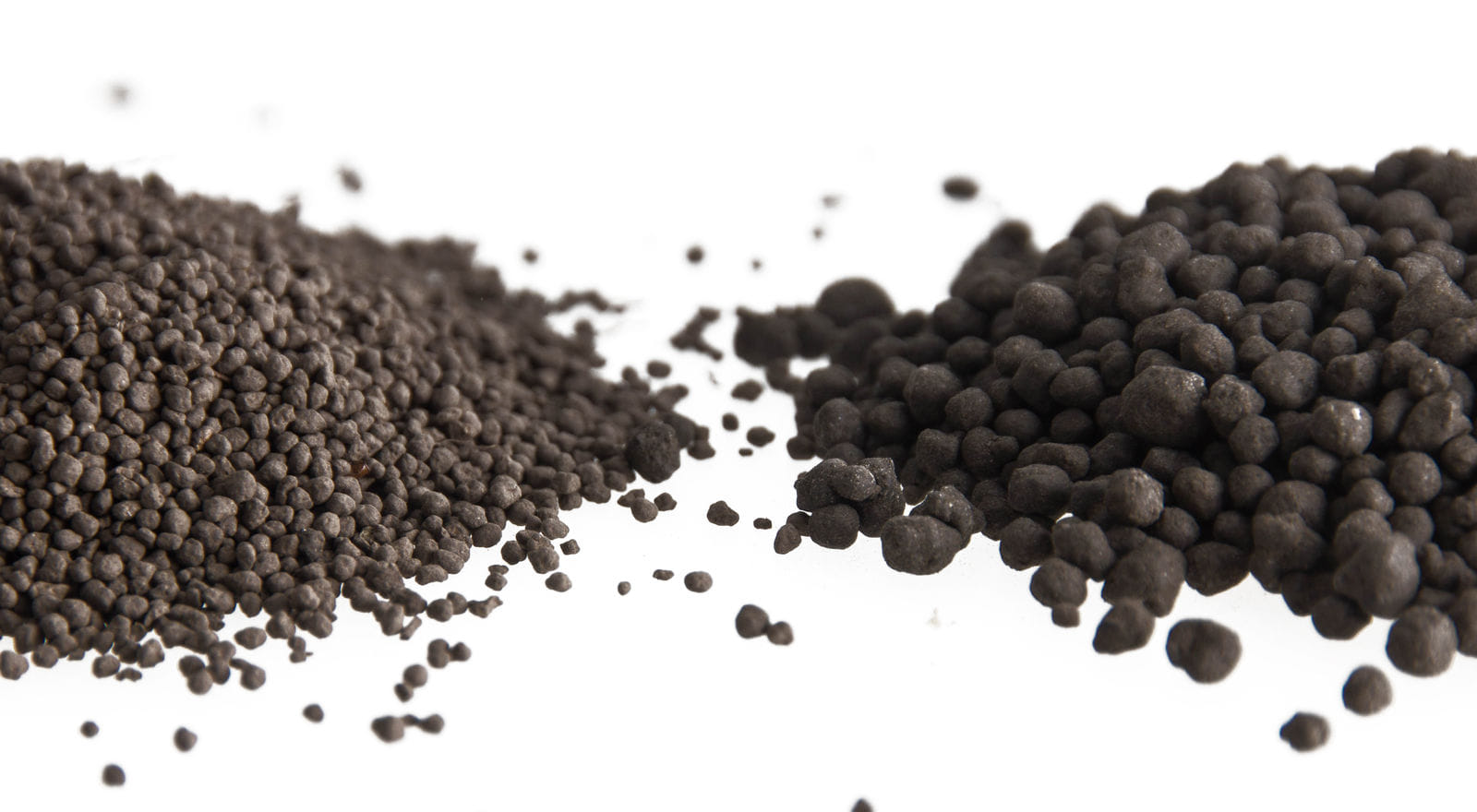
Depending on the manufacturer and product, different grain sizes of the same soil type are sometimes available. A normal soil grain size is comparable to that of standard aquarium gravel; it is relatively similar in diameter. The so-called powder variant, on the other hand, has a much smaller grain size, comparable to very fine gravel up to sand. These finer particle sizes make it much easier for very delicate and small ground cover plants with short roots, such as Hemianthus callitrichoides "Cuba", to take root and give them better hold than coarse soil.
Sometimes the designation "Multi Type" can also be found. Here the grain sizes are deliberately of different sizes, which is meant to create more hold and stability in the substrate structure.
As a special service for our customers, we have therefore classified all soils available in our shop and summarized them in an overview.

Nutrient-poor soils
Soil substrates with rather few nutrients are preferably used in shrimp keeping. Here the properties as an active cation exchanger are in the foreground, in order to keep the aquarium water as consistently soft and acidic as possible for bee shrimp, for example.
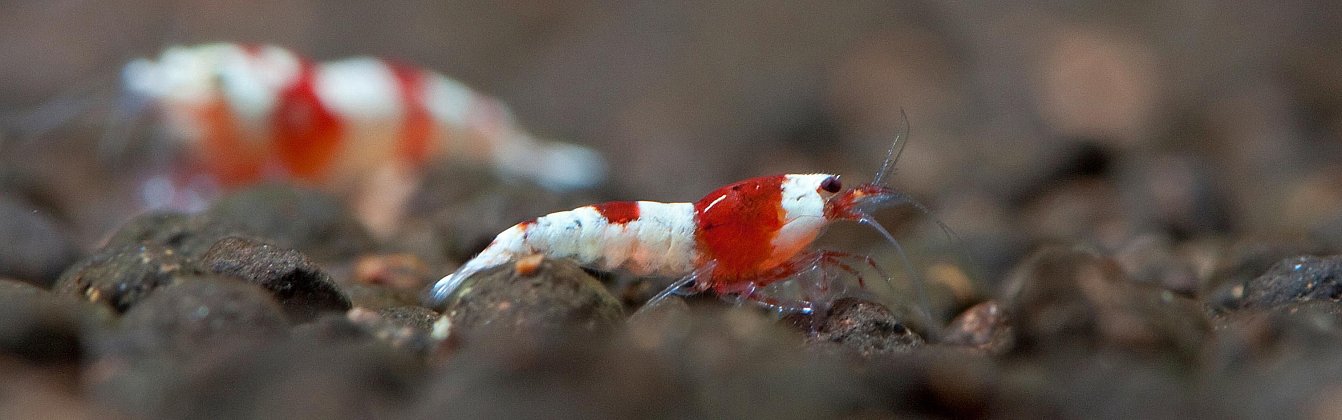
- Shirakura Red Bee Sand: As the name already tells you, an unfertilized soil without nutrients, designed for keeping bee shrimp. It serves primarily to lower or regulate the pH value and carbonate hardness (KH).
- JBL ProScape ShrimpsSoil: Available in either brown or beige and has quite hard grains.
- Dennerle Shrimp King Active Soil: Black soil substrate in mixed grain size. It also contains humic and fulvic acids without coloring the water noticeably.
- AQUARIO Neo Soil Compact Shrimp: A relatively soft soil substrate consisting of two layers. It already contains beneficial bacteria and provides clean and clear water.
- Environment Aquarium Soil: With this product, the manufacturer GlasGarten offers a soil that contains fulvic acids, which are important for fish and invertebrates, and provides clean water. It is also suitable for use with an under-gravel filter. Also available as a powder variant.
Moderately fertilized soils
Soil substrates with a moderate nutrient content are interesting above all for aquascaping beginners, or can be used in planted aquariums in which the plants do not need as many nutrients (for example with easy plants and weaker aquarium lighting). Nutrient deficits can be balanced out effortlessly by increased use of liquid fertilizers.
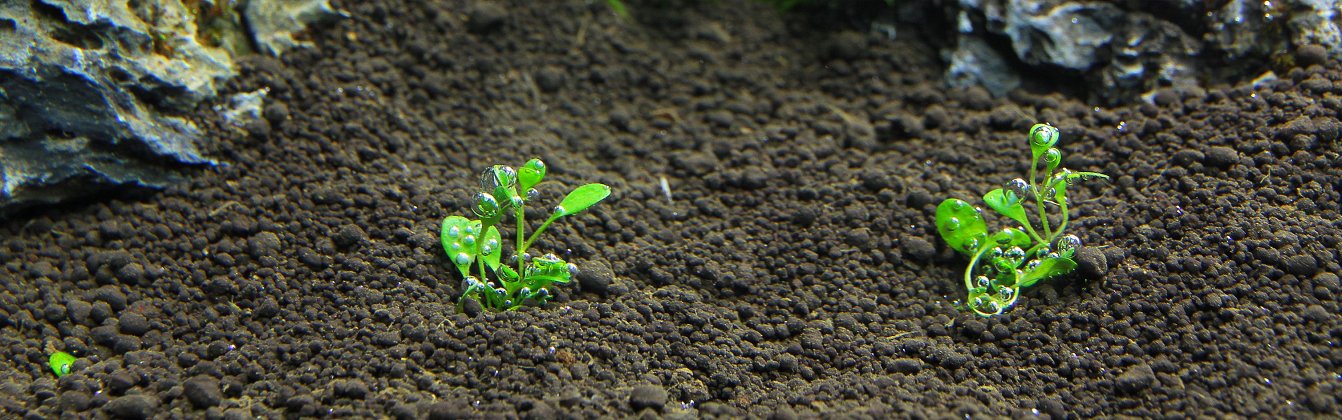
- DOOA Tropical River Soil: This soil has a strikingly light brown color and lowers the pH value only slightly. Compared with the ADA Aqua Soils of the Amazonia series, it contains fewer nutrients, so plants in this substrate grow somewhat more slowly.
- JBL ProScape PlantSoil: Has quite hard and stable particles and is available in either brown or beige.
- ADA Aqua Soil Amazonia Light: A rather light brown soil substrate that is not as rich in nutrients as Aqua Soil Amazonia I & II by comparison. Above all, significantly less nitrogen is released here in the form of ammonium (see here for a comparison.) Also available as a powder variant.
- Dennerle Scaper's Soil: A fairly dark (black) soil substrate in mixed grain size. Thanks to its natural content of Andosol, it contains many important nutrients, but also humic and fulvic acids.
- Tropica Aquarium Soil: This dark substrate is available as a powder variant as well as in the normal grain size. It also provides very clear water and sits in the upper midfield in terms of nutrient loading.
Nutrient-rich soils
Active substrates lavishly equipped with nutrients make it much easier for the planted-aquarium keeper to keep various aquarium plants. The aquatic plants can draw their nutrients directly from the substrate, but through the cation exchange capacity of the substrate, nutrient elements also reach the water column of the aquarium. However, lavish soils release large amounts of nutrients especially in the beginning. Freshly planted plants cannot yet use these to the full extent in the aquarium's cycling phase, so more water changes and somewhat more maintenance are sometimes required during this time. In return, though, you are rewarded with very healthy plant growth after the cycling phase ends.
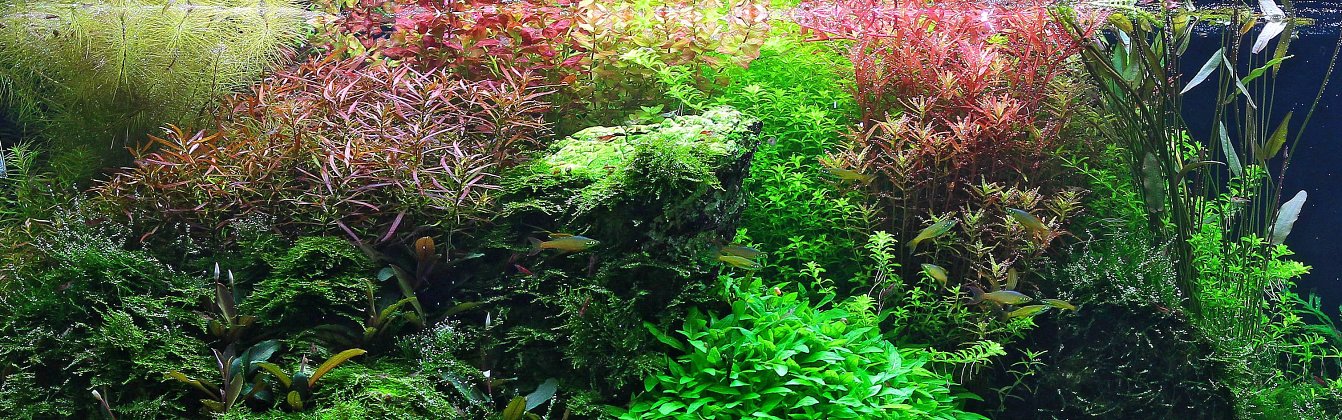
- ADA Aqua Soil Amazonia: This soil is the classic par excellence, and many planted-aquarium keepers swear by it! Aqua Soil Amazonia has a high content of nutrients such as iron, manganese and nitrogen, but also contains valuable humic acids. Nitrogen is present here in the form of ammonium (NH4) in high amounts, which can be taken up very easily by the aquatic plants. During the cycling phase, more frequent and larger water changes are generally necessary. ADA now also has other soil types with a lower nutrient content in its range, which are said to be somewhat more beginner-friendly to handle.
- Cal Aqua Labs Black Earth Premium: This soil is rich in organic nutrients but does not release any ammonium into the water. Thanks to the modern manufacturing process, NH4 is better retained in the substrate and thus remains primarily reserved for the plant roots. A very dimensionally stable, high-density substrate that also provides clear water.
- AQUARIO Neo Soil Compact Plant: Another nutrient-rich soil, which additionally contains trace elements such as iron and the macronutrient nitrogen. The special feature of this substrate is that the grains consist of two layers: dark on the outside, reddish on the inside.
- ADA Aqua Soil Amazonia II: Amazonia II also still counts among the nutrient-rich substrates for planted aquariums, but contains somewhat less nitrogen than the normal Aqua Soil Amazonia. A more detailed analysis to distinguish the various ADA soils was carried out by the Flowgrow community here a few years ago, by the way. There you can follow the differences between Amazonia and Amazonia II very clearly.