
We use cookies to offer you an optimal shopping experience. These cookies can be grouped into categories. The necessary ones are essential for your purchase. Functional services enable additional content such as videos and maps. With further cookies we produce anonymized statistics. Others serve primarily marketing purposes and are used for the personalization of advertising. These cookies are used by 11 Services used in the shop. You can decide for yourself which cookies you want to allow.
We store your choice on your device (“local storage”) and ask you again after 12 months at the latest. You can change it at any time under “Cookie Preferences” in the footer. You can find details on cookie lifetimes and necessary cookies in our privacy policy.
These services are required to run the shop and for your purchase and cannot be switched off.
Strictly necessary cookies enable basic functions and are required for the website to work properly.
Shop functions: Essential Shop functions This includes: JTLSHOP (cookie, until you close the browser; keeps your session, the cart and your login), consent (browser storage; remembers your cookie choice, 12 months at most, during the session also in session storage), has_starting_point, cur_product_id and product_page_visits (session storage; navigation between products) as well as aquasabi-search-index-last-url, aquasabi-search-index-results and aquasabi-search-index-data (session storage; search results and lists when paging). easyVision: easyVision lets website visitors customize the display – e.g. by adjusting contrast, font size, line and letter spacing, color rendering, a blue light filter or by disabling animations. Developed and hosted in Germany, the service is GDPR-compliant and supports statutory accessibility requirements (BFSG) from 2025. The service loads its scripts from cdn.sitecockpit.com and stores your settings (easy-vision-*) in your browser storage (no cookies). Reviews: aquasabi_guid (cookie, 12 months) is only set when you click “Helpful” under a review. It stores a random ID so that the same person cannot count a review as helpful more than once. Sorting and view: aquaSort and aquaDisplayType (cookies, 90 days) store the sorting or view (gallery or list) that you choose in a product list. They are only set when you choose a sorting or view. Amazon Pay: Payment processing with Amazon Pay. The service provider is Amazon Payments Europe S.C.A. Where Amazon Pay is offered (e.g. in the cart and at the checkout), the shop loads scripts and images from static-eu.payments-amazon.com, payments-eu.amazon.com and m.media-amazon.com and sets cookies (language, ledgerCurrency, apay-session-set). You can find out more in the privacy policy at https://www.amazon.de/gp/help/customer/display.html?nodeId=GRFTMVHP4HXMESSP PayPal: Payment processing with PayPal. The service provider is PayPal (Europe) S.à r.l. et Cie, S.C.A. Where PayPal is offered (e.g. in the cart and at the checkout), the shop loads scripts from www.paypal.com; for invoice payment via PayPal, c.paypal.com is added for fraud prevention. PayPal stores an entry in your browser storage (__paypal_storage__), and the shop remembers the chosen PayPal payment method in session storage (chosenPPCPaymentOption). You can find out more in the privacy policy at https://www.paypal.com/en/legalhub/paypal/privacy-full Sofortüberweisung: On the confirmation page after an order with this payment method the shop loads a Klarna logo from x.klarnacdn.net.
Additional functions such as embedded videos and maps, spam protection in forms or the rating badge. Data is transferred to the respective provider when they load.
Show Youtube Videos
Displaying videos
Processing company:Google Ireland Limited, Google Building Gordon House, 4 Barrow St, Dublin, D04 E5W5, Ireland
Terms of use: https://policies.google.com/privacyShow Shopauskunft Rating-Badge
Used to provide the services of shopauskunft.de.
Processing company:Händlerbund Management AG
Terms of use: https://www.shopauskunft.de/datenschutzIntegration of Google Maps services
Performance measurement; Providing personalized services, including content and ads; Providing our services
Processing company:Google Ireland Limited
Terms of use: https://policies.google.com/privacy?hl=enTo submit forms on this page, you need to consent to the transfer of data and storage of third-party cookies by Google. With your consent, reCAPTCHA, a Google service to avoid spam messages via contact forms, will be embedded. This service allows us to provide our customers with a safe way to contact us via online forms. At the same time, the service prevents spam bots from compromising our services. After you gave your permission, you might be asked to answer a security prompt to send the form. If you do not consent, unfortunately you cannot use the form. Please contact us in a different way.
Stopping spam bots
Processing company:Google Inc.
Terms of use: https://policies.google.com/privacyHelps us understand how the shop is used so that we can improve it.
We measure which pages and products are viewed and how visitors move through the shop. Google Analytics sets cookies (_ga, _ga_*) and sends usage data to Google.
Audience measurement and analysis of how the shop is used
Processing company:Google Ireland Limited
Terms of use: https://policies.google.com/privacy?hl=enMeasures our advertising and enables personalised advertising on other sites.
We measure whether an ad on Facebook or Instagram led to a purchase and show visitors relevant ads again. Cookies are set for this: _fbp and _fbc (Meta) and as_fbclid (ours, 30 days; remembers the ID of the ad click). Meta receives data about your actions in the shop (e.g. product views, cart, purchase), your IP address and browser information; for a purchase our server may also send them directly to Meta (Conversions API). More in our privacy policy (retargeting/remarketing and conversion tracking).
Measure advertising success and show relevant ads again (Facebook, Instagram)
Processing company:Meta Platforms Ireland Limited, Merrion Road, Dublin 4, D04 X2K5, Irland
Terms of use: https://www.facebook.com/privacy/policy/We measure whether an ad on TikTok led to a purchase. Cookies are set for this: _ttp, ttclid and _tt_* (TikTok) and as_ttclid (ours, 30 days; remembers the ID of the ad click). TikTok receives data about your actions in the shop (e.g. product views, cart, purchase), your IP address and browser information; for a purchase our server may also send them directly to TikTok (Events API). More in our privacy policy (retargeting/remarketing and conversion tracking).
Measure the success of ads on TikTok
Processing company:TikTok Technology Limited, 10 Earlsfort Terrace, Dublin, D02 T380, Irland
Terms of use: https://www.tiktok.com/legal/page/eea/privacy-policy/enWe measure whether an ad in ChatGPT led to a purchase. Cookies are set for this: __oppref and __obref (OpenAI) and as_oppref (ours, 30 days; remembers the ID of the ad click). OpenAI receives data about your actions in the shop (e.g. product views, cart, purchase), your IP address and browser information; for a purchase our server may also send them directly to OpenAI (Conversions API). Data may be transmitted to OpenAI OpCo, LLC (USA). More in our privacy policy (retargeting/remarketing and conversion tracking).
Measure the success of ads in ChatGPT
Processing company:OpenAI Ireland Limited, 1st Floor, The Liffey Trust Centre, 117-126 Sheriff Street Upper, Dublin 1, D01 YC43, Irland
Terms of use: https://openai.com/policies/eu-privacy-policy/We measure whether an ad led to a purchase and show visitors relevant ads again. Google Ads sets cookies (e.g. _gcl_*) and receives purchase data, where applicable in hashed form (SHA-256).
Measure advertising success and show relevant ads again (remarketing)
Processing company:Google Ireland Limited
Terms of use: https://policies.google.com/privacy?hl=enWe use cookies that are essential for payment processing through our partners. Please select which payment providers you would like to use.
In order to unlock offers for extended payment options, in particular express checkout and payment in instalments, we require your consent to the data transfer and storage of third-party cookies of the payment provider PayPal. This allows us to also offer you express checkout and payment by instalments. Without your consent, only the technically necessary data transfer to PayPal will take place, but you will then not be able to use the express checkout or extended offers for payment by instalments on this site.
Using express checkout and Displaying offers for payment in instalments for individual items or your entire purchase.
Processing company:PayPal
Terms of use: https://www.paypal.com/de/webapps/mpp/ua/privacy-full?locale.x=en-GB
Your consent ID:
With this randomly generated number we can show on request what you selected. It contains no information about you.
Would you like to see these contents? Activate the desired contents for one session only or allow the website to remember these settings. Once you have given your consent, the third-party data can be loaded. For this, third-party cookies might be stored on your device. You can change these settings at any time (footer: “Cookie Preferences”). For further details, please see the Privacy notice.
By Aram Schneider Published Updated
Translated from German with AI assistance and reviewed by our editors.
Contents
An Asian aquarium features aquatic plants, ornamental fish and invertebrates that are native to the Asian continent. Above all, labyrinth fish, barbs and danios are among the most popular aquarium fish that originate in Asian regions such as Thailand, Borneo, Sumatra, Cambodia or India. The diversity of species, and with it the range of colors and shapes, is very large. The popular dwarf shrimp also originally come from Asian countries. If imitating natural conditions is a strong priority, one can speak of an Asian biotope aquarium. Water parameters, equipment, and the setup and decoration of the aquarium are strictly adapted to the needs of the aquarium inhabitants. In this article, we explain which conditions have to be met to set up and maintain an Asian aquarium.
![]()
The Asian continent is very large, so depending on the collection site or biotope there are very specific requirements for the water parameters. Broadly generalized, however, it can certainly be said that the water for an Asian aquarium should be rather soft to medium hard. This means a rather low carbonate and general hardness and a pH value in the acidic to slightly acidic range (below 7). Compared with the typical South American aquarium, an Asian aquarium sometimes will not need such a high temperature, but this depends heavily on the particular livestock. Often, however, temperatures of about 20 to 25 °C are sufficient for Asian fish species.
Our hard tap water is not always suitable for Asian aquarium inhabitants. To obtain good soft-water parameters, the aquarist has a variety of options, which we have explained in more detail in this article. Above all, lowering the pH value is a priority here, which can be achieved, for example, by introducing CO2. This also supplies the aquatic plants with the carbon they need, which boosts their growth and vitality.
Asian ornamental fish do not always come from clearwater biotopes; because of blackwater they are also used to humic substances being present in the water. The aquarist can recreate these conditions very well by using suitable products and thus offer enough humic substances. Filtering through peat is also a popular way both to lower the pH value and to add humic substances.

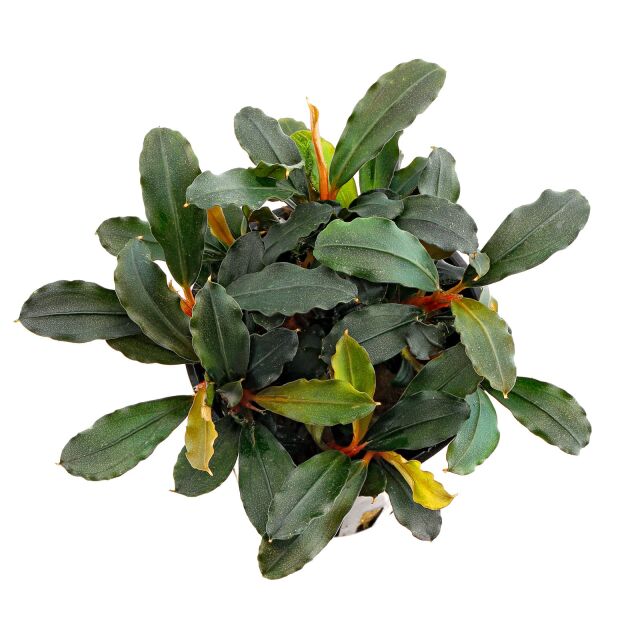
Asian aquatic plants are already very well represented in aquaristics, so the aquarist can draw on a large selection of different plants here. Typical aquarium plants from Asia include the popular cryptocorynes. These are quite easy plants to keep, undemanding, but as heavy root feeders they benefit greatly from a nutrient-rich substrate. Bucephalandra also come from Asia and have caused a real hype, especially in recent years. They are fairly undemanding epiphytes that grow very slowly. Leaf sizes, colors and shapes are very varied. Most mosses for the aquarium also come from Asian countries. Aquarium mosses are also very popular in aquascaping and shrimp keeping and are very easy aquatic plants to keep. Even the classic among ferns, the Java fern, comes from Asia and is an undemanding epiphyte that can be attached to stones or driftwood. Numerous colorful stem plants are also native to Asian countries. These include in particular Rotala species, such as the popular Rotala rotundifolia, but also genera such as Hygrophila, Limnophila and Pogostemon.
Aquatic plants are not just to be seen as pure decoration, though; they also take on useful biological tasks. Especially for juveniles or fish that need places to retreat to, aquarium plants create a suitable structure in the aquarium. They also metabolize nutrients in the water, compete with algae and produce oxygen. They are therefore an enrichment for any Asian aquarium in every case.
If soft and slightly acidic water parameters are wanted, active soil substrate is a good choice for an Asian aquarium, since it helps to reach and maintain the right soft-water values. Because of its dark color, it is especially suitable for fish species that do not like a light substrate. Because of its rather soft consistency and its round particles, this substrate is not sharp-edged and is therefore also an optimal substrate for bottom-digging animals. Especially in shrimp breeding, soil substrate is always the first choice for soft-water animals such as bee shrimp or tiger shrimp. Nutrient-rich soil can also be used in Asian aquariums that have heavier planting.
For Asian biotopes that want to represent more of a stream or river section, suitable types of sand and gravel are recommended. Here you should take care when choosing the substrate not to pick one that hardens the water. Asian loaches, hillstream loaches and gobies in particular enjoy a natural-looking setting with fine gravel or sand as the aquarium substrate.

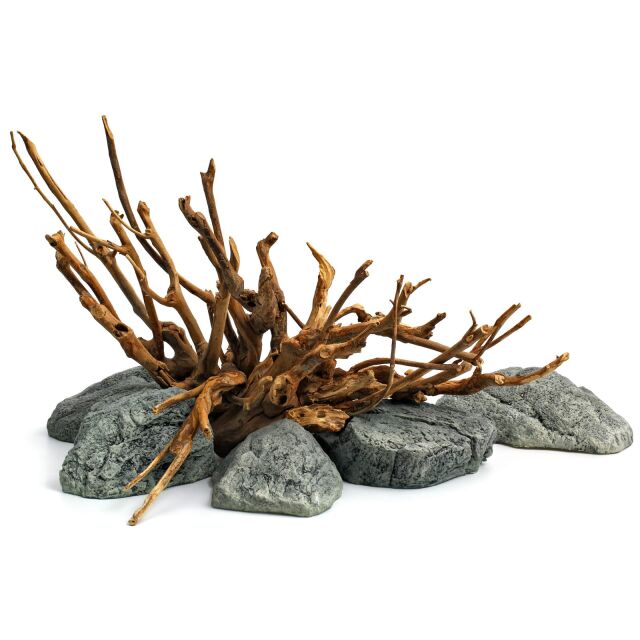
In addition to aquatic plants, an Asian aquarium should also be furnished with natural elements such as driftwood or stones. These offer good hiding and retreat spots for weaker animals, serve as spawning sites and provide the necessary structure in the aquarium. If soft and acidic water parameters are wanted, the aquarist should take care to choose types of rock that are as water-neutral as possible. If a slight brown tint and enrichment with humic substances similar to the original habitat is wanted, driftwood can achieve the desired effect through the tannins it releases. Wood types with a high density are especially well suited for this.
In a more stream-like biotope in the aquarium, rather round and flat stones (such as pebbles) are particularly suitable to match a gravel or sand substrate.

Copyright: Chris Lukhaup.
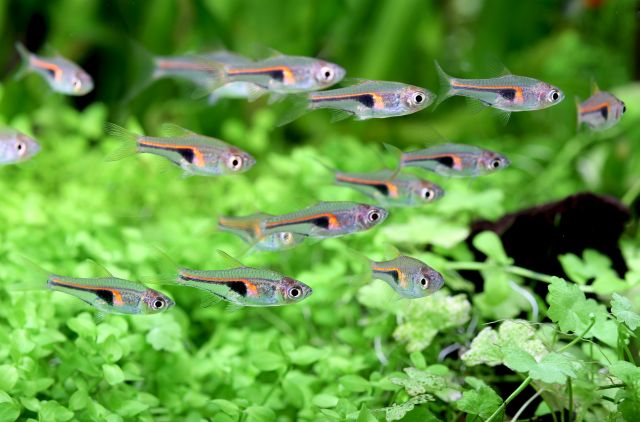
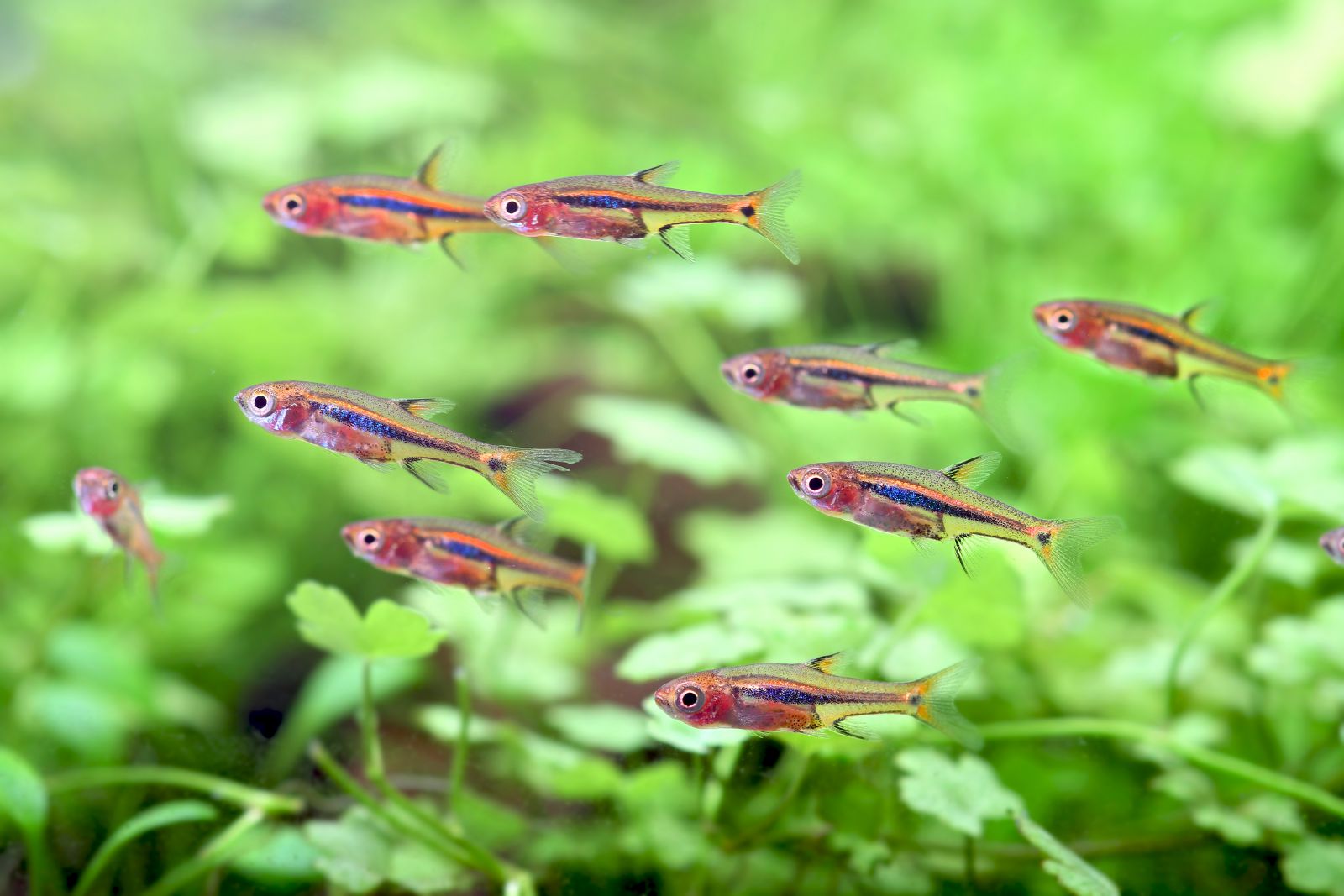
Because of the enormous size of the continent and the species diversity that goes with it, ornamental fish from Asia exist in abundance. Particularly popular are the many barb and danio species, which are also often used in community aquariums because of their hardiness, for example. Fish such as the leopard danio or the Sumatra barb are true classics of aquaristics and have been kept successfully for decades. They are lively and robust schooling fish that need enough open swimming space, but also enough hiding places. Danios in particular stand out in part through great schooling behavior and are therefore also welcome inhabitants of a planted aquarium. Genera that stay especially small, such as Rasbora, Boraras or Sundadanio, have also become more and more popular in combination with nano aquaristics. You can find more information on this topic here.
Copyright: Chris Lukhaup.
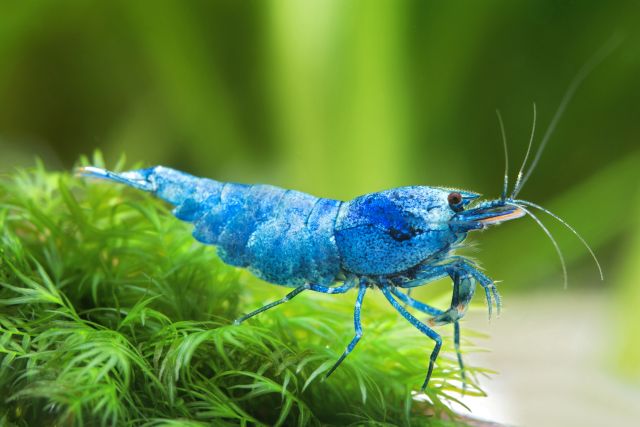
The dwarf shrimp segment in particular, with genera such as Caridina and Neocaridina, also offers invertebrates that come mainly from Asia, more precisely from China and Japan. Likewise in line with nano aquaristics, these busy, colorful crawlers have become a fixture in aquariums. Dwarf shrimp often only grow to 2 to 3 cm and are sociable and peaceful aquarium animals that are very interesting to watch. They are constantly looking for food and tirelessly graze on plants, hardscape and substrate. If the conditions are right, breeding or reproduction is quite easy and soon happens by itself. The robust Neocaridina species in particular are very well suited to being kept with peaceful fish for a harmonious Asian aquarium. Do you want to learn more about dwarf shrimp? The Aquascaping Wiki has its own category for invertebrates here.
Loaches, hillstream loaches and gobies are particularly suitable for so-called Asian stream biotopes or for the bottom zone of an aquarium. Many of these species come from rather cooler waters and need very clear, oxygen-rich water. A strong current near the bottom increases the animals' well-being and comes very close to their natural habitat. Most of these species are also very sociable schooling fish, so you should offer them an aquarium that is large enough with enough floor space.
Copyright: Chris Lukhaup.
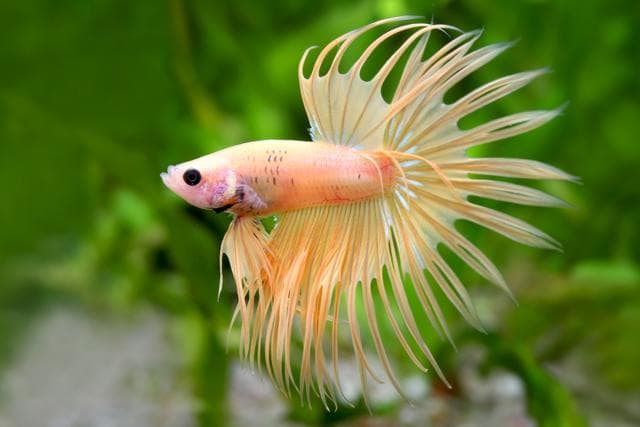
The majority of labyrinth fish are also native to Asia, including the popular thread-fin gouramis, but also other gouramis and the popular bettas (fighting fish). Betta species in particular, however, are quite special to keep and should mainly be kept in a species tank. In this article you can learn even more about keeping bettas.
Labyrinth fish prefer to stay in the upper to middle area of the aquarium and are therefore suitable stocking for the upper water zone. They are rather calm and peaceful animals that show very interesting breeding behavior by building so-called bubble nests at the water surface.
Copyright header photo: Chris Lukhaup